---
title: "Evolutionary CMS Migration"
canonical_url: "https://www.laioutr.com/en/blog/cms-migration-incremental-evolution"
locale: en
meta:
description: "The strategic case for evolutionary CMS migration: why big bangs fail and iteration wins for content platforms."
"og:description": "The strategic case for evolutionary CMS migration: why big bangs fail and iteration wins for content platforms."
"og:title": "Evolutionary CMS Migration"
---
# The Strategic Case for Evolutionary CMS Migration: Why Big Bangs Fail and Iteration Wins
Table of contents
1. [1.The Hidden Costs of the Big Bang Migration](#the-hidden-costs-of-the-big-bang-migration)
2. [2.Why Incremental Evolution Changes Everything](#why-incremental-evolution-changes-everything)
3. [3.The Architecture That Makes Incremental Migration Possible](#the-architecture-that-makes-incremental-migration-possible)
4. [4.How Organizations Actually Execute This Strategy](#how-organizations-actually-execute-this-strategy)
5. [5.The Timeline Reality Your Executives Need to Understand](#the-timeline-reality-your-executives-need-to-understand)
6. [6.Why This Approach Aligns With Modern Organizational Realities](#why-this-approach-aligns-with-modern-organizational-realities)
7. 7.The Organizational Competency You're Actually Building
8. [8.Moving From Analysis to Action](#moving-from-analysis-to-action)
Every organization reaches a critical inflection point. Your content management system, once a source of competitive advantage, has become an anchor. Migrations are attempted, timelines slip, budgets multiply, and teams burn out. The problem isn't the technology itself. It's the migration methodology.
The traditional approach to CMS migration is fundamentally flawed. It operates on a "rip and replace" philosophy born from enterprise project management dogma: plan everything upfront, execute all at once, hope nothing breaks. This methodology fails because it ignores a basic truth about content organizations: your business cannot afford to stop publishing while you rebuild your infrastructure.
Laioutr's experience across hundreds of digital transformations has revealed a different path forward. The most successful organizations aren't choosing between "legacy and broken" or "new and risky." They're choosing evolution: a deliberate, measured approach that treats CMS migration as a strategic business initiative rather than an IT catastrophe.
This isn't compromise. This is sophisticated operational strategy.
## The Hidden Costs of the Big Bang Migration
Before understanding why evolutionary migration works, we must acknowledge why traditional migrations fail so catastrophically.
When organizations attempt simultaneous migration of entire CMS platforms, they're simultaneously managing five distinct failure vectors:
**Content Mapping Complexity Explodes**: A legacy system housing five years of editorial decisions, structural inconsistencies, and accumulated technical debt doesn't translate neatly to modern content models. Organizations discover that 30% of their content violates their own data governance rules. Another 40% contains presentation logic embedded in content fields that no modern content architect designed for. Attempting to solve all of this mapping simultaneously while maintaining the old system creates impossible coordination overhead.
**Team Cognitive Load Shatters**: Your editorial team must learn new tools, new workflows, and new governance structures while maintaining their publishing schedule. This is training, migration, and production all at once. In practice, this means either production stalls or migration fails because editorial teams fall back to the familiar, broken system they know.
**Organizational Risk Concentrates**: A single migration event creates a single point of failure for the entire business. If content doesn't migrate, if URLs break, if publishing stops, the entire company is affected simultaneously. Every downstream system dependent on content becomes fragile.
**Technology Debt Defers**: Attempting to migrate everything now often means settling for "as-is" instead of "optimized-for-the-future." Teams accept the old system's architectural choices because there's no time to reconsider. You're moving the problem, not solving it.
**Budget Scenarios Go Nonlinear**: Most CMS migrations exceed their original timeline estimates by 200-300%. Every week of delay costs money in consulting hours, resource allocation, and opportunity cost. The "quick" migration becomes a two-year project.
The fundamental error: treating migration as a project rather than a process.
## Why Incremental Evolution Changes Everything
Evolutionary CMS migration operates on different principles entirely. Instead of a single coordinated event, it's a series of controlled transitions where each phase delivers value independently.
The strategic insight is this: you don't have to move everything simultaneously. You can migrate specific content categories, editorial teams, or content types one at a time. While you do, your legacy system continues operating. Your business continues generating revenue. Your teams continue publishing.
This unlocks five strategic advantages that traditional migrations cannot achieve:
**Real Feedback Improves Design**: When you migrate your first content category, your content architects discover what actually works for your organization's specific content patterns. Not what works in theory. Not what works for generic cases. What works for your writers, your editors, your metadata standards, and your publishing workflows. This feedback becomes the foundation for designing subsequent migrations. You're learning through iteration, not through expensive pre-project analysis that will prove partially wrong.
**Risk Distributes Rather Than Concentrates**: If your first migration uncovers problems, they affect one content category, not your entire operation. You can pause, recover, and adjust. The second migration incorporates the lessons. By the fifth migration, you have institutional knowledge and proven processes. Compare this to a big bang migration where you discover problems after affecting everything simultaneously.
**Team Capacity Actually Increases**: Unlike big bang migrations that require pulling team members away from their actual work, evolutionary migration allows you to dedicate specific people to specific phases. Your main editorial team continues their normal work while a specialized team handles the first migration. As that team becomes expert, they train others. Organizational knowledge compounds. You're not trying to train everyone simultaneously on new systems while maintaining production.
**Budget Predictability Stabilizes**: Each migration phase is bounded. You can estimate based on the specific content being migrated rather than on theoretical total scope. You achieve more accurate forecasting. If a phase takes longer than expected, you adjust the timeline for subsequent phases rather than discovering you've blown your entire budget after months of work.
**Business Continuity Never Breaks**: Your organization publishes content every single day throughout the entire migration. Revenue-generating content goes out on schedule. Editorial teams use familiar workflows right up until you switch them to the new system. There's no "go live date" where everything goes dark. There's no two-week moratorium on publishing while systems integrate. There's no "we can't go live yet" conversation with executives because it would disrupt the holiday campaign.
This is operational realism. This is business-aligned technology strategy.
## The Architecture That Makes Incremental Migration Possible
Evolutionary CMS migration requires a specific technical approach: maintaining multiple content sources simultaneously while creating a unified experience layer.
Your legacy system doesn't vanish. It coexists. New content lives in your new platform. Old content lives where it is. The organization sees a single coherent content experience because an experience layer abstracts away the underlying complexity.
This architecture has concrete implications:
**Integration becomes primary**: Rather than a one-time data migration, you're building ongoing integration between systems. This sounds more complex, but it's actually simpler in execution. Integration is a known problem with proven patterns. Data migration from a legacy monolith is a custom nightmare specific to your technical archaeology.
**Governance shifts upstream**: Instead of enforcing governance through a single system, you enforce it through the integration layer. Metadata validation, content quality standards, publishing workflows: these exist above the database layer, not within it. This actually strengthens governance because rules apply consistently regardless of which system stores the content.
**Publishing becomes abstracted**: Editors don't care whether content lives in the legacy system or the new system. They see a unified authoring and publishing experience. This is the value that justifies the complexity. Your team gets a better tool without the trauma of simultaneous system replacement.
**Infrastructure becomes distributed**: Your content doesn't live in one place. This seems like a disadvantage until you understand the upside: you can maintain legacy infrastructure as-is while building new infrastructure alongside it. You're not forced into a big cutover because the infrastructure exists in parallel.
## How Organizations Actually Execute This Strategy
The architecture is conceptually clean. Execution requires discipline in specific areas:
**Start with your highest-churn content**: The content you change most frequently should migrate first. This gives you immediate wins. Your editors experience better tools for their daily work. You prove the migration process works. For most organizations, this means news, blog posts, or promotional content. Not foundational pages or evergreen content that rarely changes.
**Define clear ownership boundaries**: Each migrated content type has a clear owner. They're responsible for ensuring content quality in the new system. They own the training process for their team. This prevents organizational fuzziness about who's accountable for success or failure.
**Create explicit rollback procedures**: For the first several migrations, you maintain the ability to roll back to the old system if something fails. This isn't paranoia. This is operating discipline. Eventually, as confidence grows, rollback becomes unnecessary. Early on, it's essential psychological safety for teams entering unfamiliar territory.
**Build the integration layer first**: Before migrating any content, before training any users, you have a functioning integration layer that can read from both systems simultaneously and present unified content. This is your proof point. Demonstrate that the technical approach works before asking teams to rely on it.
**Measure real metrics at each phase**: Not implementation metrics. Real business metrics. Publishing velocity: is your team publishing the same amount of content as before, or has it slowed during transition? Content quality: are metadata standards being followed? User satisfaction: are editors happier or frustrated? These metrics determine whether you proceed to the next phase or pause to fix problems.
## The Timeline Reality Your Executives Need to Understand
Traditional CMS migration estimates are optimistic fantasies. Organizations plan for nine months and deliver in eighteen. Evolutionary migration operates on a different timeline:
The first phase takes longer than you expect because you're learning your migration methodology. You discover technical challenges, process gaps, and organizational friction that prevented your estimation. This is actually information, not failure. You spend six to eight weeks on your first major content migration.
The second phase takes about 60% of the time the first one did. You have processes now. Your integration layer works. Your team understands the workflow. Maybe five weeks instead of eight.
By the fourth or fifth phase, you're moving content in three or four weeks per category. You're learning so much about what works and what doesn't that you're optimizing as you go.
A complete organizational CMS migration that would take eighteen months as a big bang takes nine to twelve months as an evolutionary process. You lose some time to learning and iteration. You save dramatically more time because you're not dealing with crisis management and organizational trauma.
But the real value isn't the timeline. It's that throughout this entire period, your business continues operating normally. You're not asking stakeholders to accept disruption. You're solving a technical problem without creating organizational pain.
## Why This Approach Aligns With Modern Organizational Realities
Software development teams now organize around agile and iterative methodologies. Product teams launch features incrementally, gather feedback, and improve. Marketing teams run campaigns in phases and optimize based on performance.
But somehow, infrastructure and CMS decisions still operate on waterfall project methodologies. Everything planned upfront. Everything executed simultaneously. Feedback comes too late to matter.
Evolutionary migration brings content infrastructure into alignment with how modern organizations actually work. It treats migration as a business process that must coexist with normal operations, not a special project that disrupts everything.
This also means you can adjust strategy based on organizational changes. If your company acquires another organization mid-migration, you can adapt your approach. If your business priorities shift, you can resequence which content migrates when. You're not locked into a plan made twelve months ago when the organization was different.
## The Organizational Competency You're Actually Building
The most underestimated value of evolutionary CMS migration isn't the new system. It's the organizational capability you develop.
When you complete an incremental migration, you have:
A team that understands your content architecture at a depth most organizations never achieve. This team can make better content decisions. They can design better workflows. They can advise on content strategy because they intimately understand your content structure.
Documented processes for moving content between systems. If you ever need to migrate again, or if you need to integrate another content source in the future, you have proven playbooks.
Integration architecture that becomes a permanent part of your technology infrastructure. You can keep multiple content sources alive indefinitely now. You're not forced into single-system thinking.
Stakeholder confidence. When you've successfully migrated fifty content categories on schedule without disrupting the business, your executives trust your next technical initiative. You've demonstrated discipline and execution. Future projects benefit from that credibility.
This is the real strategic advantage. Not just better tools. But organizational capacity to manage technical change without constant crisis.
## Moving From Analysis to Action
The case for evolutionary CMS migration is straightforward once you acknowledge that traditional migrations fail most organizations. The methodology is proven. The business case is clear: reduced risk, maintained revenue, team competency development, and realistic timelines.
The decision point is always the same: do you want to migrate your CMS, or do you want to transform your content operations?
Evolutionary migration does both. It moves you to better tools while building the organizational capability to manage complex technical change effectively.
The first step is always the same: identify your highest-churn content category, design the integration layer that will hold both systems together, and plan your first migration phase.
That first phase is your real test. Not of technology. Of your organization's ability to execute change methodically rather than chaotically.
Once you've completed it successfully, everything else becomes easier.
*Laioutr helps organizations transform their content operations through strategic technology adoption and change management. Our approach prioritizes business continuity, team competency development, and realistic risk assessment in every engagement.*
### **Related Insights**
- [Headless CMS Projects Fail Without a Frontend Strategy - Here’s Why](https://www.laioutr.com/en/blog/headless-cms-projects-fail-without-a-frontend-strategy-heres-why)
- [Intelligent Migration: Why Legacy Websites No Longer Need to Be Your Strategic Bottleneck](https://www.laioutr.com/en/blog/intelligent-migration-legacy-websites)
### **More from the Laioutr Platform**
- [Composable Headless Frontend](https://www.laioutr.com/en/composable-headless-frontend)
- [Content Management](https://www.laioutr.com/en/product/content-management)
- [Agentic Frontend Management Platform](https://www.laioutr.com/en/agentic-frontend-management-platform)
---
Share this article
[Share on Facebook](https://www.facebook.com/sharer/sharer.php?u=https%3A%2F%2Fwww.laioutr.com%2Fen%2Fblog%2Fcms-migration-incremental-evolution) [Share on X](https://x.com/intent/post?url=https%3A%2F%2Fwww.laioutr.com%2Fen%2Fblog%2Fcms-migration-incremental-evolution&text=) [Share on LinkedIn](https://www.linkedin.com/sharing/share-offsite/?url=https%3A%2F%2Fwww.laioutr.com%2Fen%2Fblog%2Fcms-migration-incremental-evolution) [Share on Pinterest](https://pinterest.com/pin/create/button/?url=https%3A%2F%2Fwww.laioutr.com%2Fen%2Fblog%2Fcms-migration-incremental-evolution&description=) [Share via email](mailto:?subject=&body=%0A%0Ahttps%3A%2F%2Fwww.laioutr.com%2Fen%2Fblog%2Fcms-migration-incremental-evolution)
## More articles on frontend and headless
Practical know-how for frontend development, smart agents, and headless
[To the blog](https://www.laioutr.com/en/blogs/insights)
[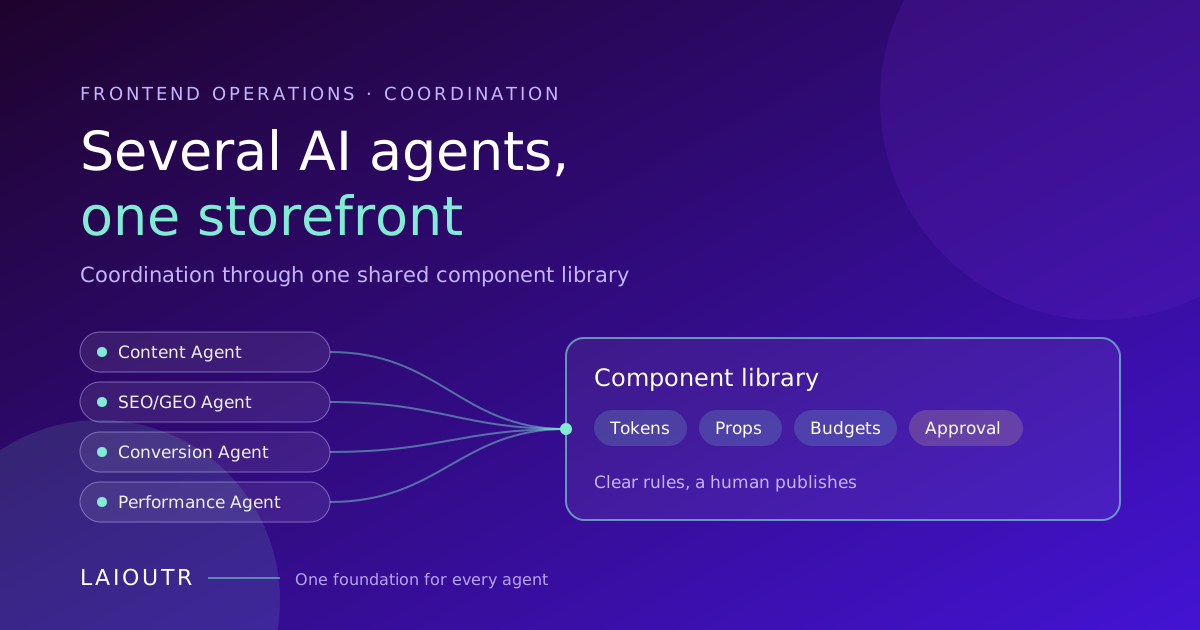Several AI Agents, One Storefront: Coordination Without Collisions
When several AI agents work on the same storefront, conflicts rarely happen between the agents thems…](https://www.laioutr.com/en/blog/frontend-operations-multi-agent-coordination-storefront-2026)
[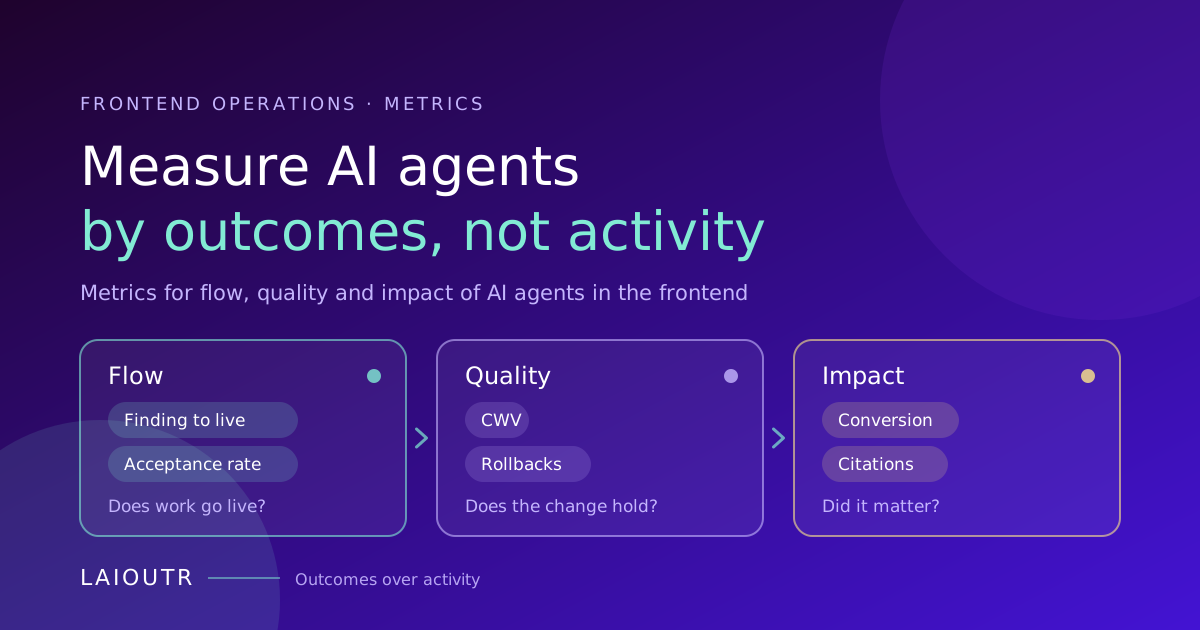Measuring AI Agents by Outcomes: Agentic Frontend Management Metrics
AI agents in the frontend should be measured by outcomes, not by activity. The number of prompts, ge…](https://www.laioutr.com/en/blog/frontend-operations-measuring-ai-agents-outcomes-2026)
[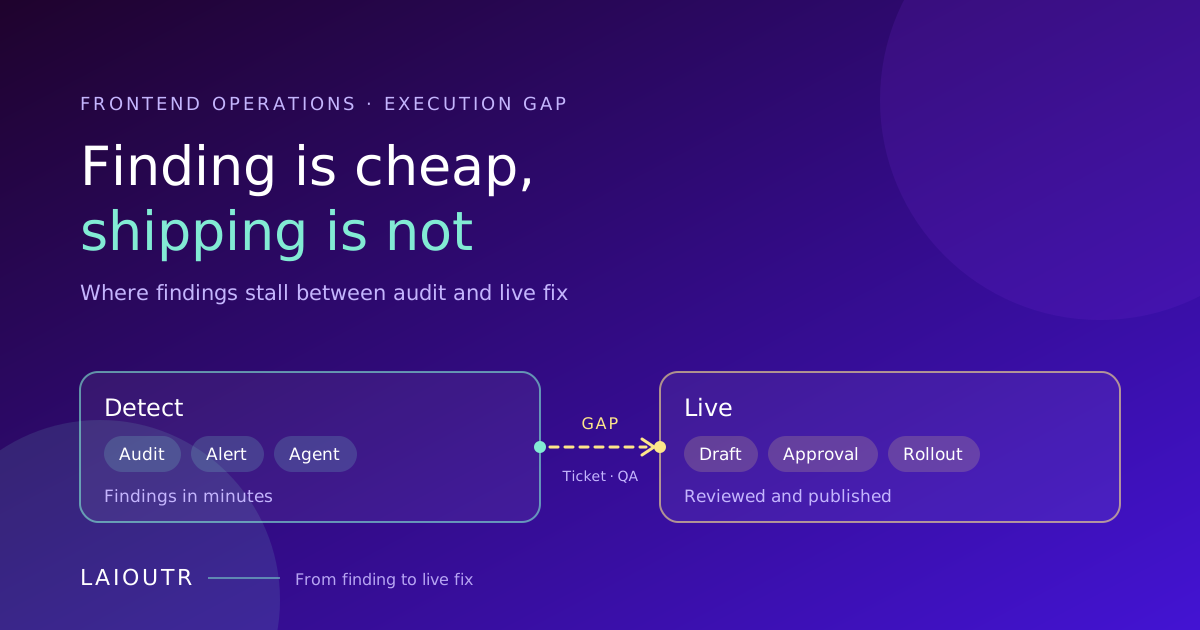The Execution Gap in the Frontend: Finding Is Cheap, Shipping Is Not
The execution gap in the frontend is the time, and the number of handoffs, between "we know wha…](https://www.laioutr.com/en/blog/frontend-operations-execution-gap-detect-vs-deploy-2026)
[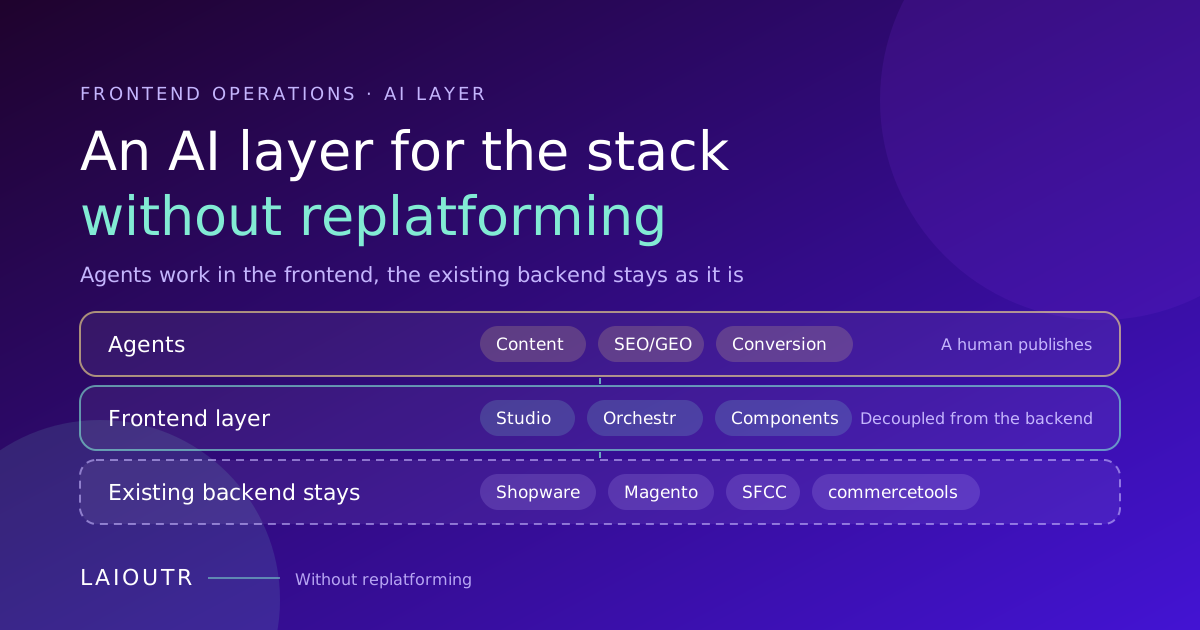Adding an AI Layer to an Existing Commerce Stack Without Replatforming
An AI layer can be added to an existing commerce stack without replacing the shop system. The most p…](https://www.laioutr.com/en/blog/frontend-operations-ai-layer-existing-stack-without-replatforming-2026)
[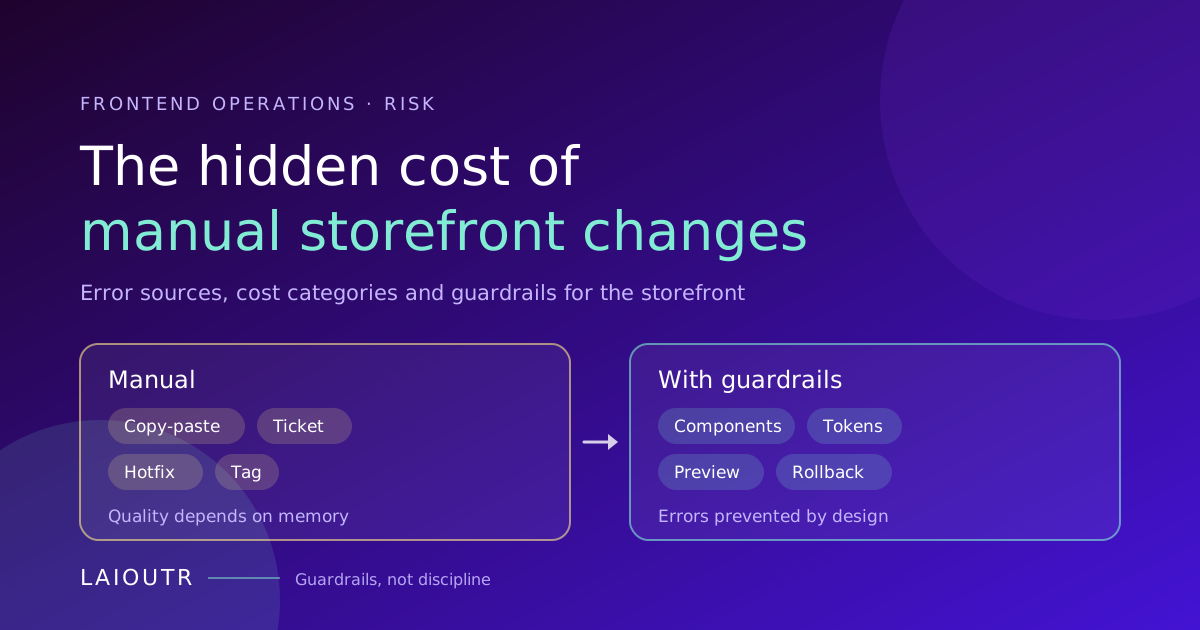The Hidden Cost of Manual Storefront Changes and How to Cut It
Manual frontend changes are the many small edits that keep a storefront running day to day: a new ba…](https://www.laioutr.com/en/blog/frontend-operations-hidden-cost-manual-storefront-changes-2026)
[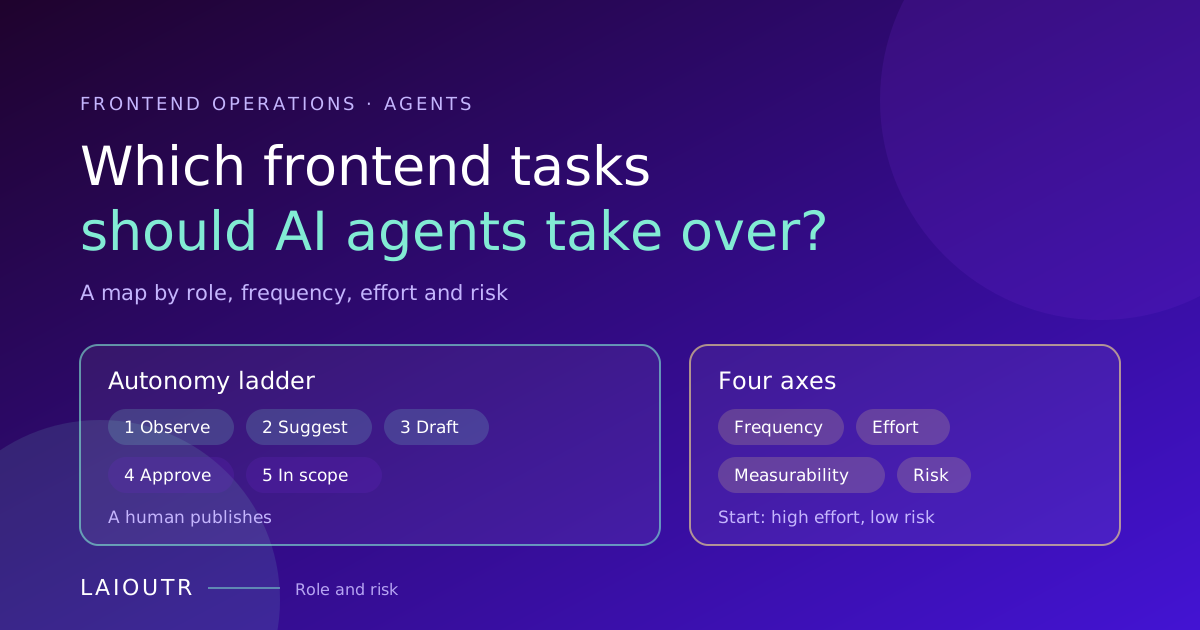Which Frontend Tasks Should AI Agents Take Over? Role and Risk Map
AI agents should first take over the frontend tasks that come up often, involve a lot of manual work…](https://www.laioutr.com/en/blog/frontend-operations-agent-task-map-role-risk-2026)
[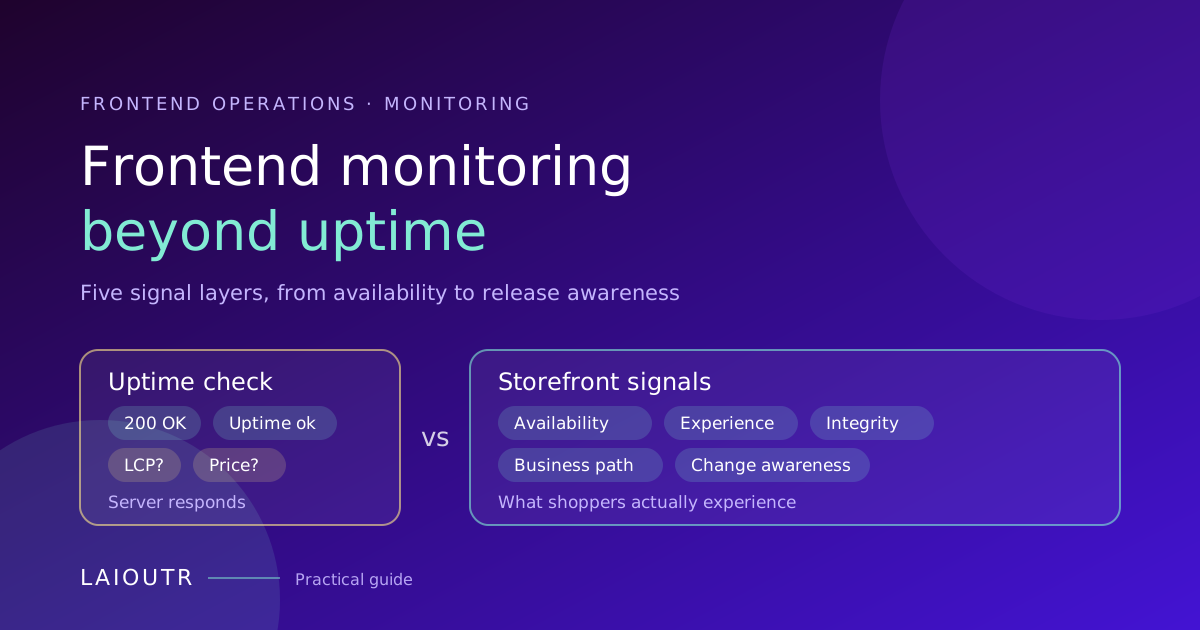Frontend Monitoring Beyond Uptime: Signals a Storefront Needs
Frontend monitoring beyond uptime means checking a storefront not only for availability but for what…](https://www.laioutr.com/en/blog/frontend-operations-monitoring-beyond-uptime-2026)
[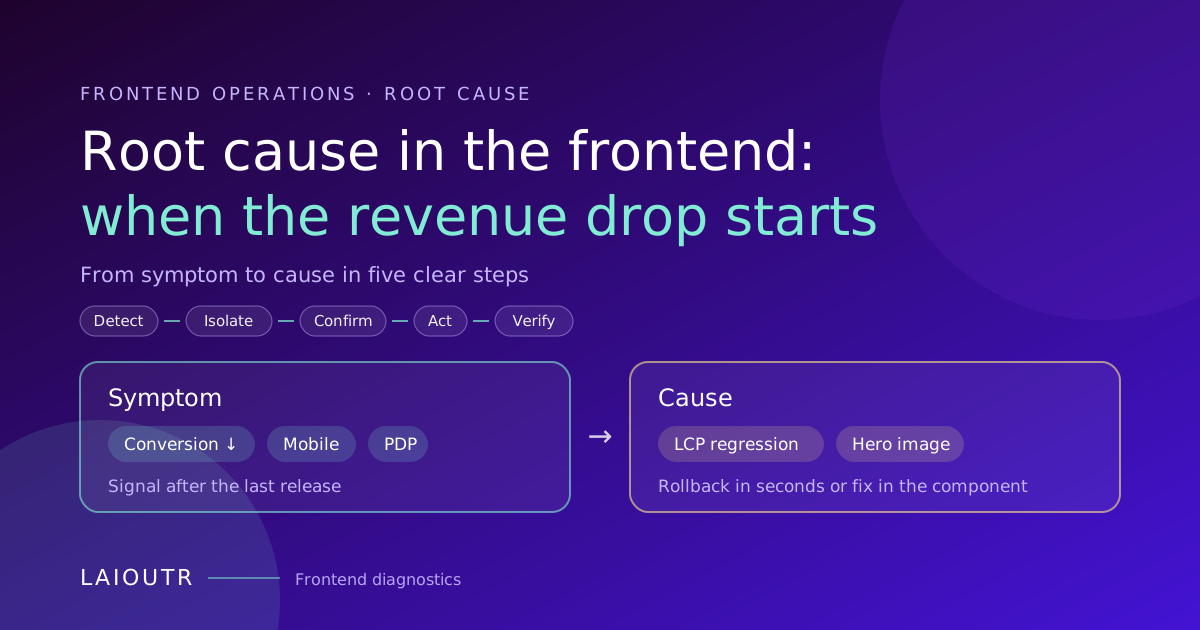Root Cause in the Frontend: When Revenue Drops Start in the Storefront
When revenue or conversion rate drops suddenly, the cause often is not traffic, pricing or the comme…](https://www.laioutr.com/en/blog/frontend-operations-root-cause-revenue-drop-storefront-2026)
[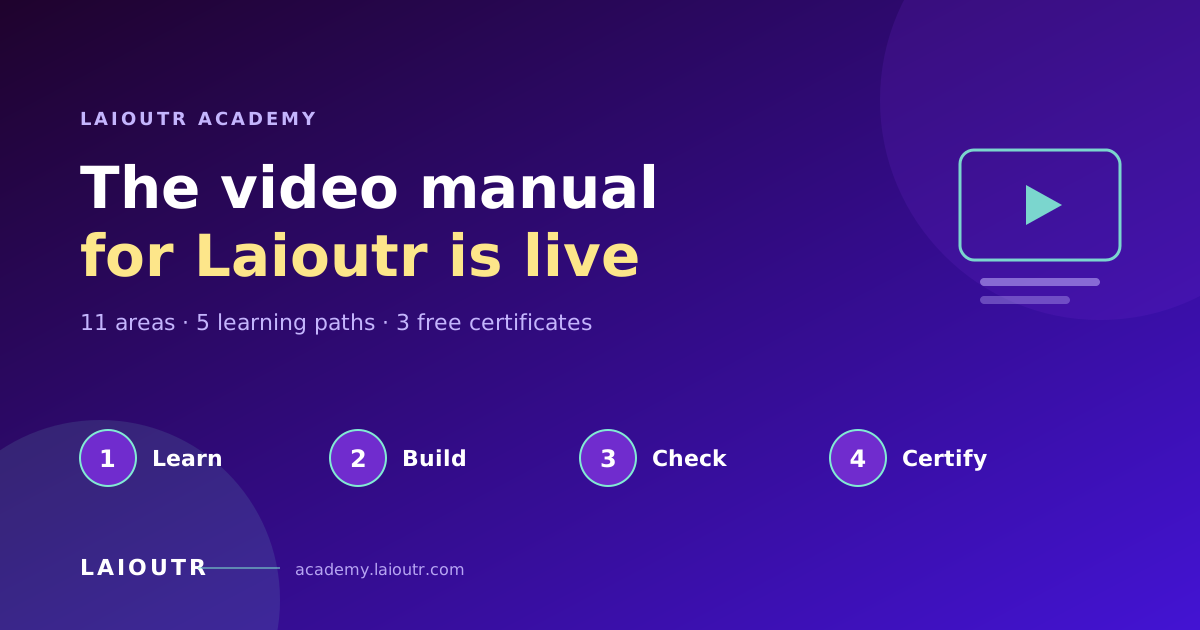Laioutr Academy Is Live: The Video Manual for Laioutr
Since October 15, 2026, the Laioutr Academy has been live at academy.laioutr.com. It is the user man…](https://www.laioutr.com/en/blog/laioutr-academy-launch-video-manual-certification)
[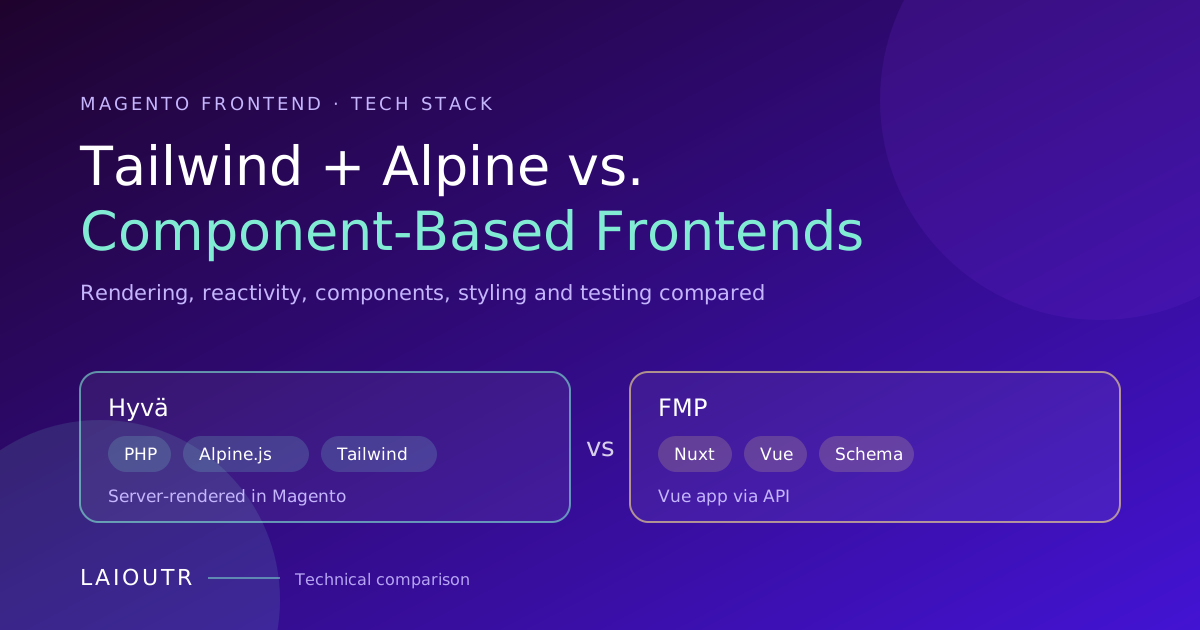Tailwind + Alpine vs. Component-Based Frontends for Magento
Hyvä renders Magento pages on the server with PHP templates and layout XML, adds interactivity throu…](https://www.laioutr.com/en/blog/tailwind-alpine-magento-vs-component-based-frontend-2026)
[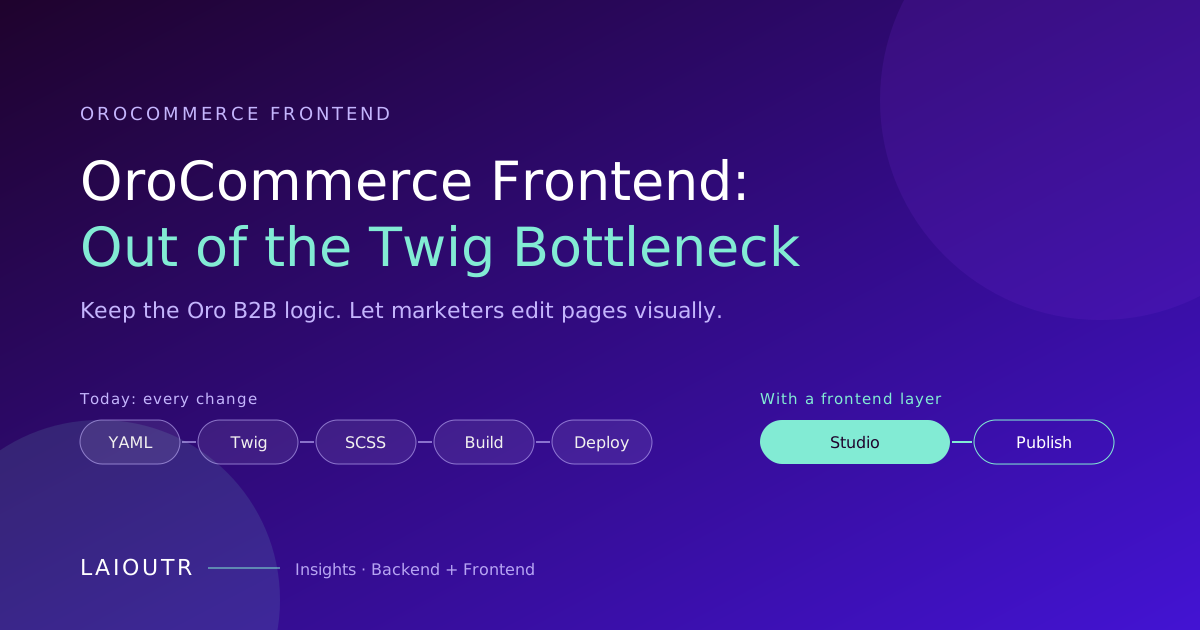OroCommerce Frontend: Out of the Twig and Layouts Bottleneck
The OroCommerce frontend is a server-rendered storefront built from Symfony bundles, OroLayouts and …](https://www.laioutr.com/en/blog/orocommerce-frontend-twig-layouts-bottleneck)
[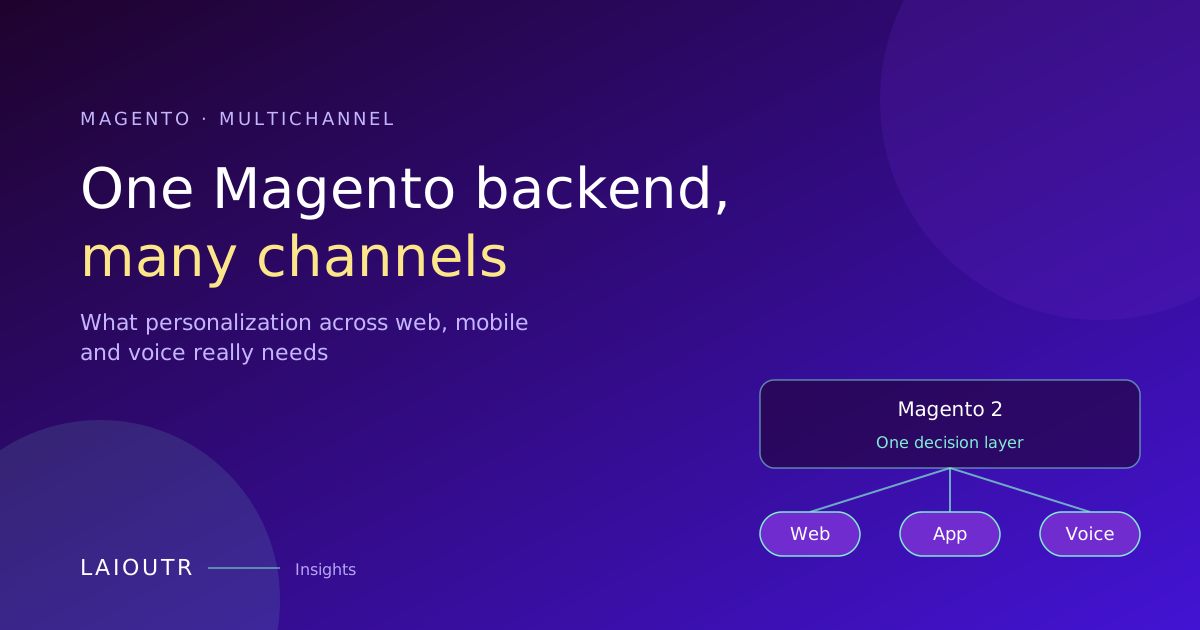One Magento Backend, Many Channels: Personalization in Practice
Personalization across web, mobile and voice on a single Magento backend does not start with a featu…](https://www.laioutr.com/en/blog/magento-multichannel-personalization-web-mobile-voice-2026)
[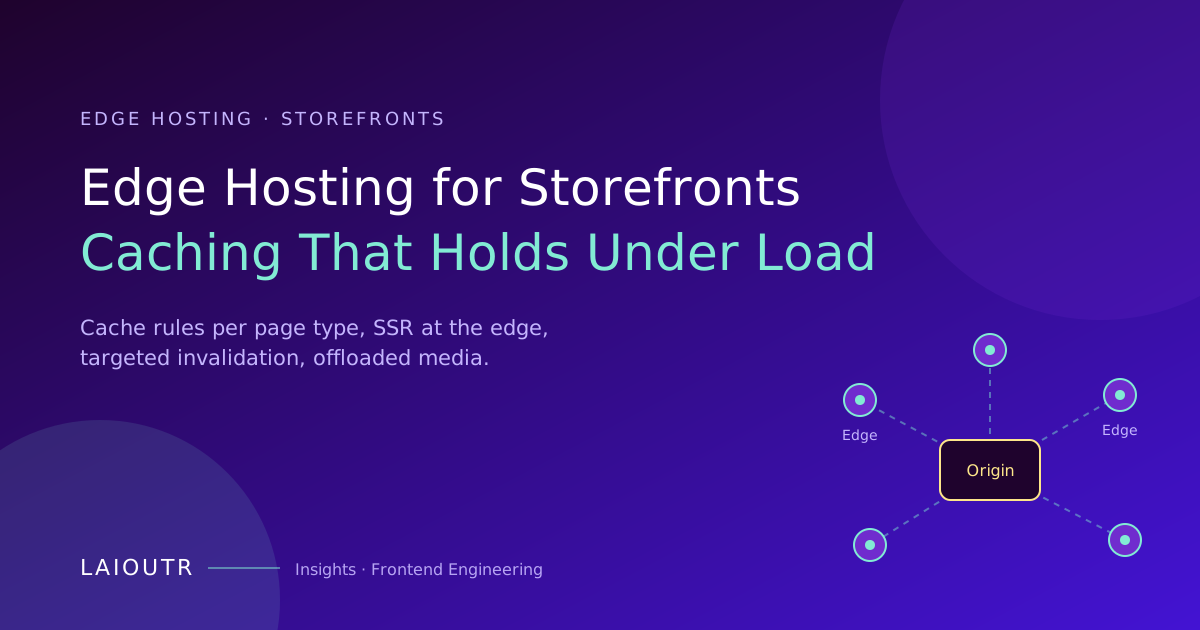Edge Hosting for Storefronts: Caching That Holds Under Peak Load
Edge hosting keeps a storefront fast under load when most requests never reach the origin: pages and…](https://www.laioutr.com/en/blog/edge-hosting-storefronts-peak-traffic-caching-2026)
[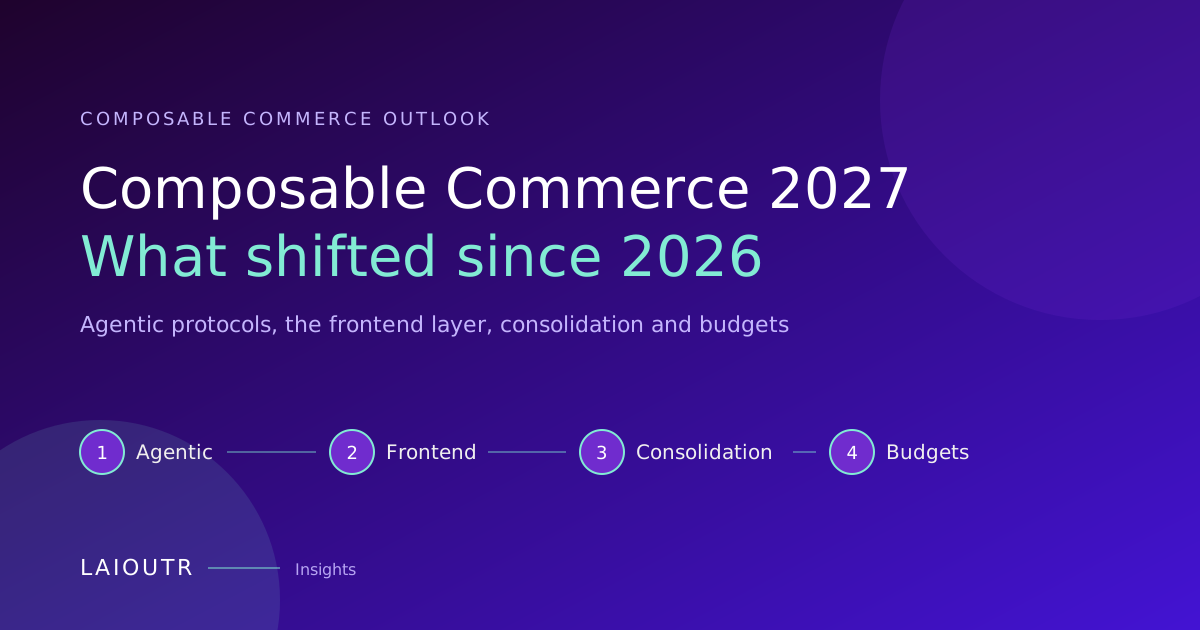Composable Commerce 2027: What Shifted and What Comes Next
Composable commerce enters 2027 with a different agenda than a year ago. The architecture question i…](https://www.laioutr.com/en/blog/composable-commerce-2027-outlook)
[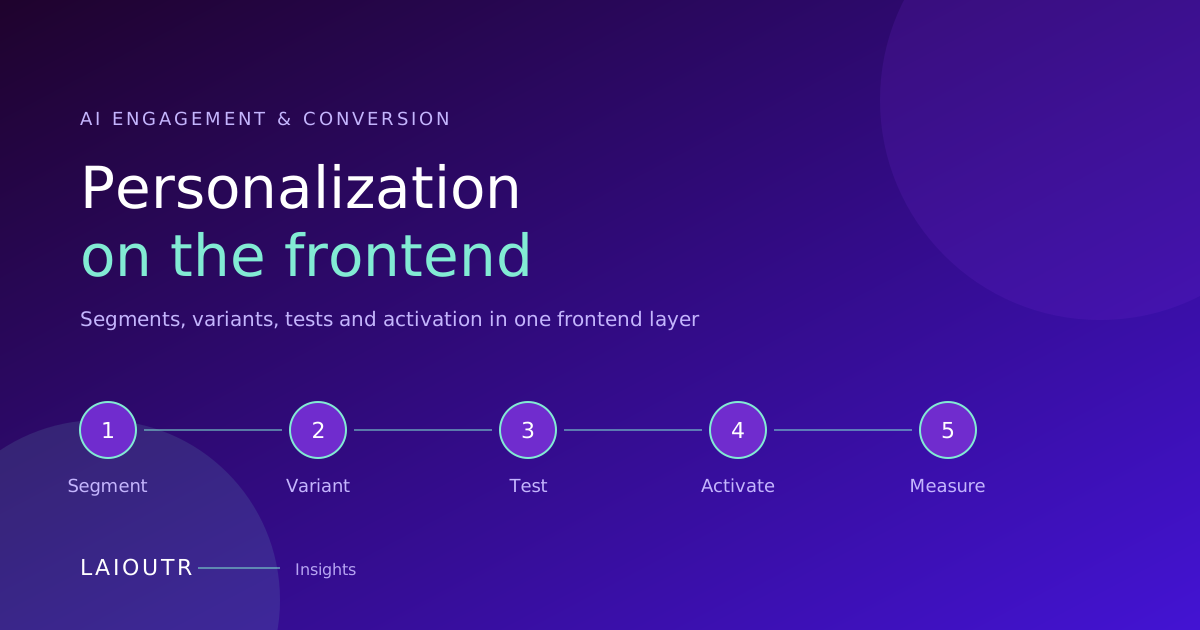AI Engagement and Conversion: Personalization on the Frontend
AI-driven engagement and conversion on the frontend rests on five mechanics: segments decide who see…](https://www.laioutr.com/en/blog/ai-engagement-conversion-frontend-personalization)
## Apps for the Laioutr platform
[View all apps](https://www.laioutr.com/en/apps)
[](https://www.laioutr.com/en/apps/shopify)
Laioutr
[Shopify](https://www.laioutr.com/en/apps/shopify)
Shopify is a commerce platform for selling online and in physical retail.
[](https://www.laioutr.com/en/apps/shopware)
Laioutr
[Shopware](https://www.laioutr.com/en/apps/shopware)
Shopware is a flexible ecommerce platform from Europe for product catalogs and omnichannel commerce.
[](https://www.laioutr.com/en/apps/adobe-commerce)
Laioutr
[Adobe Commerce](https://www.laioutr.com/en/apps/adobe-commerce)
Adobe Commerce is an enterprise commerce platform for complex, global B2C and B2B scenarios.
Planned
[](https://www.laioutr.com/en/apps/b2b-sellers)
Laioutr
[B2Bsellers](https://www.laioutr.com/en/apps/b2b-sellers)
B2B suite for Shopware that turns an online store into a professional B2B commerce platform.
Planned
[](https://www.laioutr.com/en/apps/commerce-layer)
Laioutr
[Commerce Layer](https://www.laioutr.com/en/apps/commerce-layer)
Commerce Layer is a headless commerce platform for making inventory and catalogs available online.
[](https://www.laioutr.com/en/apps/commercetools)
Laioutr
[Commercetools](https://www.laioutr.com/en/apps/commercetools)
Commercetools is a SaaS-based headless ecommerce platform used worldwide.
[](https://www.laioutr.com/en/apps/emporix)
Laioutr
[Emporix](https://www.laioutr.com/en/apps/emporix)
Emporix is a composable, API-first commerce platform for scalable B2B and B2C scenarios.
Planned
[](https://www.laioutr.com/en/apps/hcl-software)
Laioutr
[HCL Software](https://www.laioutr.com/en/apps/hcl-software)
Enterprise suite for digital commerce and experience with extensive configurability.
Planned
[](https://www.laioutr.com/en/apps/intershop)
Laioutr
[Intershop](https://www.laioutr.com/en/apps/intershop)
Enterprise commerce platform for complex B2B and B2C business models.
Planned
[](https://www.laioutr.com/en/apps/magento-2)
Laioutr
[Magento 2](https://www.laioutr.com/en/apps/magento-2)
Widely used, extensible commerce platform for B2C and B2B scenarios.
[](https://www.laioutr.com/en/apps/oxid-eshop)
Laioutr
[OXID eShop](https://www.laioutr.com/en/apps/oxid-eshop)
OXID eShop is an extensible commerce platform for complex B2B and B2C requirements.
Planned
[](https://www.laioutr.com/en/apps/patchworks)
Laioutr
[Patchworks](https://www.laioutr.com/en/apps/patchworks)
Patchworks is a low-code iPaaS that connects ecommerce, ERP, WMS, 3PL, and marketplaces.
Planned
[](https://www.laioutr.com/en/apps/PrestaShop)
Laioutr
[Prestashop](https://www.laioutr.com/en/apps/PrestaShop)
Open-source commerce platform for small and midsize merchants in Europe and beyond.
Planned
[](https://www.laioutr.com/en/apps/saleor)
Laioutr
[Saleor](https://www.laioutr.com/en/apps/saleor)
Open-source, API-first commerce platform built on GraphQL for custom storefronts.
Planned
[](https://www.laioutr.com/en/apps/salesforce-commerce-cloud)
Laioutr
[Salesforce Commerce Cloud](https://www.laioutr.com/en/apps/salesforce-commerce-cloud)
Salesforce Commerce Cloud is a cloud-based enterprise commerce platform for businesses of any size.
Planned
[](https://www.laioutr.com/en/apps/sap-commerce-cloud)
Laioutr
[SAP Commerce Cloud](https://www.laioutr.com/en/apps/sap-commerce-cloud)
Enterprise commerce platform for complex catalogs, pricing models, and omnichannel journeys.
Planned
[](https://www.laioutr.com/en/apps/scayle)
Laioutr
[Scayle](https://www.laioutr.com/en/apps/scayle)
SCAYLE is a commerce engine that helps brands and retailers scale their business.
Planned
[](https://www.laioutr.com/en/apps/spryker)
Laioutr
[Spryker](https://www.laioutr.com/en/apps/spryker)
Composable commerce platform for sophisticated B2B and B2C business models.
[](https://www.laioutr.com/en/apps/sylius)
Laioutr
[Sylius](https://www.laioutr.com/en/apps/sylius)
Sylius is a developer-friendly ecommerce framework for B2C and B2B shopping experiences.
Planned
[](https://www.laioutr.com/en/apps/vendure)
Laioutr
[Vendure](https://www.laioutr.com/en/apps/vendure)
Vendure is a headless commerce platform for businesses with complex requirements.
Coming Soon
[](https://www.laioutr.com/en/apps/vtex)
Laioutr
[VTEX](https://www.laioutr.com/en/apps/vtex)
Cloud-native, composable commerce platform for B2B and B2C at scale.
Planned
[](https://www.laioutr.com/en/apps/websale)
Laioutr
[Websale](https://www.laioutr.com/en/apps/websale)
Stable, enterprise-ready commerce backend for complex retail environments.
Strategy call
## The frontend as a control layer
A conversation about stack, roadmap and replatforming scenario. The outcome: a clear picture of how Laioutr fits, what it costs and how fast the go-live can happen.
*"After 30 minutes, we knew Laioutr makes our replatforming feasible."*
*Daniel B., CEO,* [*hygibox.de*](https://hygibox.de)
[Book a demo](https://www.laioutr.com/en/contact)
## Structured Data
```json
{
"@context": "https://schema.org",
"@graph": [
{
"@type": "Organization",
"@id": "https://www.laioutr.com/#identity",
"name": "Laioutr",
"legalName": "Laioutr GmbH",
"url": "https://www.laioutr.com/",
"logo": {
"@type": "ImageObject",
"url": "https://www.laioutr.com/laioutr-logo.png",
"width": 400,
"height": 400
},
"email": "info@laioutr.com",
"telephone": "+49 30 75435715",
"address": {
"@type": "PostalAddress",
"streetAddress": "Münchweilersteig 5",
"postalCode": "12559",
"addressLocality": "Berlin",
"addressCountry": "DE"
},
"vatID": "DE450905846",
"sameAs": [
"https://www.linkedin.com/company/laioutr",
"https://www.youtube.com/@Laioutr",
"https://x.com/laioutr"
]
},
{
"@type": "WebSite",
"@id": "https://www.laioutr.com/en/#website",
"url": "https://www.laioutr.com/en/",
"name": "Laioutr",
"inLanguage": "en",
"publisher": {
"@id": "https://www.laioutr.com/#identity"
}
},
{
"@type": "BlogPosting",
"@id": "https://www.laioutr.com/en/blog/cms-migration-incremental-evolution#article",
"headline": "The Strategic Case for Evolutionary CMS Migration: Why Big Bangs Fail and Iteration Wins",
"description": "The strategic case for evolutionary CMS migration: why big bangs fail and iteration wins for content platforms.",
"image": [
"https://eu-west-2.graphassets.com/cmii2mlqi0dux06l5543v7nkc/cmnucypviw8mi07mgmwsd5asa"
],
"datePublished": "2026-06-30T17:26:30.072327+00:00",
"dateModified": "2026-06-30T17:26:29.819285+00:00",
"inLanguage": "en",
"articleSection": "Insights",
"keywords": "Industry & Trends",
"author": {
"@type": "Person",
"name": "Marcel Thiesies",
"jobTitle": "Co-Founder & CEO, Laioutr",
"image": "https://eu-west-2.graphassets.com/cmii2mlqi0dux06l5543v7nkc/cmj01b962364n07lb0iguvts5"
},
"publisher": {
"@id": "https://www.laioutr.com/#identity"
},
"mainEntityOfPage": {
"@id": "https://www.laioutr.com/en/blog/cms-migration-incremental-evolution#webpage"
},
"isPartOf": {
"@id": "https://www.laioutr.com/en/#website"
}
},
{
"@type": "WebPage",
"@id": "https://www.laioutr.com/en/blog/cms-migration-incremental-evolution#webpage",
"url": "https://www.laioutr.com/en/blog/cms-migration-incremental-evolution",
"name": "The Strategic Case for Evolutionary CMS Migration: Why Big Bangs Fail and Iteration Wins",
"description": "The strategic case for evolutionary CMS migration: why big bangs fail and iteration wins for content platforms.",
"inLanguage": "en",
"isPartOf": {
"@id": "https://www.laioutr.com/en/#website"
},
"breadcrumb": {
"@id": "https://www.laioutr.com/en/blog/cms-migration-incremental-evolution#breadcrumb"
},
"primaryImageOfPage": {
"@type": "ImageObject",
"url": "https://eu-west-2.graphassets.com/cmii2mlqi0dux06l5543v7nkc/cmnucypviw8mi07mgmwsd5asa"
},
"datePublished": "2026-06-30T17:26:30.072327+00:00",
"dateModified": "2026-06-30T17:26:29.819285+00:00",
"mainEntity": {
"@id": "https://www.laioutr.com/en/blog/cms-migration-incremental-evolution#article"
}
},
{
"@type": "BreadcrumbList",
"@id": "https://www.laioutr.com/en/blog/cms-migration-incremental-evolution#breadcrumb",
"itemListElement": [
{
"@type": "ListItem",
"position": 1,
"name": "Laioutr",
"item": "https://www.laioutr.com/en/"
},
{
"@type": "ListItem",
"position": 2,
"name": "Insights",
"item": "https://www.laioutr.com/en/blogs/insights"
},
{
"@type": "ListItem",
"position": 3,
"name": "The Strategic Case for Evolutionary CMS Migration: Why Big Bangs Fail and Iteration Wins"
}
]
}
]
}
```