---
title: "Building a Composable Commerce Stack: A Blueprint"
canonical_url: "https://www.laioutr.com/en/blog/composable-stack"
locale: en
meta:
description: "A practical guide to assembling a composable commerce stack: how the pieces connect, how data flows, and which integration patterns work in production."
"og:description": "A practical guide to assembling a composable commerce stack: how the pieces connect, how data flows, and which integration patterns work in production."
"og:title": "Building a Composable Commerce Stack: A Blueprint"
---

# Building a Composable Commerce Stack: A Real-World Blueprint
Table of contents
1. [1.Understanding the Composable Commerce Foundation](#understanding-the-composable-commerce-foundation)
2. [2.The Core Components of a Composable Stack](#the-core-components-of-a-composable-stack)
3. [3.Integration Patterns in Practice](#integration-patterns-in-practice)
4. [4.Challenges and Solutions](#challenges-and-solutions)
5. [5.Building Your Composable Stack Step by Step](#building-your-composable-stack-step-by-step)
6. [6.Measuring Composable Success](#measuring-composable-success)
7. [7.The Path Forward](#the-path-forward)
The promise of composable commerce sounds elegant in theory; selecting best-of-breed solutions and connecting them through APIs creates flexibility, scalability, and faster innovation. But when you move from whiteboard diagrams to actual implementation, questions emerge. How do these pieces really fit together? What does the data flow look like? Which integration patterns actually work in production? This guide walks you through assembling a fully functional composable commerce stack, using real examples of tools and technologies that power successful enterprise implementations today.
## Understanding the Composable Commerce Foundation
Before diving into architecture specifics, let's establish what composable commerce truly means beyond the buzzwords. Composable commerce represents a fundamental shift from monolithic systems where all commerce functionality, content management, and customer experience layers are tightly coupled within a single platform. Instead, you build from modular, specialized components that excel at their specific domain.
The MACH acronym provides a useful framework: Microservices architecture, API-first design, Cloud-native infrastructure, and Headless separation of frontend from backend systems. But MACH describes principles rather than a specific product stack. Your actual composable stack is what you construct by selecting and integrating specific tools.
The real power of composability emerges when you recognize that no single vendor solves every problem equally well. A platform that excels at product information management may not be the best choice for content authoring. A commerce engine optimized for B2B transactions might not deliver the customer experience features needed for B2C. By choosing best-of-breed solutions for each domain and wiring them together through APIs, you gain freedom that monolithic platforms simply cannot offer.
## The Core Components of a Composable Stack
A functional composable commerce stack typically includes five essential layers, though your specific implementation may vary based on business requirements.
### The Commerce Engine: Your Transaction Foundation
At the heart of your stack sits the commerce engine, responsible for product catalogs, pricing, inventory management, cart operations, orders, and payments. This component handles the core business logic of buying and selling. Rather than embedding this within a website platform, you implement it as an independent, API-driven service.
Consider a commerce engine like commercetools, which was built from the ground up with composability in mind. It exposes every capability through REST APIs and GraphQL, meaning your frontend never communicates directly with internal commerce databases. Instead, applications query the commerce engine for product data, manage customer carts, and submit orders through well-defined API contracts. This separation means you can completely redesign your customer-facing applications without touching commerce logic.
The commerce engine should handle multiple sales channels. A B2C mobile app, a B2B wholesale portal, and an in-store kiosk might all query the same commerce engine simultaneously, each requesting data in their preferred format. The engine manages inventory consistency across channels, ensures pricing rules apply correctly regardless of entry point, and maintains accurate order records for all transactions.
### Content Management: Beyond Blocks and Pages
Traditional CMS platforms have long tried to be commerce systems and content systems simultaneously, typically excelling at neither. A content management system in a composable stack focuses purely on content: authoring, approval workflows, versioning, and publishing. It does not contain commerce logic, pricing databases, or transaction processing.
Content management systems like Contentstack exemplify the headless CMS approach. Content editors compose pages, blog articles, and marketing campaigns using a structured interface. The CMS exposes this content through APIs rather than rendering HTML pages directly. This separation enables several powerful patterns. The same content might power a website, a mobile application, and even a voice interface simultaneously, each consuming the same API. When you launch a new digital channel, you do not need to re-author content; you simply implement a new consumer that queries the same CMS APIs.
Within your commerce context, the CMS handles product descriptions, landing pages, marketing campaigns, promotional banners, and editorial content. Product data itself typically lives in the commerce engine, while marketing narrative and positioning reside in the CMS. This separation prevents situations where developers must edit a monolithic platform to change marketing copy, and marketers are blocked waiting for technical resources to update a product page layout.
### Digital Asset Management: Organizing Visual Excellence
E-commerce thrives on images. Product photography, lifestyle shots, variant-specific photos, and marketing graphics must be organized, optimized, and delivered quickly across multiple channels. A dedicated digital asset management system owns this responsibility in a composable stack.
Digital asset management solutions like Cloudinary handle far more than simply storing images. They automatically optimize files for different devices and formats, apply transformations on the fly, manage version histories, and control distribution. Rather than developers manually creating thumbnail versions or cropping variants, the DAM system provides intelligent endpoints that resize, compress, and format images based on the requesting application's parameters.
In a composable architecture, your commerce engine contains references to assets stored in the DAM, but not the assets themselves. Your CMS similarly references DAM assets when building pages. This prevents duplicate storage, ensures every channel accesses the highest quality source asset, and creates a single point of control for asset lifecycle management. When you discover that a product photo needs updating, you replace one asset in the DAM, and instantly every system consuming that asset reflects the change.
### The Experience Platform: Orchestrating Personalization
Between the composable backend services and customer-facing applications sits an experience platform, also called a digital experience platform or DXP. This component receives customer context and requests, orchestrates communication with the commerce engine, CMS, and other services, and returns properly formatted responses optimized for the specific channel.
An experience platform serves several critical functions in a composable stack. First, it handles personalization logic. Rather than embedding personalization rules directly in the commerce engine or CMS, the experience platform evaluates customer segments, behavior, preferences, and context, then shapes responses accordingly. The same API request for "featured products" might return different results for new customers versus loyal ones, based on rules defined in the experience platform.
Second, the experience platform manages real-time integration. It might need to call the commerce engine for current inventory, fetch personalized recommendations from a separate recommendations service, and pull marketing content from the CMS, all within a single request. The experience platform coordinates these calls, combines responses, and returns unified data to the frontend application.
Third, it handles channel-specific transformation. A mobile app requesting product information might need different data structures than a web application. The experience platform translates between the standardized APIs of backend components and the specific formats each frontend expects. This prevents each frontend team from needing intimate knowledge of every backend system.
## Integration Patterns in Practice
Understanding the components is one thing; seeing how they actually communicate reveals the real-world complexity and elegance of composable architecture.
### The Product Page Request Flow
Consider a customer viewing a product page on your mobile app. The app does not query the commerce engine, CMS, and DAM separately; doing so would create excessive latency as the device waited for three separate roundtrips. Instead, the mobile app calls a single endpoint on the experience platform, requesting "product details for SKU-12345."
The experience platform receives this request and orchestrates a symphony of backend calls. It queries the commerce engine for current inventory levels, pricing (which might vary by customer segment), and related product data. Simultaneously, it requests product description and marketing content from the CMS. It also retrieves asset references from the DAM, transforming them into optimized image URLs for mobile display. If the company runs a recommendations engine, the platform queries that service for related products. Within milliseconds, the experience platform combines these responses and returns a single JSON payload containing everything the mobile app needs to render a complete product page.
This architecture delivers several benefits over monolithic approaches. If the commerce engine experiences a temporary outage, your CMS and DAM remain accessible; the experience platform might return cached product information while waiting for the commerce engine to recover. If the CMS experiences high load, the experience platform can increase cache duration or fall back to previous versions of content. If the DAM API has issues, the experience platform might serve images from a CDN cache rather than failing the entire request.
### Omnichannel Inventory Synchronization
A retail company with physical stores and e-commerce channels must maintain accurate inventory across all touchpoints. With a composable stack, inventory truth lives in the commerce engine. Your point-of-sale system in stores communicates inventory changes to the commerce engine through APIs. Your e-commerce platform queries the commerce engine for real-time stock levels. Your fulfillment system reads orders from the commerce engine and updates inventory as items are picked and shipped.
This works because the commerce engine is the single source of truth, accessed by all channels through standardized APIs. When a customer purchases an item online, the commerce engine immediately decrements stock. When a store associate sells that same product in-store, the POS system updates the commerce engine. Because all systems query the same API, every channel sees consistent inventory within moments.
A monolithic system creates this same data consistency within its own databases, but coordinating multiple monolithic systems across channels requires complex middleware and introduces synchronization delays and failure modes.
### Content Staging and Preview Workflows
Marketing teams need to preview campaign content before publication. With a composable stack, the workflow becomes powerful and efficient. Content authors compose campaigns in the CMS, including product selections and pricing that come from the commerce engine. The CMS provides a preview URL that calls the experience platform with a "preview" parameter. The experience platform queries preview versions of content from the CMS while pulling live data from the commerce engine, allowing marketers to see exactly how the campaign will appear to customers.
When the marketing team approves the campaign, they publish the content in the CMS. The published content becomes available through the standard API, and frontend applications automatically display the new campaign. If the campaign includes special pricing, developers can deploy the pricing rules to the commerce engine in advance, with activation occurring at a scheduled time.
This separation prevents the collision between content and commerce teams that occurs in monolithic systems. Developers do not need to deploy code to launch marketing campaigns. Content authors do not need technical skills to configure product selections.
## Challenges and Solutions
Building a composable stack introduces challenges that monolithic systems avoid, and successful implementations address these thoughtfully.
### API Dependency and Latency
Each system in your composable stack is separate, which means frontend applications must make network calls to multiple backend services. This creates potential latency issues. The solution is the experience platform layer, which consolidates calls and can cache results aggressively.
Another pattern is asynchronous data preparation. Rather than building product pages on-demand, pre-compute and cache frequently accessed product information. Update these caches when content or products change, ensuring fresh data is always available.
### Complex Data Relationships
When products live in the commerce engine but marketing images live in the DAM and descriptions live in the CMS, maintaining these relationships becomes critical. The system must ensure that product SKU references are consistent across all systems. Most composable architectures solve this through IDs and references. The commerce engine contains a product record with an ID and a reference to the corresponding DAM asset. The CMS contains content entries that reference the same product ID. The experience platform resolves these references when building responses.
### Governance and Standards
With multiple systems and teams managing different components, governance becomes essential. Standards must define API response formats, authentication approaches, and data validation rules. Without strong governance, each team implements integration differently, creating a chaotic system.
Successful governance includes API standards documents, shared schema definitions, and clear responsibility boundaries. Your commerce engine team owns product data structure; your CMS team owns content data structure. The experience platform team owns how these are combined and exposed to frontends.
### Operational Complexity
Operating multiple systems increases complexity compared to a single monolithic platform. Monitoring must track the health of each component and the integration between them. When something fails, identifying the root cause requires understanding integration points, not just individual systems.
The solution is comprehensive observability. Implement distributed tracing so a single customer request can be tracked across the entire stack. Centralize logging so you can search for errors across all systems simultaneously. Create dashboards that show the health of each component and how they interact.
## Building Your Composable Stack Step by Step
Assembling a working composable stack requires thoughtful sequencing. Start with the core, then add layers.
### Phase One: Commerce Engine Foundation
Begin by selecting and implementing your commerce engine. This component handles your core business logic and must be right. Spend time understanding how it manages multi-currency pricing, inventory across channels, and order management. Get this working correctly before building dependent systems.
### Phase Two: Headless CMS
Implement your content management system alongside the commerce engine. Choose a CMS that is truly headless, exposing all content through APIs. Do not choose a CMS that tries to be a commerce system; this reintroduces the coupling you are trying to avoid.
### Phase Three: Digital Asset Management
Add a DAM system for managing all visual assets. Configure it to generate optimized variants automatically. Integrate it with both the CMS and commerce engine so product images are easily referenced from multiple places.
### Phase Four: Experience Platform
Build or implement an experience platform that sits between your frontends and backend services. This is where the real composability emerges. The experience platform orchestrates backend calls, handles caching, manages personalization, and shields frontends from backend complexity.
### Phase Five: Frontend Applications
Now build customer-facing applications confident that they have reliable, well-designed APIs to consume. You can build web applications, mobile apps, progressive web apps, or any channel you need, all consuming the same backend APIs.
## Measuring Composable Success
How do you know your composable stack is working well? Track these metrics.
**Time to Market**: Measure how quickly you can launch new features or campaigns. Composable stacks should reduce this significantly, as teams can work independently on different components.
**Deployment Frequency**: Count how often you deploy changes. Composable architectures enable high-frequency deployments because changing one component does not require coordinating across a large monolith.
**System Availability**: Monitor uptime for each component and for the system as a whole. Composable stacks should offer better overall availability because failure in one component does not necessarily take down the entire system.
**Time to Resolve Incidents**: When something breaks, how long does it take to identify and fix the problem? Composable stacks with good observability allow faster incident resolution.
**Developer Productivity**: Track how many features individual teams can deliver. When teams can work independently on different components, productivity should increase.
## The Path Forward
Building a composable commerce stack requires more upfront architectural thinking than deploying a monolithic system. But the investment pays dividends through flexibility, scalability, and the ability to innovate continuously. By understanding the core components, integration patterns, and implementation challenges, you can construct a stack that serves your business for years while remaining adaptable to future requirements.
The future of commerce is composable. The businesses winning today are those that recognize composability not as a technical implementation detail but as a competitive advantage that enables rapid experimentation, market responsiveness, and sustainable growth.
### **More from the Laioutr Platform**
- [Composable Digital Experience Platform](https://www.laioutr.com/en/composable-digital-experience-platform)
- [Agentic Frontend Management Platform](https://www.laioutr.com/en/agentic-frontend-management-platform)
- [Personalization](https://www.laioutr.com/en/product/personalization)
- [Composable Visual Page Builder](https://www.laioutr.com/en/composable-visual-page-builder)
- [Headless Frontend for commercetools](https://www.laioutr.com/en/headless-frontend-for-commercetools)
Related reading: [5 Editor-UX Patterns for Multi-Service Composable Stacks](https://www.laioutr.com/en/blog/visual-editor-composable-stack-ux-consistency-patterns-2026) and [The Composable Correction: 4 Engineering Patterns That Stick](https://www.laioutr.com/en/blog/composable-stack-correction-engineering-patterns-fmp-2026).
---
Share this article
[Share on Facebook](https://www.facebook.com/sharer/sharer.php?u=https%3A%2F%2Fwww.laioutr.com%2Fen%2Fblog%2Fcomposable-stack) [Share on X](https://x.com/intent/post?url=https%3A%2F%2Fwww.laioutr.com%2Fen%2Fblog%2Fcomposable-stack&text=) [Share on LinkedIn](https://www.linkedin.com/sharing/share-offsite/?url=https%3A%2F%2Fwww.laioutr.com%2Fen%2Fblog%2Fcomposable-stack) [Share on Pinterest](https://pinterest.com/pin/create/button/?url=https%3A%2F%2Fwww.laioutr.com%2Fen%2Fblog%2Fcomposable-stack&description=) [Share via email](mailto:?subject=&body=%0A%0Ahttps%3A%2F%2Fwww.laioutr.com%2Fen%2Fblog%2Fcomposable-stack)
## More articles on frontend and headless
Practical know-how for frontend development, smart agents, and headless
[To the blog](https://www.laioutr.com/en/blogs/insights)
[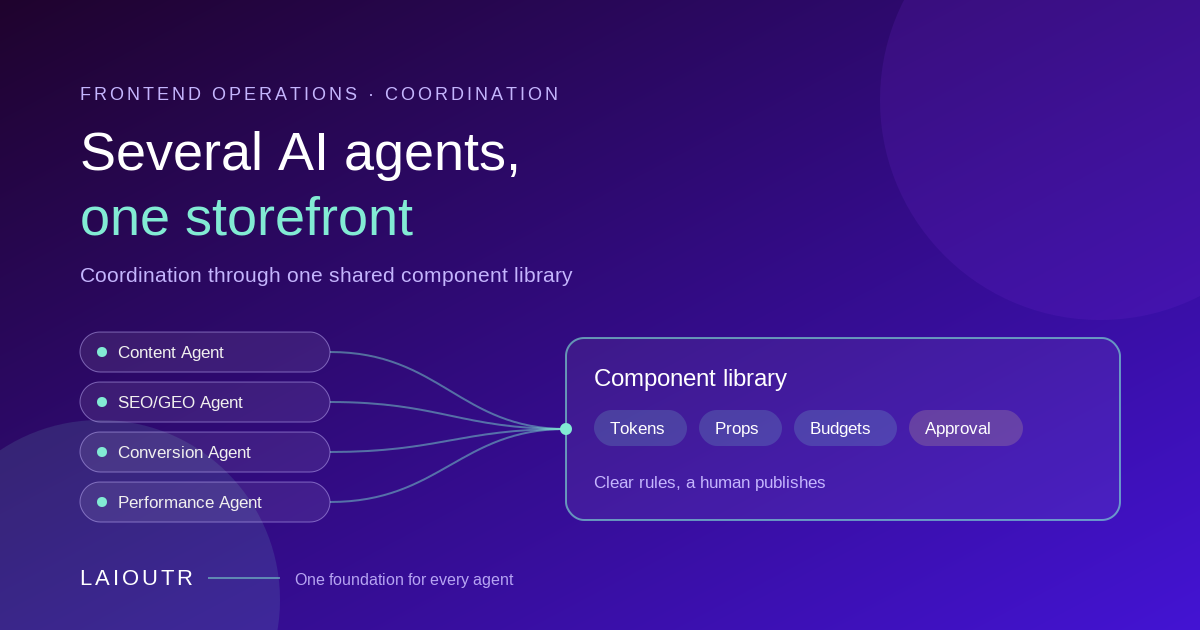Several AI Agents, One Storefront: Coordination Without Collisions
When several AI agents work on the same storefront, conflicts rarely happen between the agents thems…](https://www.laioutr.com/en/blog/frontend-operations-multi-agent-coordination-storefront-2026)
[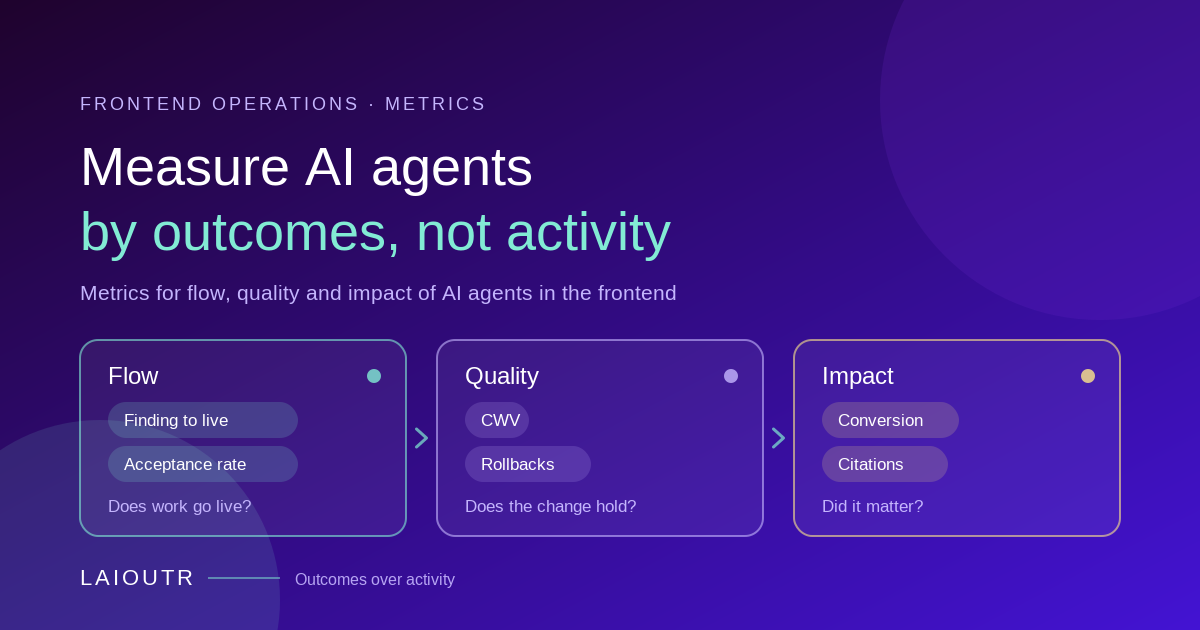Measuring AI Agents by Outcomes: Agentic Frontend Management Metrics
AI agents in the frontend should be measured by outcomes, not by activity. The number of prompts, ge…](https://www.laioutr.com/en/blog/frontend-operations-measuring-ai-agents-outcomes-2026)
[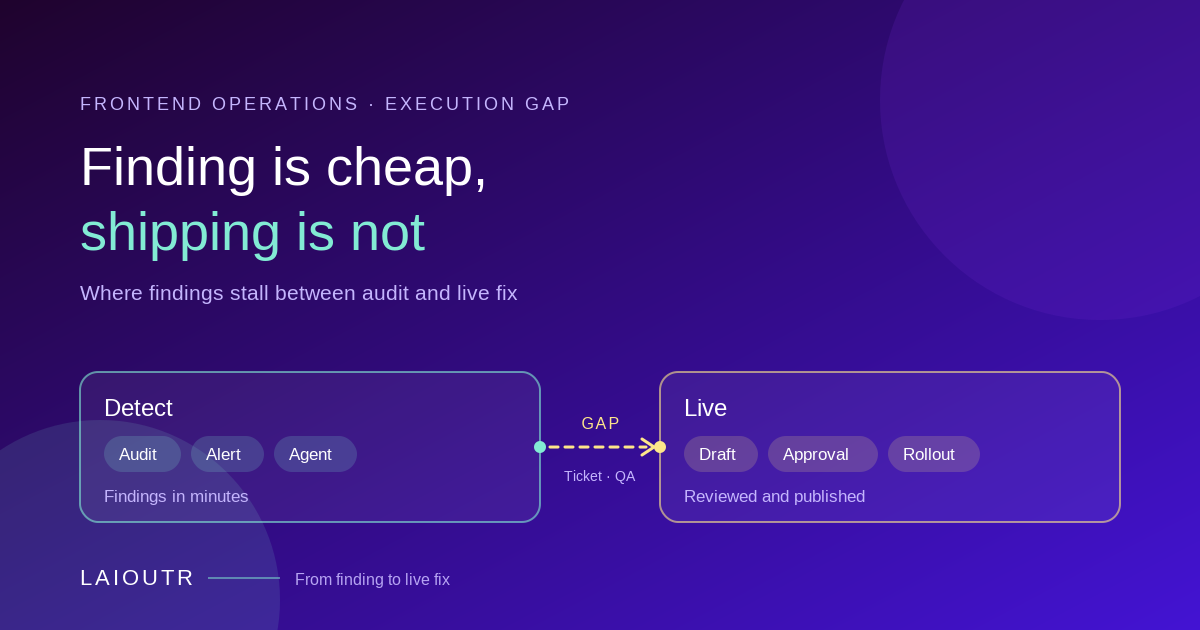The Execution Gap in the Frontend: Finding Is Cheap, Shipping Is Not
The execution gap in the frontend is the time, and the number of handoffs, between "we know wha…](https://www.laioutr.com/en/blog/frontend-operations-execution-gap-detect-vs-deploy-2026)
[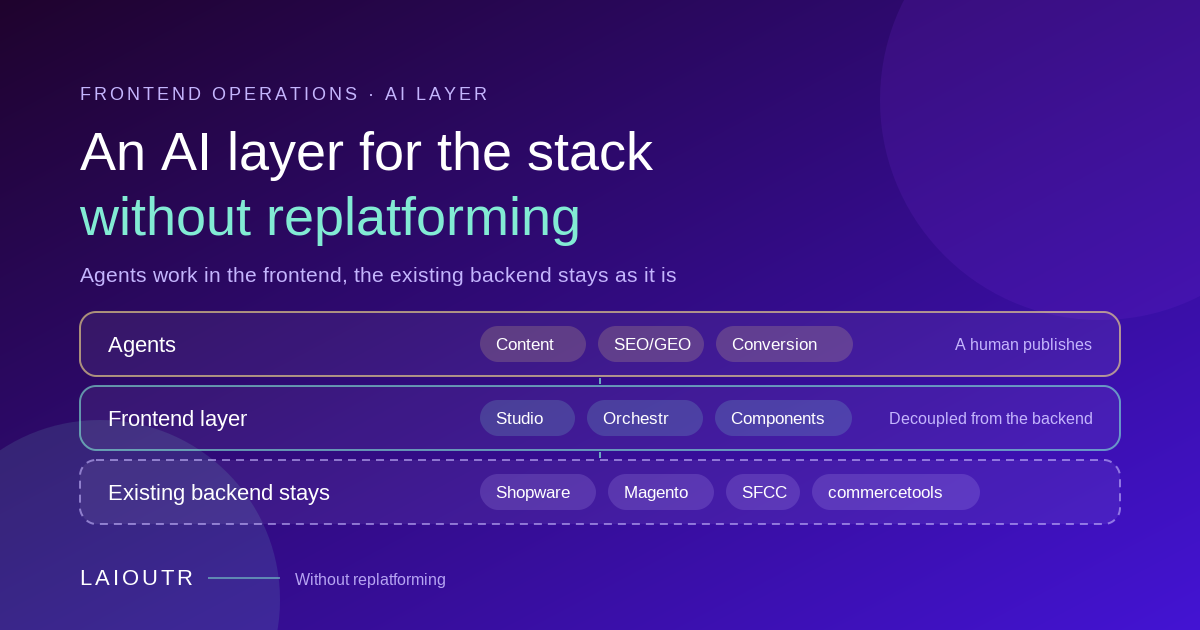Adding an AI Layer to an Existing Commerce Stack Without Replatforming
An AI layer can be added to an existing commerce stack without replacing the shop system. The most p…](https://www.laioutr.com/en/blog/frontend-operations-ai-layer-existing-stack-without-replatforming-2026)
[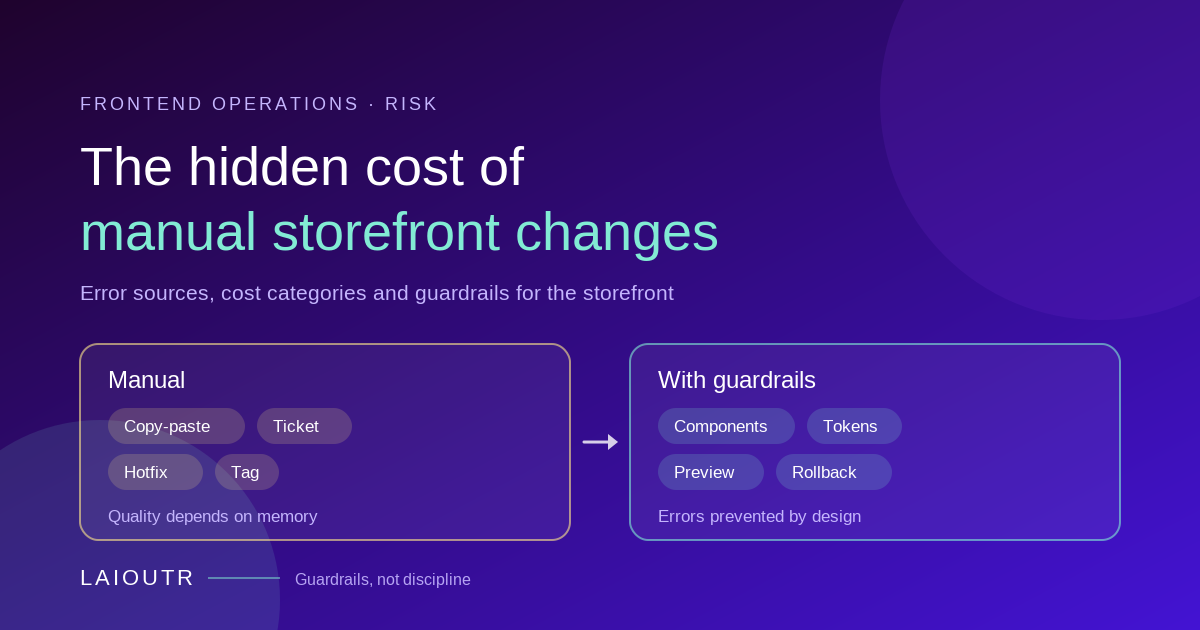The Hidden Cost of Manual Storefront Changes and How to Cut It
Manual frontend changes are the many small edits that keep a storefront running day to day: a new ba…](https://www.laioutr.com/en/blog/frontend-operations-hidden-cost-manual-storefront-changes-2026)
[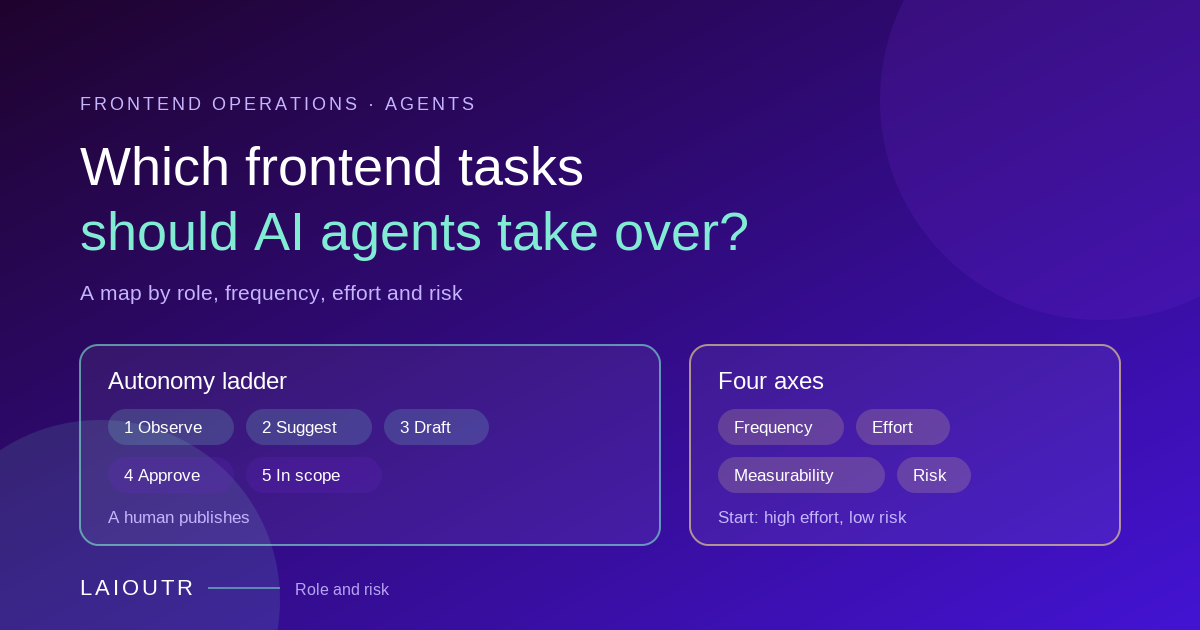Which Frontend Tasks Should AI Agents Take Over? Role and Risk Map
AI agents should first take over the frontend tasks that come up often, involve a lot of manual work…](https://www.laioutr.com/en/blog/frontend-operations-agent-task-map-role-risk-2026)
[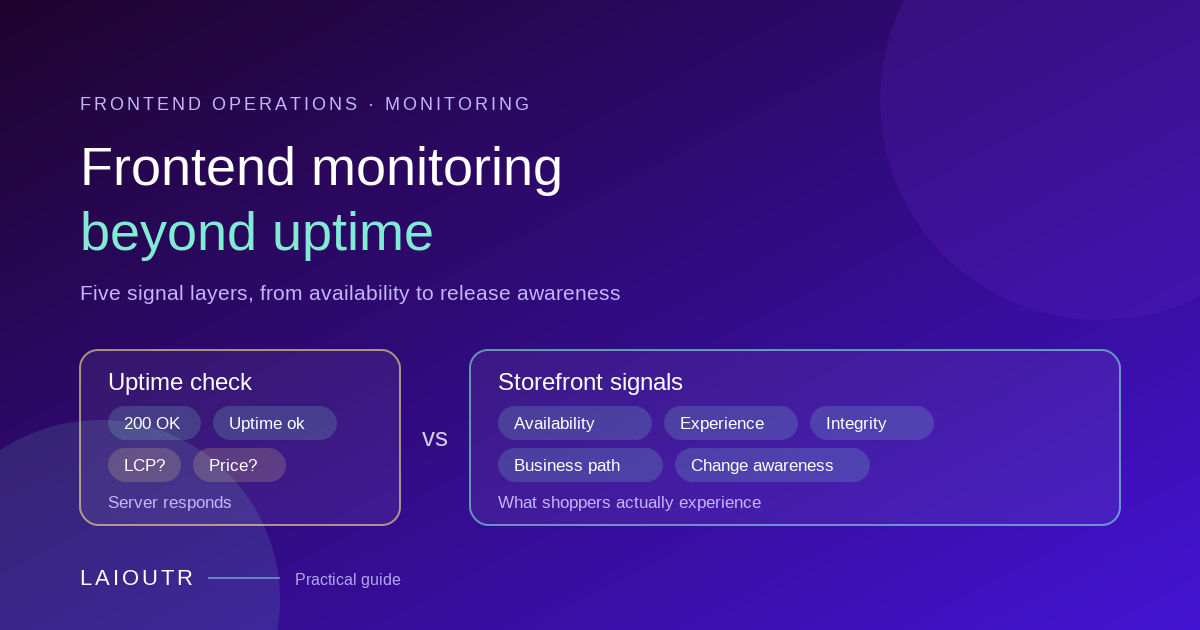Frontend Monitoring Beyond Uptime: Signals a Storefront Needs
Frontend monitoring beyond uptime means checking a storefront not only for availability but for what…](https://www.laioutr.com/en/blog/frontend-operations-monitoring-beyond-uptime-2026)
[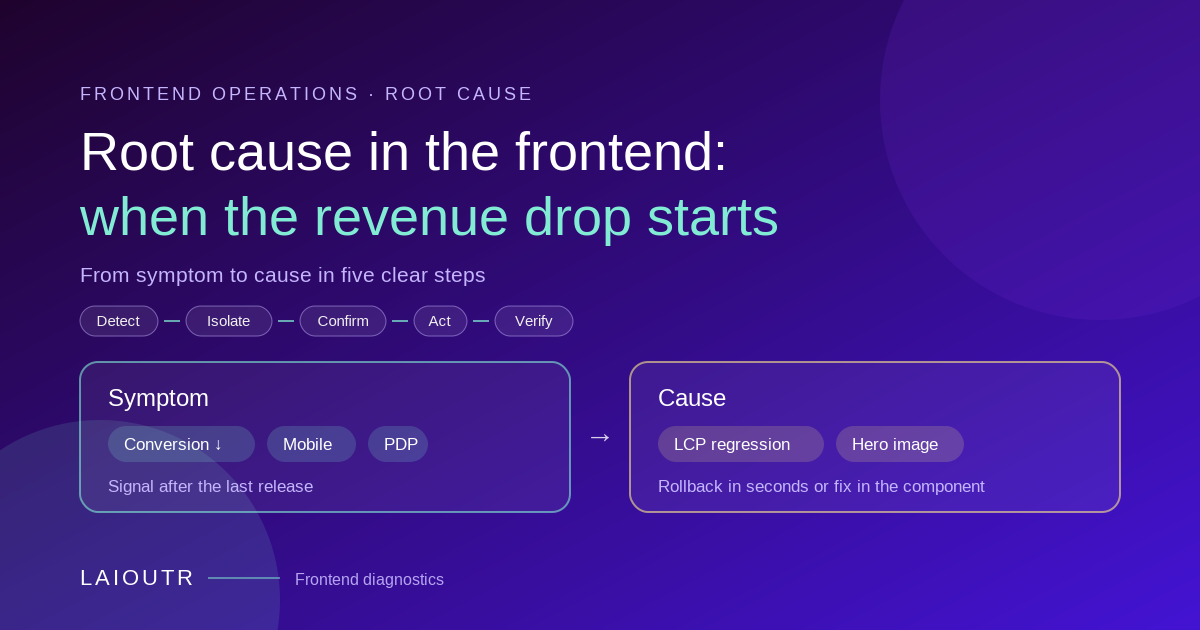Root Cause in the Frontend: When Revenue Drops Start in the Storefront
When revenue or conversion rate drops suddenly, the cause often is not traffic, pricing or the comme…](https://www.laioutr.com/en/blog/frontend-operations-root-cause-revenue-drop-storefront-2026)
[Laioutr Academy Is Live: The Video Manual for Laioutr
Since October 15, 2026, the Laioutr Academy has been live at academy.laioutr.com. It is the user man…](https://www.laioutr.com/en/blog/laioutr-academy-launch-video-manual-certification)
[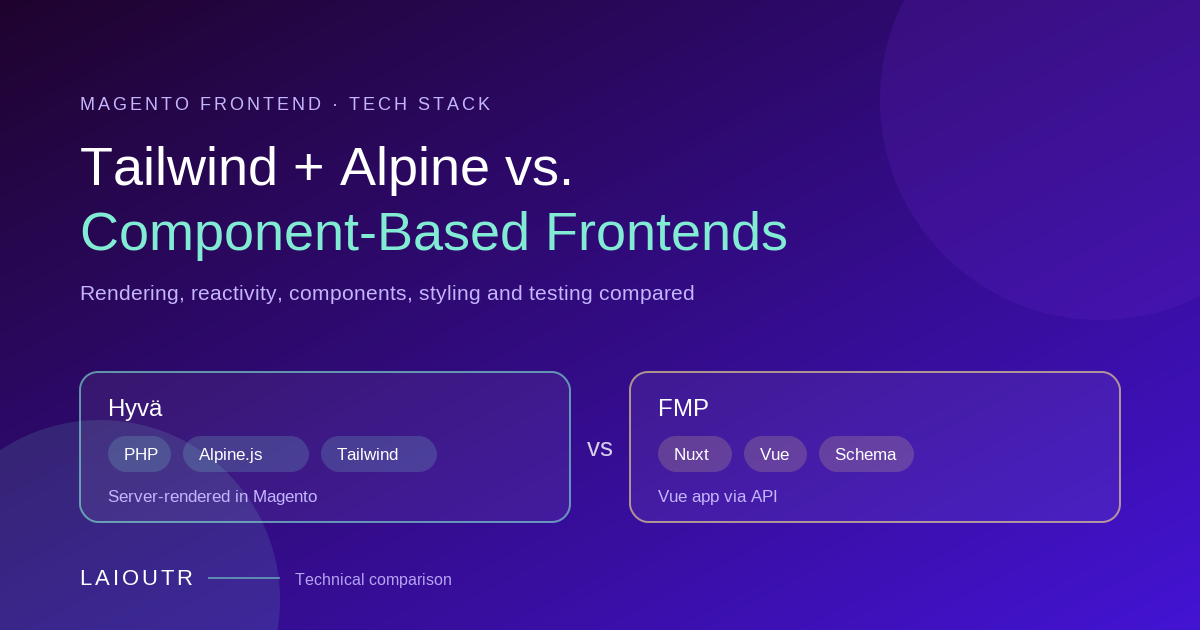Tailwind + Alpine vs. Component-Based Frontends for Magento
Hyvä renders Magento pages on the server with PHP templates and layout XML, adds interactivity throu…](https://www.laioutr.com/en/blog/tailwind-alpine-magento-vs-component-based-frontend-2026)
[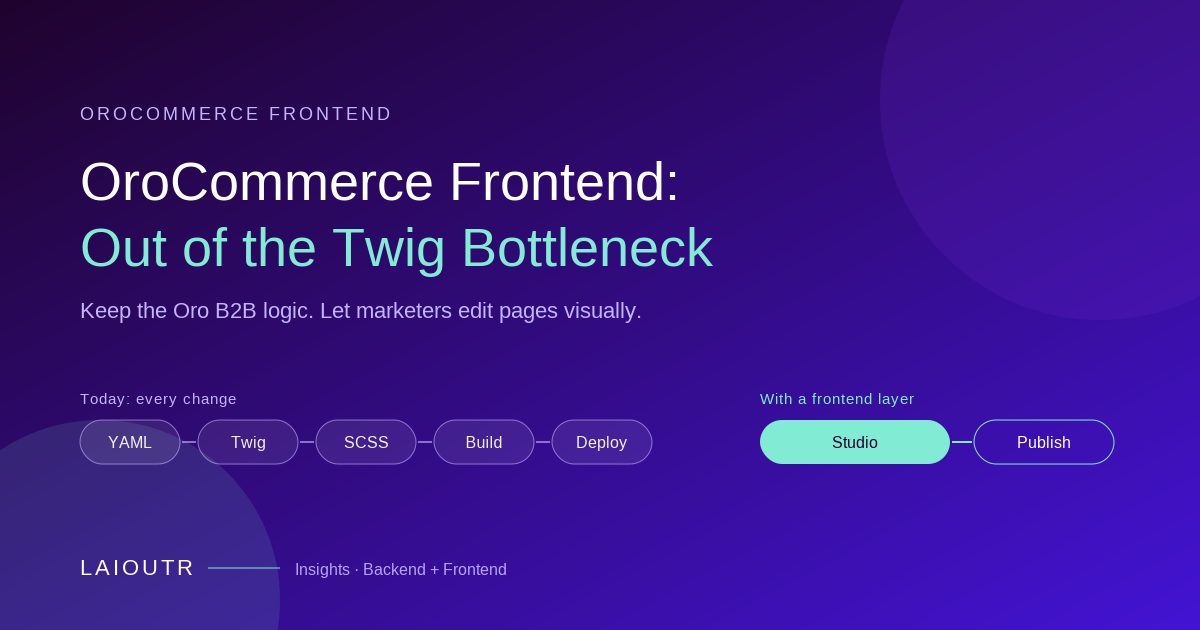OroCommerce Frontend: Out of the Twig and Layouts Bottleneck
The OroCommerce frontend is a server-rendered storefront built from Symfony bundles, OroLayouts and …](https://www.laioutr.com/en/blog/orocommerce-frontend-twig-layouts-bottleneck)
[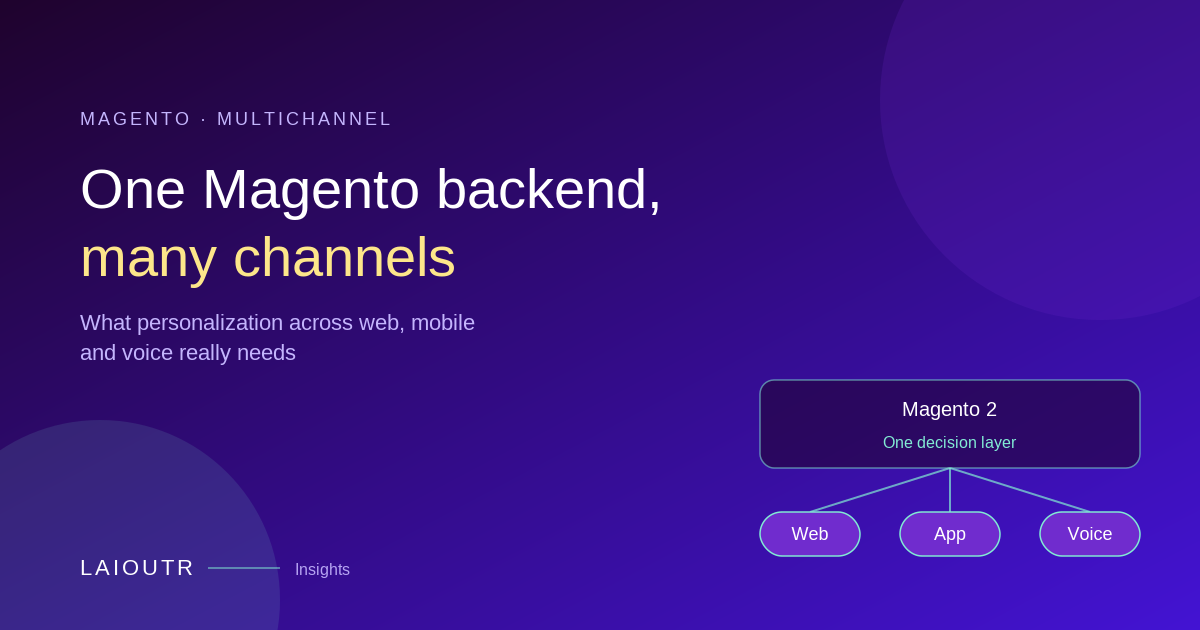One Magento Backend, Many Channels: Personalization in Practice
Personalization across web, mobile and voice on a single Magento backend does not start with a featu…](https://www.laioutr.com/en/blog/magento-multichannel-personalization-web-mobile-voice-2026)
[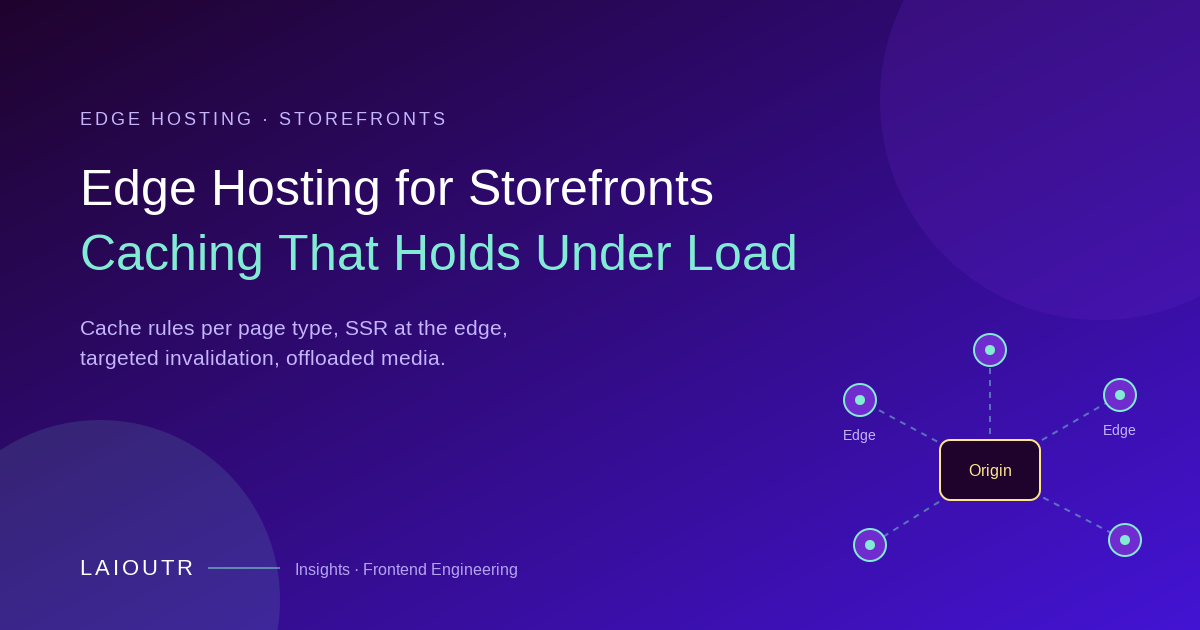Edge Hosting for Storefronts: Caching That Holds Under Peak Load
Edge hosting keeps a storefront fast under load when most requests never reach the origin: pages and…](https://www.laioutr.com/en/blog/edge-hosting-storefronts-peak-traffic-caching-2026)
[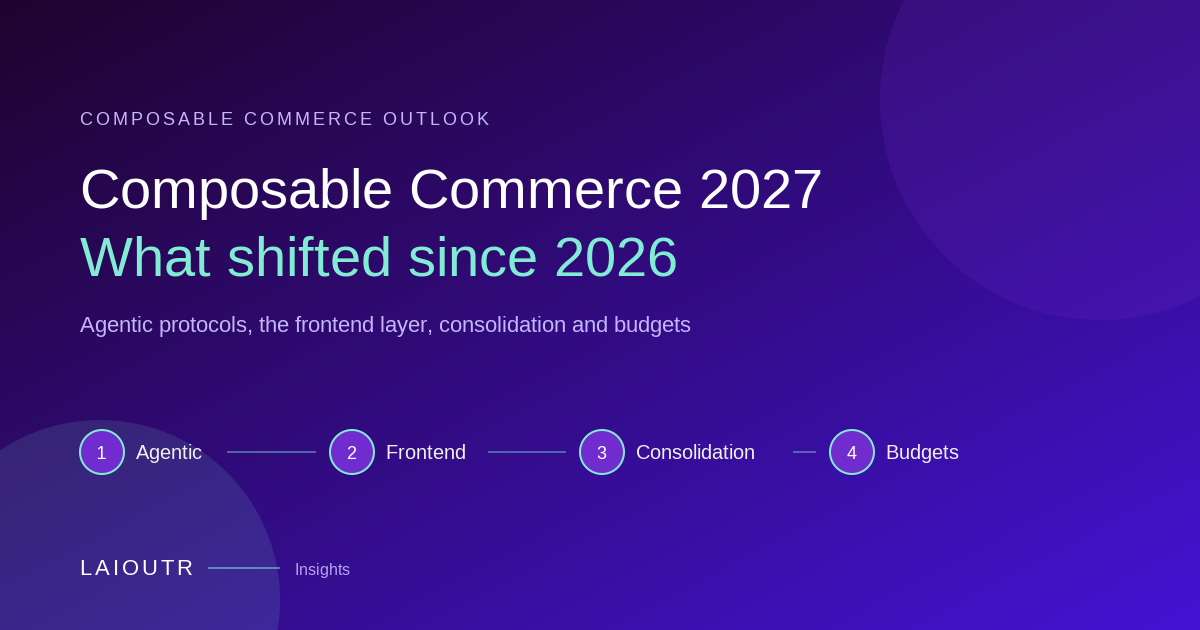Composable Commerce 2027: What Shifted and What Comes Next
Composable commerce enters 2027 with a different agenda than a year ago. The architecture question i…](https://www.laioutr.com/en/blog/composable-commerce-2027-outlook)
[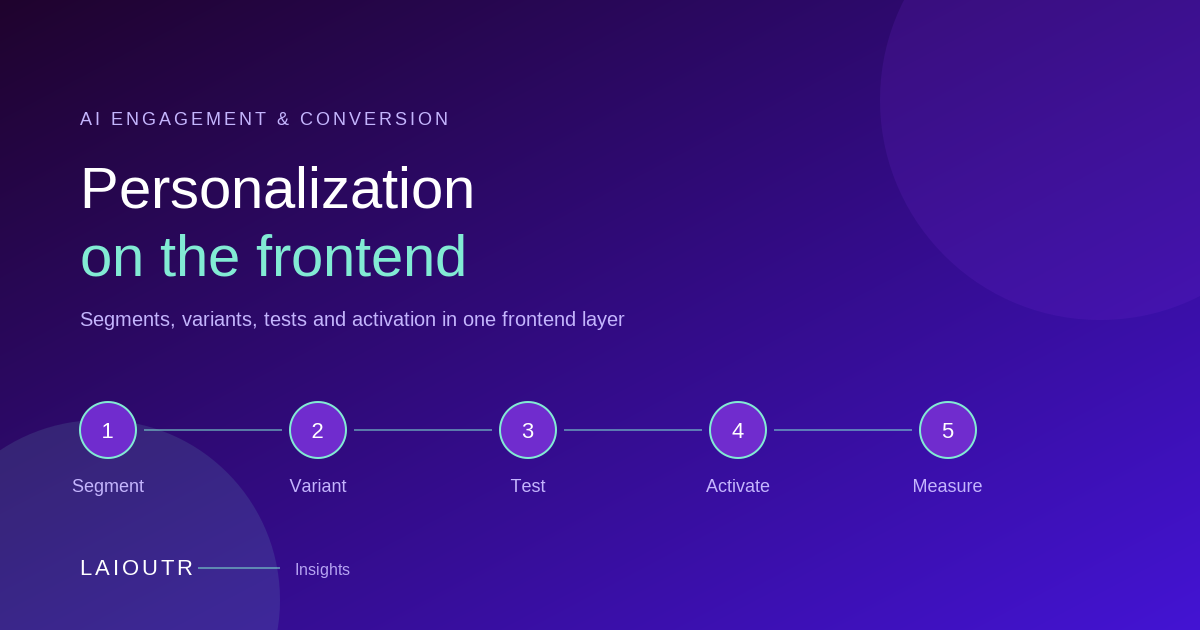AI Engagement and Conversion: Personalization on the Frontend
AI-driven engagement and conversion on the frontend rests on five mechanics: segments decide who see…](https://www.laioutr.com/en/blog/ai-engagement-conversion-frontend-personalization)
## Apps for the Laioutr platform
[View all apps](https://www.laioutr.com/en/apps)
[](https://www.laioutr.com/en/apps/shopify)
Laioutr
[Shopify](https://www.laioutr.com/en/apps/shopify)
Shopify is a commerce platform for selling online and in physical retail.
[](https://www.laioutr.com/en/apps/shopware)
Laioutr
[Shopware](https://www.laioutr.com/en/apps/shopware)
Shopware is a flexible ecommerce platform from Europe for product catalogs and omnichannel commerce.
[](https://www.laioutr.com/en/apps/adobe-commerce)
Laioutr
[Adobe Commerce](https://www.laioutr.com/en/apps/adobe-commerce)
Adobe Commerce is an enterprise commerce platform for complex, global B2C and B2B scenarios.
Planned
[](https://www.laioutr.com/en/apps/b2b-sellers)
Laioutr
[B2Bsellers](https://www.laioutr.com/en/apps/b2b-sellers)
B2B suite for Shopware that turns an online store into a professional B2B commerce platform.
Planned
[](https://www.laioutr.com/en/apps/commerce-layer)
Laioutr
[Commerce Layer](https://www.laioutr.com/en/apps/commerce-layer)
Commerce Layer is a headless commerce platform for making inventory and catalogs available online.
[](https://www.laioutr.com/en/apps/commercetools)
Laioutr
[Commercetools](https://www.laioutr.com/en/apps/commercetools)
Commercetools is a SaaS-based headless ecommerce platform used worldwide.
[](https://www.laioutr.com/en/apps/emporix)
Laioutr
[Emporix](https://www.laioutr.com/en/apps/emporix)
Emporix is a composable, API-first commerce platform for scalable B2B and B2C scenarios.
Planned
[](https://www.laioutr.com/en/apps/hcl-software)
Laioutr
[HCL Software](https://www.laioutr.com/en/apps/hcl-software)
Enterprise suite for digital commerce and experience with extensive configurability.
Planned
[](https://www.laioutr.com/en/apps/intershop)
Laioutr
[Intershop](https://www.laioutr.com/en/apps/intershop)
Enterprise commerce platform for complex B2B and B2C business models.
Planned
[](https://www.laioutr.com/en/apps/magento-2)
Laioutr
[Magento 2](https://www.laioutr.com/en/apps/magento-2)
Widely used, extensible commerce platform for B2C and B2B scenarios.
[](https://www.laioutr.com/en/apps/oxid-eshop)
Laioutr
[OXID eShop](https://www.laioutr.com/en/apps/oxid-eshop)
OXID eShop is an extensible commerce platform for complex B2B and B2C requirements.
Planned
[](https://www.laioutr.com/en/apps/patchworks)
Laioutr
[Patchworks](https://www.laioutr.com/en/apps/patchworks)
Patchworks is a low-code iPaaS that connects ecommerce, ERP, WMS, 3PL, and marketplaces.
Planned
[](https://www.laioutr.com/en/apps/PrestaShop)
Laioutr
[Prestashop](https://www.laioutr.com/en/apps/PrestaShop)
Open-source commerce platform for small and midsize merchants in Europe and beyond.
Planned
[](https://www.laioutr.com/en/apps/saleor)
Laioutr
[Saleor](https://www.laioutr.com/en/apps/saleor)
Open-source, API-first commerce platform built on GraphQL for custom storefronts.
Planned
[](https://www.laioutr.com/en/apps/salesforce-commerce-cloud)
Laioutr
[Salesforce Commerce Cloud](https://www.laioutr.com/en/apps/salesforce-commerce-cloud)
Salesforce Commerce Cloud is a cloud-based enterprise commerce platform for businesses of any size.
Planned
[](https://www.laioutr.com/en/apps/sap-commerce-cloud)
Laioutr
[SAP Commerce Cloud](https://www.laioutr.com/en/apps/sap-commerce-cloud)
Enterprise commerce platform for complex catalogs, pricing models, and omnichannel journeys.
Planned
[](https://www.laioutr.com/en/apps/scayle)
Laioutr
[Scayle](https://www.laioutr.com/en/apps/scayle)
SCAYLE is a commerce engine that helps brands and retailers scale their business.
Planned
[](https://www.laioutr.com/en/apps/spryker)
Laioutr
[Spryker](https://www.laioutr.com/en/apps/spryker)
Composable commerce platform for sophisticated B2B and B2C business models.
[](https://www.laioutr.com/en/apps/sylius)
Laioutr
[Sylius](https://www.laioutr.com/en/apps/sylius)
Sylius is a developer-friendly ecommerce framework for B2C and B2B shopping experiences.
Planned
[](https://www.laioutr.com/en/apps/vendure)
Laioutr
[Vendure](https://www.laioutr.com/en/apps/vendure)
Vendure is a headless commerce platform for businesses with complex requirements.
Coming Soon
[](https://www.laioutr.com/en/apps/vtex)
Laioutr
[VTEX](https://www.laioutr.com/en/apps/vtex)
Cloud-native, composable commerce platform for B2B and B2C at scale.
Planned
[](https://www.laioutr.com/en/apps/websale)
Laioutr
[Websale](https://www.laioutr.com/en/apps/websale)
Stable, enterprise-ready commerce backend for complex retail environments.
Strategy call
## The frontend as a control layer
A conversation about stack, roadmap and replatforming scenario. The outcome: a clear picture of how Laioutr fits, what it costs and how fast the go-live can happen.
*"After 30 minutes, we knew Laioutr makes our replatforming feasible."*
*Daniel B., CEO,* [*hygibox.de*](https://hygibox.de)
[Book a demo](https://www.laioutr.com/en/contact)
## Structured Data
```json
{
"@context": "https://schema.org",
"@graph": [
{
"@type": "Organization",
"@id": "https://www.laioutr.com/#identity",
"name": "Laioutr",
"legalName": "Laioutr GmbH",
"url": "https://www.laioutr.com/",
"logo": {
"@type": "ImageObject",
"url": "https://www.laioutr.com/laioutr-logo.png",
"width": 400,
"height": 400
},
"email": "info@laioutr.com",
"telephone": "+49 30 75435715",
"address": {
"@type": "PostalAddress",
"streetAddress": "Münchweilersteig 5",
"postalCode": "12559",
"addressLocality": "Berlin",
"addressCountry": "DE"
},
"vatID": "DE450905846",
"sameAs": [
"https://www.linkedin.com/company/laioutr",
"https://www.youtube.com/@Laioutr",
"https://x.com/laioutr"
]
},
{
"@type": "WebSite",
"@id": "https://www.laioutr.com/en/#website",
"url": "https://www.laioutr.com/en/",
"name": "Laioutr",
"inLanguage": "en",
"publisher": {
"@id": "https://www.laioutr.com/#identity"
}
},
{
"@type": "BlogPosting",
"@id": "https://www.laioutr.com/en/blog/composable-stack#article",
"headline": "Building a Composable Commerce Stack: A Real-World Blueprint",
"description": "A practical guide to assembling a composable commerce stack: how the pieces connect, how data flows, and which integration patterns work in production.",
"image": [
"https://eu-west-2.graphassets.com/cmii2mlqi0dux06l5543v7nkc/cmnucypviw8mi07mgmwsd5asa"
],
"datePublished": "2026-07-09T04:43:18.267021+00:00",
"dateModified": "2026-07-09T04:43:18.017279+00:00",
"inLanguage": "en",
"articleSection": "Insights",
"keywords": "Industry & Trends, commercetools",
"author": {
"@type": "Person",
"name": "Marcel Thiesies",
"jobTitle": "Co-Founder & CEO, Laioutr",
"image": "https://eu-west-2.graphassets.com/cmii2mlqi0dux06l5543v7nkc/cmj01b962364n07lb0iguvts5"
},
"publisher": {
"@id": "https://www.laioutr.com/#identity"
},
"mainEntityOfPage": {
"@id": "https://www.laioutr.com/en/blog/composable-stack#webpage"
},
"isPartOf": {
"@id": "https://www.laioutr.com/en/#website"
}
},
{
"@type": "WebPage",
"@id": "https://www.laioutr.com/en/blog/composable-stack#webpage",
"url": "https://www.laioutr.com/en/blog/composable-stack",
"name": "Building a Composable Commerce Stack: A Real-World Blueprint",
"description": "A practical guide to assembling a composable commerce stack: how the pieces connect, how data flows, and which integration patterns work in production.",
"inLanguage": "en",
"isPartOf": {
"@id": "https://www.laioutr.com/en/#website"
},
"breadcrumb": {
"@id": "https://www.laioutr.com/en/blog/composable-stack#breadcrumb"
},
"primaryImageOfPage": {
"@type": "ImageObject",
"url": "https://eu-west-2.graphassets.com/cmii2mlqi0dux06l5543v7nkc/cmnucypviw8mi07mgmwsd5asa"
},
"datePublished": "2026-07-09T04:43:18.267021+00:00",
"dateModified": "2026-07-09T04:43:18.017279+00:00",
"mainEntity": {
"@id": "https://www.laioutr.com/en/blog/composable-stack#article"
}
},
{
"@type": "BreadcrumbList",
"@id": "https://www.laioutr.com/en/blog/composable-stack#breadcrumb",
"itemListElement": [
{
"@type": "ListItem",
"position": 1,
"name": "Laioutr",
"item": "https://www.laioutr.com/en/"
},
{
"@type": "ListItem",
"position": 2,
"name": "Insights",
"item": "https://www.laioutr.com/en/blogs/insights"
},
{
"@type": "ListItem",
"position": 3,
"name": "Building a Composable Commerce Stack: A Real-World Blueprint"
}
]
}
]
}
```