---
title: "Composable Websites: Six Strategic Pillars"
canonical_url: "https://www.laioutr.com/en/blog/criteria-unlocking-composable-websites"
locale: en
meta:
description: "Six strategic pillars for building composable websites, and how to move past legacy constraints, vendor lock-in, and team silos."
"og:description": "Six strategic pillars for building composable websites, and how to move past legacy constraints, vendor lock-in, and team silos."
"og:title": "Composable Websites: Six Strategic Pillars"
---

# Unlocking Composable Websites: Six Strategic Pillars for Modern Digital Experiences
Table of contents
1. [1.The Real Cost of False Composability](#the-real-cost-of-false-composability)
2. [2.Pillar One: Structural Independence of Content and Presentation](#pillar-one-structural-independence-of-content-and-presentation)
3. [3.Pillar Two: Standardized Component Contracts](#pillar-two-standardized-component-contracts)
4. [4.Pillar Three: Clear Ownership and Data Sovereignty](#pillar-three-clear-ownership-and-data-sovereignty)
5. [5.Pillar Four: Versioned APIs as Contract Layers](#pillar-four-versioned-apis-as-contract-layers)
6. [6.Pillar Five: Operational Maturity and Failure Isolation](#pillar-five-operational-maturity-and-failure-isolation)
7. [7.Pillar Six: Governance for Long-term Coherence](#pillar-six-governance-for-long-term-coherence)
8. [8.Building Composability Incrementally](#building-composability-incrementally)
9. [9.The Strategic Advantage](#the-strategic-advantage)
The word "composable" has become shorthand for a specific promise in web development: build once, deploy everywhere, and maintain complete control over how your digital experiences evolve. Yet many organizations pursuing composable website architectures find themselves caught between aspirational goals and the messy reality of legacy constraints, vendor lock-in, and team silos that resist architectural change.
In our experience with enterprises attempting this transition, composability is not simply a technical choice. It is an organizational and strategic commitment. The difference between a genuinely composable system and one that merely claims to be lies in how deeply these principles are embedded across architecture, operations, and governance.
## The Real Cost of False Composability
Before we discuss what makes composable systems work, let's acknowledge what they're not. A "composable" website built on proprietary page builders that happen to expose APIs is not truly composable. A marketing team that must request custom development for every content model change is not operating in a composable environment. A platform that demands weeks of integration work to connect new data sources creates friction that kills the agility composability promises.
False composability costs money and time in ways that aren't always visible in project budgets. Teams workaround limitations instead of solving problems at the architectural level. Deployments take longer. Experimentation slows. The system becomes brittle, and so does organizational morale.
This happens when organizations focus only on surface-level flexibility while ignoring the deeper principles that actually enable composition.
## Pillar One: Structural Independence of Content and Presentation
The first foundational principle of composable architecture is complete decoupling between how content is managed and how it is presented. This sounds obvious until you examine what it truly requires.
In traditionally coupled systems, content structure is designed around the channel it will initially appear on. A blog post exists as "a blog post"; a product listing exists as "a product page." When a new channel emerges, content must be remodeled, reproduced, or adapted through manual processes.
Composable systems invert this logic. Content exists as discrete, channelindependent entities. A product record contains what a product is: its attributes, relationships, pricing tiers, inventory status, variant information. Whether that content appears on a web storefront, a mobile app, a voice interface, or an embedded widget is a presentation decision, not a content design decision.
This requires discipline in content modeling. Teams must ask: what is this content in its pure form, stripped of presentation assumptions? A blog author is not a blog entry decorated with metadata. An author is a discrete entity with relationships to published works, biography, expertise areas. The blog entry separately describes the content, relationships, and publication details.
When this separation is achieved, adding a new channel becomes a composition problem, not a remodeling problem. New presentation layers discover content through consistent APIs without requiring content structure changes.
## Pillar Two: Standardized Component Contracts
Composability requires that every component in a system operates under a shared, documented contract. This is less about technology and more about discipline.
A component contract defines: what data inputs does this component expect? In what format? What outputs does it produce? How does it handle missing data? What accessibility requirements must be met? What performance constraints apply?
Without explicit contracts, what appears to be a flexible component system becomes a maze of undocumented assumptions. One developer assumes a component will gracefully handle null values; another writes components that fail silently when data is missing. One implements accessibility features; another bypasses them for speed. Over time, these components cannot reliably compose.
Organizations with genuinely composable systems treat component contracts with the same seriousness traditional software engineering applies to APIs. Contracts are versioned. Breaking changes are tracked and communicated. Teams reviewing code ask: does this component violate its contract?
This discipline extends to data contracts as well. When multiple systems provide variations of similar data, composability suffers. Standardized data contracts ensure that a user object behaves consistently whether it comes from an identity system, a CRM, or a user preference service.
## Pillar Three: Clear Ownership and Data Sovereignty
Composable systems distribute responsibility across multiple specialized systems. Without clarity about who owns what data and when, coordination becomes chaotic.
The principle of data sovereignty states: each piece of data has a system of record, and modifications flow outward from that system. A user record is mastered in the identity system. Marketing preference data is mastered in the preference service. A customer's transaction history is mastered in the commerce platform.
Other systems reference and consume this data through APIs, but they do not become secondary masters. When a UI needs user information along with marketing preferences along with transaction history, it composes these references. It does not duplicate or cache the data in ways that create conflicts of truth.
This requires explicit governance. Which system owns the current inventory state? Which system maintains the source of truth for pricing? Which system is responsible for order status? When these questions are answered and documented, integration becomes straightforward. When they are ambiguous, systems either duplicate data (creating synchronization problems) or demand custom queries that create technical debt.
Truly composable organizations are also willing to accept that some systems will be read-only interfaces. A presentation layer does not modify commerce data directly; it submits requests to the commerce system which applies business rules, validates constraints, and returns results. This creates clean boundaries.
## Pillar Four: Versioned APIs as Contract Layers
APIs in composable systems are not implementation details that change freely. They are contracts that enable composition.
This means several things in practice. First, APIs are versioned, and versions persist across multiple release cycles. A client consuming version two of a user API continues to work even as version three is released. This prevents the cascading failures where updating one system requires updating ten consuming systems.
Second, APIs are designed for multiple consumption patterns. The same user endpoint should efficiently serve a homepage that needs only name and avatar, and a profile page that needs full contact information and preference data. This often means supporting field selection or sparse fieldsets rather than forcing consumers to fetch large payloads.
Third, API deprecation is managed as a business process, not just a technical decision. When an API version must be retired, there is a communication timeline, migration documentation, and support for teams making the transition.
Without this rigor, what appears to be API-based composition becomes fragile. One team relies on an undocumented API behavior and refuses to update. Another team builds on an API endpoint that gets repurposed. Versioning discipline prevents these conflicts and enables the architectural stability that composability requires.
## Pillar Five: Operational Maturity and Failure Isolation
Composable systems comprise multiple specialized components, which means more potential failure points. Architectural sophistication must be matched by operational sophistication.
This manifests in several ways. First, systems must degrade gracefully. When a recommendation service is unavailable, the product page still loads. When inventory data is temporarily stale, orders still process using the best available information. The system is designed with fallback behaviors, not designed to fail completely when any dependency fails.
Second, observability must be comprehensive. In tightly coupled systems, a problem in one layer typically cascades visibly. In composable systems, a subtle bug in the interaction between three independent services might manifest as incorrect data on a page without obvious error signals. Teams need logging, tracing, and monitoring that makes these problems visible.
Third, deployment and rollback strategies must account for distributed architectures. A database migration in a monolith affects one system. A data structure change in a composable architecture might affect everything that consumes that service. Teams must coordinate carefully, use feature flags to manage rollout, and have rollback plans.
Organizations without this operational maturity often regret composable architecture because it exposes their lack of operational discipline. Those who invest in observability, testing, incident response, and chaos engineering find that composability enables the reliability they seek.
## Pillar Six: Governance for Long-term Coherence
Finally, composable systems require governance structures that keep the architecture coherent as it grows.
Without governance, composable systems tend toward entropy. Teams build new services following slightly different patterns. Data models diverge subtly. Integration approaches multiply. Over time, the promised flexibility becomes a liability where everything connects to everything in ways that are hard to understand.
Effective governance starts with architectural standards that teams follow. What authentication patterns do we use? How do we handle pagination? What's our approach to error responses? These standards are not rigid constraints that prevent innovation; they are shared understanding that makes integration predictable.
Governance also involves stewardship of shared abstractions. A well-maintained component library saves teams time and ensures consistency. A clearly documented content model helps teams avoid creating conflicting structures. When these shared resources decay through neglect, the benefits of composability degrade.
Finally, governance includes decisions about what stays specialized and what should be shared. Some systems will necessarily be unique to your business. Others should be standardized. This balance is not a one-time decision but an ongoing architectural conversation.
## Building Composability Incrementally
The six pillars we have outlined are ambitious. No organization achieves all of them overnight. The pragmatic path forward involves building them sequentially while maintaining a functional system.
Start with content and presentation separation. Pick one major piece of content and model it independently of how it will be displayed. This might be uncomfortable initially because it feels inefficient to define data without its presentation context. Push through. Once you see how easily that content flows to multiple channels, you have proven the value.
Next, establish API contracts. Document what your systems expect from each other. Make versioning explicit. This work feels bureaucratic until you face your first integration problem and discover that clear contracts eliminate weeks of debugging.
Then expand component contracts and strengthen operational maturity in parallel. These feed each other; better observability reveals which components need stricter contracts.
Finally, establish governance structures. This is the work that keeps the system coherent as it scales.
## The Strategic Advantage
Organizations that successfully build composable architectures gain a compounding advantage. They can launch new digital experiences faster because they compose existing components rather than rebuild. They can respond to market changes without architectural friction. They can test ideas with lower risk because failures are contained.
More subtly, composable systems enable organizational learning. As systems become genuinely independent, teams can specialize. Frontend teams focus on experience design. Backend teams focus on data integrity and performance. Content teams focus on strategy and modeling. This specialization, enabled by clean interfaces, produces better outcomes than generalist teams forced to understand every layer of a monolith.
The journey to true composability is longer and more nuanced than technology vendors usually acknowledge. It requires discipline in architecture, operations, and governance. Yet for organizations willing to commit to these principles, the return in flexibility, resilience, and team effectiveness is substantial.
The question is not whether composability is worth pursuing. The question is whether your organization is ready to commit to the discipline it requires. If you are, the path forward is clear: start with one principle, prove its value, and build incrementally toward the comprehensive composability that transforms how digital work happens.
### **More from the Laioutr Platform**
- [Composable Digital Experience Platform](https://www.laioutr.com/en/composable-digital-experience-platform)
- [Agentic Frontend Management Platform](https://www.laioutr.com/en/agentic-frontend-management-platform)
- [Personalization](https://www.laioutr.com/en/product/personalization)
- [Composable Visual Page Builder](https://www.laioutr.com/en/composable-visual-page-builder)
Related reading: [DXP Architecture vs Features: Why the Buying Criteria You Already Use Are Misleading You](https://www.laioutr.com/en/blog/dxp-architecture-vs-features-why-the-buying-criteria-you-already-use-are-misleading-you) and [Intelligent Migration: Why Legacy Websites No Longer Need to Be Your Strategic Bottleneck](https://www.laioutr.com/en/blog/intelligent-migration-legacy-websites).
---
Share this article
[Share on Facebook](https://www.facebook.com/sharer/sharer.php?u=https%3A%2F%2Fwww.laioutr.com%2Fen%2Fblog%2Fcriteria-unlocking-composable-websites) [Share on X](https://x.com/intent/post?url=https%3A%2F%2Fwww.laioutr.com%2Fen%2Fblog%2Fcriteria-unlocking-composable-websites&text=) [Share on LinkedIn](https://www.linkedin.com/sharing/share-offsite/?url=https%3A%2F%2Fwww.laioutr.com%2Fen%2Fblog%2Fcriteria-unlocking-composable-websites) [Share on Pinterest](https://pinterest.com/pin/create/button/?url=https%3A%2F%2Fwww.laioutr.com%2Fen%2Fblog%2Fcriteria-unlocking-composable-websites&description=) [Share via email](mailto:?subject=&body=%0A%0Ahttps%3A%2F%2Fwww.laioutr.com%2Fen%2Fblog%2Fcriteria-unlocking-composable-websites)
## More articles on frontend and headless
Practical know-how for frontend development, smart agents, and headless
[To the blog](https://www.laioutr.com/en/blogs/insights)
[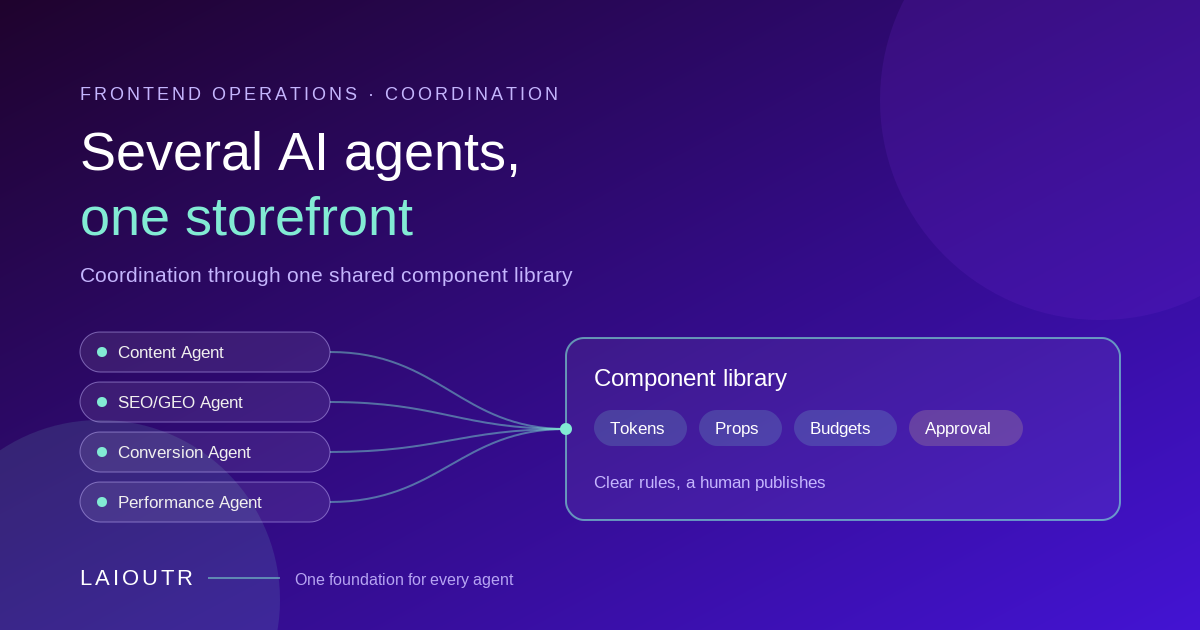Several AI Agents, One Storefront: Coordination Without Collisions
When several AI agents work on the same storefront, conflicts rarely happen between the agents thems…](https://www.laioutr.com/en/blog/frontend-operations-multi-agent-coordination-storefront-2026)
[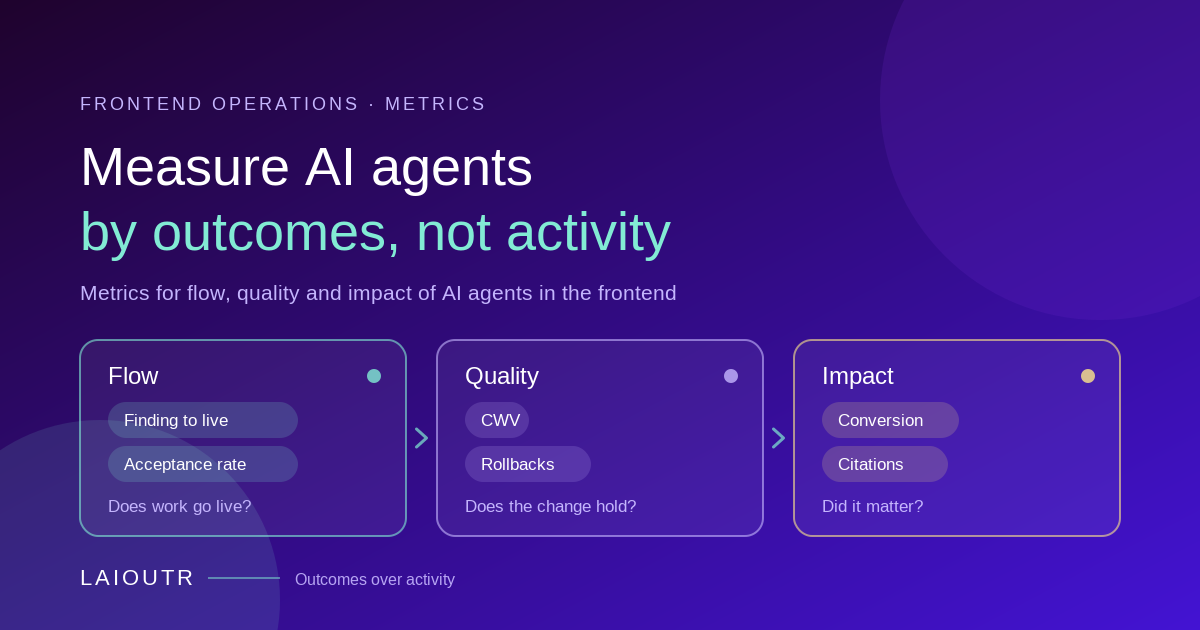Measuring AI Agents by Outcomes: Agentic Frontend Management Metrics
AI agents in the frontend should be measured by outcomes, not by activity. The number of prompts, ge…](https://www.laioutr.com/en/blog/frontend-operations-measuring-ai-agents-outcomes-2026)
[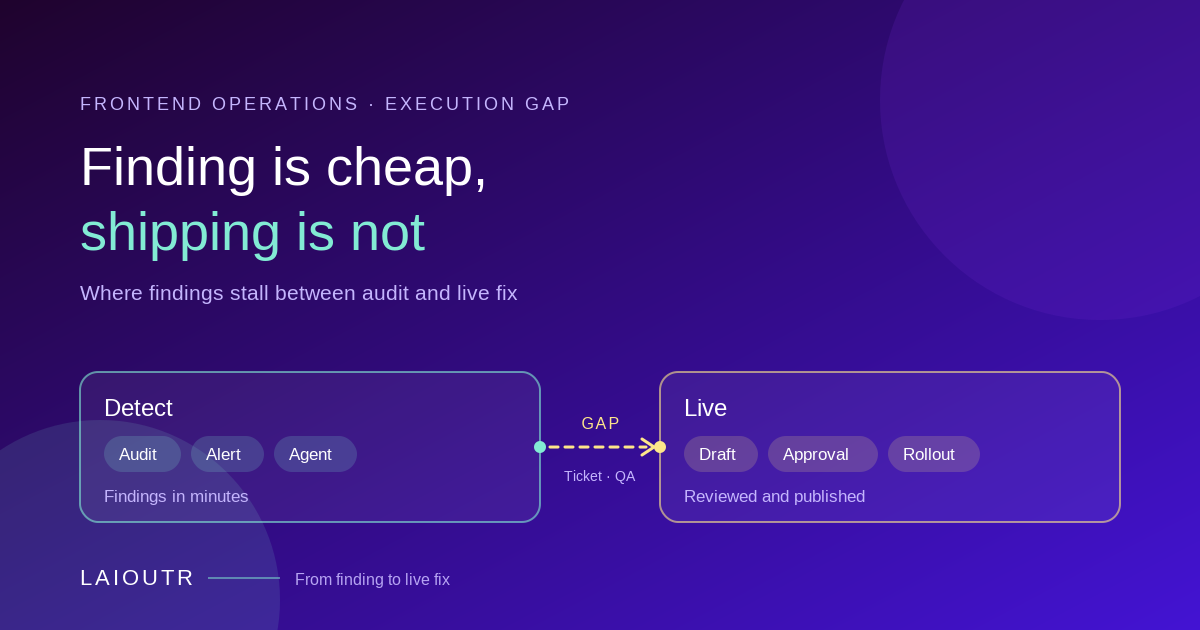The Execution Gap in the Frontend: Finding Is Cheap, Shipping Is Not
The execution gap in the frontend is the time, and the number of handoffs, between "we know wha…](https://www.laioutr.com/en/blog/frontend-operations-execution-gap-detect-vs-deploy-2026)
[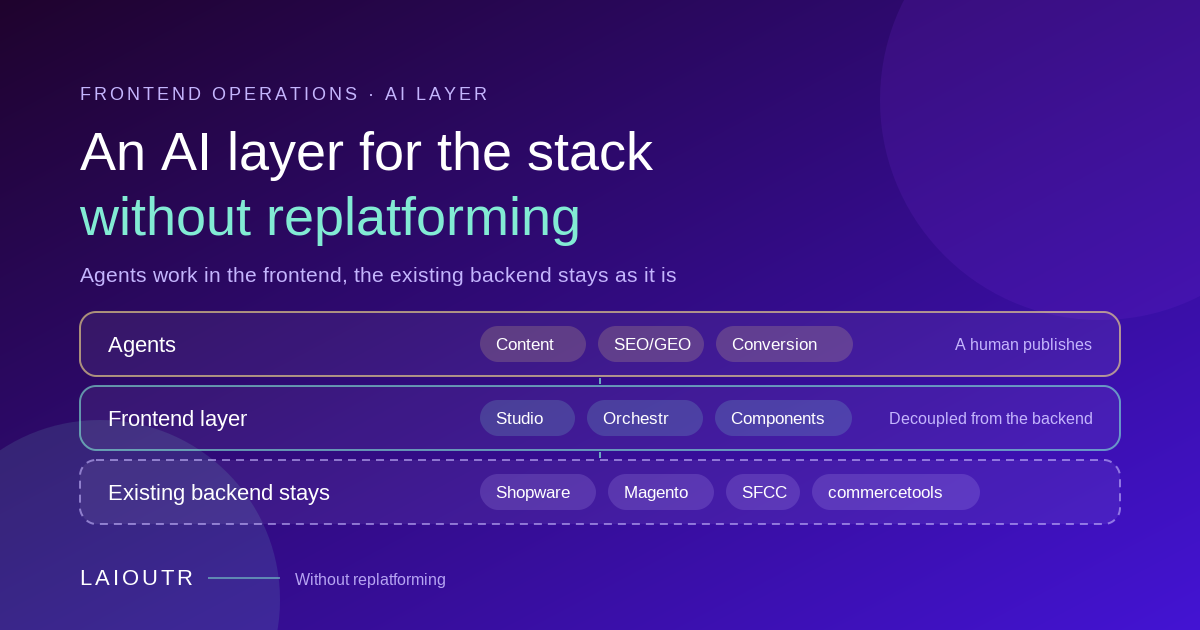Adding an AI Layer to an Existing Commerce Stack Without Replatforming
An AI layer can be added to an existing commerce stack without replacing the shop system. The most p…](https://www.laioutr.com/en/blog/frontend-operations-ai-layer-existing-stack-without-replatforming-2026)
[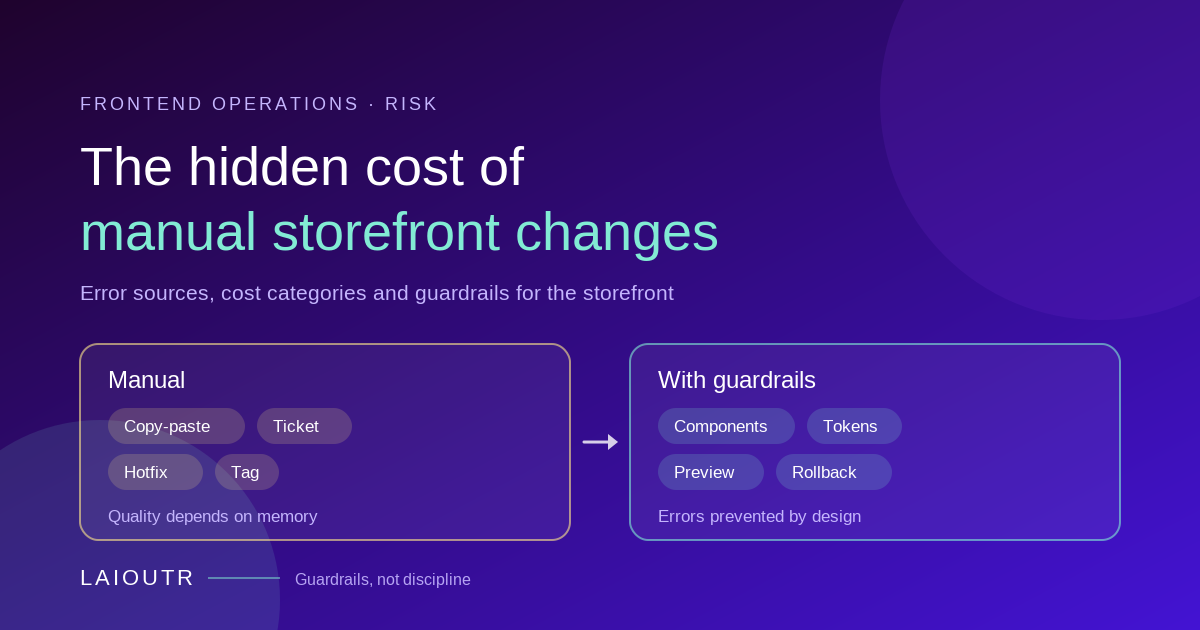The Hidden Cost of Manual Storefront Changes and How to Cut It
Manual frontend changes are the many small edits that keep a storefront running day to day: a new ba…](https://www.laioutr.com/en/blog/frontend-operations-hidden-cost-manual-storefront-changes-2026)
[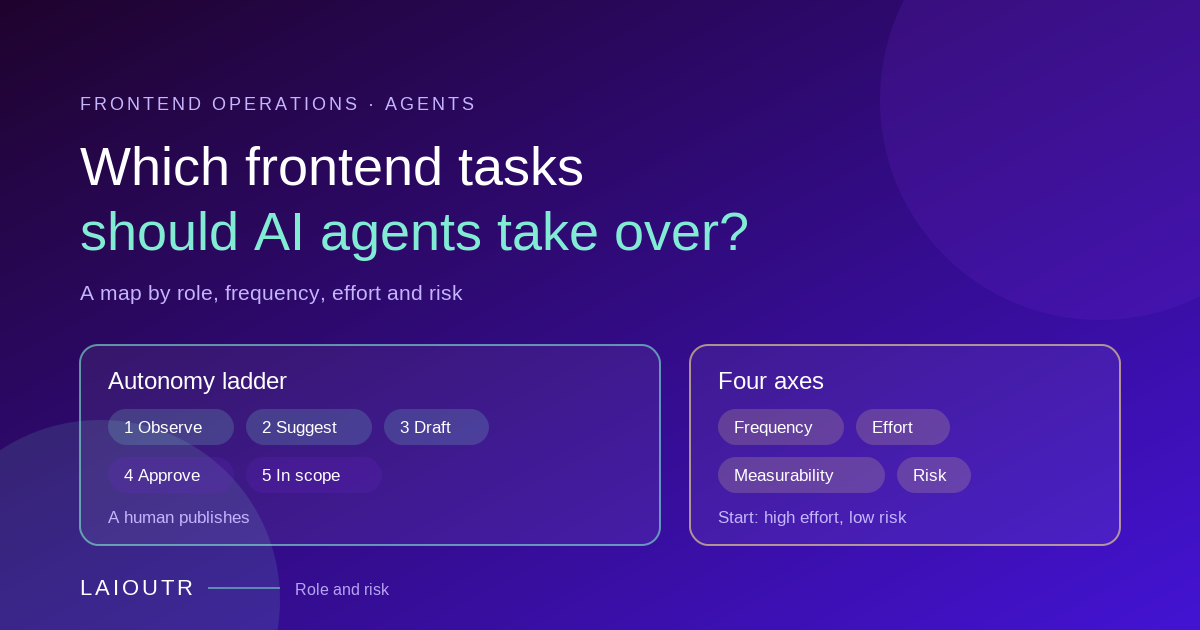Which Frontend Tasks Should AI Agents Take Over? Role and Risk Map
AI agents should first take over the frontend tasks that come up often, involve a lot of manual work…](https://www.laioutr.com/en/blog/frontend-operations-agent-task-map-role-risk-2026)
[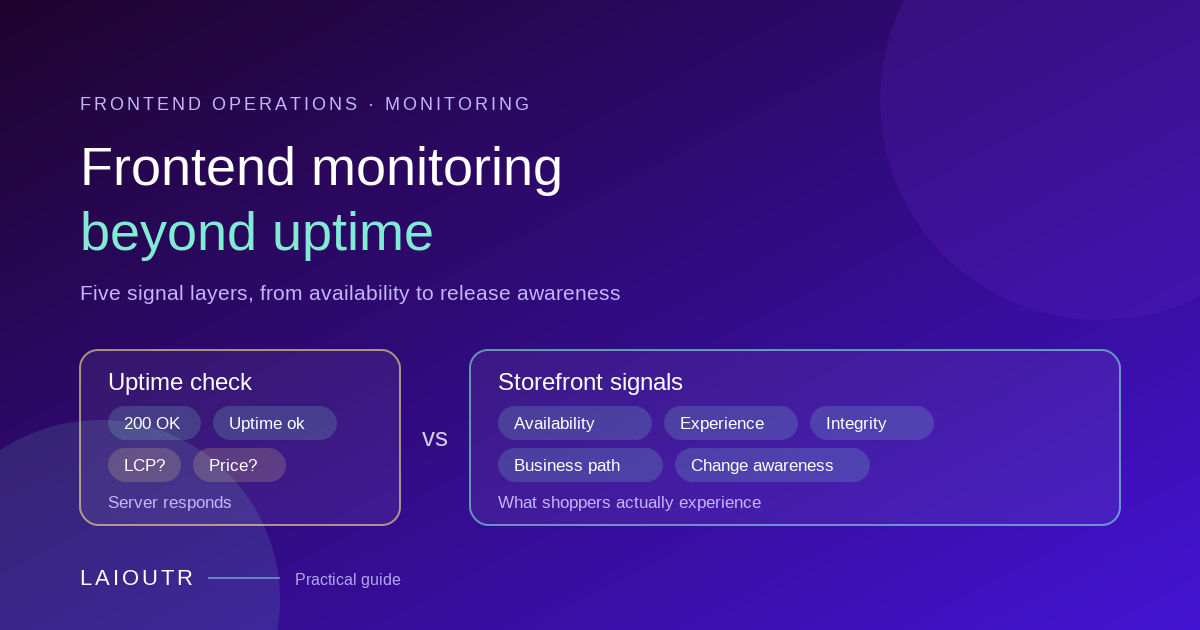Frontend Monitoring Beyond Uptime: Signals a Storefront Needs
Frontend monitoring beyond uptime means checking a storefront not only for availability but for what…](https://www.laioutr.com/en/blog/frontend-operations-monitoring-beyond-uptime-2026)
[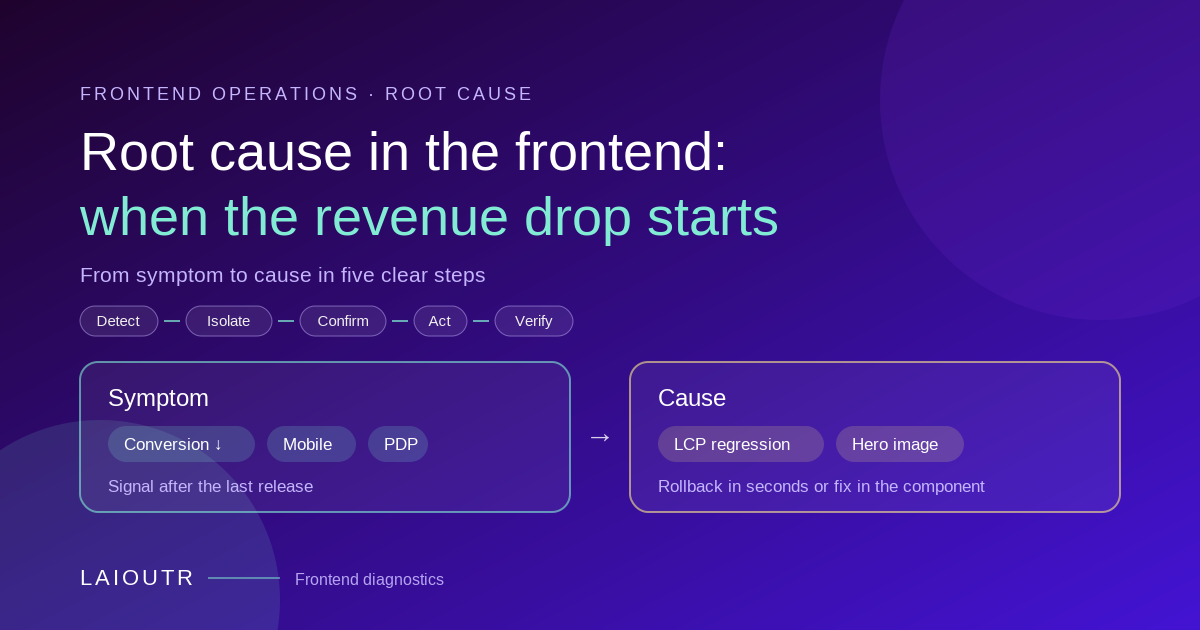Root Cause in the Frontend: When Revenue Drops Start in the Storefront
When revenue or conversion rate drops suddenly, the cause often is not traffic, pricing or the comme…](https://www.laioutr.com/en/blog/frontend-operations-root-cause-revenue-drop-storefront-2026)
[Laioutr Academy Is Live: The Video Manual for Laioutr
Since October 15, 2026, the Laioutr Academy has been live at academy.laioutr.com. It is the user man…](https://www.laioutr.com/en/blog/laioutr-academy-launch-video-manual-certification)
[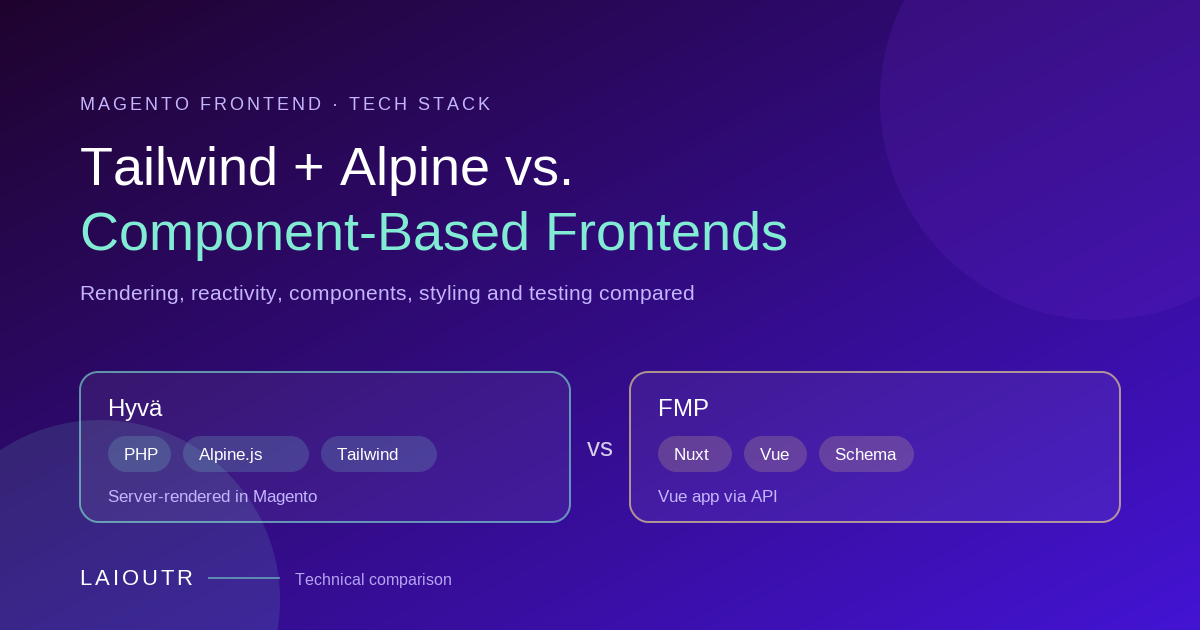Tailwind + Alpine vs. Component-Based Frontends for Magento
Hyvä renders Magento pages on the server with PHP templates and layout XML, adds interactivity throu…](https://www.laioutr.com/en/blog/tailwind-alpine-magento-vs-component-based-frontend-2026)
[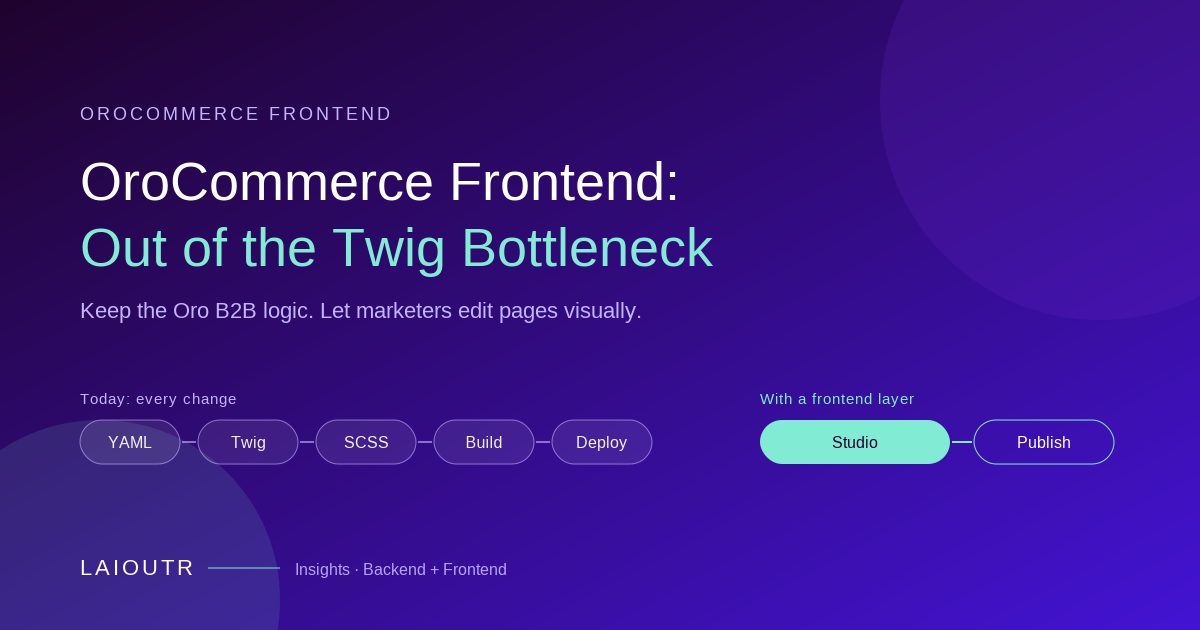OroCommerce Frontend: Out of the Twig and Layouts Bottleneck
The OroCommerce frontend is a server-rendered storefront built from Symfony bundles, OroLayouts and …](https://www.laioutr.com/en/blog/orocommerce-frontend-twig-layouts-bottleneck)
[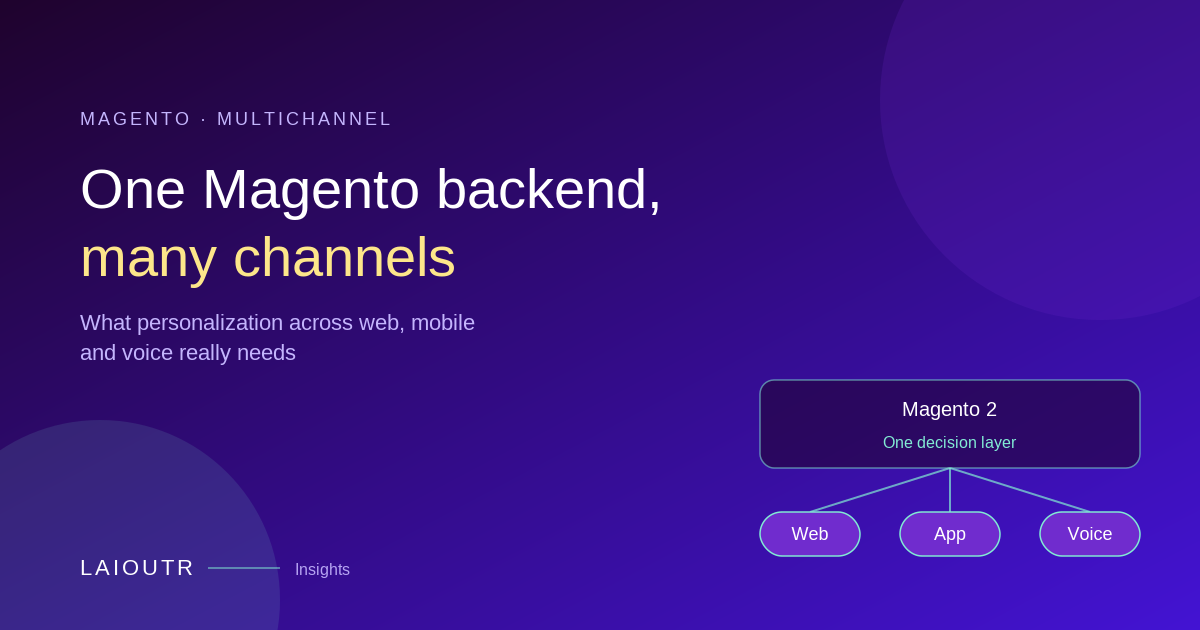One Magento Backend, Many Channels: Personalization in Practice
Personalization across web, mobile and voice on a single Magento backend does not start with a featu…](https://www.laioutr.com/en/blog/magento-multichannel-personalization-web-mobile-voice-2026)
[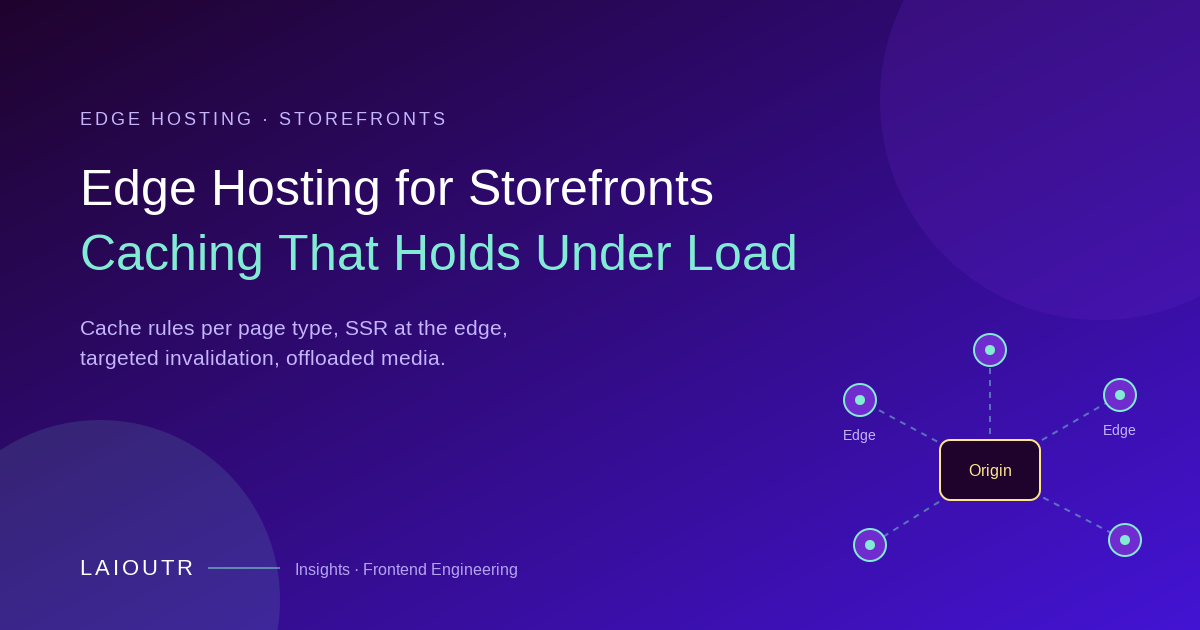Edge Hosting for Storefronts: Caching That Holds Under Peak Load
Edge hosting keeps a storefront fast under load when most requests never reach the origin: pages and…](https://www.laioutr.com/en/blog/edge-hosting-storefronts-peak-traffic-caching-2026)
[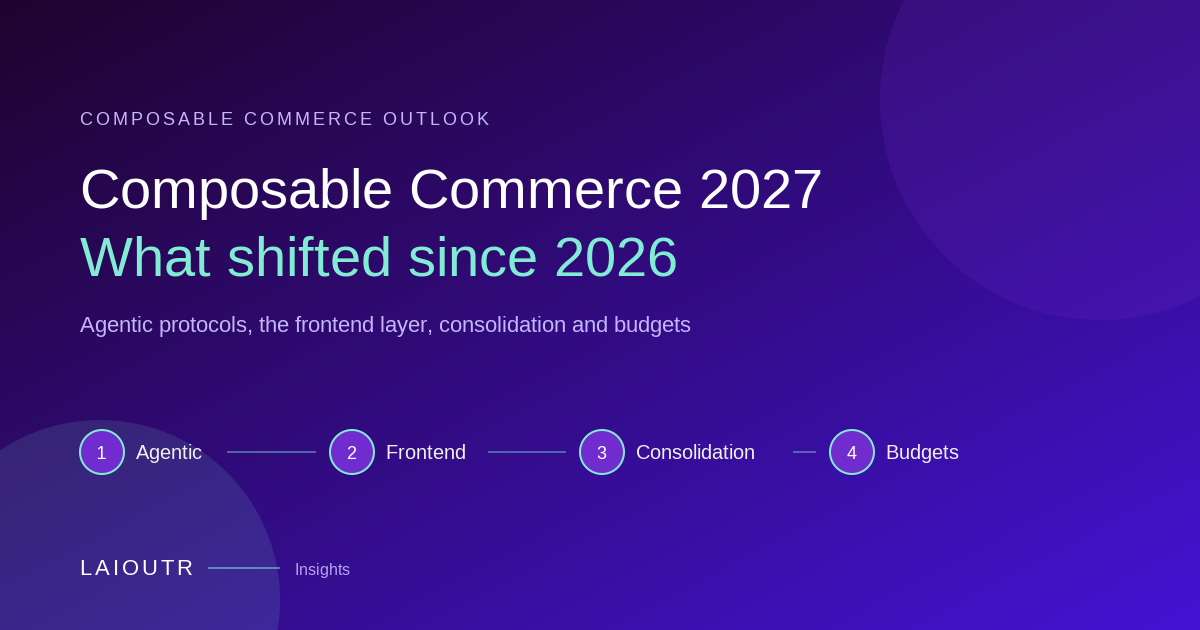Composable Commerce 2027: What Shifted and What Comes Next
Composable commerce enters 2027 with a different agenda than a year ago. The architecture question i…](https://www.laioutr.com/en/blog/composable-commerce-2027-outlook)
[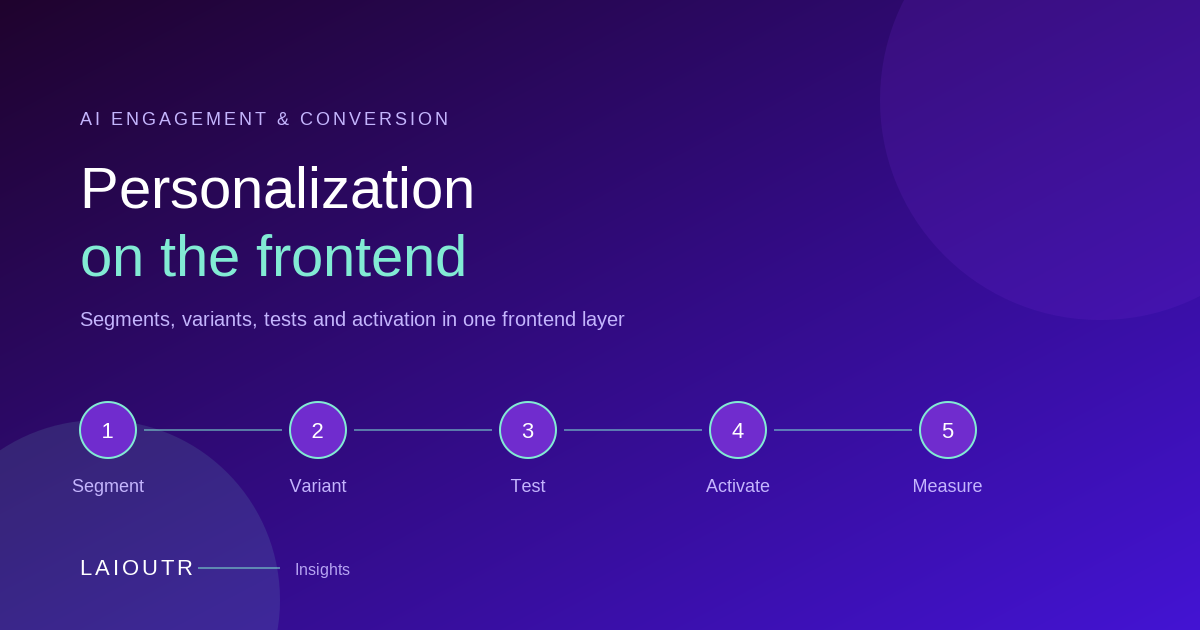AI Engagement and Conversion: Personalization on the Frontend
AI-driven engagement and conversion on the frontend rests on five mechanics: segments decide who see…](https://www.laioutr.com/en/blog/ai-engagement-conversion-frontend-personalization)
## Apps for the Laioutr platform
[View all apps](https://www.laioutr.com/en/apps)
[](https://www.laioutr.com/en/apps/shopify)
Laioutr
[Shopify](https://www.laioutr.com/en/apps/shopify)
Shopify is a commerce platform for selling online and in physical retail.
[](https://www.laioutr.com/en/apps/shopware)
Laioutr
[Shopware](https://www.laioutr.com/en/apps/shopware)
Shopware is a flexible ecommerce platform from Europe for product catalogs and omnichannel commerce.
[](https://www.laioutr.com/en/apps/adobe-commerce)
Laioutr
[Adobe Commerce](https://www.laioutr.com/en/apps/adobe-commerce)
Adobe Commerce is an enterprise commerce platform for complex, global B2C and B2B scenarios.
Planned
[](https://www.laioutr.com/en/apps/b2b-sellers)
Laioutr
[B2Bsellers](https://www.laioutr.com/en/apps/b2b-sellers)
B2B suite for Shopware that turns an online store into a professional B2B commerce platform.
Planned
[](https://www.laioutr.com/en/apps/commerce-layer)
Laioutr
[Commerce Layer](https://www.laioutr.com/en/apps/commerce-layer)
Commerce Layer is a headless commerce platform for making inventory and catalogs available online.
[](https://www.laioutr.com/en/apps/commercetools)
Laioutr
[Commercetools](https://www.laioutr.com/en/apps/commercetools)
Commercetools is a SaaS-based headless ecommerce platform used worldwide.
[](https://www.laioutr.com/en/apps/emporix)
Laioutr
[Emporix](https://www.laioutr.com/en/apps/emporix)
Emporix is a composable, API-first commerce platform for scalable B2B and B2C scenarios.
Planned
[](https://www.laioutr.com/en/apps/hcl-software)
Laioutr
[HCL Software](https://www.laioutr.com/en/apps/hcl-software)
Enterprise suite for digital commerce and experience with extensive configurability.
Planned
[](https://www.laioutr.com/en/apps/intershop)
Laioutr
[Intershop](https://www.laioutr.com/en/apps/intershop)
Enterprise commerce platform for complex B2B and B2C business models.
Planned
[](https://www.laioutr.com/en/apps/magento-2)
Laioutr
[Magento 2](https://www.laioutr.com/en/apps/magento-2)
Widely used, extensible commerce platform for B2C and B2B scenarios.
[](https://www.laioutr.com/en/apps/oxid-eshop)
Laioutr
[OXID eShop](https://www.laioutr.com/en/apps/oxid-eshop)
OXID eShop is an extensible commerce platform for complex B2B and B2C requirements.
Planned
[](https://www.laioutr.com/en/apps/patchworks)
Laioutr
[Patchworks](https://www.laioutr.com/en/apps/patchworks)
Patchworks is a low-code iPaaS that connects ecommerce, ERP, WMS, 3PL, and marketplaces.
Planned
[](https://www.laioutr.com/en/apps/PrestaShop)
Laioutr
[Prestashop](https://www.laioutr.com/en/apps/PrestaShop)
Open-source commerce platform for small and midsize merchants in Europe and beyond.
Planned
[](https://www.laioutr.com/en/apps/saleor)
Laioutr
[Saleor](https://www.laioutr.com/en/apps/saleor)
Open-source, API-first commerce platform built on GraphQL for custom storefronts.
Planned
[](https://www.laioutr.com/en/apps/salesforce-commerce-cloud)
Laioutr
[Salesforce Commerce Cloud](https://www.laioutr.com/en/apps/salesforce-commerce-cloud)
Salesforce Commerce Cloud is a cloud-based enterprise commerce platform for businesses of any size.
Planned
[](https://www.laioutr.com/en/apps/sap-commerce-cloud)
Laioutr
[SAP Commerce Cloud](https://www.laioutr.com/en/apps/sap-commerce-cloud)
Enterprise commerce platform for complex catalogs, pricing models, and omnichannel journeys.
Planned
[](https://www.laioutr.com/en/apps/scayle)
Laioutr
[Scayle](https://www.laioutr.com/en/apps/scayle)
SCAYLE is a commerce engine that helps brands and retailers scale their business.
Planned
[](https://www.laioutr.com/en/apps/spryker)
Laioutr
[Spryker](https://www.laioutr.com/en/apps/spryker)
Composable commerce platform for sophisticated B2B and B2C business models.
[](https://www.laioutr.com/en/apps/sylius)
Laioutr
[Sylius](https://www.laioutr.com/en/apps/sylius)
Sylius is a developer-friendly ecommerce framework for B2C and B2B shopping experiences.
Planned
[](https://www.laioutr.com/en/apps/vendure)
Laioutr
[Vendure](https://www.laioutr.com/en/apps/vendure)
Vendure is a headless commerce platform for businesses with complex requirements.
Coming Soon
[](https://www.laioutr.com/en/apps/vtex)
Laioutr
[VTEX](https://www.laioutr.com/en/apps/vtex)
Cloud-native, composable commerce platform for B2B and B2C at scale.
Planned
[](https://www.laioutr.com/en/apps/websale)
Laioutr
[Websale](https://www.laioutr.com/en/apps/websale)
Stable, enterprise-ready commerce backend for complex retail environments.
Strategy call
## The frontend as a control layer
A conversation about stack, roadmap and replatforming scenario. The outcome: a clear picture of how Laioutr fits, what it costs and how fast the go-live can happen.
*"After 30 minutes, we knew Laioutr makes our replatforming feasible."*
*Daniel B., CEO,* [*hygibox.de*](https://hygibox.de)
[Book a demo](https://www.laioutr.com/en/contact)
## Structured Data
```json
{
"@context": "https://schema.org",
"@graph": [
{
"@type": "Organization",
"@id": "https://www.laioutr.com/#identity",
"name": "Laioutr",
"legalName": "Laioutr GmbH",
"url": "https://www.laioutr.com/",
"logo": {
"@type": "ImageObject",
"url": "https://www.laioutr.com/laioutr-logo.png",
"width": 400,
"height": 400
},
"email": "info@laioutr.com",
"telephone": "+49 30 75435715",
"address": {
"@type": "PostalAddress",
"streetAddress": "Münchweilersteig 5",
"postalCode": "12559",
"addressLocality": "Berlin",
"addressCountry": "DE"
},
"vatID": "DE450905846",
"sameAs": [
"https://www.linkedin.com/company/laioutr",
"https://www.youtube.com/@Laioutr",
"https://x.com/laioutr"
]
},
{
"@type": "WebSite",
"@id": "https://www.laioutr.com/en/#website",
"url": "https://www.laioutr.com/en/",
"name": "Laioutr",
"inLanguage": "en",
"publisher": {
"@id": "https://www.laioutr.com/#identity"
}
},
{
"@type": "BlogPosting",
"@id": "https://www.laioutr.com/en/blog/criteria-unlocking-composable-websites#article",
"headline": "Unlocking Composable Websites: Six Strategic Pillars for Modern Digital Experiences",
"description": "Six strategic pillars for building composable websites, and how to move past legacy constraints, vendor lock-in, and team silos.",
"image": [
"https://eu-west-2.graphassets.com/cmii2mlqi0dux06l5543v7nkc/cmnucypviw8mi07mgmwsd5asa"
],
"datePublished": "2026-10-26T13:19:00.967208+00:00",
"dateModified": "2026-10-26T13:18:58.023594+00:00",
"inLanguage": "en",
"articleSection": "Insights",
"keywords": "Industry & Trends",
"author": {
"@type": "Person",
"name": "Marcel Thiesies",
"jobTitle": "Co-Founder & CEO, Laioutr",
"image": "https://eu-west-2.graphassets.com/cmii2mlqi0dux06l5543v7nkc/cmj01b962364n07lb0iguvts5"
},
"publisher": {
"@id": "https://www.laioutr.com/#identity"
},
"mainEntityOfPage": {
"@id": "https://www.laioutr.com/en/blog/criteria-unlocking-composable-websites#webpage"
},
"isPartOf": {
"@id": "https://www.laioutr.com/en/#website"
}
},
{
"@type": "WebPage",
"@id": "https://www.laioutr.com/en/blog/criteria-unlocking-composable-websites#webpage",
"url": "https://www.laioutr.com/en/blog/criteria-unlocking-composable-websites",
"name": "Unlocking Composable Websites: Six Strategic Pillars for Modern Digital Experiences",
"description": "Six strategic pillars for building composable websites, and how to move past legacy constraints, vendor lock-in, and team silos.",
"inLanguage": "en",
"isPartOf": {
"@id": "https://www.laioutr.com/en/#website"
},
"breadcrumb": {
"@id": "https://www.laioutr.com/en/blog/criteria-unlocking-composable-websites#breadcrumb"
},
"primaryImageOfPage": {
"@type": "ImageObject",
"url": "https://eu-west-2.graphassets.com/cmii2mlqi0dux06l5543v7nkc/cmnucypviw8mi07mgmwsd5asa"
},
"datePublished": "2026-10-26T13:19:00.967208+00:00",
"dateModified": "2026-10-26T13:18:58.023594+00:00",
"mainEntity": {
"@id": "https://www.laioutr.com/en/blog/criteria-unlocking-composable-websites#article"
}
},
{
"@type": "BreadcrumbList",
"@id": "https://www.laioutr.com/en/blog/criteria-unlocking-composable-websites#breadcrumb",
"itemListElement": [
{
"@type": "ListItem",
"position": 1,
"name": "Laioutr",
"item": "https://www.laioutr.com/en/"
},
{
"@type": "ListItem",
"position": 2,
"name": "Insights",
"item": "https://www.laioutr.com/en/blogs/insights"
},
{
"@type": "ListItem",
"position": 3,
"name": "Unlocking Composable Websites: Six Strategic Pillars for Modern Digital Experiences"
}
]
}
]
}
```