---
title: "DXP vs DXCP: Understanding the Critical Difference"
canonical_url: "https://www.laioutr.com/en/blog/dxp-vs-dxcp-difference"
locale: en
meta:
description: "Understanding the critical difference between DXP and DXCP in digital experience platforms."
"og:description": "Understanding the critical difference between DXP and DXCP in digital experience platforms."
"og:title": "DXP vs DXCP: Understanding the Critical Difference"
---
# DXP vs DXCP: Understanding the Critical Difference in Digital Experience Platforms
Table of contents
1. [1.The Legacy DXP Model: Powerful But Inflexible](#the-legacy-dxp-model-powerful-but-inflexible)
2. [2.The Rise of Composable Architecture: A Fundamental Shift](#the-rise-of-composable-architecture-a-fundamental-shift)
3. [3.Key Architectural Differences](#key-architectural-differences)
4. [4.The Strategic Implications for Your Organization](#the-strategic-implications-for-your-organization)
5. [5.The Transition Path](#the-transition-path)
6. [6.The Verdict](#the-verdict)
The digital commerce landscape is shifting beneath our feet, and many organizations don't fully realize it yet. What was once a straightforward decision between competing Digital Experience Platforms (DXPs) has evolved into something fundamentally different: the emergence of Digital Experience Composition Platforms (DXCPs). Understanding the distinction between these two approaches is no longer an academic exercise. It's a strategic imperative that directly impacts your ability to compete, innovate, and adapt to market changes.
In our experience with the complexity of modern commerce architecture, we've seen firsthand how the wrong platform choice can lock organizations into technical and organizational rigidity for years. Conversely, the right choice unlocks agility, vendor flexibility, and true composability. This post is grounded in our real-world experience helping enterprises navigate this decision.
## The Legacy DXP Model: Powerful But Inflexible
To understand where we are today, we need to understand where we've been. The traditional DXP model emerged to address a real problem: organizations needed a unified platform to orchestrate digital experiences across multiple channels without building everything from scratch. Vendors positioned their platforms as all-in-one solutions that could handle content management, personalization, asset management, workflow automation, and customer data in a single, integrated system.
This approach worked, and it worked well, for a time. Organizations appreciated the operational simplicity of a single vendor relationship, unified governance, and integrated tooling. The promise was elegant: one platform, one governance model, one vendor to manage.
But the cost of this simplicity was significant, though many organizations didn't fully appreciate it initially. By consolidating everything into a single vendor's system, organizations inadvertently locked themselves into that vendor's technology roadmap, architecture decisions, and upgrade cycles. When your core business processes run on a single vendor's platform, switching becomes prohibitively expensive, not just financially but organizationally.
More insidiously, the monolithic nature of traditional DXPs created what we call "data model pollution." When you force design data (how experiences should look and function), business data (customer information, transactions), and operational data (workflows, rules) all into a single schema, you create inefficiencies and inconsistencies. The data model becomes a compromise that serves no part of your organization exceptionally well.
## The Rise of Composable Architecture: A Fundamental Shift
The emergence of composable commerce represents a philosophical shift in how we approach digital infrastructure. Rather than attempting to build one platform that does everything, the composable approach asks a different question: what if we selected best-of-breed solutions for each discrete function and orchestrated them seamlessly?
This shift mirrors broader technology trends. Cloud infrastructure became cloud-native. Monolithic applications fractured into microservices. Tightly coupled systems gave way to API-first architectures. The pattern is consistent: specialization and interoperability outperform monolithic consolidation.
Digital Experience Composition Platforms emerge from this composable philosophy. They represent a fundamentally different approach to solving the digital experience challenge. Rather than trying to be everything to everyone, a DXCP focuses on what it does best: providing the connective tissue that allows specialized best-of-breed tools to work together as a cohesive system.
## Key Architectural Differences
### Data Separation and Integrity
One of the most significant technical differences between traditional DXPs and modern DXCPs lies in how they organize and manage data.
Traditional DXPs store design data and domain data together in a single content repository. This seems efficient in theory, but in practice, it creates constraints. Your content management system becomes bloated with data it wasn't designed to optimize for. Your customer data management becomes constrained by the CMS's limitations. You're essentially asking a single database schema to serve purposes it was never architected for.
DXCPs operate differently. They maintain a clear separation between design data (the instructions for how experiences should be constructed and rendered) and domain data (customer information, product catalogs, business logic, transactions). This separation is not accidental or incidental. It's fundamental to the architecture.
Why does this matter? Because it means your customer data system can be optimized specifically for customer data operations. Your commerce platform can be optimized for transaction processing. Your content system can be optimized for editorial workflows. Your personalization engine can focus solely on what it does best. Each component excels because it's not compromised by trying to also be something else.
### Cloud-Native Infrastructure and Operations
Traditional DXPs often operate on legacy infrastructure assumptions. Updates require planned downtime. Scaling requires capacity planning. Infrastructure changes require deployment windows that must be coordinated with business calendars.
Modern DXCPs are built from the ground up as cloud-native systems. This isn't merely a hosting preference. It's an architectural commitment that fundamentally changes how the platform operates. Cloud-native architecture means:
Updates can occur transparently without requiring downtime windows. Scaling happens elastically and automatically in response to demand. Infrastructure adapts continuously rather than requiring planned changes. The operational burden shifts dramatically from reactive maintenance to managed continuity.
For organizations running complex digital experiences across multiple regions or serving spiky traffic patterns, this difference is transformative. A traditional DXP might require complex load balancing and failover configurations. A cloud-native DXCP handles this as part of its basic operational model.
### Vendor Flexibility and True Composability
This is where we see the most significant strategic difference.
Traditional DXPs claim composability, but what they actually offer is integration. You can connect external systems via APIs, webhooks, and connectors. But the core architecture remains monolithic and single-vendor. You're not truly composing different specialized platforms. You're integrating satellite systems around a central monolithic core.
A true DXCP enables something fundamentally different: you can select specialized, best-of-breed solutions from different vendors and orchestrate them as an integrated system without any lock-in to a particular vendor's broader ecosystem.
Need the best-in-class headless commerce engine? Use it. Need a specialized customer data platform? Integrate it. Need a dedicated personalization engine? Connect it. Need an advanced digital asset management system? Layer it in. The DXCP acts as the orchestration layer that allows all these specialized tools to work together, but it doesn't force you to use any particular vendor's offerings.
This flexibility has profound implications for technology strategy. You're no longer betting your digital future on one vendor's ability to remain innovative across all domains. You're distributing your risk and ensuring that if one vendor fails to innovate, you can replace that component without replacing your entire platform.
### User Experience and Developer Experience
Traditional DXPs were often built with a particular audience in mind. Either they were designed primarily for developers, requiring technical expertise to construct experiences, or they were designed for business users, with capabilities that couldn't satisfy sophisticated technical requirements.
DXCPs bridge this gap by providing a dual interface. They offer a low-code or no-code environment where business users can compose and modify experiences without requiring development expertise. Simultaneously, they expose comprehensive APIs and development frameworks for developers who need to build custom functionality or integrate complex systems.
This dual-interface approach reflects a recognition that digital experience creation is increasingly a collaborative process. Marketing teams, product managers, developers, and design teams all need to contribute. A platform that requires business users to wait for developers, or that leaves developers building workarounds for business limitations, is a platform that has failed to address the reality of modern team structures.
## The Strategic Implications for Your Organization
Understanding the architectural differences between DXPs and DXCPs is valuable only if you understand what these differences mean for your organization's future. Let's translate the technical distinctions into strategic implications.
### Flexibility and Agility
Organizations built on traditional DXP architectures often find themselves locked into quarterly release cycles controlled by their vendor. If your business needs to introduce a new channel, integrate with a emerging marketing platform, or adopt a new customer data approach, you must fit those needs into your vendor's roadmap.
Composable architectures invert this dynamic. You control your roadmap. You choose when to adopt new best-of-breed solutions. You're not waiting for a vendor to build a connector to your latest critical tool. Your team can make technology decisions based on business requirements rather than vendor capabilities.
This flexibility becomes increasingly valuable as market dynamics accelerate and competitive threats emerge from unexpected directions.
### Cost and Total Cost of Ownership
The financial implications deserve careful analysis. Traditional DXPs often appear cheaper upfront. You're licensing a single platform, reducing the number of vendor relationships, and consolidating costs.
But total cost of ownership tells a different story. When you're locked into a particular vendor, you have limited negotiating power. Renewal rates creep up. Custom development required to bridge vendor capability gaps accumulates. Integration complexity increases because you're working within a single vendor's architecture.
Composable platforms often result in lower total cost of ownership because you're selecting purpose-built solutions and you maintain the ability to swap components if better alternatives emerge. Your vendor relationships are based on competitive merit, not lock-in.
### Organizational Scalability
There's a dimension to this choice that extends beyond technology into organizational structure and culture. Organizations built around monolithic DXPs often develop organizational structures that mirror the platform monolith. You might have a "CMS team," a "Commerce team," and a "Personalization team" all working within the same platform but with competing interests.
Composable architectures enable different organizational structures. Teams can own specialized domains end-to-end. A personalization team can own the personalization platform completely. A commerce team can optimize their commerce platform. These teams coordinate at integration points but maintain independent control over their core responsibilities.
This organizational alignment with technology boundaries is often overlooked, but it drives enormous differences in team productivity, innovation, and satisfaction.
## The Transition Path
Recognizing that you should move toward a composable architecture is valuable. Understanding how to execute that transition is critical.
The transition from a traditional DXP to a composable DXCP architecture doesn't need to be a big-bang replacement. Successful transitions typically follow a phased approach where organizations introduce composable components alongside existing systems, gradually shifting traffic and functionality to the new architecture.
This phased approach achieves several objectives simultaneously. It reduces risk by allowing you to validate the new architecture with real traffic before fully committing. It allows teams to upskill and adjust organizational structures gradually. It provides clear decision points where you can evaluate whether the transition is delivering expected benefits.
The transition also provides an opportunity to reassess your technology stack holistically. If you're moving away from a monolithic platform anyway, this might be the perfect moment to evaluate whether your commerce engine, personalization system, customer data platform, and content system are all still serving your business optimally.
## The Verdict
The difference between traditional DXPs and modern DXCPs is not merely a difference in vendor claims or marketing positioning. It represents a fundamental architectural shift in how digital platforms are built and operated.
Traditional DXPs made sense in a world where consolidation was valued and monolithic systems were assumed to be simpler. That world has changed. Markets move faster. Technology options are more specialized and more capable. Organizations need flexibility and agility to compete.
Composable architectures, enabled by platforms specifically designed as DXCPs, reflect the reality of modern commerce. They acknowledge that no single vendor excels at all domains. They embrace the principle that organizations should be able to optimize each function with best-of-breed solutions. They recognize that true agility requires the ability to evolve your technology stack as your business needs evolve.
For organizations still operating on traditional DXPs, the question is not whether to move toward composable architecture, but when. The competitive advantages of flexibility, agility, and cost efficiency are too significant to ignore. The only remaining question is whether you'll move proactively, building an advantage, or reactively, catching up to competitors who moved first.
At Laioutr, we help organizations make this transition strategically and successfully. Whether you're evaluating a move toward a more composable architecture, assessing your current platform against emerging requirements, or designing your next-generation digital experience infrastructure, our experience with composable commerce architecture and integrations can guide you through the decision-making process and execution.
The future of digital commerce is composable. The question is whether your organization will lead the transition or follow it.
### **Related Insights**
- [Digital Experience Platform (DXP): The Complete Guide for 2026](https://www.laioutr.com/en/blog/digital-experience-platform-dxp-guide)
- [Composable Digital Experience Platforms: Separating Strategy from Hype](https://www.laioutr.com/en/blog/composable-dxp-faq)
### **More from the Laioutr Platform**
- [Composable Digital Experience Platform](https://www.laioutr.com/en/composable-digital-experience-platform)
- [Agentic Frontend Management Platform](https://www.laioutr.com/en/agentic-frontend-management-platform)
- [Personalization](https://www.laioutr.com/en/product/personalization)
- [Composable Visual Page Builder](https://www.laioutr.com/en/composable-visual-page-builder)
---
Share this article
[Share on Facebook](https://www.facebook.com/sharer/sharer.php?u=https%3A%2F%2Fwww.laioutr.com%2Fen%2Fblog%2Fdxp-vs-dxcp-difference) [Share on X](https://x.com/intent/post?url=https%3A%2F%2Fwww.laioutr.com%2Fen%2Fblog%2Fdxp-vs-dxcp-difference&text=) [Share on LinkedIn](https://www.linkedin.com/sharing/share-offsite/?url=https%3A%2F%2Fwww.laioutr.com%2Fen%2Fblog%2Fdxp-vs-dxcp-difference) [Share on Pinterest](https://pinterest.com/pin/create/button/?url=https%3A%2F%2Fwww.laioutr.com%2Fen%2Fblog%2Fdxp-vs-dxcp-difference&description=) [Share via email](mailto:?subject=&body=%0A%0Ahttps%3A%2F%2Fwww.laioutr.com%2Fen%2Fblog%2Fdxp-vs-dxcp-difference)
## More articles on frontend and headless
Practical know-how for frontend development, smart agents, and headless
[To the blog](https://www.laioutr.com/en/blogs/insights)
[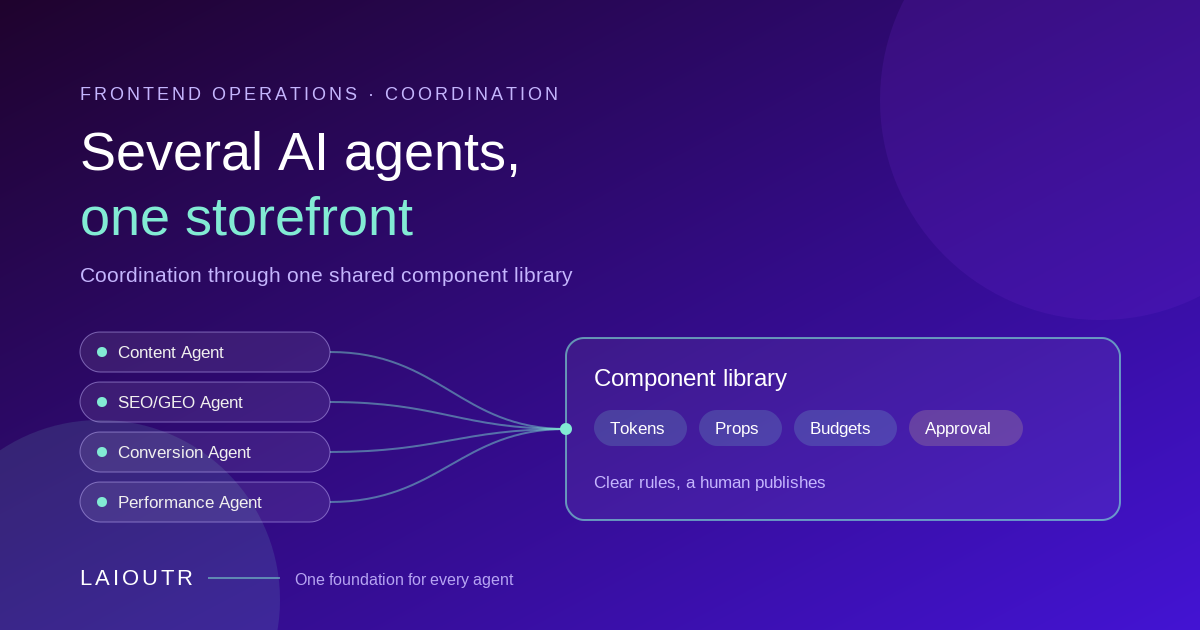Several AI Agents, One Storefront: Coordination Without Collisions
When several AI agents work on the same storefront, conflicts rarely happen between the agents thems…](https://www.laioutr.com/en/blog/frontend-operations-multi-agent-coordination-storefront-2026)
[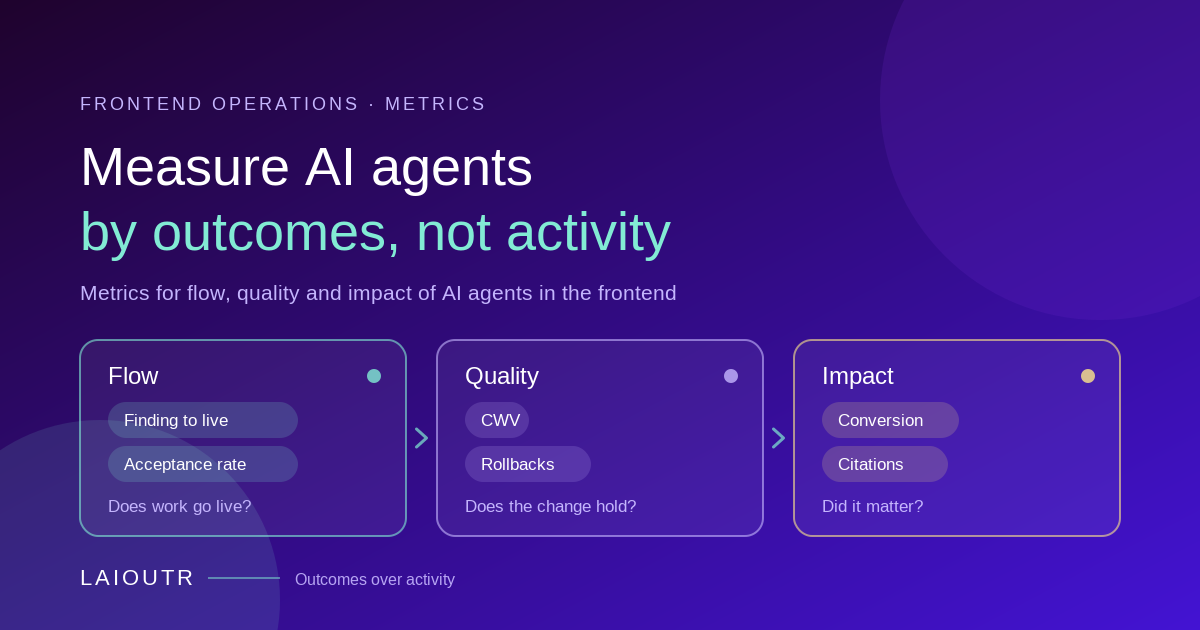Measuring AI Agents by Outcomes: Agentic Frontend Management Metrics
AI agents in the frontend should be measured by outcomes, not by activity. The number of prompts, ge…](https://www.laioutr.com/en/blog/frontend-operations-measuring-ai-agents-outcomes-2026)
[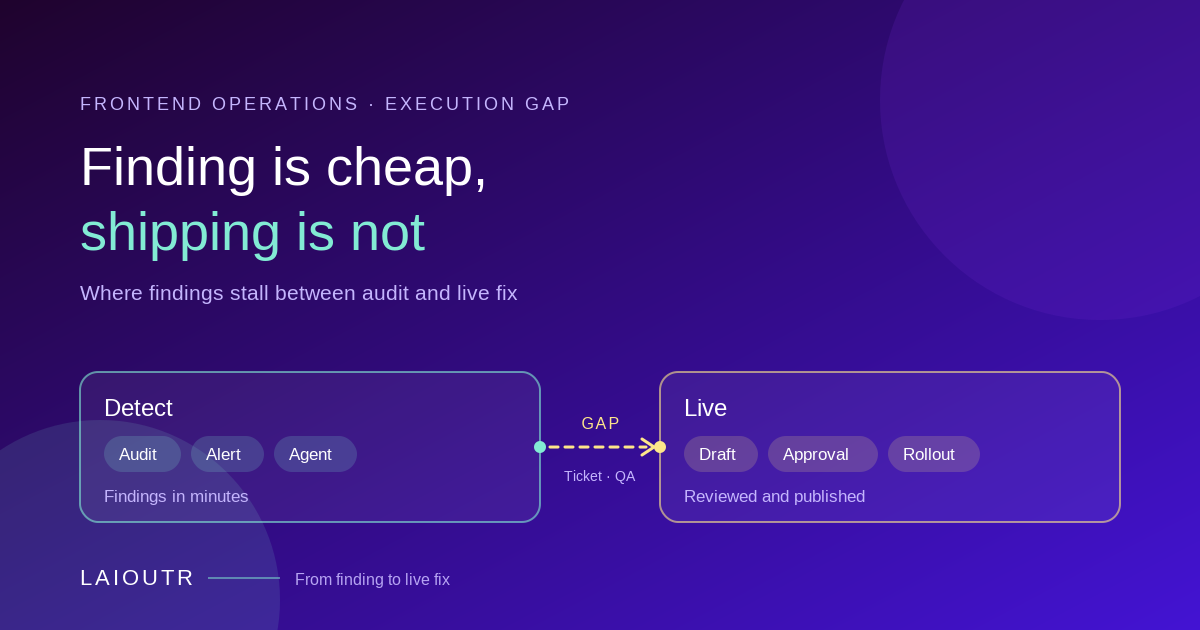The Execution Gap in the Frontend: Finding Is Cheap, Shipping Is Not
The execution gap in the frontend is the time, and the number of handoffs, between "we know wha…](https://www.laioutr.com/en/blog/frontend-operations-execution-gap-detect-vs-deploy-2026)
[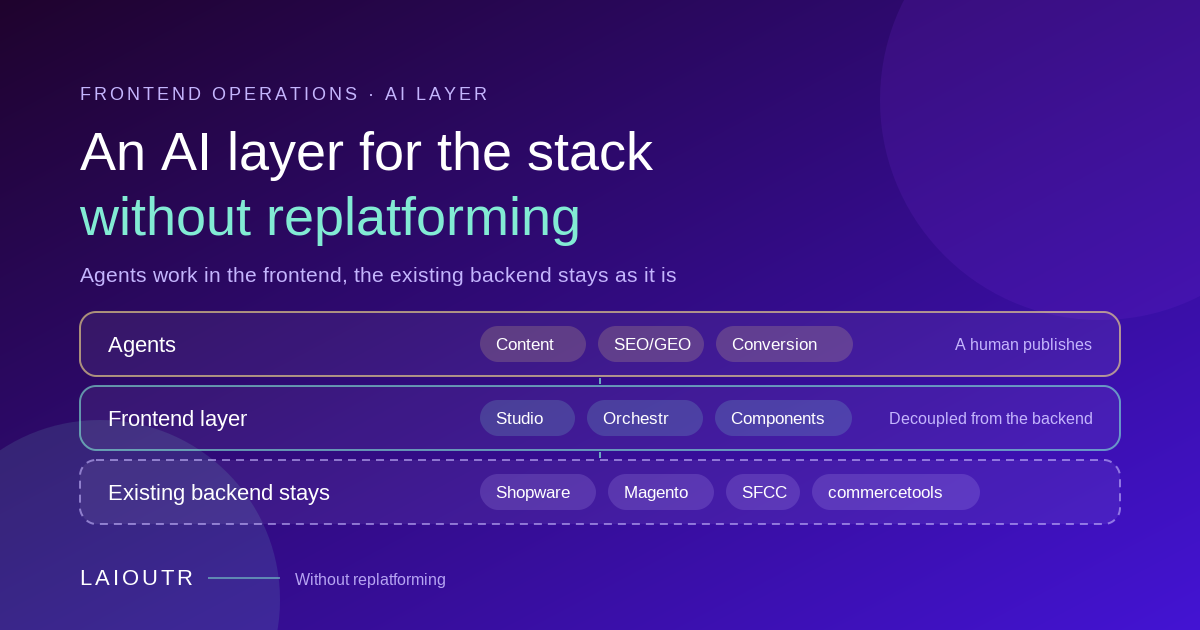Adding an AI Layer to an Existing Commerce Stack Without Replatforming
An AI layer can be added to an existing commerce stack without replacing the shop system. The most p…](https://www.laioutr.com/en/blog/frontend-operations-ai-layer-existing-stack-without-replatforming-2026)
[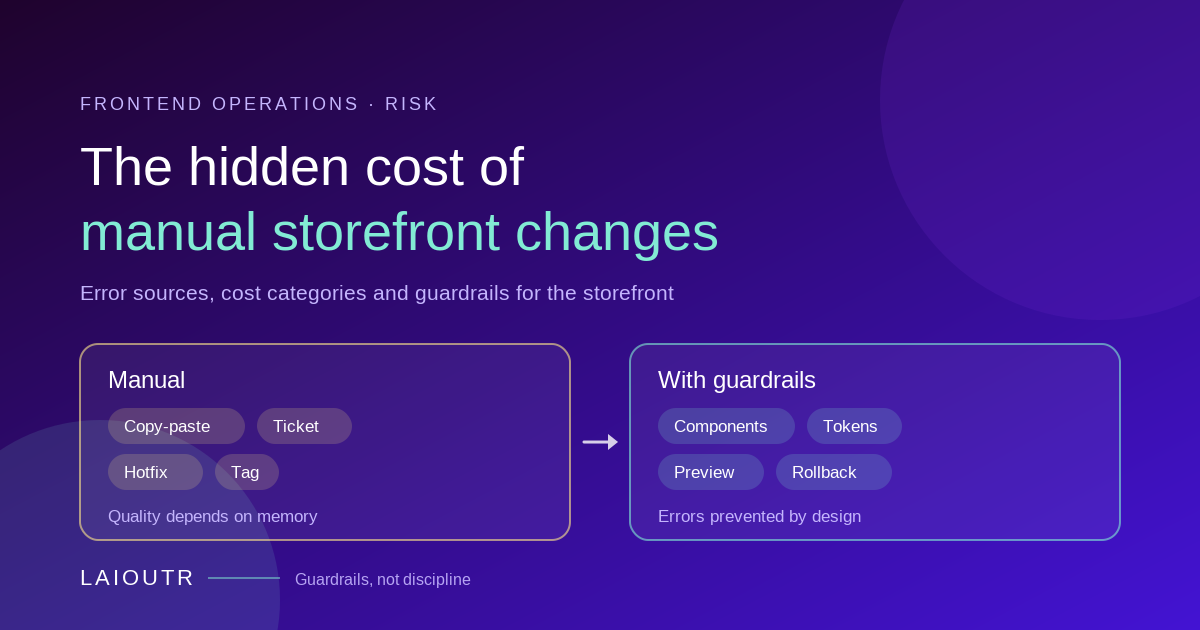The Hidden Cost of Manual Storefront Changes and How to Cut It
Manual frontend changes are the many small edits that keep a storefront running day to day: a new ba…](https://www.laioutr.com/en/blog/frontend-operations-hidden-cost-manual-storefront-changes-2026)
[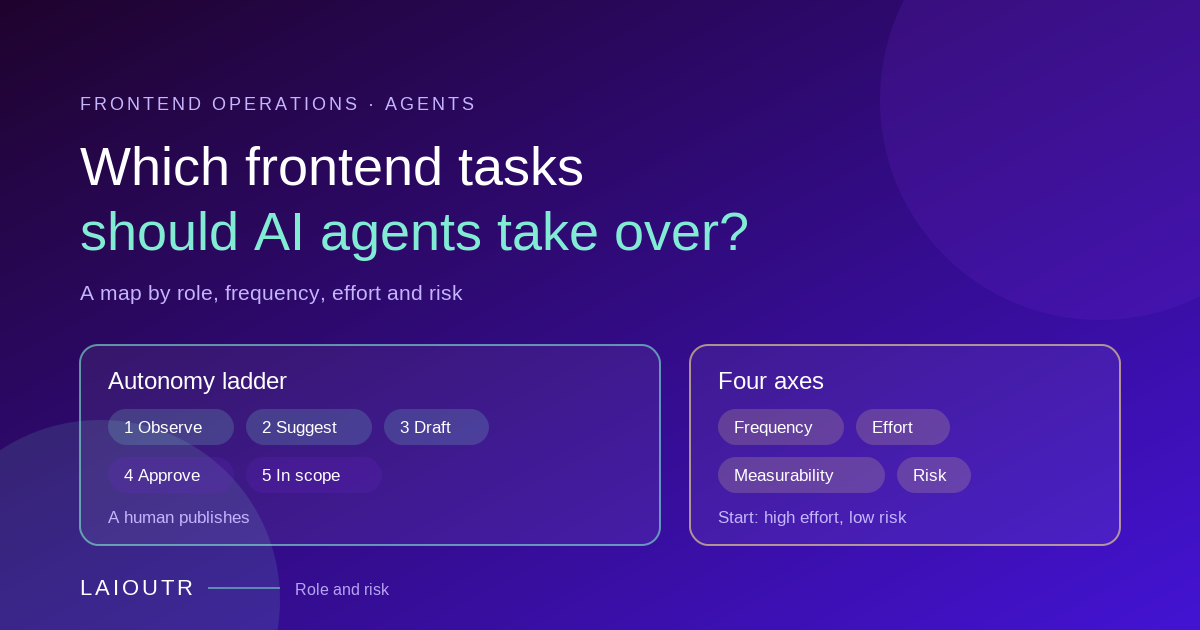Which Frontend Tasks Should AI Agents Take Over? Role and Risk Map
AI agents should first take over the frontend tasks that come up often, involve a lot of manual work…](https://www.laioutr.com/en/blog/frontend-operations-agent-task-map-role-risk-2026)
[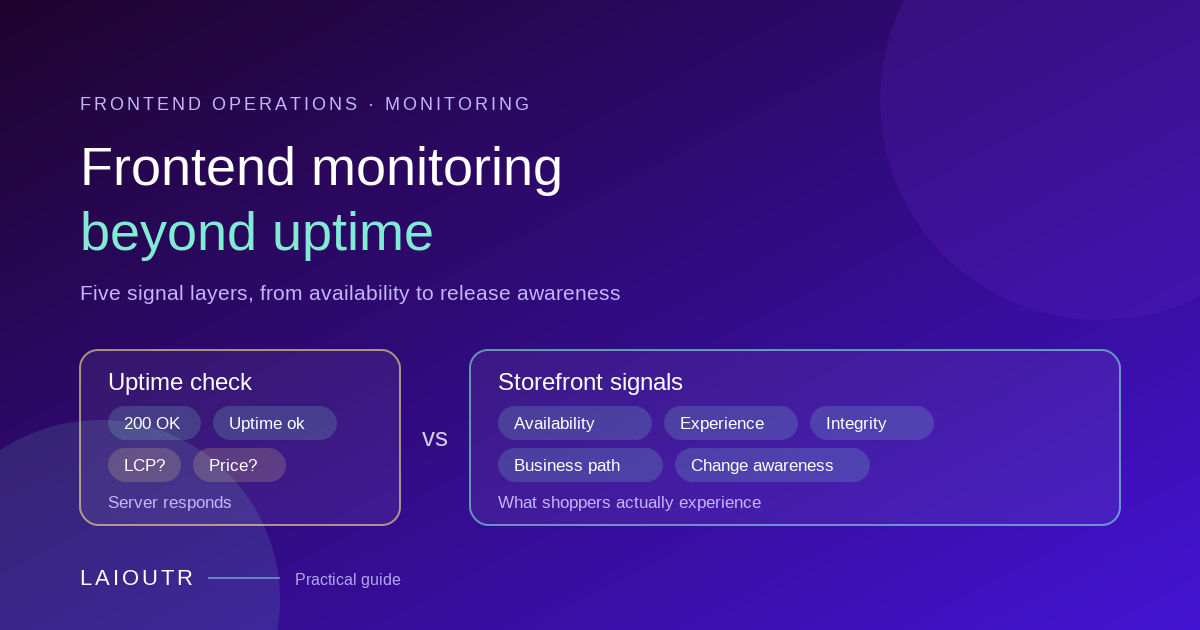Frontend Monitoring Beyond Uptime: Signals a Storefront Needs
Frontend monitoring beyond uptime means checking a storefront not only for availability but for what…](https://www.laioutr.com/en/blog/frontend-operations-monitoring-beyond-uptime-2026)
[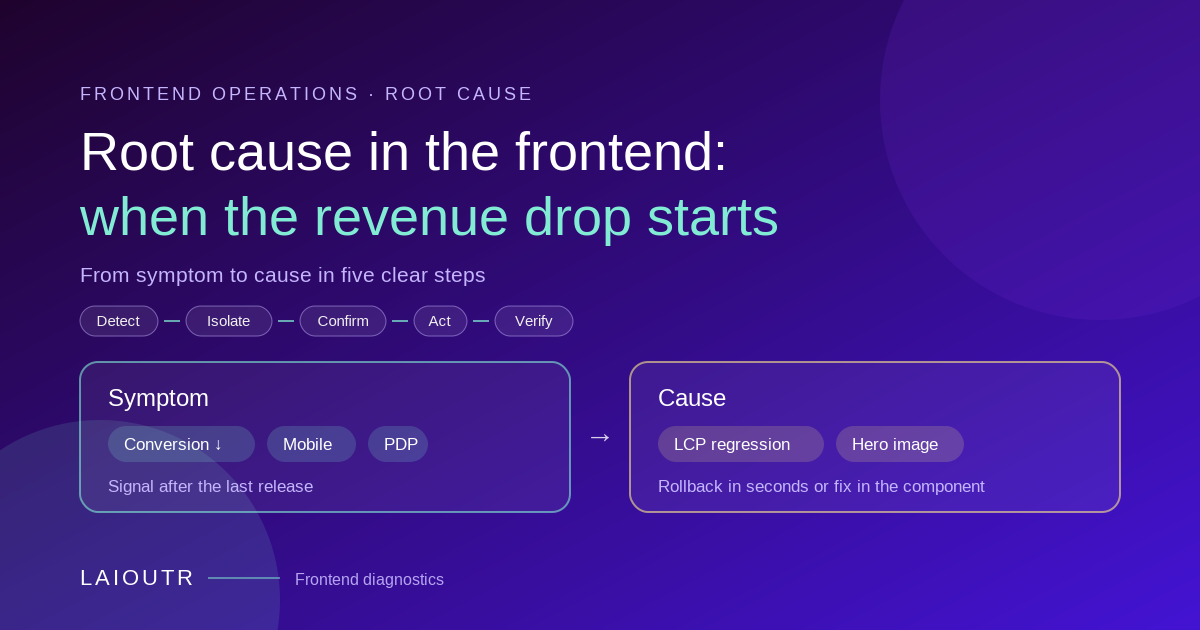Root Cause in the Frontend: When Revenue Drops Start in the Storefront
When revenue or conversion rate drops suddenly, the cause often is not traffic, pricing or the comme…](https://www.laioutr.com/en/blog/frontend-operations-root-cause-revenue-drop-storefront-2026)
[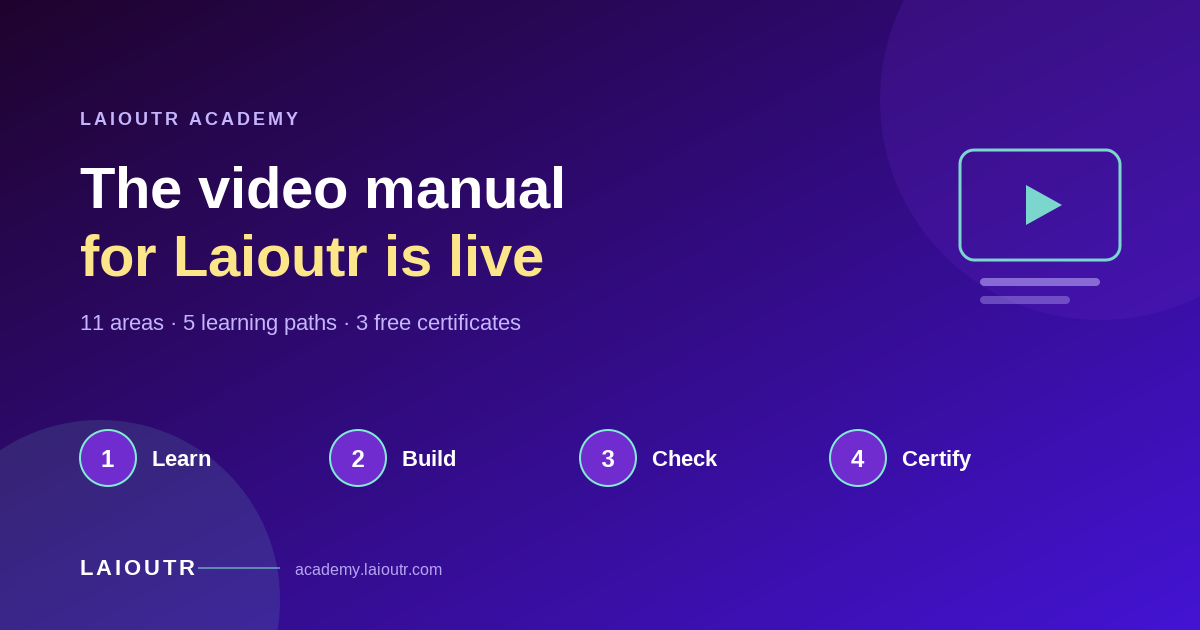Laioutr Academy Is Live: The Video Manual for Laioutr
Since October 15, 2026, the Laioutr Academy has been live at academy.laioutr.com. It is the user man…](https://www.laioutr.com/en/blog/laioutr-academy-launch-video-manual-certification)
[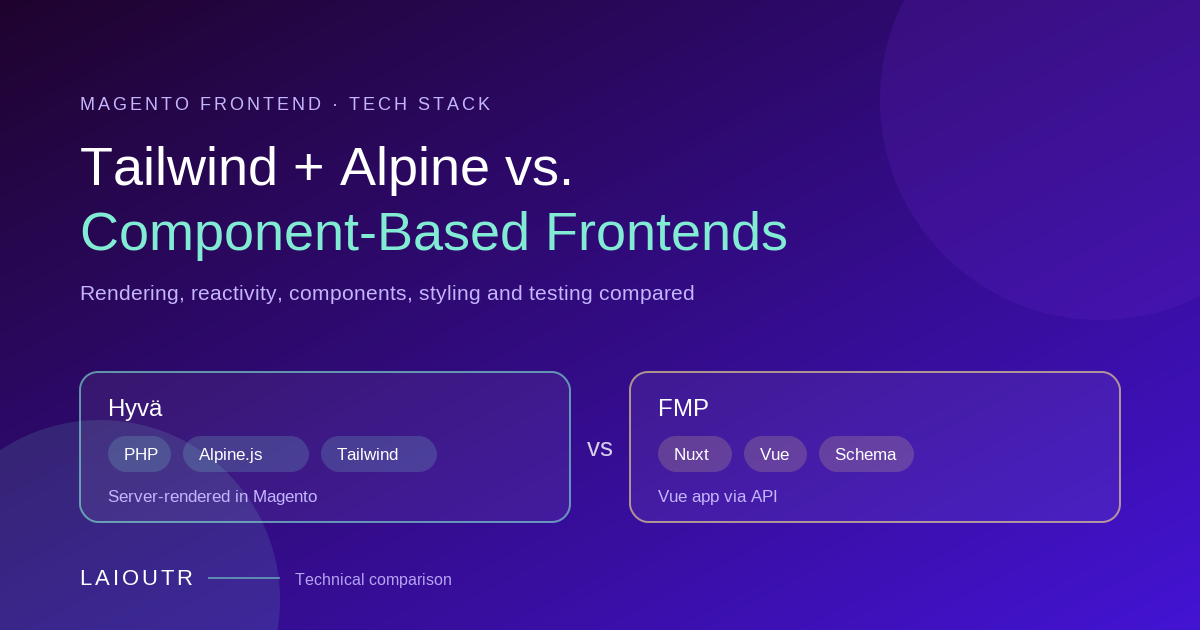Tailwind + Alpine vs. Component-Based Frontends for Magento
Hyvä renders Magento pages on the server with PHP templates and layout XML, adds interactivity throu…](https://www.laioutr.com/en/blog/tailwind-alpine-magento-vs-component-based-frontend-2026)
[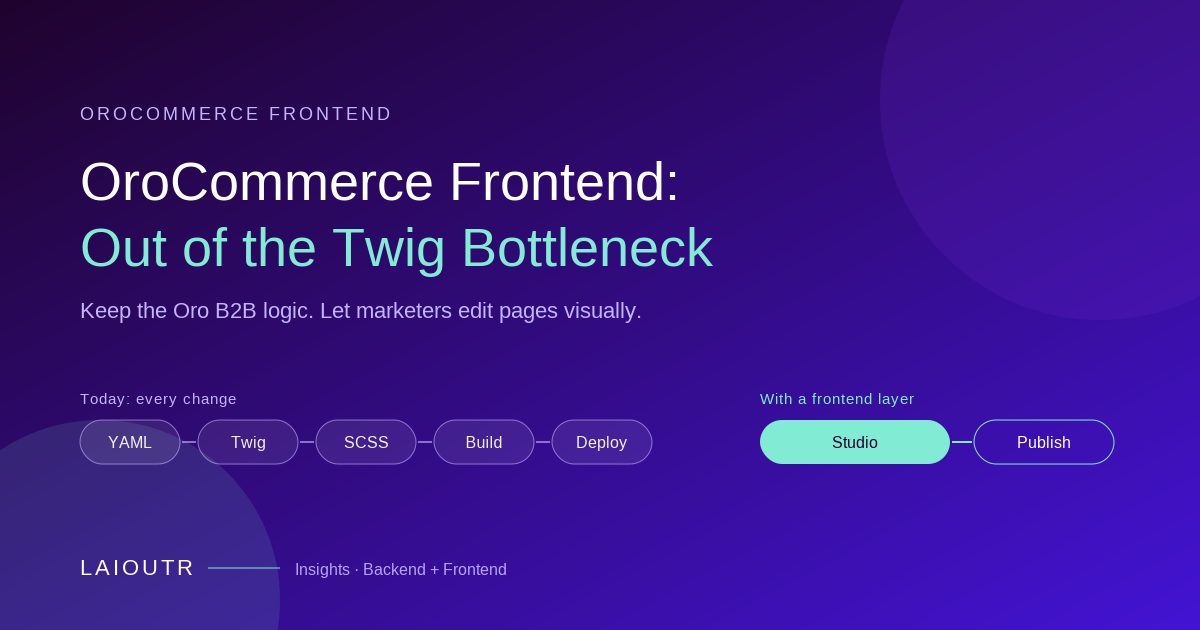OroCommerce Frontend: Out of the Twig and Layouts Bottleneck
The OroCommerce frontend is a server-rendered storefront built from Symfony bundles, OroLayouts and …](https://www.laioutr.com/en/blog/orocommerce-frontend-twig-layouts-bottleneck)
[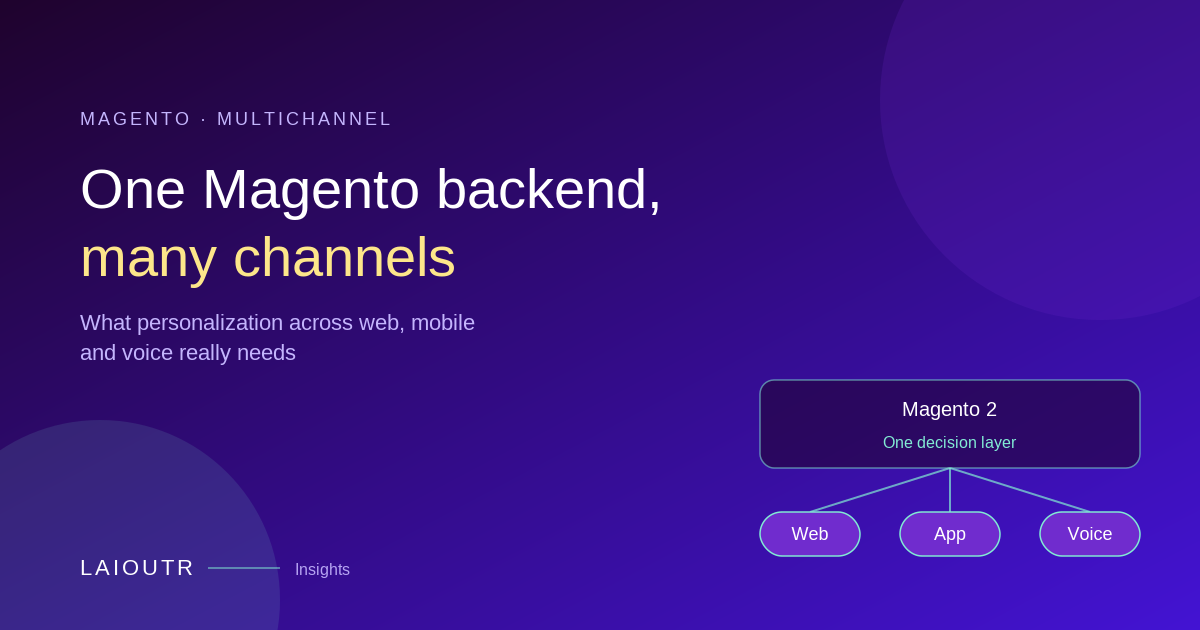One Magento Backend, Many Channels: Personalization in Practice
Personalization across web, mobile and voice on a single Magento backend does not start with a featu…](https://www.laioutr.com/en/blog/magento-multichannel-personalization-web-mobile-voice-2026)
[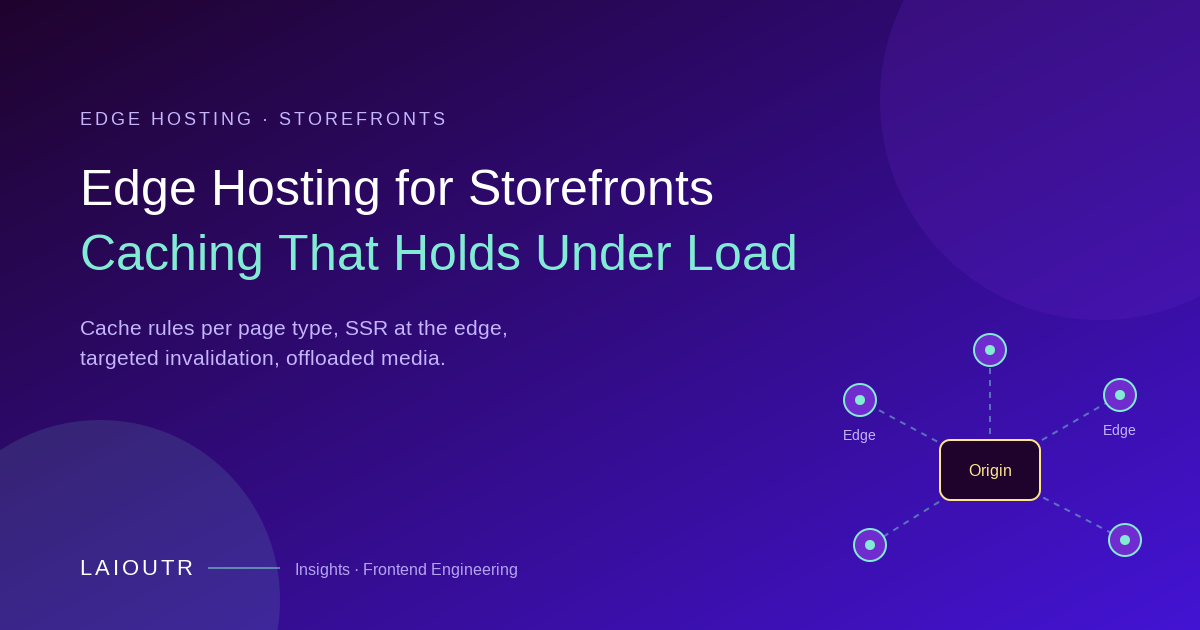Edge Hosting for Storefronts: Caching That Holds Under Peak Load
Edge hosting keeps a storefront fast under load when most requests never reach the origin: pages and…](https://www.laioutr.com/en/blog/edge-hosting-storefronts-peak-traffic-caching-2026)
[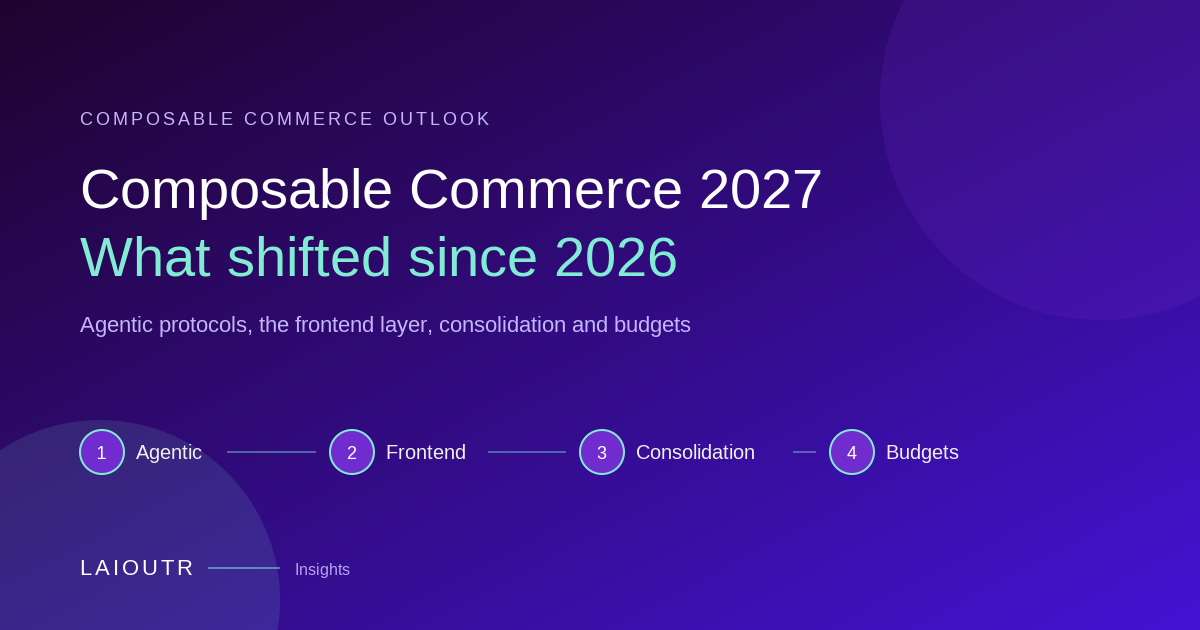Composable Commerce 2027: What Shifted and What Comes Next
Composable commerce enters 2027 with a different agenda than a year ago. The architecture question i…](https://www.laioutr.com/en/blog/composable-commerce-2027-outlook)
[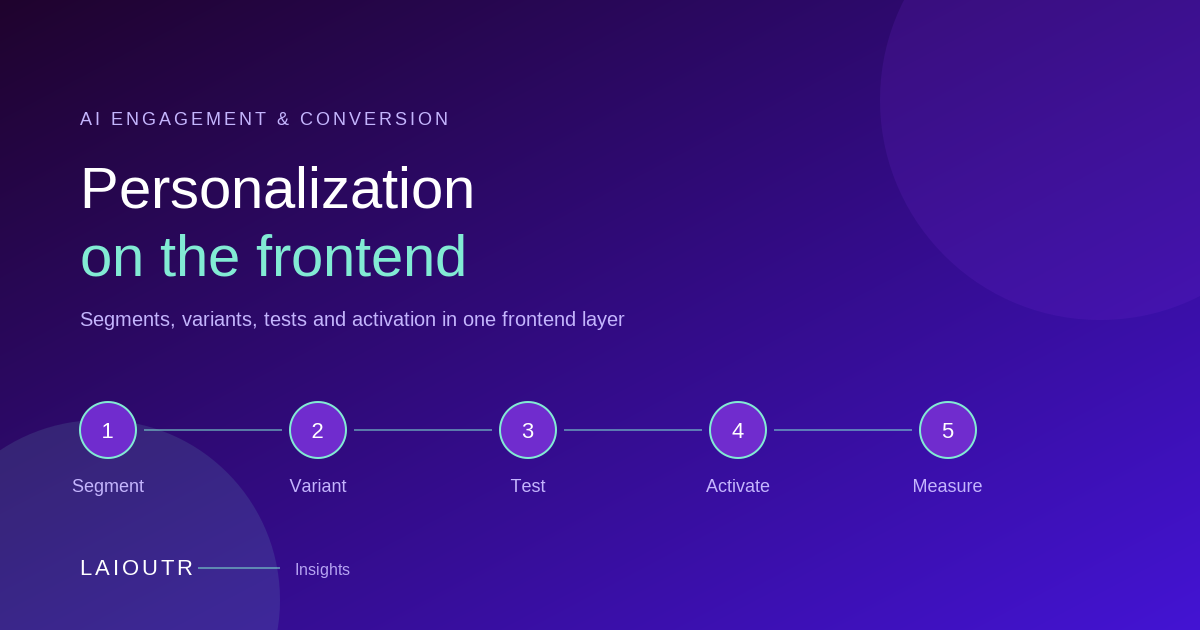AI Engagement and Conversion: Personalization on the Frontend
AI-driven engagement and conversion on the frontend rests on five mechanics: segments decide who see…](https://www.laioutr.com/en/blog/ai-engagement-conversion-frontend-personalization)
## Apps for the Laioutr platform
[View all apps](https://www.laioutr.com/en/apps)
[](https://www.laioutr.com/en/apps/shopify)
Laioutr
[Shopify](https://www.laioutr.com/en/apps/shopify)
Shopify is a commerce platform for selling online and in physical retail.
[](https://www.laioutr.com/en/apps/shopware)
Laioutr
[Shopware](https://www.laioutr.com/en/apps/shopware)
Shopware is a flexible ecommerce platform from Europe for product catalogs and omnichannel commerce.
[](https://www.laioutr.com/en/apps/adobe-commerce)
Laioutr
[Adobe Commerce](https://www.laioutr.com/en/apps/adobe-commerce)
Adobe Commerce is an enterprise commerce platform for complex, global B2C and B2B scenarios.
Planned
[](https://www.laioutr.com/en/apps/b2b-sellers)
Laioutr
[B2Bsellers](https://www.laioutr.com/en/apps/b2b-sellers)
B2B suite for Shopware that turns an online store into a professional B2B commerce platform.
Planned
[](https://www.laioutr.com/en/apps/commerce-layer)
Laioutr
[Commerce Layer](https://www.laioutr.com/en/apps/commerce-layer)
Commerce Layer is a headless commerce platform for making inventory and catalogs available online.
[](https://www.laioutr.com/en/apps/commercetools)
Laioutr
[Commercetools](https://www.laioutr.com/en/apps/commercetools)
Commercetools is a SaaS-based headless ecommerce platform used worldwide.
[](https://www.laioutr.com/en/apps/emporix)
Laioutr
[Emporix](https://www.laioutr.com/en/apps/emporix)
Emporix is a composable, API-first commerce platform for scalable B2B and B2C scenarios.
Planned
[](https://www.laioutr.com/en/apps/hcl-software)
Laioutr
[HCL Software](https://www.laioutr.com/en/apps/hcl-software)
Enterprise suite for digital commerce and experience with extensive configurability.
Planned
[](https://www.laioutr.com/en/apps/intershop)
Laioutr
[Intershop](https://www.laioutr.com/en/apps/intershop)
Enterprise commerce platform for complex B2B and B2C business models.
Planned
[](https://www.laioutr.com/en/apps/magento-2)
Laioutr
[Magento 2](https://www.laioutr.com/en/apps/magento-2)
Widely used, extensible commerce platform for B2C and B2B scenarios.
[](https://www.laioutr.com/en/apps/oxid-eshop)
Laioutr
[OXID eShop](https://www.laioutr.com/en/apps/oxid-eshop)
OXID eShop is an extensible commerce platform for complex B2B and B2C requirements.
Planned
[](https://www.laioutr.com/en/apps/patchworks)
Laioutr
[Patchworks](https://www.laioutr.com/en/apps/patchworks)
Patchworks is a low-code iPaaS that connects ecommerce, ERP, WMS, 3PL, and marketplaces.
Planned
[](https://www.laioutr.com/en/apps/PrestaShop)
Laioutr
[Prestashop](https://www.laioutr.com/en/apps/PrestaShop)
Open-source commerce platform for small and midsize merchants in Europe and beyond.
Planned
[](https://www.laioutr.com/en/apps/saleor)
Laioutr
[Saleor](https://www.laioutr.com/en/apps/saleor)
Open-source, API-first commerce platform built on GraphQL for custom storefronts.
Planned
[](https://www.laioutr.com/en/apps/salesforce-commerce-cloud)
Laioutr
[Salesforce Commerce Cloud](https://www.laioutr.com/en/apps/salesforce-commerce-cloud)
Salesforce Commerce Cloud is a cloud-based enterprise commerce platform for businesses of any size.
Planned
[](https://www.laioutr.com/en/apps/sap-commerce-cloud)
Laioutr
[SAP Commerce Cloud](https://www.laioutr.com/en/apps/sap-commerce-cloud)
Enterprise commerce platform for complex catalogs, pricing models, and omnichannel journeys.
Planned
[](https://www.laioutr.com/en/apps/scayle)
Laioutr
[Scayle](https://www.laioutr.com/en/apps/scayle)
SCAYLE is a commerce engine that helps brands and retailers scale their business.
Planned
[](https://www.laioutr.com/en/apps/spryker)
Laioutr
[Spryker](https://www.laioutr.com/en/apps/spryker)
Composable commerce platform for sophisticated B2B and B2C business models.
[](https://www.laioutr.com/en/apps/sylius)
Laioutr
[Sylius](https://www.laioutr.com/en/apps/sylius)
Sylius is a developer-friendly ecommerce framework for B2C and B2B shopping experiences.
Planned
[](https://www.laioutr.com/en/apps/vendure)
Laioutr
[Vendure](https://www.laioutr.com/en/apps/vendure)
Vendure is a headless commerce platform for businesses with complex requirements.
Coming Soon
[](https://www.laioutr.com/en/apps/vtex)
Laioutr
[VTEX](https://www.laioutr.com/en/apps/vtex)
Cloud-native, composable commerce platform for B2B and B2C at scale.
Planned
[](https://www.laioutr.com/en/apps/websale)
Laioutr
[Websale](https://www.laioutr.com/en/apps/websale)
Stable, enterprise-ready commerce backend for complex retail environments.
Strategy call
## The frontend as a control layer
A conversation about stack, roadmap and replatforming scenario. The outcome: a clear picture of how Laioutr fits, what it costs and how fast the go-live can happen.
*"After 30 minutes, we knew Laioutr makes our replatforming feasible."*
*Daniel B., CEO,* [*hygibox.de*](https://hygibox.de)
[Book a demo](https://www.laioutr.com/en/contact)
## Structured Data
```json
{
"@context": "https://schema.org",
"@graph": [
{
"@type": "Organization",
"@id": "https://www.laioutr.com/#identity",
"name": "Laioutr",
"legalName": "Laioutr GmbH",
"url": "https://www.laioutr.com/",
"logo": {
"@type": "ImageObject",
"url": "https://www.laioutr.com/laioutr-logo.png",
"width": 400,
"height": 400
},
"email": "info@laioutr.com",
"telephone": "+49 30 75435715",
"address": {
"@type": "PostalAddress",
"streetAddress": "Münchweilersteig 5",
"postalCode": "12559",
"addressLocality": "Berlin",
"addressCountry": "DE"
},
"vatID": "DE450905846",
"sameAs": [
"https://www.linkedin.com/company/laioutr",
"https://www.youtube.com/@Laioutr",
"https://x.com/laioutr"
]
},
{
"@type": "WebSite",
"@id": "https://www.laioutr.com/en/#website",
"url": "https://www.laioutr.com/en/",
"name": "Laioutr",
"inLanguage": "en",
"publisher": {
"@id": "https://www.laioutr.com/#identity"
}
},
{
"@type": "BlogPosting",
"@id": "https://www.laioutr.com/en/blog/dxp-vs-dxcp-difference#article",
"headline": "DXP vs DXCP: Understanding the Critical Difference in Digital Experience Platforms",
"description": "Understanding the critical difference between DXP and DXCP in digital experience platforms.",
"image": [
"https://eu-west-2.graphassets.com/cmii2mlqi0dux06l5543v7nkc/cmnucypviw8mi07mgmwsd5asa"
],
"datePublished": "2026-10-26T13:19:33.050636+00:00",
"dateModified": "2026-10-26T13:19:30.000356+00:00",
"inLanguage": "en",
"articleSection": "Insights",
"keywords": "Composable, Experience Operations, Headless Commerce, Digital Experience Platform (DXP), DXCP, Comparison",
"author": {
"@type": "Person",
"name": "Marcel Thiesies",
"jobTitle": "Co-Founder & CEO, Laioutr",
"image": "https://eu-west-2.graphassets.com/cmii2mlqi0dux06l5543v7nkc/cmj01b962364n07lb0iguvts5"
},
"publisher": {
"@id": "https://www.laioutr.com/#identity"
},
"mainEntityOfPage": {
"@id": "https://www.laioutr.com/en/blog/dxp-vs-dxcp-difference#webpage"
},
"isPartOf": {
"@id": "https://www.laioutr.com/en/#website"
}
},
{
"@type": "WebPage",
"@id": "https://www.laioutr.com/en/blog/dxp-vs-dxcp-difference#webpage",
"url": "https://www.laioutr.com/en/blog/dxp-vs-dxcp-difference",
"name": "DXP vs DXCP: Understanding the Critical Difference in Digital Experience Platforms",
"description": "Understanding the critical difference between DXP and DXCP in digital experience platforms.",
"inLanguage": "en",
"isPartOf": {
"@id": "https://www.laioutr.com/en/#website"
},
"breadcrumb": {
"@id": "https://www.laioutr.com/en/blog/dxp-vs-dxcp-difference#breadcrumb"
},
"primaryImageOfPage": {
"@type": "ImageObject",
"url": "https://eu-west-2.graphassets.com/cmii2mlqi0dux06l5543v7nkc/cmnucypviw8mi07mgmwsd5asa"
},
"datePublished": "2026-10-26T13:19:33.050636+00:00",
"dateModified": "2026-10-26T13:19:30.000356+00:00",
"mainEntity": {
"@id": "https://www.laioutr.com/en/blog/dxp-vs-dxcp-difference#article"
}
},
{
"@type": "BreadcrumbList",
"@id": "https://www.laioutr.com/en/blog/dxp-vs-dxcp-difference#breadcrumb",
"itemListElement": [
{
"@type": "ListItem",
"position": 1,
"name": "Laioutr",
"item": "https://www.laioutr.com/en/"
},
{
"@type": "ListItem",
"position": 2,
"name": "Insights",
"item": "https://www.laioutr.com/en/blogs/insights"
},
{
"@type": "ListItem",
"position": 3,
"name": "DXP vs DXCP: Understanding the Critical Difference in Digital Experience Platforms"
}
]
}
]
}
```