---
title: "Supply Chain Efficiency from the Frontend: What Customers See"
canonical_url: "https://www.laioutr.com/en/blog/efficient-supply-chains-commerce-frontend-perspective-2026"
locale: en
meta:
description: "Delivery promises, stock indicators, split shipments, click and collect: why delivery quality is decided in the frontend and how to keep promises honest."
"og:description": "Delivery promises, stock indicators, split shipments, click and collect: why delivery quality is decided in the frontend and how to keep promises honest."
"og:title": "Supply Chain Efficiency from the Frontend: What Customers See"
---

# Supply Chain Efficiency Looks Different from the Frontend
Table of contents
1. [1.Delivery promises on the PDP and at checkout](#delivery-promises-on-the-pdp-and-at-checkout)
2. [2.Stock indicators between real time and cache](#stock-indicators-between-real-time-and-cache)
3. [3.Being honest about split shipments and multiple parcels](#being-honest-about-split-shipments-and-multiple-parcels)
4. [4.Click and collect and store-level stock](#click-and-collect-and-store-level-stock)
5. [5.Return expectations as part of the delivery promise](#return-expectations-as-part-of-the-delivery-promise)
6. [6.Proactive communication when things slip](#proactive-communication-when-things-slip)
7. [7.When the frontend is more optimistic than the supply chain](#when-the-frontend-is-more-optimistic-than-the-supply-chain)
8. [8.Industry perspective: B2C, B2B, and multichannel retail](#industry-perspective-b2c-b2b-and-multichannel-retail)
When companies discuss supply chain efficiency, logistics and ERP teams usually own the conversation: warehouse locations, transport routes, safety stock, supplier negotiations. That focus makes sense, since it is where the physical work happens. But a large part of what customers actually experience as delivery quality is decided somewhere else entirely: in the frontend. That is where the delivery date appears on the product page. That is where a green dot says "in stock" while the warehouse system already shows a different status. That is where checkout promises a delivery the carrier can no longer keep. A supply chain can be technically flawless and still feel unreliable if the frontend tells the wrong story. This piece flips the usual angle: not the supply chain itself, but the interface where it meets the customer.
## Delivery promises on the PDP and at checkout
The delivery date on the product detail page is one of the most consequential statements in the entire purchase journey. It shapes the buying decision, sets an expectation, and stays the benchmark customers use days later to judge the actual delivery. The real question is how honestly that date is calculated. Does it come from a realistic combination of stock level, carrier SLA, and current order volume, or is it a static value entered once in the product record and never touched again? Many systems show a more optimistic date at checkout than on the PDP, either because both surfaces query different services or because the checkout team, under conversion pressure, prefers a tighter promise. Customers notice this inconsistency even when they cannot name it: it creates a vague sense that something does not add up.
A frontend that takes supply chain efficiency seriously treats the delivery date as a derived value, not an editorial field. That means centralizing the calculation in one place and rendering it consistently across the entire path to purchase, from category page to PDP to checkout to order confirmation. Where true real-time calculation is not technically possible, for instance because the ERP only syncs every few hours, a transparent range ("usually delivered in 3 to 5 business days") is more honest than a sharp date that is really a guess. Precision without backing is not a better customer experience, it is just a delayed breach of trust.
The stakes are highest during seasonal peaks. Black Friday, holiday shopping, or sale periods massively increase order volume, yet many frontends keep showing the "normal" delivery window because the logic is not tied to current load. The result is disappointed expectations exactly in the weeks that generate the largest share of revenue, and exactly when negative experiences show up fastest in reviews and support tickets.
## Stock indicators between real time and cache
The stock indicator is the second major promise made in the frontend, and it is technically especially prone to drift. For performance reasons, availability is frequently cached, sometimes for a few seconds, sometimes for minutes or longer, particularly on high-traffic category and landing pages. That is a legitimate technical decision, since a system that queries the inventory management system live on every page view scales poorly under heavy load. The consequence is that a window exists between what the customer sees and what is actually on the shelf, and within that window the two can diverge.
This window becomes a real problem specifically when stock is low. An item with two units left can sell out within seconds while the cached display still says "available." The customer adds it to the cart, goes through checkout, and only there, sometimes only after payment, learns that the item is not actually available. This is one of the most expensive moments in the entire purchase journey, because it combines a disappointed expectation with effort the customer has already invested.
A frontend that wants to stay consistent here needs a tiered strategy: generous caching where stock is comfortable and the risk of conflict is low, and a tighter, near-synchronous check once a defined threshold is crossed. This tiering is a frontend architecture decision, not purely a backend question. It determines which pages and components are allowed to query how often, and it needs a clear fallback for the case where the stock query briefly fails to respond: a conservative "limited availability" message beats a false positive.
## Being honest about split shipments and multiple parcels
Once an order contains multiple items sourced from different warehouses, different suppliers, or with different availability, a situation arises that many frontends handle poorly: the split shipment. Checkout often shows a single aggregated delivery date, even though the order will in fact arrive in two or three separate parcels. When the first parcel arrives before the second, it feels like an error to the customer, even though it exactly matches the planned logistics.
The fix is not to avoid split shipments, which would force a logistics constraint that is often not sensible, but to anticipate them transparently in the frontend. A checkout that already shows, before purchase, "this item ships separately, expected on X" removes the surprise from the later experience. The same applies to tracking: when an order splits into multiple shipments, tracking should reflect that without breaking, with clear mapping of which item is in which parcel, rather than showing a single tracking number that no longer matches the actual delivery.
This also touches returns logic, since a partial return from a multi-parcel order adds complexity to communicating who gets refunded for what and when. A frontend that establishes structure early, for example by tracking each shipment in the customer account as its own traceable unit, reduces support load far more effectively than any after-the-fact explanation in chat.
## Click and collect and store-level stock
Click and collect is an area where the distance between displayed and actual availability can grow especially wide, because the data source here is not a single central warehouse but potentially hundreds of individual stores. Store-level stock is synced less frequently than central warehouse stock in many systems, partly because point-of-sale systems are technically older, partly because reporting stock movements at the store level is organizationally deprioritized. The result: a customer reserves an item online as "available at store XY for pickup today" and then stands in front of an empty shelf.
This experience is especially damaging because it required a physical trip the customer took for nothing. Unlike a delayed online delivery, which at least stays within the familiar digital channel, a failed pickup breaks the channel entirely: the customer is standing in the physical store, experiencing in real time that the digital information was wrong. For retailers with a store network, this is one of the most direct touchpoints between the online frontend and physical retail, and sync frequency deserves proportionate care.
A realistic approach ties the promise shown in the frontend to the actual sync frequency: if store stock only updates once a day, the frontend should communicate that ("stock as of this morning") rather than implying a real-time accuracy that does not technically exist. A short reservation buffer also helps, where the store physically sets the item aside once a pickup has been requested, catching exactly the cases where another customer takes the last item off the shelf between display and arrival.
## Return expectations as part of the delivery promise
Delivery quality, from a customer's point of view, does not end at delivery, it includes the return expectation. A customer placing an order implicitly calculates how easy and how fast it will be to send an item back if it does not fit or does not work out. That expectation is shaped by the same frontend elements as delivery time: the return terms on the PDP, clarity at checkout, and communication in the customer account after delivery.
Where this expectation stays vague in the frontend, for example a generic "return policy" link instead of a concrete statement about the window and process, uncertainty builds up and demonstrably drives cart abandonment, especially for items with size or fit risk like apparel and footwear. Conversely, a frontend that treats the return process with the same concreteness as the delivery promise, with a visible return window and a clear statement on cost and process, can meaningfully reduce purchase hesitation.
Consistency between the promise and the backend process matters here too: a generously communicated return window that is then undercut by slow processing or unclear refund logic damages trust more than a more modest but reliably honored window would have. The same principle applies: honest beats generous-sounding.
## Proactive communication when things slip
Delays are unavoidable in any supply chain, whether caused by weather, carrier capacity constraints, customs processes in international shipping, or a single misrouted parcel. The decisive difference is not whether a delay happens, but whether the customer hears about it from the company first, or only notices on their own that the promised date has passed. Proactive communication, an automated notice in the customer account or by email as soon as a tracking status deviates from the original forecast, fundamentally changes how an incident is perceived, even when the actual delivery date does not change at all.
This requires the frontend, or the customer account system behind it, to have access to the same tracking status as the logistics system, and for a deviation to be recognized and triggered as an event rather than discovered later, manually, by support. Many companies have not closed this loop: the information about a delay technically exists, for instance at the carrier, but is not automatically passed through to the customer. The result is avoidable support load, since the customer reaches out to ask where the shipment is, a contact a single proactive message could have prevented.
The tone of this communication matters just as much. A delay message that is concrete ("new expected delivery: Thursday instead of Tuesday, reason: carrier capacity constraint") lands far better than a vague message with no new date. Uncertainty is harder for customers to sit with than bad but concrete news.
## When the frontend is more optimistic than the supply chain
The real core of this topic is a structural pattern: frontend teams optimize for conversion, logistics teams optimize for reliability and cost, and the two goals can conflict. A tighter delivery date tends to convert better, a more generous buffer protects against disappointment. Without an explicit reconciliation between the two, conversion logic tends to win in practice because it is measurable in the short term, while the cost of disappointed expectations only shows up later, through support volume, return rates, and repeat purchase rate.
The frontend should therefore not act as an independent decision-maker on delivery promises, but as a consistency layer that translates backend truth into an understandable, not flattering, customer expectation. Concretely: the numbers shown in the frontend should come from the same sources and carry the same freshness guarantees that apply operationally, not from a separate, marketing-driven configuration. Where a company deliberately works with a more optimistic date to lift conversion, that should be an informed decision, not an unplanned side effect of an architecture that fails to properly connect frontend and logistics.
## Industry perspective: B2C, B2B, and multichannel retail
The requirements for this consistency layer differ significantly by business model. In B2C, the individual customer is the focus, with comparatively short, standardized delivery windows and high sensitivity to small deviations, because a comparison to another B2C provider is always one click away. B2B looks different: orders are often larger, delivery windows longer and individually negotiated, and the relevant expectation is less "here tomorrow" and more "reliably on the agreed date." For B2B frontends, that means individual delivery agreements, framework contracts, and customer-specific pricing and availability need to be correctly reflected in the digital experience, which is technically more demanding than a uniform B2C logic.
Multichannel retail, in turn, brings the challenge that the online frontend, the app, and the physical store all need to share the same stock truth, even though the underlying systems have often grown separately over time. This is where supply chain efficiency, from a customer's perspective, hinges especially strongly on whether click and collect, in-store pickup, and online shipping operate on one shared, current data foundation or on several slightly offset truths.
The same principle applies across all three models, just weighted differently: a composable frontend that pulls stock, delivery, and return data from clearly defined services, rather than from scattered, sometimes outdated fields, makes it easier to establish this consistency across channels and business models and to configure it differently per segment where needed, for example stricter real-time requirements for large B2B accounts and more generous caching for standard B2C items. A composable digital experience platform that enables exactly this separation between presentation and data source is the technical foundation for a supply chain that feels in the frontend as reliable as it actually is in the backend. Companies shaping their Frontend Management Platform (FMP) accordingly, for example for B2B requirements through our B2B growth kit at [Growth Kit B2B](https://www.laioutr.com/en/growth-kit/b2b) or for multichannel scenarios through [Growth Kit Multichannel Retail](https://www.laioutr.com/en/growth-kit/multichannel-retail), shift the discussion from "how do we fix the supply chain" to "how do we represent it honestly." The technical basis for that lies in a composable, headless frontend that separates data sources cleanly while still bringing them together consistently, as described at [Composable Headless Frontend](https://www.laioutr.com/en/composable-headless-frontend), and in product configurations that can handle multi-brand and multi-market scenarios, see [multi-brand and multi-market](https://www.laioutr.com/en/product/multi-brand-multi-market). In the end, supply chain efficiency is not purely a logistics question, it is a question of how honestly the frontend tells the story of what the supply chain can actually deliver.
---
Share this article
[Share on Facebook](https://www.facebook.com/sharer/sharer.php?u=https%3A%2F%2Fwww.laioutr.com%2Fen%2Fblog%2Fefficient-supply-chains-commerce-frontend-perspective-2026) [Share on X](https://x.com/intent/post?url=https%3A%2F%2Fwww.laioutr.com%2Fen%2Fblog%2Fefficient-supply-chains-commerce-frontend-perspective-2026&text=) [Share on LinkedIn](https://www.linkedin.com/sharing/share-offsite/?url=https%3A%2F%2Fwww.laioutr.com%2Fen%2Fblog%2Fefficient-supply-chains-commerce-frontend-perspective-2026) [Share on Pinterest](https://pinterest.com/pin/create/button/?url=https%3A%2F%2Fwww.laioutr.com%2Fen%2Fblog%2Fefficient-supply-chains-commerce-frontend-perspective-2026&description=) [Share via email](mailto:?subject=&body=%0A%0Ahttps%3A%2F%2Fwww.laioutr.com%2Fen%2Fblog%2Fefficient-supply-chains-commerce-frontend-perspective-2026)
## More interesting articles
Practical know-how for frontend development, smart agents, and headless
[To the blog](https://www.laioutr.com/en/blogs)
[iPhone Duo and Ecommerce: What Merchants Need to Know Now
iPhone Duo goes on sale on October 23, 2026. Online stores don't need a dedicated app or a custo…](https://www.laioutr.com/en/blog/iphone-duo-ecommerce-foldable-storefront)
[Structured Product Data: How It Shows Up in Your Storefront
Structured product data means every product fact lives in a typed attribute with a unit, a stable id…](https://www.laioutr.com/en/blog/structured-product-data-pim-frontend-2026)
[44% Decide via Trial or PoC: How to Run a Storefront PoC in DACH
In DACH, software decisions are increasingly made hands-on: in the study "Software Buying in DA…](https://www.laioutr.com/en/blog/storefront-proof-of-concept-dach-buyers-2026)
[Frontend Management Platform Comparison: How to Choose the Right FMP
Choosing a frontend management platform (FMP) is less about feature lists and more about where your …](https://www.laioutr.com/en/blog/frontend-management-platform-comparison-how-to-choose-2026)
[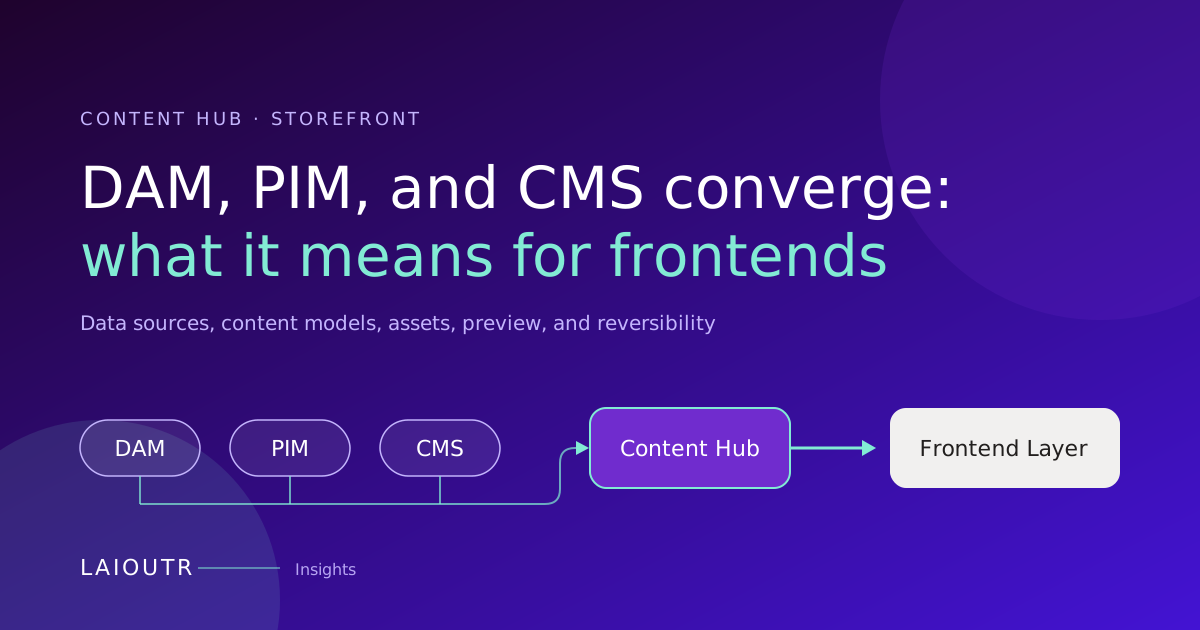DAM, PIM, and CMS Are Converging: What It Means for Your Storefront
DAM, PIM, and CMS vendors are moving into each other's territory, and more teams now evaluate on…](https://www.laioutr.com/en/blog/dam-pim-cms-convergence-content-hub-storefront-2026)
[Contentful Live Preview: What Your Frontend Has to Deliver
Contentful Live Preview lets editors see a draft right next to the entry editor and watch changes ap…](https://www.laioutr.com/en/blog/contentful-live-preview-frontend-perspective-2026)
[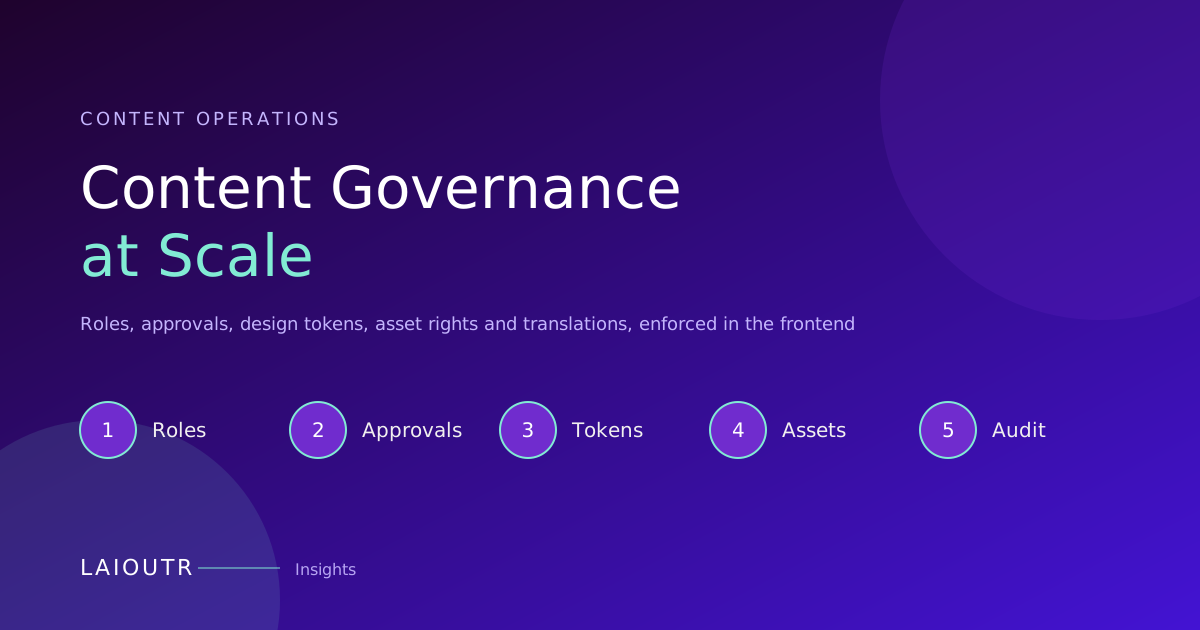Content Governance at Scale: Product Content and Brand Assets
Content governance at scale means that roles, approvals, brand rules, asset rights and translations …](https://www.laioutr.com/en/blog/content-governance-product-content-brand-assets-frontend-2026)
[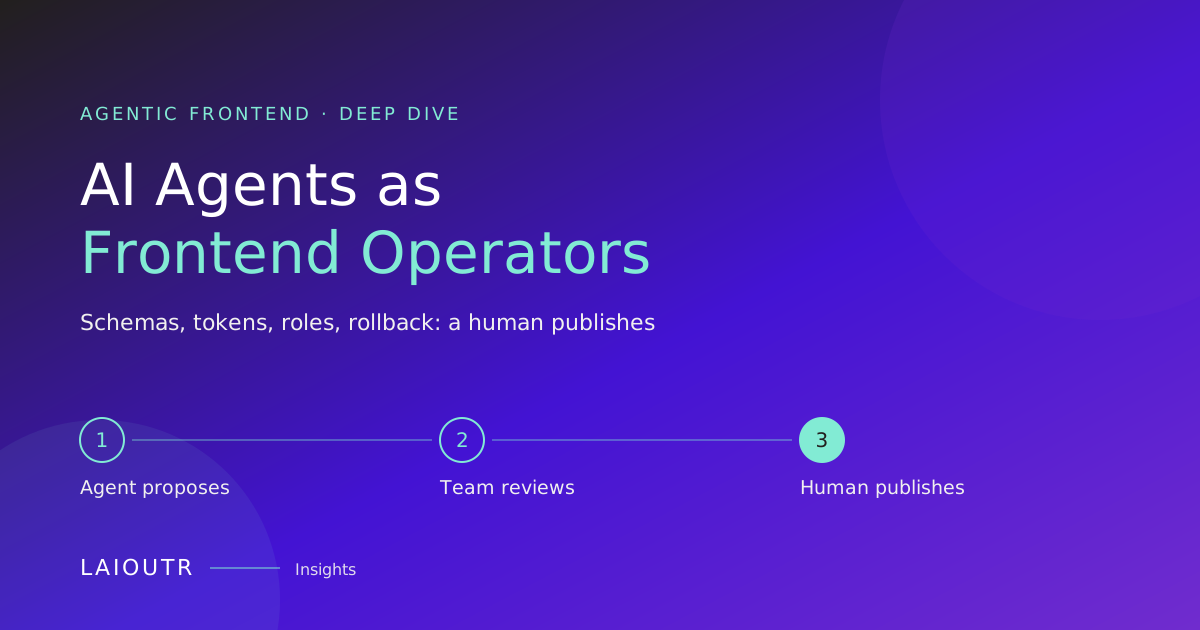AI Agents as Frontend Operators: Architecture and Control Model
An AI agent becomes a frontend operator when it watches the running storefront, spots concrete issue…](https://www.laioutr.com/en/blog/ai-agents-as-frontend-operators-2026)
[Shopping Agents Read Your Feed: What Agentic Commerce Changes
Agentic commerce adds a new reader to your product data: shopping agents in ChatGPT, Google AI Mode,…](https://www.laioutr.com/en/blog/shopping-agents-product-feeds-agentic-data-distribution-2026)
[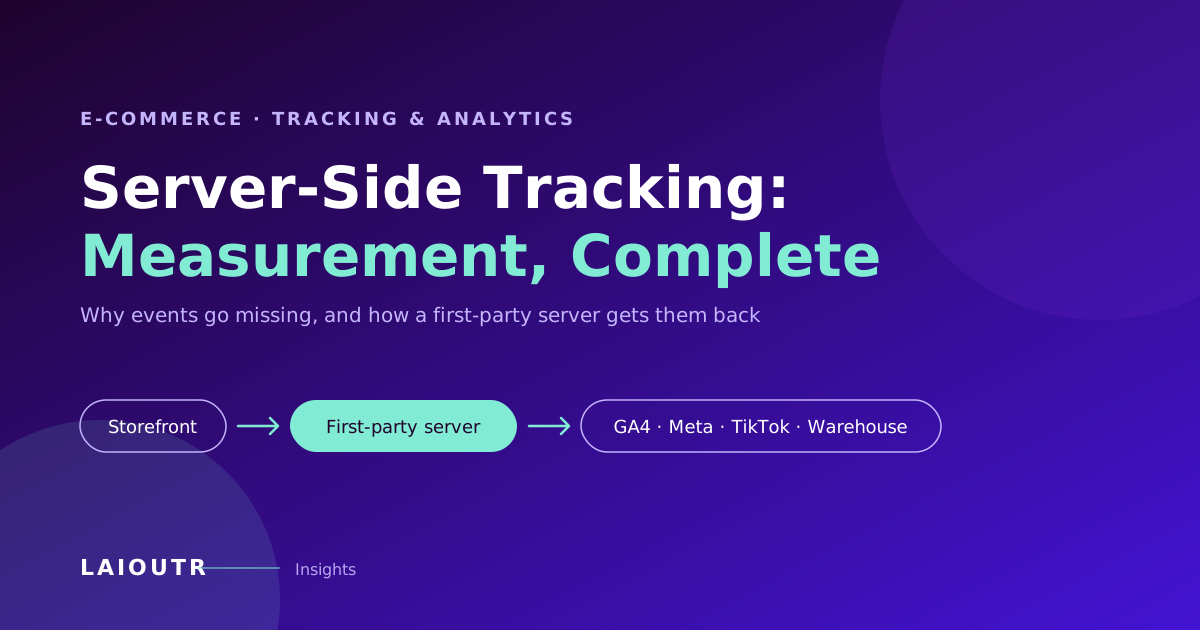Server-Side Tracking in E-Commerce: Making Measurement Complete Again
Server-side tracking moves the forwarding of analytics and conversion events from the visitor's …](https://www.laioutr.com/en/blog/server-side-tracking-ecommerce-complete-measurement-2026)
[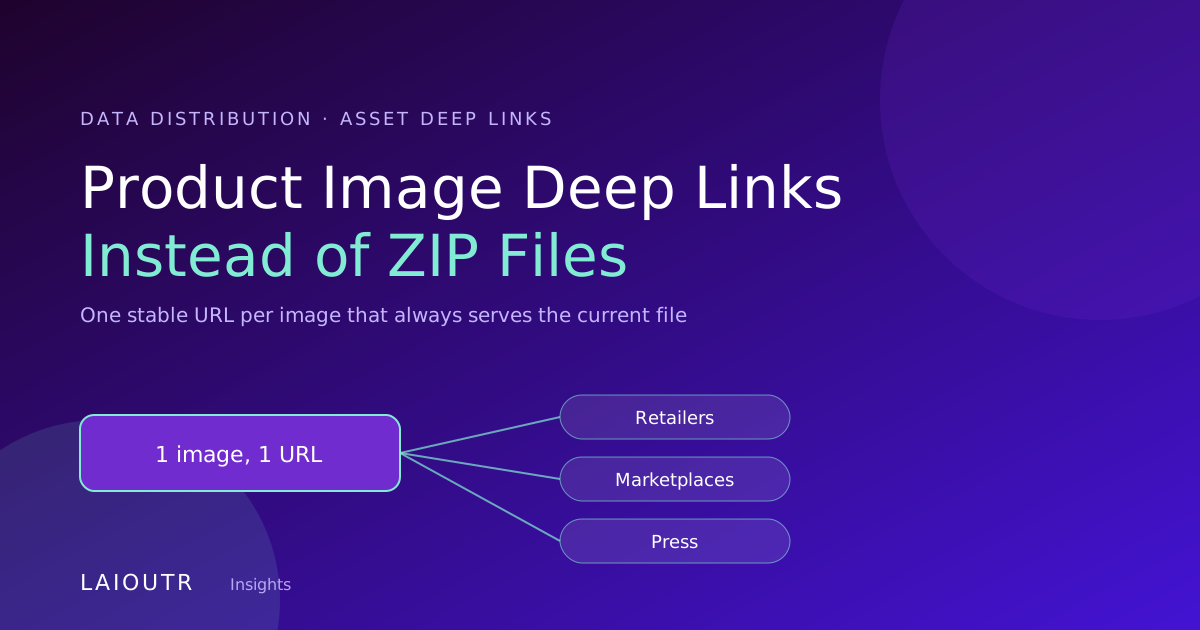Product Image Deep Links, Not ZIP Files: Assets That Stay Current
If you still send product images to retailers, marketplaces and press as ZIP files, every package st…](https://www.laioutr.com/en/blog/product-image-deeplinks-asset-distribution-2026)
[PrestaShop 8 to 9 Upgrade Without Replatforming: Decouple the Frontend
You can take most of the risk out of the PrestaShop 8 to 9 upgrade by moving the storefront off the …](https://www.laioutr.com/en/blog/prestashop-8-to-9-upgrade-without-replatforming-2026)
[Order Management With an OMS Like fulfillmenttools: The Frontend View
An efficient order management system decides which location fulfills an order, how much stock is rea…](https://www.laioutr.com/en/blog/order-management-fulfillmenttools-oms-frontend-2026)
[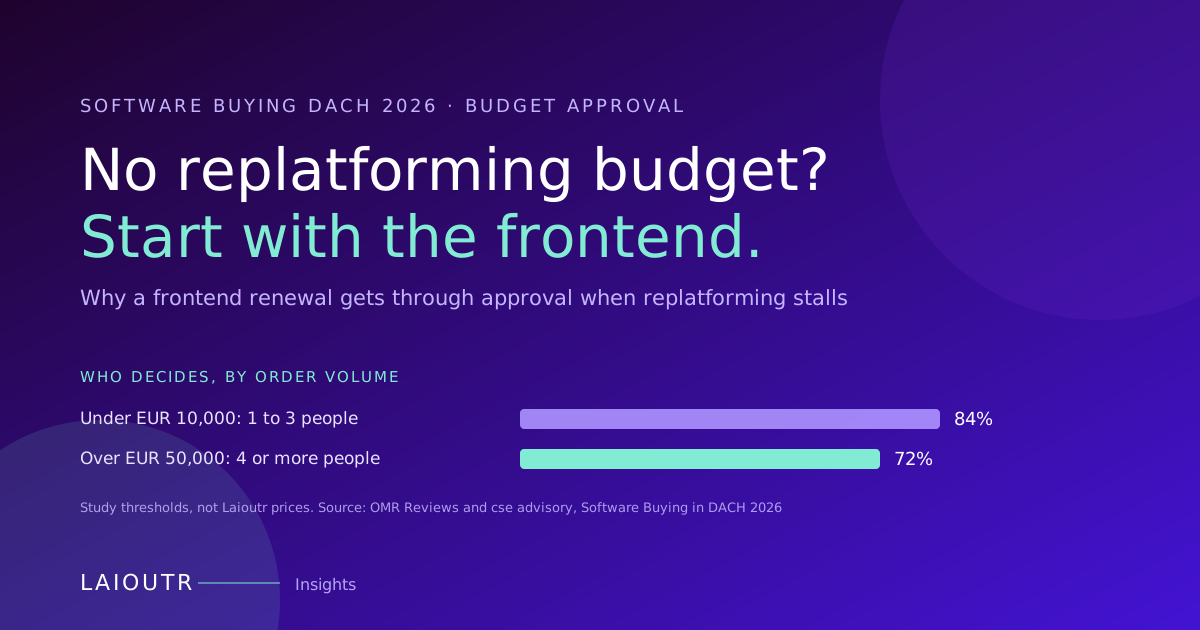No Replatforming Budget in 2026? Why the Frontend Gets Approved
If your 2026 budget has no room for a replatforming project, you are not alone, and you do not have …](https://www.laioutr.com/en/blog/no-replatforming-budget-frontend-project-approval-2026)
[Garden Retail Order Management: What Your Storefront Must Show
In garden and DIY retail, one cart can hold a parcel item, a patio set that ships by freight, live p…](https://www.laioutr.com/en/blog/garden-retail-order-management-seasonal-frontend-2026)
[](https://www.laioutr.com/en/apps/shopify)
Laioutr
[Shopify](https://www.laioutr.com/en/apps/shopify)
Shopify is a commerce platform for selling online and in physical retail.
[](https://www.laioutr.com/en/apps/shopware)
Laioutr
[Shopware](https://www.laioutr.com/en/apps/shopware)
Shopware is a flexible ecommerce platform from Europe for product catalogs and omnichannel commerce.
[](https://www.laioutr.com/en/apps/adobe-commerce)
Laioutr
[Adobe Commerce](https://www.laioutr.com/en/apps/adobe-commerce)
Adobe Commerce is an enterprise commerce platform for complex, global B2C and B2B scenarios.
Planned
[](https://www.laioutr.com/en/apps/b2b-sellers)
Laioutr
[B2Bsellers](https://www.laioutr.com/en/apps/b2b-sellers)
B2B suite for Shopware that turns an online store into a professional B2B commerce platform.
Planned
[](https://www.laioutr.com/en/apps/commerce-layer)
Laioutr
[Commerce Layer](https://www.laioutr.com/en/apps/commerce-layer)
Commerce Layer is a headless commerce platform for making inventory and catalogs available online.
[](https://www.laioutr.com/en/apps/commercetools)
Laioutr
[Commercetools](https://www.laioutr.com/en/apps/commercetools)
Commercetools is a SaaS-based headless ecommerce platform used worldwide.
[](https://www.laioutr.com/en/apps/emporix)
Laioutr
[Emporix](https://www.laioutr.com/en/apps/emporix)
Emporix is a composable, API-first commerce platform for scalable B2B and B2C scenarios.
Planned
[](https://www.laioutr.com/en/apps/hcl-software)
Laioutr
[HCL Software](https://www.laioutr.com/en/apps/hcl-software)
Enterprise suite for digital commerce and experience with extensive configurability.
Planned
[](https://www.laioutr.com/en/apps/intershop)
Laioutr
[Intershop](https://www.laioutr.com/en/apps/intershop)
Enterprise commerce platform for complex B2B and B2C business models.
Planned
[](https://www.laioutr.com/en/apps/magento-2)
Laioutr
[Magento 2](https://www.laioutr.com/en/apps/magento-2)
Widely used, extensible commerce platform for B2C and B2B scenarios.
[](https://www.laioutr.com/en/apps/oxid-eshop)
Laioutr
[OXID eShop](https://www.laioutr.com/en/apps/oxid-eshop)
OXID eShop is an extensible commerce platform for complex B2B and B2C requirements.
Planned
[](https://www.laioutr.com/en/apps/patchworks)
Laioutr
[Patchworks](https://www.laioutr.com/en/apps/patchworks)
Patchworks is a low-code iPaaS that connects ecommerce, ERP, WMS, 3PL, and marketplaces.
Planned
[](https://www.laioutr.com/en/apps/PrestaShop)
Laioutr
[Prestashop](https://www.laioutr.com/en/apps/PrestaShop)
Open-source commerce platform for small and midsize merchants in Europe and beyond.
Planned
[](https://www.laioutr.com/en/apps/saleor)
Laioutr
[Saleor](https://www.laioutr.com/en/apps/saleor)
Open-source, API-first commerce platform built on GraphQL for custom storefronts.
Planned
[](https://www.laioutr.com/en/apps/salesforce-commerce-cloud)
Laioutr
[Salesforce Commerce Cloud](https://www.laioutr.com/en/apps/salesforce-commerce-cloud)
Salesforce Commerce Cloud is a cloud-based enterprise commerce platform for businesses of any size.
Planned
[](https://www.laioutr.com/en/apps/sap-commerce-cloud)
Laioutr
[SAP Commerce Cloud](https://www.laioutr.com/en/apps/sap-commerce-cloud)
Enterprise commerce platform for complex catalogs, pricing models, and omnichannel journeys.
Planned
[](https://www.laioutr.com/en/apps/scayle)
Laioutr
[Scayle](https://www.laioutr.com/en/apps/scayle)
SCAYLE is a commerce engine that helps brands and retailers scale their business.
Planned
[](https://www.laioutr.com/en/apps/spryker)
Laioutr
[Spryker](https://www.laioutr.com/en/apps/spryker)
Composable commerce platform for sophisticated B2B and B2C business models.
[](https://www.laioutr.com/en/apps/sylius)
Laioutr
[Sylius](https://www.laioutr.com/en/apps/sylius)
Sylius is a developer-friendly ecommerce framework for B2C and B2B shopping experiences.
Planned
[](https://www.laioutr.com/en/apps/vendure)
Laioutr
[Vendure](https://www.laioutr.com/en/apps/vendure)
Vendure is a headless commerce platform for businesses with complex requirements.
Coming Soon
[](https://www.laioutr.com/en/apps/vtex)
Laioutr
[VTEX](https://www.laioutr.com/en/apps/vtex)
Cloud-native, composable commerce platform for B2B and B2C at scale.
Planned
[](https://www.laioutr.com/en/apps/websale)
Laioutr
[Websale](https://www.laioutr.com/en/apps/websale)
Stable, enterprise-ready commerce backend for complex retail environments.

Strategy call
## Ready to turn your frontend into a control layer?
Show us your stack, your roadmap, your replatforming scenario, and we'll show you how Laioutr fits, what it costs, and how fast you go live.
*"After 30 minutes, we knew Laioutr makes our replatforming feasible." - Daniel B., CEO,* [*hygibox.de*](https://hygibox.de)
[Book a demo](https://www.laioutr.com/en/contact)
## Structured Data
```json
{
"@context": "https://schema.org",
"@graph": [
{
"@type": "Organization",
"@id": "https://www.laioutr.com/#identity",
"name": "Laioutr",
"legalName": "Laioutr GmbH",
"url": "https://www.laioutr.com/",
"logo": {
"@type": "ImageObject",
"url": "https://www.laioutr.com/laioutr-logo.png",
"width": 400,
"height": 400
},
"email": "info@laioutr.com",
"telephone": "+49 30 75435715",
"address": {
"@type": "PostalAddress",
"streetAddress": "Münchweilersteig 5",
"postalCode": "12559",
"addressLocality": "Berlin",
"addressCountry": "DE"
},
"vatID": "DE450905846",
"sameAs": [
"https://www.linkedin.com/company/laioutr",
"https://www.youtube.com/@Laioutr",
"https://x.com/laioutr"
]
},
{
"@type": "WebSite",
"@id": "https://www.laioutr.com/en/#website",
"url": "https://www.laioutr.com/en/",
"name": "Laioutr",
"inLanguage": "en",
"publisher": {
"@id": "https://www.laioutr.com/#identity"
}
},
{
"@type": "BlogPosting",
"@id": "https://www.laioutr.com/en/blog/efficient-supply-chains-commerce-frontend-perspective-2026#article",
"headline": "Supply Chain Efficiency Looks Different from the Frontend",
"description": "Delivery promises, stock indicators, split shipments, click and collect: why delivery quality is decided in the frontend and how to keep promises honest.",
"image": [
"https://eu-west-2.graphassets.com/cmii2mlqi0dux06l5543v7nkc/cmtqvwjj1vnjj06lb8fzutjrq"
],
"datePublished": "2026-09-07T06:54:18.923951+00:00",
"dateModified": "2026-09-07T06:54:18.517822+00:00",
"inLanguage": "en",
"articleSection": "Insights",
"keywords": "Composable, Experience Operations, Storefront Experience, Industry & Trends",
"author": {
"@type": "Person",
"name": "Marcel Thiesies",
"jobTitle": "Co-Founder & CEO, Laioutr",
"image": "https://eu-west-2.graphassets.com/cmii2mlqi0dux06l5543v7nkc/cmj01b962364n07lb0iguvts5"
},
"publisher": {
"@id": "https://www.laioutr.com/#identity"
},
"mainEntityOfPage": {
"@id": "https://www.laioutr.com/en/blog/efficient-supply-chains-commerce-frontend-perspective-2026#webpage"
},
"isPartOf": {
"@id": "https://www.laioutr.com/en/#website"
}
},
{
"@type": "WebPage",
"@id": "https://www.laioutr.com/en/blog/efficient-supply-chains-commerce-frontend-perspective-2026#webpage",
"url": "https://www.laioutr.com/en/blog/efficient-supply-chains-commerce-frontend-perspective-2026",
"name": "Supply Chain Efficiency Looks Different from the Frontend",
"description": "Delivery promises, stock indicators, split shipments, click and collect: why delivery quality is decided in the frontend and how to keep promises honest.",
"inLanguage": "en",
"isPartOf": {
"@id": "https://www.laioutr.com/en/#website"
},
"breadcrumb": {
"@id": "https://www.laioutr.com/en/blog/efficient-supply-chains-commerce-frontend-perspective-2026#breadcrumb"
},
"primaryImageOfPage": {
"@type": "ImageObject",
"url": "https://eu-west-2.graphassets.com/cmii2mlqi0dux06l5543v7nkc/cmtqvwjj1vnjj06lb8fzutjrq"
},
"datePublished": "2026-09-07T06:54:18.923951+00:00",
"dateModified": "2026-09-07T06:54:18.517822+00:00",
"mainEntity": {
"@id": "https://www.laioutr.com/en/blog/efficient-supply-chains-commerce-frontend-perspective-2026#article"
}
},
{
"@type": "BreadcrumbList",
"@id": "https://www.laioutr.com/en/blog/efficient-supply-chains-commerce-frontend-perspective-2026#breadcrumb",
"itemListElement": [
{
"@type": "ListItem",
"position": 1,
"name": "Laioutr",
"item": "https://www.laioutr.com/en/"
},
{
"@type": "ListItem",
"position": 2,
"name": "Insights",
"item": "https://www.laioutr.com/en/blogs/insights"
},
{
"@type": "ListItem",
"position": 3,
"name": "Supply Chain Efficiency Looks Different from the Frontend"
}
]
}
]
}
```