---
title: "DXP Architecture Over Vendor Choice"
canonical_url: "https://www.laioutr.com/en/blog/modernize-dxp"
locale: en
meta:
description: "DXP success depends on architecture decisions, not vendor choice. Monolithic platforms become straightjackets; composable design preserves flexibility."
"og:description": "DXP success depends on architecture decisions, not vendor choice. Monolithic platforms become straightjackets; composable design preserves flexibility."
"og:title": "DXP Architecture Over Vendor Choice"
---
# Beyond Platform Lock-In: Why DXP Architecture Decisions Matter More Than Vendor Choice
Table of contents
1. 1.The Architectural Truth Your Vendor Won't Discuss
2. 2.What Martec's Law Actually Means for Your Organization
3. [3.The Two Types of Modernization, and Why Most Organizations Choose Wrong](#the-two-types-of-modernization-and-why-most-organizations-choose-wrong)
4. [4.The Architecture Principles That Actually Matter](#the-architecture-principles-that-actually-matter)
5. [5.The Real Cost of Inaction](#the-real-cost-of-inaction)
6. [6.How to Start Thinking About Your DXP Architecture](#how-to-start-thinking-about-your-dxp-architecture)
7. [7.The Strategic Payoff](#the-strategic-payoff)
The digital experience platform market has spent the last decade selling a seductive story: buy our platform, integrate your content, deploy experiences, measure results. Deploy at scale. Achieve digital transformation. For many organizations, this narrative has led to expensive monolithic implementations that now function as straightjackets.
We're watching a fundamental shift in how enterprises think about digital experience infrastructure. It's not about choosing the right DXP vendor anymore. It's about building the right architecture first, then fitting vendors and tools into that structure.
This is one of the most underappreciated strategic decisions marketing and technology leaders face. And it determines whether your digital programs stay agile or calcify into legacy systems within five years.
## The Architectural Truth Your Vendor Won't Discuss
Every major DXP platform is built on the same fundamental assumption: your content, your customer data, your experience logic, and your delivery mechanisms should be tightly coupled within a single system. That architectural coupling was sensible when digital channels were predictable and relatively static. A website, maybe a mobile app, some email. The experience layers didn't change fast. The data sources didn't multiply overnight. The underlying content structure could remain stable for years.
That world no longer exists.
Today, your organization needs to deliver experiences across web, mobile apps, progressive web apps, voice assistants, in-app messaging, email, SMS, marketing automation platforms, and channels that don't exist yet. Each of those channels has different requirements for content structure, personalization logic, and performance constraints. Your content lives in multiple sources: product information systems, legacy databases, third-party data providers, real-time event streams. Your customer data sits in your CDP, your CRM, your loyalty system, your analytics platform.
The traditional DXP architecture can't absorb this complexity without either becoming impossibly complicated or forcing you to funnel everything through its proprietary data model. And when you funnel everything through a single platform's data model, you've committed to that platform's evolution path. If the platform stagnates, so does your ability to adapt.
This is why the most strategically advanced organizations are moving away from platform-centric thinking and toward architectural principles first.
## What Martec's Law Actually Means for Your Organization
Technology change moves faster than organizational change. This isn't a controversial statement anymore; it's an observable fact in every enterprise we work with.
What matters is understanding the implications at the infrastructure layer. Your monolithic DXP platform represents organizational rigidity embedded in technology. It forces your digital strategy to move at the pace your platform can evolve. When that platform enters maintenance mode, your entire digital roadmap effectively pauses.
We see this repeatedly with organizations running multi-million dollar DXP implementations that have become strategic liabilities. They're not failing in a dramatic way. They're just slowly becoming obstacles to the decisions you need to make.
The cost of that constraint isn't just financial, though that's real. It's strategic. While your team is negotiating with your platform vendor about what's included in the next release, your competitors are integrating point solutions, experimenting with emerging channels, and adapting to market changes in weeks instead of quarters.
The organizations that win aren't the ones with the most sophisticated platform. They're the ones that can make independent technical decisions without organizational friction. That's an architectural property, not a vendor property.
## The Two Types of Modernization, and Why Most Organizations Choose Wrong
When we work with clients facing the question of DXP modernization, we typically see two response patterns, and the choice between them determines whether modernization is a strategic win or a costly reset.
**Path One: Incremental Architectural Decoupling**
This approach starts with the assumption that your legacy DXP contains business value that shouldn't be thrown away. There are 50,000 content items in there. Workflows and review processes are embedded in the system. Editors have learned the interface. But instead of accepting the platform's architectural constraints, you gradually build independence from it.
You start by building a content abstraction layer that can speak to your legacy system but also to new data sources. You modernize your delivery layer independently of your content repository. You introduce API-first thinking even though your platform was built for batch publishing. Over time, your legacy platform becomes one data source among many, rather than the source of truth for your entire digital strategy.
This path takes longer. It requires technical sophistication and discipline about architectural separation of concerns. But it lets you maintain continuity in your team's workflows, preserve existing content investments, and gradually shift your technical footprint.
**Path Two: Greenfield Replacement with Tactical Coexistence**
This approach starts new digital initiatives on modern architecture while maintaining the legacy platform for mature, stable experiences. Over time, you're not migrating legacy content to new systems; you're starving the legacy system by redirecting traffic and investment toward the new architecture.
This path is faster for new digital initiatives. It gives you complete architectural freedom. But it commits your organization to running two systems in parallel for a significant period, managing content across two repositories, and eventually making a final cutover that's both risky and expensive.
## The Architecture Principles That Actually Matter
Regardless of which path you choose, several architectural principles determine whether your modernization effort succeeds:
**Content Source Abstraction**
Your digital experiences should not be tightly coupled to where content lives. This doesn't mean your content should be in a data lake or a data fabric or whatever terminology is fashionable this quarter. It means you need a logical abstraction layer that can accommodate content coming from multiple physical locations without your experience delivery layer needing to change.
When this abstraction is missing, every new content source becomes an integration project. With it, adding a new content source becomes a simple plugin problem.
**Channel-Agnostic Experience Logic**
The logic that determines what experience a given person should see should not be channel-specific. That doesn't mean the same logic powers every channel; it means your fundamental decision rules are separated from channel-specific implementations.
Most legacy DXP platforms embed channel logic throughout their codebase. Your personalization engine assumes a certain rendering pipeline. Your content modeling is optimized for web delivery. When you need to deliver the same experience logic to voice, to mobile app, to marketing automation, you're stuck translating and rebuilding.
**Incremental Capability Replacement**
You should be able to replace individual capabilities of your platform without replacing the whole system. If you want to move from your current analytics system to something better, that should be possible without touching your content repository. If you want to integrate a new personalization engine, that shouldn't force you to rearchitect your delivery pipeline.
Most monolithic platforms make this structurally impossible. Every component is tightly integrated with every other component. Replacing one piece means potentially disrupting everything else.
**Observability and Autonomy**
Your architecture should give you complete visibility into what's happening at each layer and complete control over what each layer does. When your DXP is a black box that handles everything from content to personalization to rendering to analytics, understanding what's actually happening when something breaks becomes an archaeology project.
Modern, sustainable digital infrastructure is transparent. You should be able to answer: Where is this specific content decision coming from? What data is driving this personalization choice? Which system is responsible for this performance problem?
## The Real Cost of Inaction
Many organizations recognize these challenges but decide that the cost of modernization is too high. Better to keep the existing system running until the pain becomes unbearable.
This is a false economy. The pain of running a legacy system isn't felt all at once; it's distributed across thousands of small decisions throughout your organization. Every new channel becomes harder. Every new vendor becomes more expensive to integrate. Every team member dealing with the system accumulates a little more frustration.
The real cost of inaction is opportunity cost. The digital programs your team could be running but isn't. The personalization depth your competitors have achieved but you haven't. The operational efficiency you could have gained but haven't.
More specifically: the window for incremental modernization is shorter than you think. Legacy platforms that are heading toward end-of-life don't provide intermediate upgrade paths. The longer you wait, the more you're forced into the expensive, high-risk full replacement scenario instead of the gradual decoupling scenario.
## How to Start Thinking About Your DXP Architecture
Here's the framework we use when working with organizations facing these decisions:
**First: Document Your Current Architectural Constraints**
Map out what your current system can't do without significant effort. Where are the integration points that require custom code? Where are the places where you've bent your content model or your workflows to fit platform constraints?
These constraints are your architectural anchors. They represent where decoupling needs to happen first.
**Second: Define Your Future Channel and Data Landscape**
Get specific about what your digital experience needs to look like in three years. Not in abstract terms. What channels do you need to reach? What data sources do you need to incorporate? What personalization capabilities do you need?
Use that future state to identify the most critical architectural separations you need to make. If you need to deliver personalized experiences to five new channels, that argues for channel-agnostic experience logic.
**Third: Evaluate Vendors Based on Architecture, Not Features**
Most vendor comparisons focus on feature checklists. Does it have this? Does it have that? That's the wrong question.
The right question is: Does this vendor's architecture support the abstraction principles you need? Can you use their content management without being locked into their personalization engine? Can you integrate with them as one data source among many, or do they require you to make them your system of record?
The best modern vendors are increasingly comfortable with not being the center of your digital universe. They see themselves as excellent at one thing, not all things. They have APIs that assume your data comes from elsewhere.
**Fourth: Build Your Modernization Roadmap Around Architectural Milestones**
Instead of organizing your modernization around "upgrade the platform" or "replace the vendor," organize it around architectural capabilities.
First milestone: Build content source abstraction. Second milestone: Channel-agnostic experience logic. Third milestone: Independent analytics and observability. Each milestone represents a period of time where you're reducing your dependency on legacy platform constraints.
## The Strategic Payoff
Organizations that approach DXP modernization architecturally rather than vendor-centrically report dramatically different outcomes.
They move faster on new digital initiatives because they're not negotiating with a platform vendor about what's possible. They integrate new capabilities more cheaply because they're not forcing everything through a single system's integration pipeline. They survive vendor disruption because they're not totally dependent on one vendor's long-term viability.
More importantly, they don't have this conversation again in five years. Because they've organized their architecture around principles that stay true across technology shifts, they can adopt new capabilities, integrate new vendors, and change their technical decisions without organizational upheaval.
The organizations we work with that got this right don't think of themselves as running a DXP anymore. They think of themselves as running a composable digital infrastructure where they happen to use best-in-breed tools for content management, personalization, analytics, and delivery.
That's the mindset that separates modern digital operations from the ones that will be desperate for modernization in 2029.
Your platform vendor will always recommend that you focus on their roadmap and trust their vision for the future. That's their job. Your job is to make sure your digital future isn't hostage to any single vendor's decisions.
That's why architecture matters more than platform choice. And why the question you should be asking isn't "which DXP should we buy" but rather "what architectural principles should we build for, and which vendors can support them."
### **More from the Laioutr Platform**
- [Composable Headless Frontend](https://www.laioutr.com/en/composable-headless-frontend)
- [SEO and GEO](https://www.laioutr.com/en/product/seo-and-geo)
- [Agentic Frontend Management Platform](https://www.laioutr.com/en/agentic-frontend-management-platform)
---
Share this article
[Share on Facebook](https://www.facebook.com/sharer/sharer.php?u=https%3A%2F%2Fwww.laioutr.com%2Fen%2Fblog%2Fmodernize-dxp) [Share on X](https://x.com/intent/post?url=https%3A%2F%2Fwww.laioutr.com%2Fen%2Fblog%2Fmodernize-dxp&text=) [Share on LinkedIn](https://www.linkedin.com/sharing/share-offsite/?url=https%3A%2F%2Fwww.laioutr.com%2Fen%2Fblog%2Fmodernize-dxp) [Share on Pinterest](https://pinterest.com/pin/create/button/?url=https%3A%2F%2Fwww.laioutr.com%2Fen%2Fblog%2Fmodernize-dxp&description=) [Share via email](mailto:?subject=&body=%0A%0Ahttps%3A%2F%2Fwww.laioutr.com%2Fen%2Fblog%2Fmodernize-dxp)
## More articles on frontend and headless
Practical know-how for frontend development, smart agents, and headless
[To the blog](https://www.laioutr.com/en/blogs/insights)
[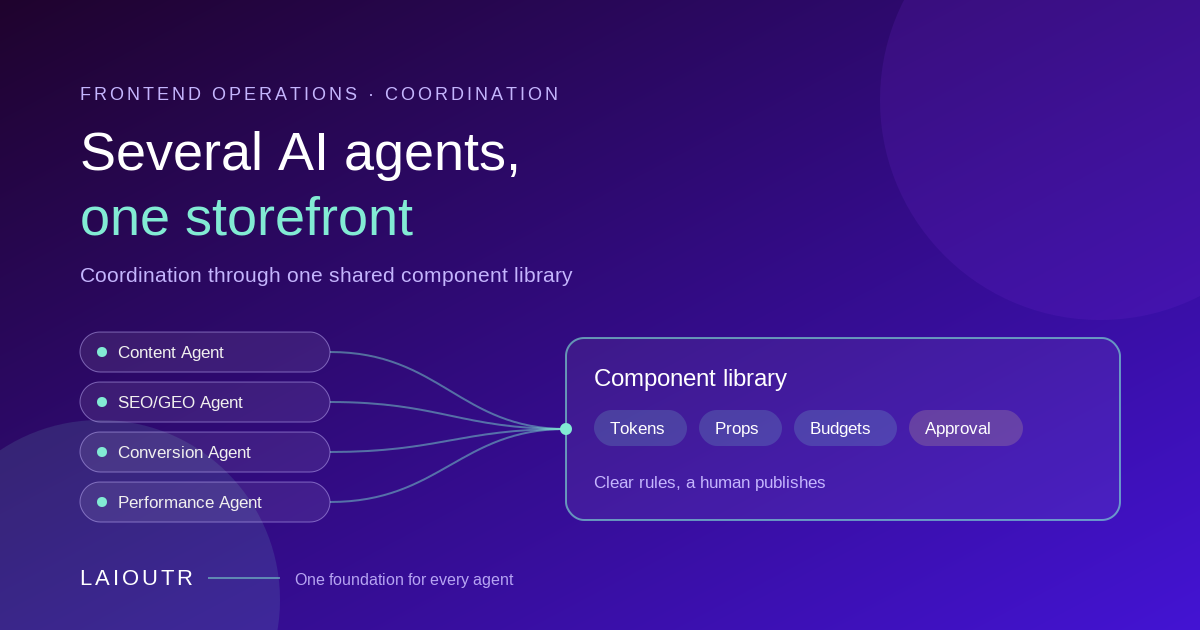Several AI Agents, One Storefront: Coordination Without Collisions
When several AI agents work on the same storefront, conflicts rarely happen between the agents thems…](https://www.laioutr.com/en/blog/frontend-operations-multi-agent-coordination-storefront-2026)
[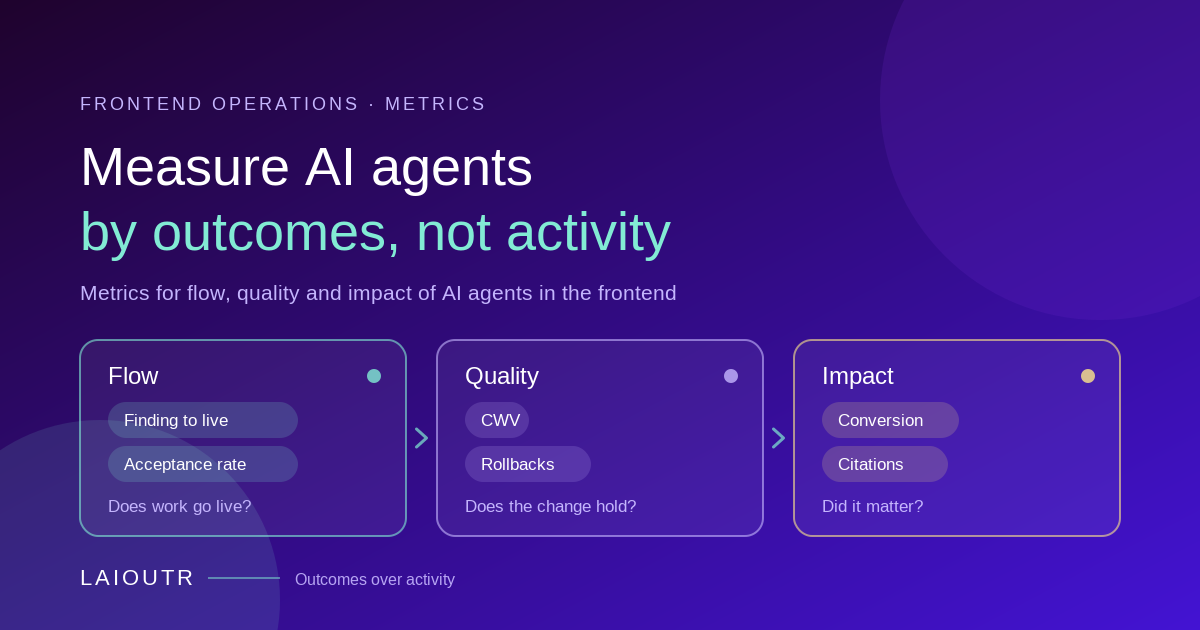Measuring AI Agents by Outcomes: Agentic Frontend Management Metrics
AI agents in the frontend should be measured by outcomes, not by activity. The number of prompts, ge…](https://www.laioutr.com/en/blog/frontend-operations-measuring-ai-agents-outcomes-2026)
[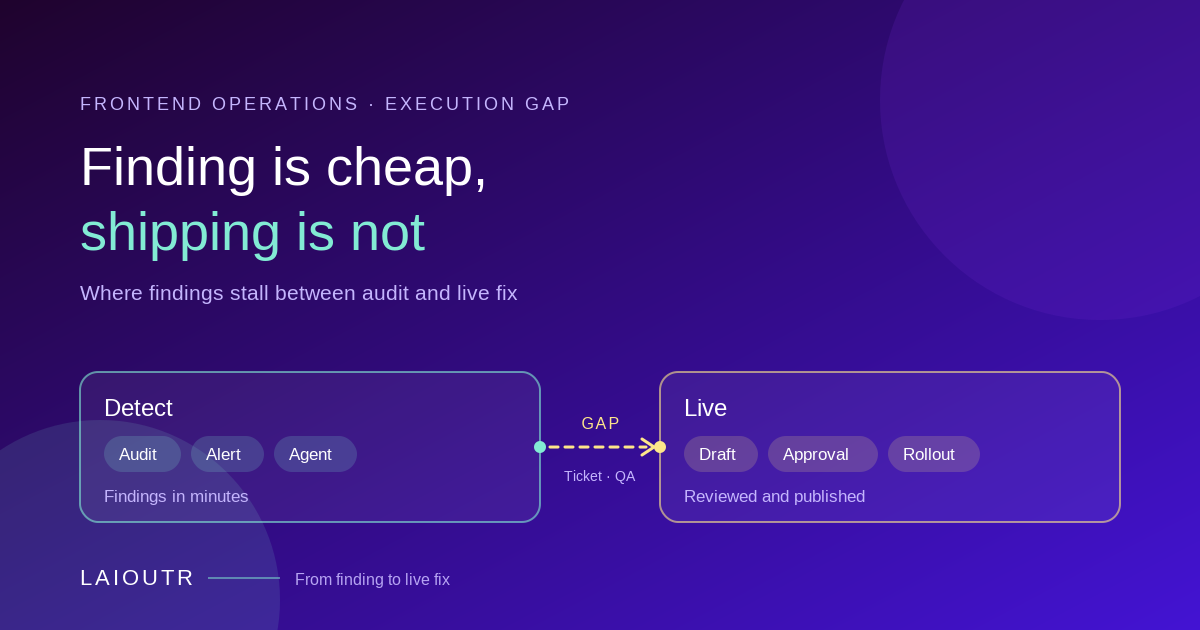The Execution Gap in the Frontend: Finding Is Cheap, Shipping Is Not
The execution gap in the frontend is the time, and the number of handoffs, between "we know wha…](https://www.laioutr.com/en/blog/frontend-operations-execution-gap-detect-vs-deploy-2026)
[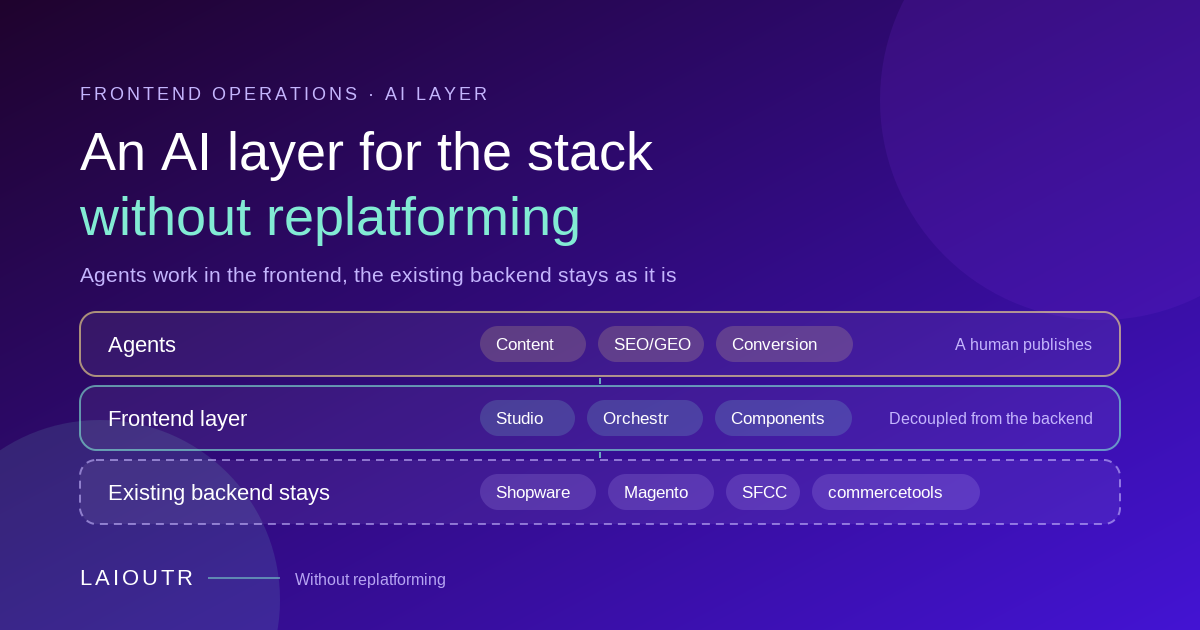Adding an AI Layer to an Existing Commerce Stack Without Replatforming
An AI layer can be added to an existing commerce stack without replacing the shop system. The most p…](https://www.laioutr.com/en/blog/frontend-operations-ai-layer-existing-stack-without-replatforming-2026)
[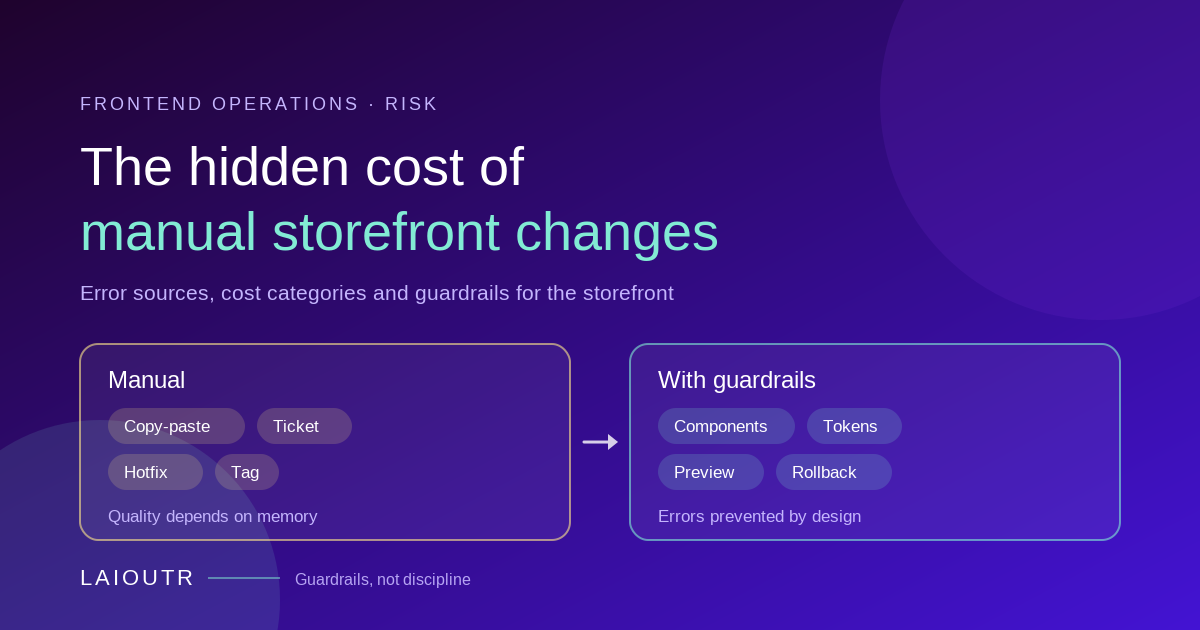The Hidden Cost of Manual Storefront Changes and How to Cut It
Manual frontend changes are the many small edits that keep a storefront running day to day: a new ba…](https://www.laioutr.com/en/blog/frontend-operations-hidden-cost-manual-storefront-changes-2026)
[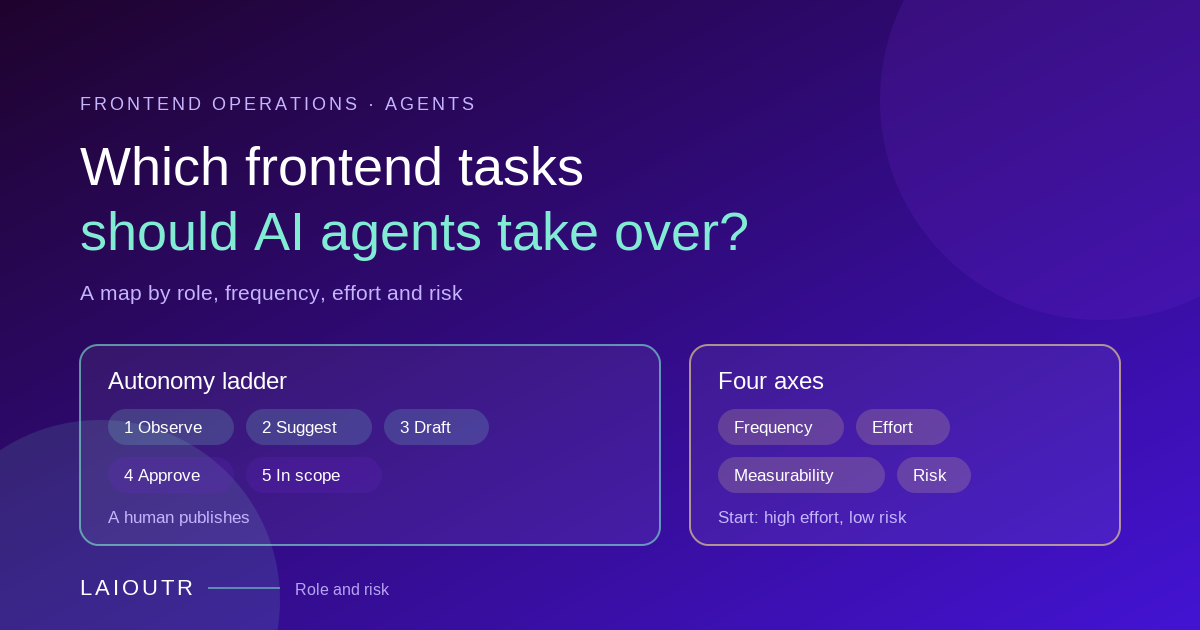Which Frontend Tasks Should AI Agents Take Over? Role and Risk Map
AI agents should first take over the frontend tasks that come up often, involve a lot of manual work…](https://www.laioutr.com/en/blog/frontend-operations-agent-task-map-role-risk-2026)
[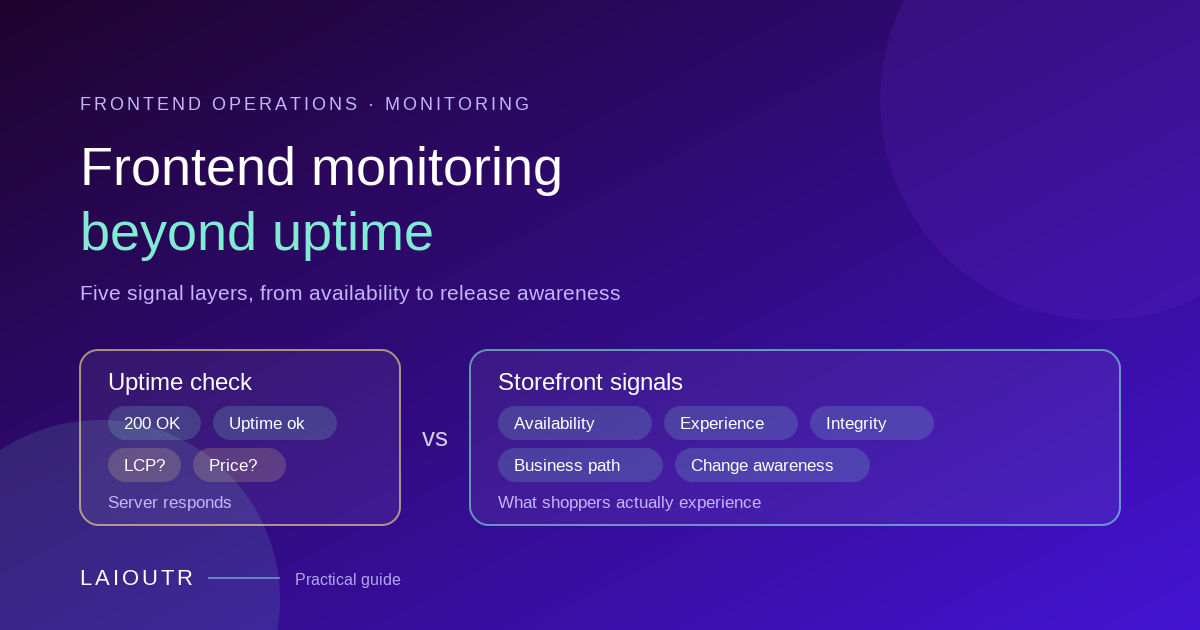Frontend Monitoring Beyond Uptime: Signals a Storefront Needs
Frontend monitoring beyond uptime means checking a storefront not only for availability but for what…](https://www.laioutr.com/en/blog/frontend-operations-monitoring-beyond-uptime-2026)
[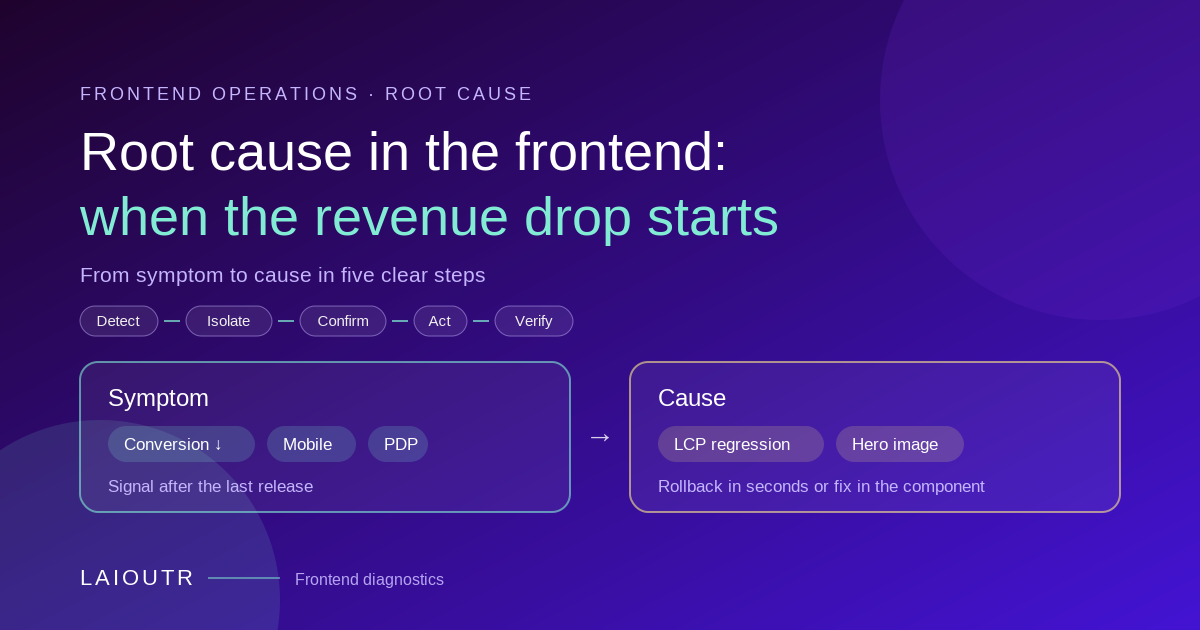Root Cause in the Frontend: When Revenue Drops Start in the Storefront
When revenue or conversion rate drops suddenly, the cause often is not traffic, pricing or the comme…](https://www.laioutr.com/en/blog/frontend-operations-root-cause-revenue-drop-storefront-2026)
[Laioutr Academy Is Live: The Video Manual for Laioutr
Since October 15, 2026, the Laioutr Academy has been live at academy.laioutr.com. It is the user man…](https://www.laioutr.com/en/blog/laioutr-academy-launch-video-manual-certification)
[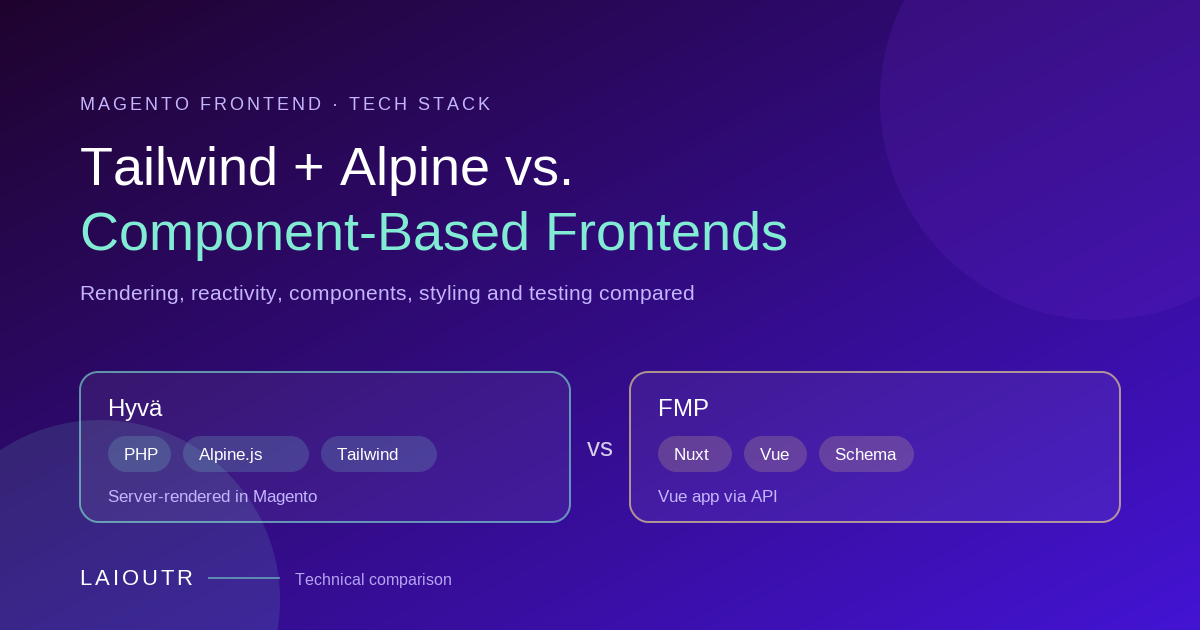Tailwind + Alpine vs. Component-Based Frontends for Magento
Hyvä renders Magento pages on the server with PHP templates and layout XML, adds interactivity throu…](https://www.laioutr.com/en/blog/tailwind-alpine-magento-vs-component-based-frontend-2026)
[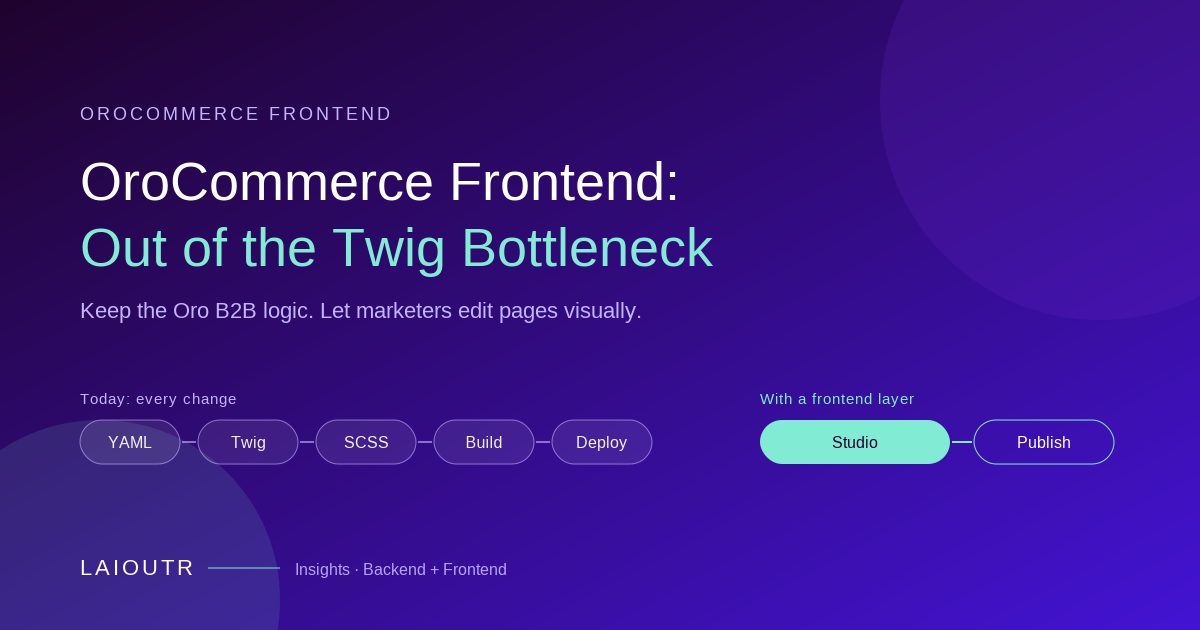OroCommerce Frontend: Out of the Twig and Layouts Bottleneck
The OroCommerce frontend is a server-rendered storefront built from Symfony bundles, OroLayouts and …](https://www.laioutr.com/en/blog/orocommerce-frontend-twig-layouts-bottleneck)
[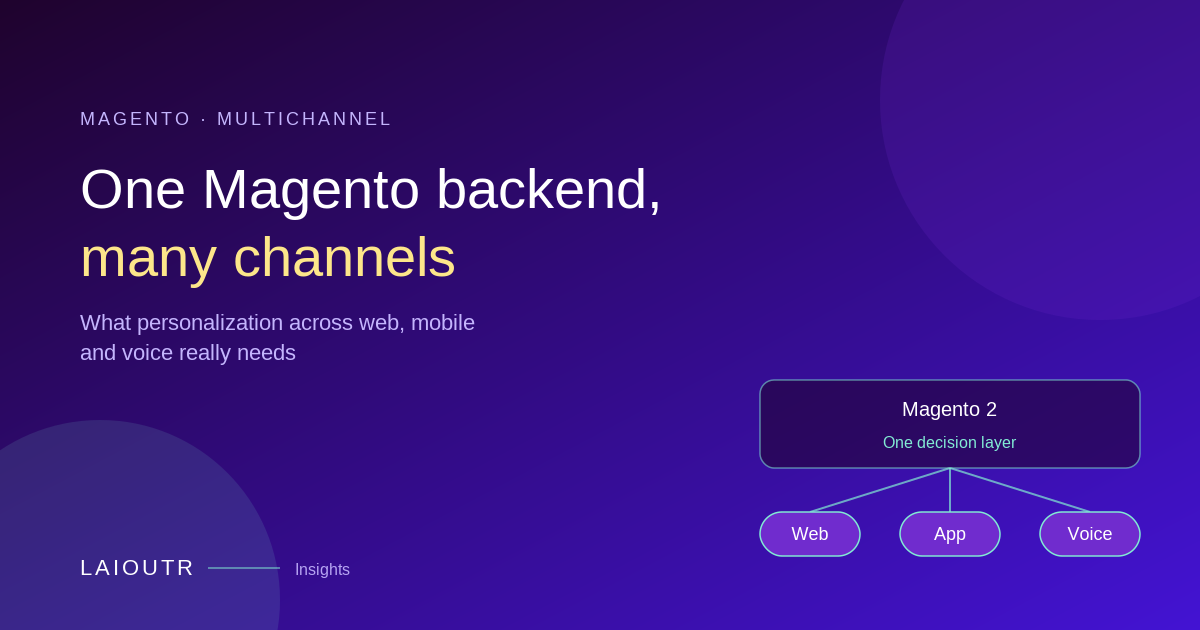One Magento Backend, Many Channels: Personalization in Practice
Personalization across web, mobile and voice on a single Magento backend does not start with a featu…](https://www.laioutr.com/en/blog/magento-multichannel-personalization-web-mobile-voice-2026)
[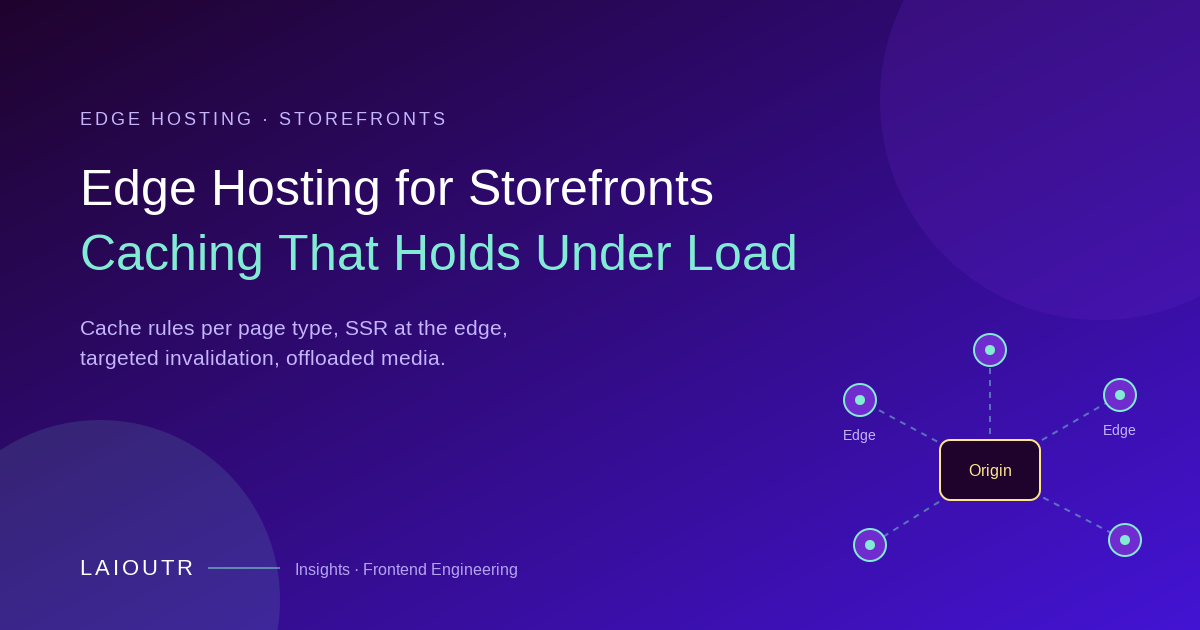Edge Hosting for Storefronts: Caching That Holds Under Peak Load
Edge hosting keeps a storefront fast under load when most requests never reach the origin: pages and…](https://www.laioutr.com/en/blog/edge-hosting-storefronts-peak-traffic-caching-2026)
[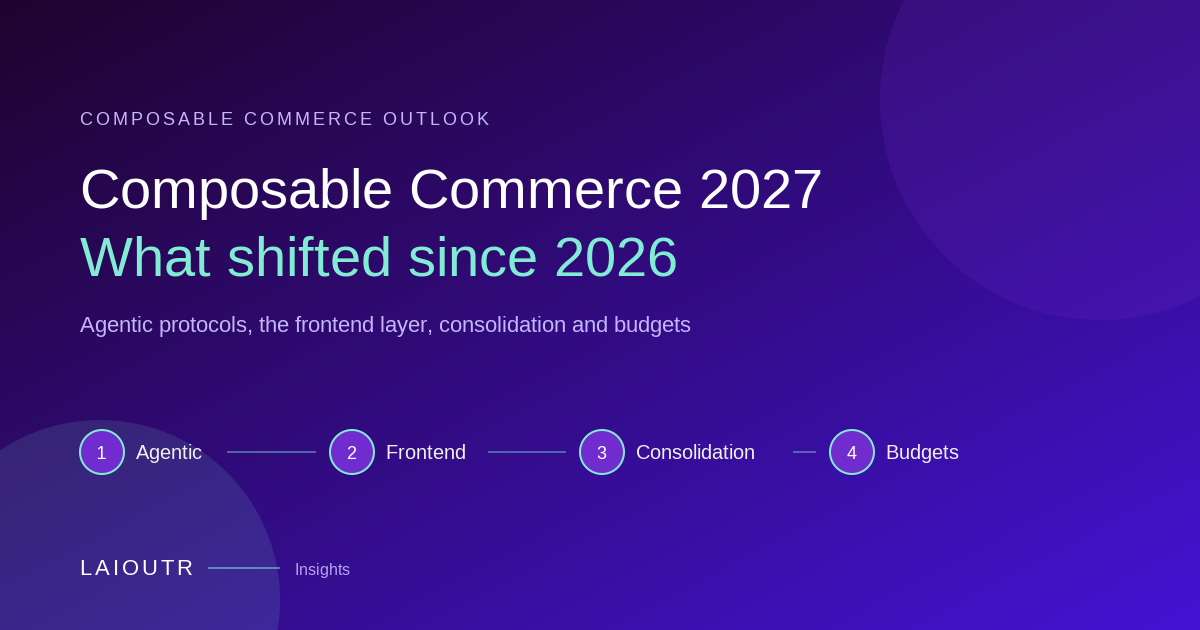Composable Commerce 2027: What Shifted and What Comes Next
Composable commerce enters 2027 with a different agenda than a year ago. The architecture question i…](https://www.laioutr.com/en/blog/composable-commerce-2027-outlook)
[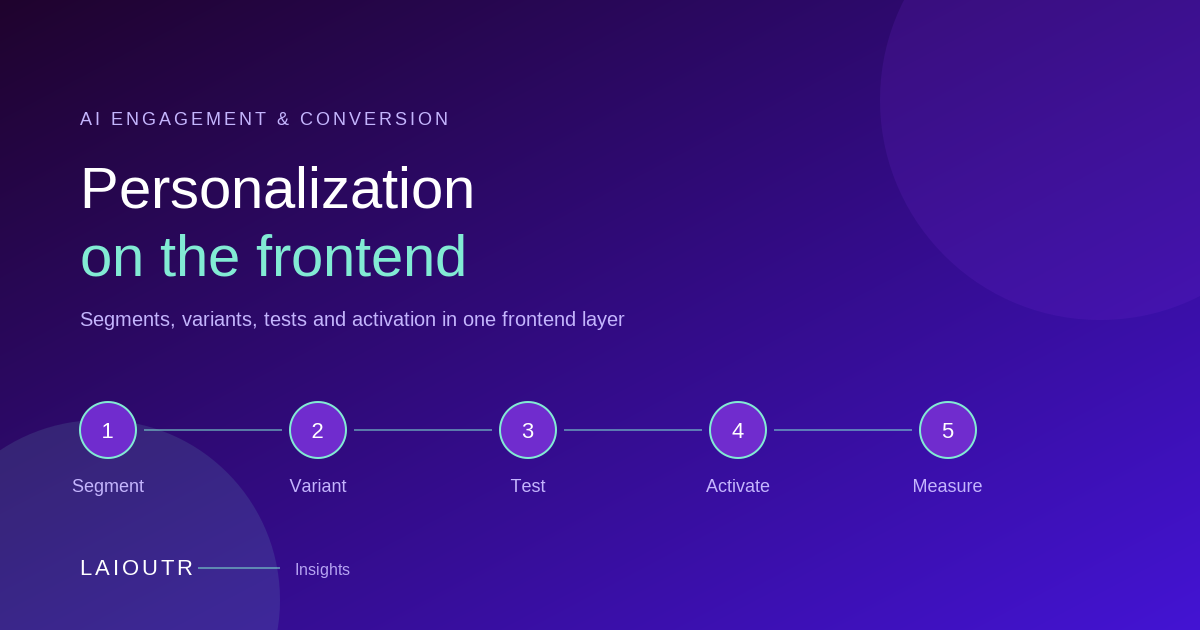AI Engagement and Conversion: Personalization on the Frontend
AI-driven engagement and conversion on the frontend rests on five mechanics: segments decide who see…](https://www.laioutr.com/en/blog/ai-engagement-conversion-frontend-personalization)
## Apps for the Laioutr platform
[View all apps](https://www.laioutr.com/en/apps)
[](https://www.laioutr.com/en/apps/shopify)
Laioutr
[Shopify](https://www.laioutr.com/en/apps/shopify)
Shopify is a commerce platform for selling online and in physical retail.
[](https://www.laioutr.com/en/apps/shopware)
Laioutr
[Shopware](https://www.laioutr.com/en/apps/shopware)
Shopware is a flexible ecommerce platform from Europe for product catalogs and omnichannel commerce.
[](https://www.laioutr.com/en/apps/adobe-commerce)
Laioutr
[Adobe Commerce](https://www.laioutr.com/en/apps/adobe-commerce)
Adobe Commerce is an enterprise commerce platform for complex, global B2C and B2B scenarios.
Planned
[](https://www.laioutr.com/en/apps/b2b-sellers)
Laioutr
[B2Bsellers](https://www.laioutr.com/en/apps/b2b-sellers)
B2B suite for Shopware that turns an online store into a professional B2B commerce platform.
Planned
[](https://www.laioutr.com/en/apps/commerce-layer)
Laioutr
[Commerce Layer](https://www.laioutr.com/en/apps/commerce-layer)
Commerce Layer is a headless commerce platform for making inventory and catalogs available online.
[](https://www.laioutr.com/en/apps/commercetools)
Laioutr
[Commercetools](https://www.laioutr.com/en/apps/commercetools)
Commercetools is a SaaS-based headless ecommerce platform used worldwide.
[](https://www.laioutr.com/en/apps/emporix)
Laioutr
[Emporix](https://www.laioutr.com/en/apps/emporix)
Emporix is a composable, API-first commerce platform for scalable B2B and B2C scenarios.
Planned
[](https://www.laioutr.com/en/apps/hcl-software)
Laioutr
[HCL Software](https://www.laioutr.com/en/apps/hcl-software)
Enterprise suite for digital commerce and experience with extensive configurability.
Planned
[](https://www.laioutr.com/en/apps/intershop)
Laioutr
[Intershop](https://www.laioutr.com/en/apps/intershop)
Enterprise commerce platform for complex B2B and B2C business models.
Planned
[](https://www.laioutr.com/en/apps/magento-2)
Laioutr
[Magento 2](https://www.laioutr.com/en/apps/magento-2)
Widely used, extensible commerce platform for B2C and B2B scenarios.
[](https://www.laioutr.com/en/apps/oxid-eshop)
Laioutr
[OXID eShop](https://www.laioutr.com/en/apps/oxid-eshop)
OXID eShop is an extensible commerce platform for complex B2B and B2C requirements.
Planned
[](https://www.laioutr.com/en/apps/patchworks)
Laioutr
[Patchworks](https://www.laioutr.com/en/apps/patchworks)
Patchworks is a low-code iPaaS that connects ecommerce, ERP, WMS, 3PL, and marketplaces.
Planned
[](https://www.laioutr.com/en/apps/PrestaShop)
Laioutr
[Prestashop](https://www.laioutr.com/en/apps/PrestaShop)
Open-source commerce platform for small and midsize merchants in Europe and beyond.
Planned
[](https://www.laioutr.com/en/apps/saleor)
Laioutr
[Saleor](https://www.laioutr.com/en/apps/saleor)
Open-source, API-first commerce platform built on GraphQL for custom storefronts.
Planned
[](https://www.laioutr.com/en/apps/salesforce-commerce-cloud)
Laioutr
[Salesforce Commerce Cloud](https://www.laioutr.com/en/apps/salesforce-commerce-cloud)
Salesforce Commerce Cloud is a cloud-based enterprise commerce platform for businesses of any size.
Planned
[](https://www.laioutr.com/en/apps/sap-commerce-cloud)
Laioutr
[SAP Commerce Cloud](https://www.laioutr.com/en/apps/sap-commerce-cloud)
Enterprise commerce platform for complex catalogs, pricing models, and omnichannel journeys.
Planned
[](https://www.laioutr.com/en/apps/scayle)
Laioutr
[Scayle](https://www.laioutr.com/en/apps/scayle)
SCAYLE is a commerce engine that helps brands and retailers scale their business.
Planned
[](https://www.laioutr.com/en/apps/spryker)
Laioutr
[Spryker](https://www.laioutr.com/en/apps/spryker)
Composable commerce platform for sophisticated B2B and B2C business models.
[](https://www.laioutr.com/en/apps/sylius)
Laioutr
[Sylius](https://www.laioutr.com/en/apps/sylius)
Sylius is a developer-friendly ecommerce framework for B2C and B2B shopping experiences.
Planned
[](https://www.laioutr.com/en/apps/vendure)
Laioutr
[Vendure](https://www.laioutr.com/en/apps/vendure)
Vendure is a headless commerce platform for businesses with complex requirements.
Coming Soon
[](https://www.laioutr.com/en/apps/vtex)
Laioutr
[VTEX](https://www.laioutr.com/en/apps/vtex)
Cloud-native, composable commerce platform for B2B and B2C at scale.
Planned
[](https://www.laioutr.com/en/apps/websale)
Laioutr
[Websale](https://www.laioutr.com/en/apps/websale)
Stable, enterprise-ready commerce backend for complex retail environments.
Strategy call
## The frontend as a control layer
A conversation about stack, roadmap and replatforming scenario. The outcome: a clear picture of how Laioutr fits, what it costs and how fast the go-live can happen.
*"After 30 minutes, we knew Laioutr makes our replatforming feasible."*
*Daniel B., CEO,* [*hygibox.de*](https://hygibox.de)
[Book a demo](https://www.laioutr.com/en/contact)
## Structured Data
```json
{
"@context": "https://schema.org",
"@graph": [
{
"@type": "Organization",
"@id": "https://www.laioutr.com/#identity",
"name": "Laioutr",
"legalName": "Laioutr GmbH",
"url": "https://www.laioutr.com/",
"logo": {
"@type": "ImageObject",
"url": "https://www.laioutr.com/laioutr-logo.png",
"width": 400,
"height": 400
},
"email": "info@laioutr.com",
"telephone": "+49 30 75435715",
"address": {
"@type": "PostalAddress",
"streetAddress": "Münchweilersteig 5",
"postalCode": "12559",
"addressLocality": "Berlin",
"addressCountry": "DE"
},
"vatID": "DE450905846",
"sameAs": [
"https://www.linkedin.com/company/laioutr",
"https://www.youtube.com/@Laioutr",
"https://x.com/laioutr"
]
},
{
"@type": "WebSite",
"@id": "https://www.laioutr.com/en/#website",
"url": "https://www.laioutr.com/en/",
"name": "Laioutr",
"inLanguage": "en",
"publisher": {
"@id": "https://www.laioutr.com/#identity"
}
},
{
"@type": "BlogPosting",
"@id": "https://www.laioutr.com/en/blog/modernize-dxp#article",
"headline": "Beyond Platform Lock-In: Why DXP Architecture Decisions Matter More Than Vendor Choice",
"description": "DXP success depends on architecture decisions, not vendor choice. Monolithic platforms become straightjackets; composable design preserves flexibility.",
"image": [
"https://eu-west-2.graphassets.com/cmii2mlqi0dux06l5543v7nkc/cmnucypviw8mi07mgmwsd5asa"
],
"datePublished": "2026-06-30T17:24:50.288193+00:00",
"dateModified": "2026-06-30T17:24:49.944584+00:00",
"inLanguage": "en",
"articleSection": "Insights",
"keywords": "Industry & Trends",
"author": {
"@type": "Person",
"name": "Marcel Thiesies",
"jobTitle": "Co-Founder & CEO, Laioutr",
"image": "https://eu-west-2.graphassets.com/cmii2mlqi0dux06l5543v7nkc/cmj01b962364n07lb0iguvts5"
},
"publisher": {
"@id": "https://www.laioutr.com/#identity"
},
"mainEntityOfPage": {
"@id": "https://www.laioutr.com/en/blog/modernize-dxp#webpage"
},
"isPartOf": {
"@id": "https://www.laioutr.com/en/#website"
}
},
{
"@type": "WebPage",
"@id": "https://www.laioutr.com/en/blog/modernize-dxp#webpage",
"url": "https://www.laioutr.com/en/blog/modernize-dxp",
"name": "Beyond Platform Lock-In: Why DXP Architecture Decisions Matter More Than Vendor Choice",
"description": "DXP success depends on architecture decisions, not vendor choice. Monolithic platforms become straightjackets; composable design preserves flexibility.",
"inLanguage": "en",
"isPartOf": {
"@id": "https://www.laioutr.com/en/#website"
},
"breadcrumb": {
"@id": "https://www.laioutr.com/en/blog/modernize-dxp#breadcrumb"
},
"primaryImageOfPage": {
"@type": "ImageObject",
"url": "https://eu-west-2.graphassets.com/cmii2mlqi0dux06l5543v7nkc/cmnucypviw8mi07mgmwsd5asa"
},
"datePublished": "2026-06-30T17:24:50.288193+00:00",
"dateModified": "2026-06-30T17:24:49.944584+00:00",
"mainEntity": {
"@id": "https://www.laioutr.com/en/blog/modernize-dxp#article"
}
},
{
"@type": "BreadcrumbList",
"@id": "https://www.laioutr.com/en/blog/modernize-dxp#breadcrumb",
"itemListElement": [
{
"@type": "ListItem",
"position": 1,
"name": "Laioutr",
"item": "https://www.laioutr.com/en/"
},
{
"@type": "ListItem",
"position": 2,
"name": "Insights",
"item": "https://www.laioutr.com/en/blogs/insights"
},
{
"@type": "ListItem",
"position": 3,
"name": "Beyond Platform Lock-In: Why DXP Architecture Decisions Matter More Than Vendor Choice"
}
]
}
]
}
```