---
title: "PWA vs Native Apps"
canonical_url: "https://www.laioutr.com/en/blog/pwa-vs-native"
locale: en
meta:
description: "Why native apps still win in certain ecommerce scenarios, despite the prevailing progressive web app narrative."
"og:description": "Why native apps still win in certain ecommerce scenarios, despite the prevailing progressive web app narrative."
"og:title": "PWA vs Native Apps"
---

# PWA vs Native Apps in E-Commerce: Why Native Apps Still Win in Certain Scenarios
Table of contents
1. [1.Understanding the PWA Hype](#understanding-the-pwa-hype)
2. [2.The Fundamental Gap: Where PWAs Struggle](#the-fundamental-gap-where-pwas-struggle)
3. [3.When Native Apps Deliver Superior E-Commerce Results](#when-native-apps-deliver-superior-e-commerce-results)
4. [4.Composable Commerce and the Real Decision Framework](#composable-commerce-and-the-real-decision-framework)
5. [5.The Hidden Costs of the PWA-First Approach](#the-hidden-costs-of-the-pwa-first-approach)
6. [6.A Framework for Making the Right Choice](#a-framework-for-making-the-right-choice)
7. [7.The Emerging Hybrid Reality](#the-emerging-hybrid-reality)
8. [8.Conclusion](#conclusion)
The e-commerce industry has undergone a profound transformation in how companies approach mobile commerce. Yet amid all the technological innovation, one debate refuses to fade away: should you build a Progressive Web App (PWA) or a native mobile application?
The prevailing narrative in tech communities suggests that PWAs are the obvious choice, the future, the silver bullet that eliminates the need for native app development. This consensus is so powerful that many CTOs and tech leaders accept it without scrutiny. However, this narrative oversimplifies the reality. The truth is more nuanced, particularly when viewed through the lens of composable commerce architectures and real-world business requirements.
At Laioutr, we work with enterprises implementing MACH and headless commerce solutions. We've observed firsthand that choosing between PWAs and native apps is not a binary decision driven by technological preferences alone. Instead, it requires careful analysis of business goals, user behavior, and technical constraints. This article challenges the PWA-first assumption and explores the genuine scenarios where native mobile apps deliver superior results.
## Understanding the PWA Hype
Progressive Web Apps have legitimately transformed mobile commerce. They offer real advantages that shouldn't be dismissed. PWAs combine the best of web and mobile technologies, delivering a web-based experience that feels native to users. They work offline, they can be added to home screens, they send push notifications, and crucially, they eliminate the friction of app store downloads and updates.
From a deployment perspective, PWAs simplify operations. A single codebase serves all platforms. Updates happen automatically without app store review processes. Infrastructure costs align directly with usage patterns. For many retailers, these advantages have been transformative.
The business case for PWAs is compelling: faster time to market, lower development costs, simpler maintenance, and broader reach through browsers. These benefits explain the enthusiastic adoption by many retailers and the optimistic discourse around PWA capabilities.
Yet the hype around PWAs has created a blind spot. Technology enthusiasts and digital transformation consultants have pronounced native apps obsolete without acknowledging the scenarios where mobile applications remain the superior choice.
## The Fundamental Gap: Where PWAs Struggle
Before exploring when native apps win, we need to understand the inherent limitations of PWAs. These limitations aren't minor inconveniences; they represent fundamental technological constraints.
### Performance Under Constraint
PWAs must run within browser engines designed for general web content. This architectural decision introduces performance ceilings that native apps don't face. Complex animations, intensive graphics rendering, and real-time updates can feel sluggish in PWAs compared to native implementations. While browser engines continually improve, they remain fundamentally constrained by their generalist design.
For e-commerce, this matters. Smooth product carousels, quick transitions between product listings, and responsive image loading all contribute to conversion. Users perceive native apps as faster and more responsive, and in many cases, this perception reflects reality.
### Hardware Integration and Device Access
Native apps can access device hardware in ways PWAs cannot. While Web APIs continue expanding, significant gaps remain. PWAs have limited access to device sensors, file systems, biometric authentication methods, and advanced camera capabilities.
In e-commerce, this translates to real functionality gaps. Try-on features powered by augmented reality, seamless biometric authentication, or sophisticated image capture require native implementation. A PWA cannot deliver the same experience even if the underlying business logic uses headless APIs.
### Operating System Integration
Native apps deeply integrate with their operating systems. Android and iOS offer mechanisms for app-to-OS communication that PWAs fundamentally cannot replicate. This includes preference synchronization, deep OS-level notifications, app widget support, and integration with native features like Siri or Google Assistant.
For subscription-based e-commerce models, this becomes significant. Native apps can integrate directly with in-app purchase systems in ways that provide legal and operational advantages.
### Offline Capabilities and Reliability
While PWAs claim offline functionality, the implementation remains limited compared to native apps. Service Workers provide offline caching, but they're subject to browser storage limitations and can be cleared by users or the system without warning. Native apps maintain persistent storage with greater reliability.
For retailers operating in regions with inconsistent connectivity, or for use cases where users expect the app to function across variable network conditions, native implementations provide superior reliability.
### User Expectations and App Store Presence
This point is subtle but significant. Users have different expectations for experiences obtained through app stores versus browser-based experiences. An app downloaded from the App Store or Google Play carries implicit assurance. Users expect certain standards regarding security, performance, and privacy.
App store presence also provides visibility and credibility. Featured apps in digital storefronts receive exposure that web-based experiences cannot achieve. For brands competing in attention-scarce marketplaces, this visibility translates to customer acquisition advantages.
## When Native Apps Deliver Superior E-Commerce Results
Understanding the gaps in PWA capabilities illuminates the scenarios where native apps genuinely outperform.
### High-Engagement Retail and Subscription Models
Native apps excel in segments where user engagement and retention drive business value. Fashion brands, beauty retailers, and subscription box services see dramatically higher repeat purchase rates with native apps. The persistent presence of an app icon on a user's home screen provides ongoing visibility that browser bookmarks cannot replicate.
Native apps can deliver sophisticated personalization through push notifications, behavioral triggers, and contextual in-app messaging. While PWAs can send notifications, the user journey feels cohesive and integrated in native implementations. This cohesion translates to measurable engagement improvements.
For subscription-based e-commerce, native app integrations with platform payment systems unlock streamlined renewal flows. Users authenticate once, and subsequent transactions require minimal friction. This reduces cart abandonment in recurring revenue models where simplicity directly impacts lifetime value.
### Marketplace and Social Commerce Platforms
Complex multi-vendor platforms benefit from native apps. Marketplaces that emphasize community, user-generated content, and social features function better as native applications. Real-time notifications of new listings, vendor updates, and social interactions perform more reliably in native implementations.
Additionally, marketplace platforms often require sophisticated permission management, file handling, and local storage capabilities that native development enables. Vendors managing multiple storefronts, tracking analytics, and handling inventory updates through a companion app experience better performance and reliability with native technology.
### B2B and Complex Enterprise Commerce
Enterprise commerce scenarios involve workflows that exceed typical consumer e-commerce complexity. Configurable products, complex quoting systems, integration with ERP backends, and role-based permission management all benefit from native app architecture.
B2B buyers increasingly expect mobile-first experiences for reordering and account management. Native apps provide the performance and integration capabilities that enterprise users demand. Additionally, native apps simplify authentication flows and security protocols that enterprise procurement departments require.
### Performance-Critical Categories
Certain product categories benefit from superior performance. Electronics, jewelry, and luxury goods demand high-quality imagery and smooth browsing. Native image processing, hardware acceleration, and rendering capabilities provide noticeably better experiences than PWAs. When product discovery and visual appeal drive conversion, native apps deliver competitive advantages.
Gaming and entertainment-adjacent e-commerce, such as collectibles platforms or NFT marketplaces, clearly benefit from native performance. These experiences require the computational power and hardware access that native development provides.
### Geographic and Connectivity Considerations
In markets with inconsistent internet infrastructure, native apps provide superior reliability. While PWAs claim offline capabilities, the actual implementation often frustrates users. Native apps with robust local caching and intelligent sync mechanisms provide more predictable experiences across connectivity variations.
This particularly applies in developing markets where device specifications vary widely and network conditions fluctuate. Native implementations can optimize for specific device constraints more effectively than the browser-agnostic approach PWAs require.
### Platform-Specific Monetization and Distribution
App stores represent distinct distribution channels with unique business models. App store featured listings drive discovery and customer acquisition at volumes web experiences rarely achieve. For retailers competing in crowded categories, app store placement provides measurable competitive advantages.
Additionally, in-app purchase integrations with platform payment systems offer operational efficiencies and, in some cases, legal advantages depending on jurisdiction and business model.
## Composable Commerce and the Real Decision Framework
This is where our perspective as composable commerce consultants becomes essential. The PWA versus native app decision doesn't exist in isolation. It exists within a broader architectural context where you're likely implementing headless, API-first commerce infrastructure.
In a composable commerce architecture, your commerce logic, product catalog, inventory, and customer data reside in a flexible backend. Your frontend layer, whether PWA or native app, consumes these APIs. The architecture separates the backend business logic from the presentation layer.
This decoupling fundamentally changes how you should approach the PWA versus native question. You're not locked into a choice. A truly composable strategy might involve deploying multiple frontends simultaneously: a progressive web app for immediate reach and quick implementation, alongside native applications for segments where native capabilities deliver measurable business value.
This hybrid approach wouldn't exist without composable architecture. With monolithic, tightly coupled systems, you'd face genuine trade-offs. Composable infrastructure allows portfolio strategies where different customer segments and use cases leverage the optimal frontend technology.
## The Hidden Costs of the PWA-First Approach
The rush to PWAs has created real blind spots regarding total cost of ownership.
### Feature Constraints and Timeline Extensions
Projects beginning with PWA commitments often encounter feature requirements that PWA limitations cannot support. The team discovers mid-project that augmented reality try-on experiences, biometric authentication, or sophisticated offline functionality require alternate approaches. These discoveries delay timelines and inflate costs.
### Compromise-Driven User Experience
PWA constraints often force compromises on user experience. The team settles for adequate instead of excellent. Push notification strategies become less effective. Offline experiences feel more limited. Performance benchmarks remain acceptable rather than impressive. These compromises accumulate, creating products that function but don't delight.
### Recruitment and Team Capability
A PWA-first approach doesn't automatically solve talent challenges. Yes, a single JavaScript codebase requires fewer specialized skills than separate iOS and Android teams. However, high-quality PWA development requires sophisticated expertise in service workers, browser APIs, and performance optimization. Additionally, if your business grows to require native capabilities, your team lacks the deep platform expertise to execute effectively.
### Market Perception and Competitive Positioning
Users notice when competitors offer superior mobile experiences. In competitive categories, brands using native apps often achieve better user ratings, higher engagement metrics, and superior conversion compared to PWA-only competitors. These differences compound over time.
## A Framework for Making the Right Choice
Rather than accepting either the PWA-first dogma or defaulting to native development, we recommend a structured decision framework.
### Assess User Engagement Models
How do your most valuable customers interact with your brand? High-engagement segments with frequent repeat purchases benefit from native app presence. Users expecting quick, transactional experiences might be better served by PWAs.
### Evaluate Feature Requirements
Inventory required functionality that drives business value. Augmented reality, biometric authentication, complex offline workflows, and advanced device integration point toward native development. Simple browsing and checkout might be adequately served by PWAs.
### Consider Market and Geographic Context
Analyze where your customers live and their typical connectivity. Growing markets with variable infrastructure benefit from native app reliability. Developed markets with robust connectivity and browser usage can lean toward PWAs. This isn't absolute, but it's a relevant factor.
### Plan for Composable Architecture
Ensure your backend systems are genuinely composable and API-first. This allows you to support multiple frontends without backend rearchitecting. This flexibility is essential for the hybrid approaches that increasingly make sense.
### Calculate Total Cost Over Time
Consider not just initial development but ongoing maintenance, feature expansion, and team scaling. Sometimes native development costs more initially but delivers better economics over five-year horizons. Conversely, PWAs might save initial costs but limit future business strategies.
## The Emerging Hybrid Reality
We're observing a clear trend among sophisticated retailers: hybrid approaches. Leading companies deploy PWAs for immediate market reach and broad accessibility, while simultaneously developing native apps for segments where native capabilities drive measurable business value.
This approach only works in composable architectures where the backend serves multiple frontends. But that's increasingly where enterprises are deploying their commerce systems. The separation of concerns that composable commerce enables makes parallel frontend development economically viable.
## Conclusion
The assertion that PWAs are always superior to native apps in e-commerce is not supported by evidence. Instead, the choice depends on your specific business model, customer expectations, feature requirements, and competitive context. For some retailers, PWAs represent the optimal choice. For others, native apps or hybrid approaches deliver superior business outcomes.
The real opportunity lies in thinking beyond binary choices. In a composable commerce architecture, you can optimize each customer segment and use case with the appropriate technology. Progressive web apps and native applications aren't competitors; they're complementary tools in your mobile commerce strategy.
The question isn't whether PWAs or native apps are better. The question is, which technology best serves your customers, supports your business model, and aligns with your strategic goals? That answer is specific to your situation, and it may very well be both.
### **Related Insights**
- [PWA Studio vs. Laioutr for Adobe Commerce: Which One?](https://www.laioutr.com/en/blog/pwa-studio-vs-laioutr-for-adobe-commerce)
- [PWA Kit vs. Laioutr for Salesforce Commerce Cloud, which frontend for which team?](https://www.laioutr.com/en/blog/pwa-kit-vs-laioutr-for-salesforce-commerce-cloud)
### **More from the Laioutr Platform**
- [Composable Digital Experience Platform](https://www.laioutr.com/en/composable-digital-experience-platform)
- [Agentic Frontend Management Platform](https://www.laioutr.com/en/agentic-frontend-management-platform)
- [Personalization](https://www.laioutr.com/en/product/personalization)
- [Composable Visual Page Builder](https://www.laioutr.com/en/composable-visual-page-builder)
---
Share this article
[Share on Facebook](https://www.facebook.com/sharer/sharer.php?u=https%3A%2F%2Fwww.laioutr.com%2Fen%2Fblog%2Fpwa-vs-native) [Share on X](https://x.com/intent/post?url=https%3A%2F%2Fwww.laioutr.com%2Fen%2Fblog%2Fpwa-vs-native&text=) [Share on LinkedIn](https://www.linkedin.com/sharing/share-offsite/?url=https%3A%2F%2Fwww.laioutr.com%2Fen%2Fblog%2Fpwa-vs-native) [Share on Pinterest](https://pinterest.com/pin/create/button/?url=https%3A%2F%2Fwww.laioutr.com%2Fen%2Fblog%2Fpwa-vs-native&description=) [Share via email](mailto:?subject=&body=%0A%0Ahttps%3A%2F%2Fwww.laioutr.com%2Fen%2Fblog%2Fpwa-vs-native)
## More articles on frontend and headless
Practical know-how for frontend development, smart agents, and headless
[To the blog](https://www.laioutr.com/en/blogs/insights)
[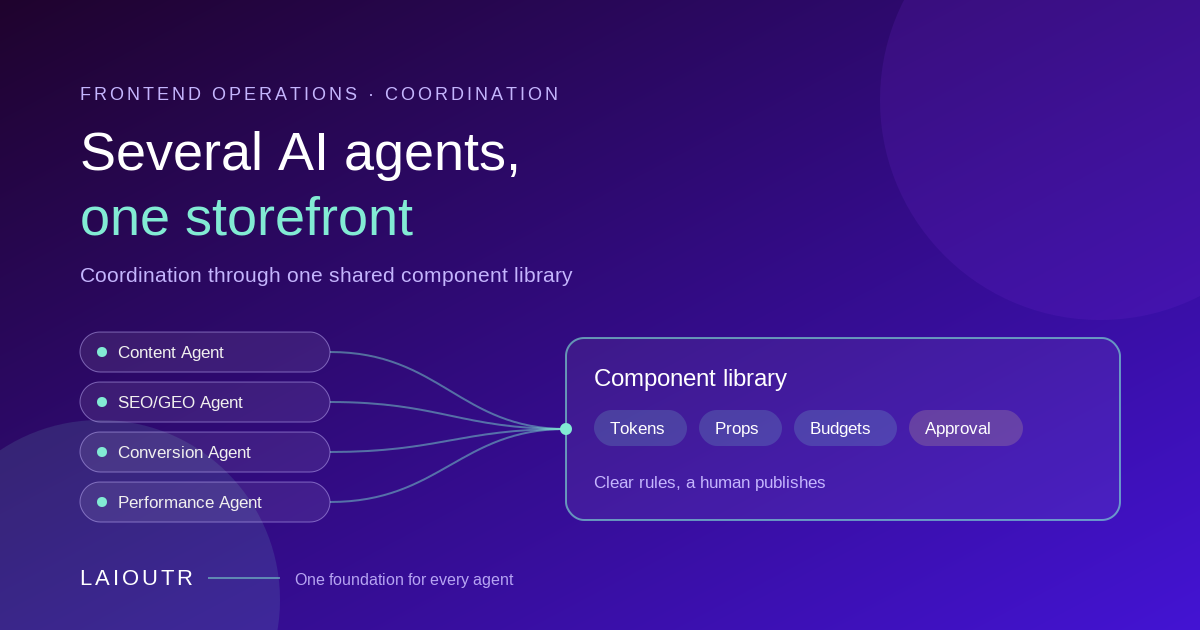Several AI Agents, One Storefront: Coordination Without Collisions
When several AI agents work on the same storefront, conflicts rarely happen between the agents thems…](https://www.laioutr.com/en/blog/frontend-operations-multi-agent-coordination-storefront-2026)
[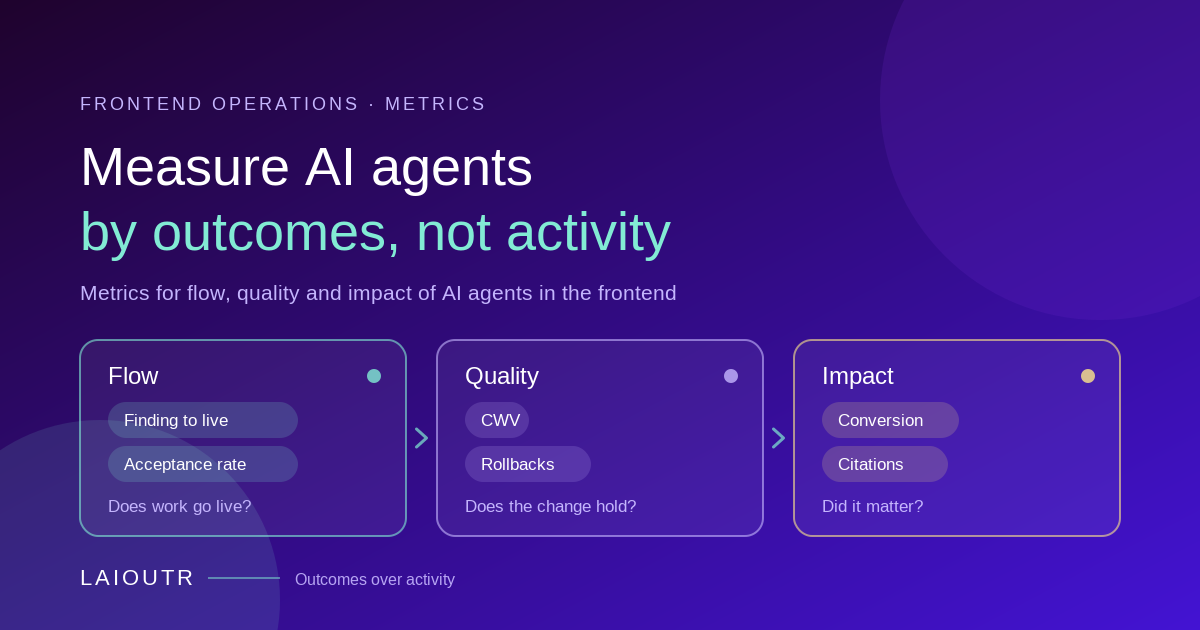Measuring AI Agents by Outcomes: Agentic Frontend Management Metrics
AI agents in the frontend should be measured by outcomes, not by activity. The number of prompts, ge…](https://www.laioutr.com/en/blog/frontend-operations-measuring-ai-agents-outcomes-2026)
[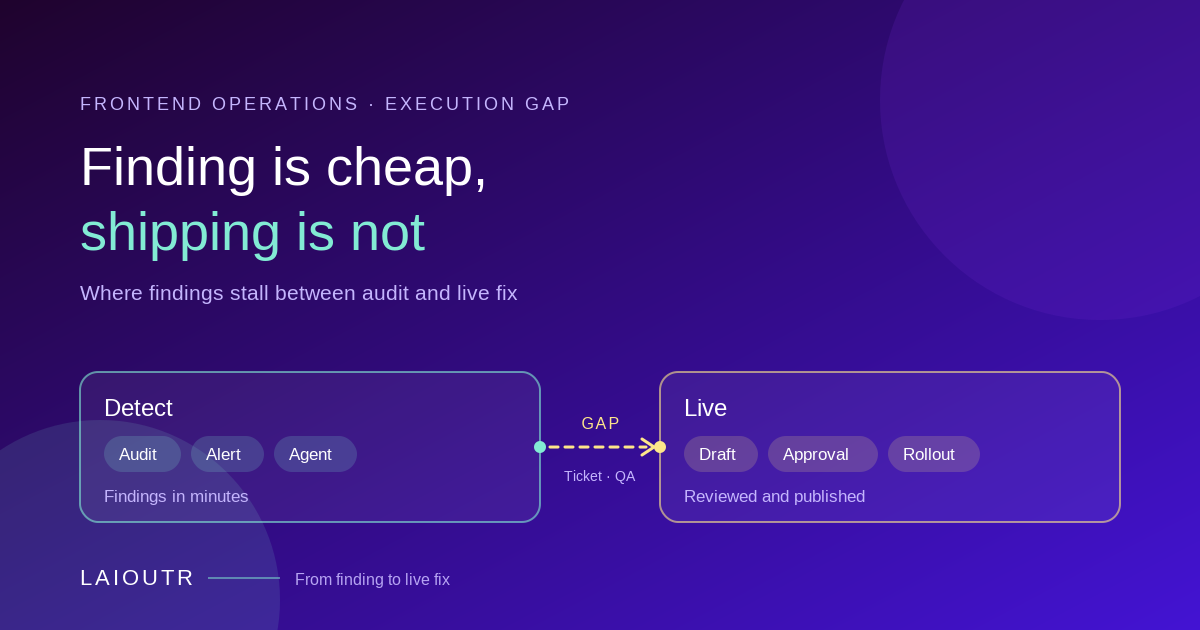The Execution Gap in the Frontend: Finding Is Cheap, Shipping Is Not
The execution gap in the frontend is the time, and the number of handoffs, between "we know wha…](https://www.laioutr.com/en/blog/frontend-operations-execution-gap-detect-vs-deploy-2026)
[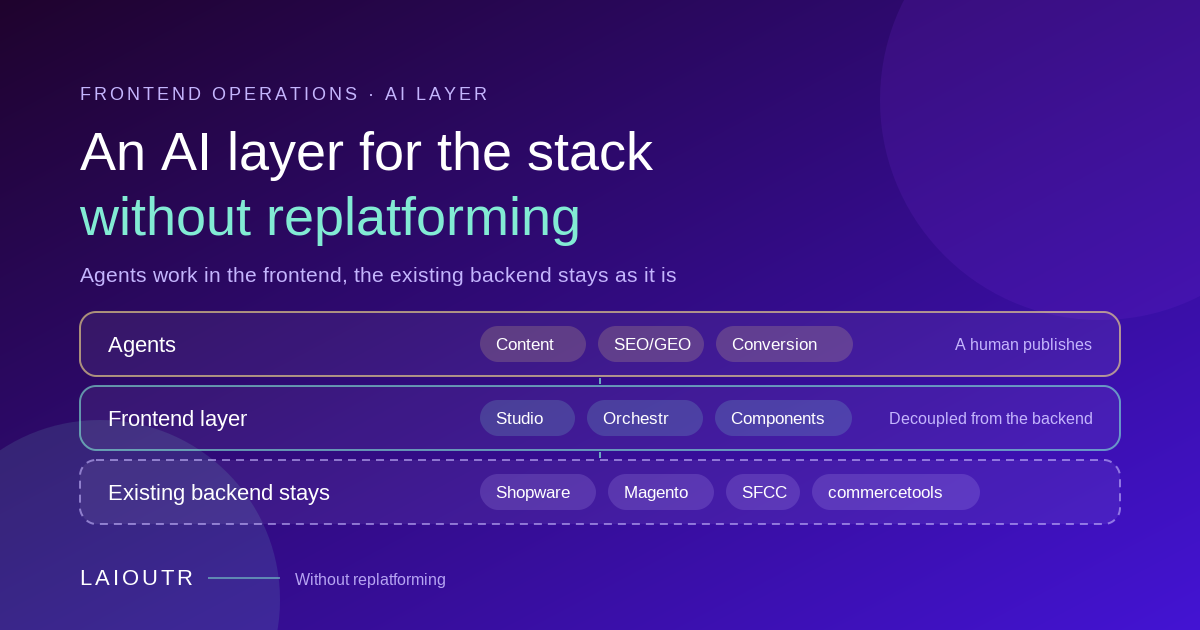Adding an AI Layer to an Existing Commerce Stack Without Replatforming
An AI layer can be added to an existing commerce stack without replacing the shop system. The most p…](https://www.laioutr.com/en/blog/frontend-operations-ai-layer-existing-stack-without-replatforming-2026)
[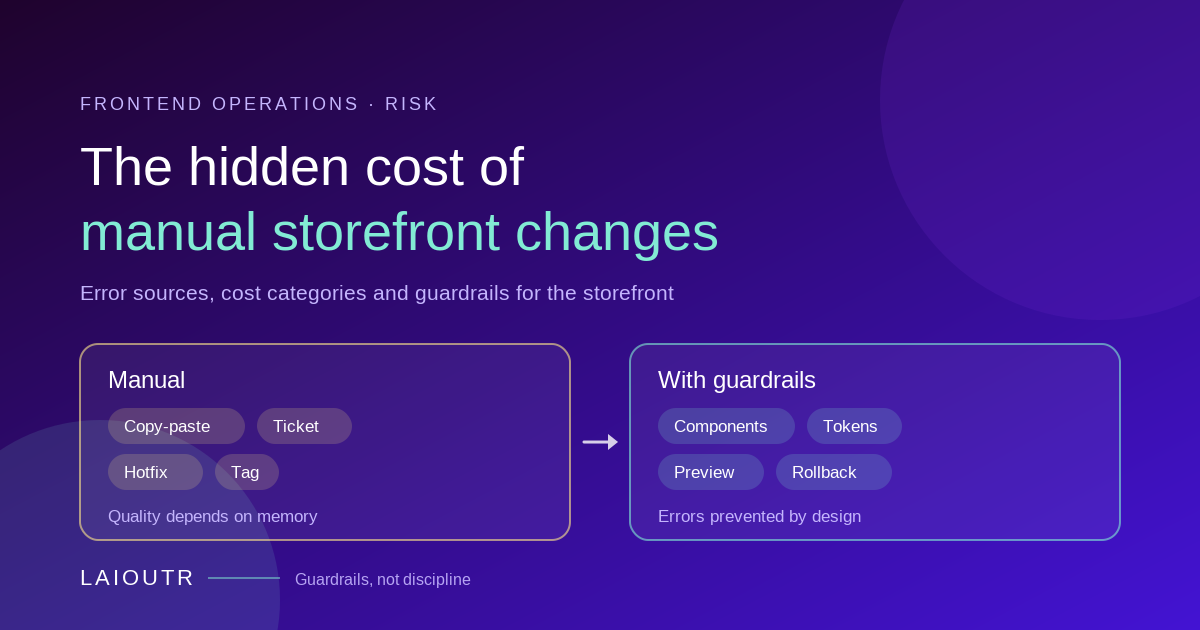The Hidden Cost of Manual Storefront Changes and How to Cut It
Manual frontend changes are the many small edits that keep a storefront running day to day: a new ba…](https://www.laioutr.com/en/blog/frontend-operations-hidden-cost-manual-storefront-changes-2026)
[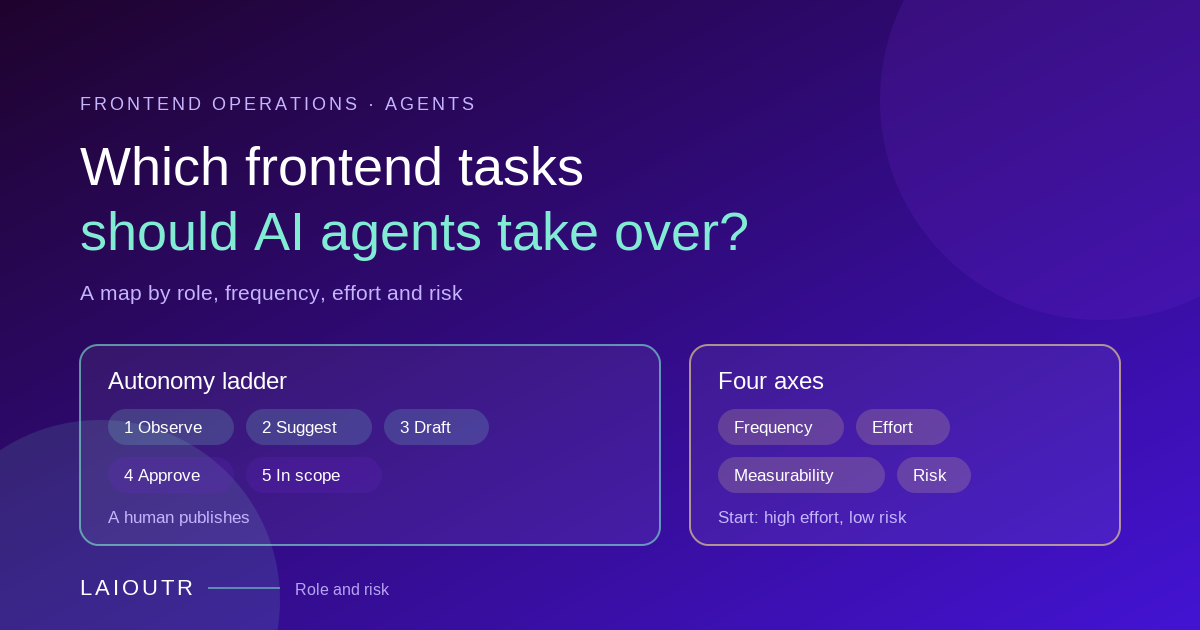Which Frontend Tasks Should AI Agents Take Over? Role and Risk Map
AI agents should first take over the frontend tasks that come up often, involve a lot of manual work…](https://www.laioutr.com/en/blog/frontend-operations-agent-task-map-role-risk-2026)
[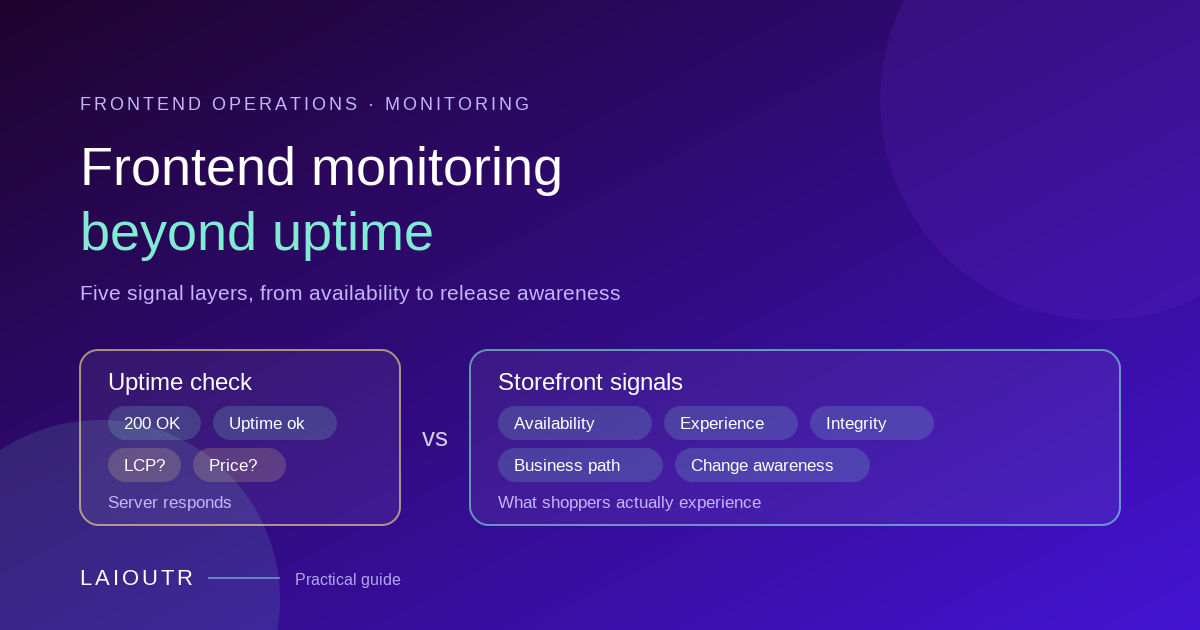Frontend Monitoring Beyond Uptime: Signals a Storefront Needs
Frontend monitoring beyond uptime means checking a storefront not only for availability but for what…](https://www.laioutr.com/en/blog/frontend-operations-monitoring-beyond-uptime-2026)
[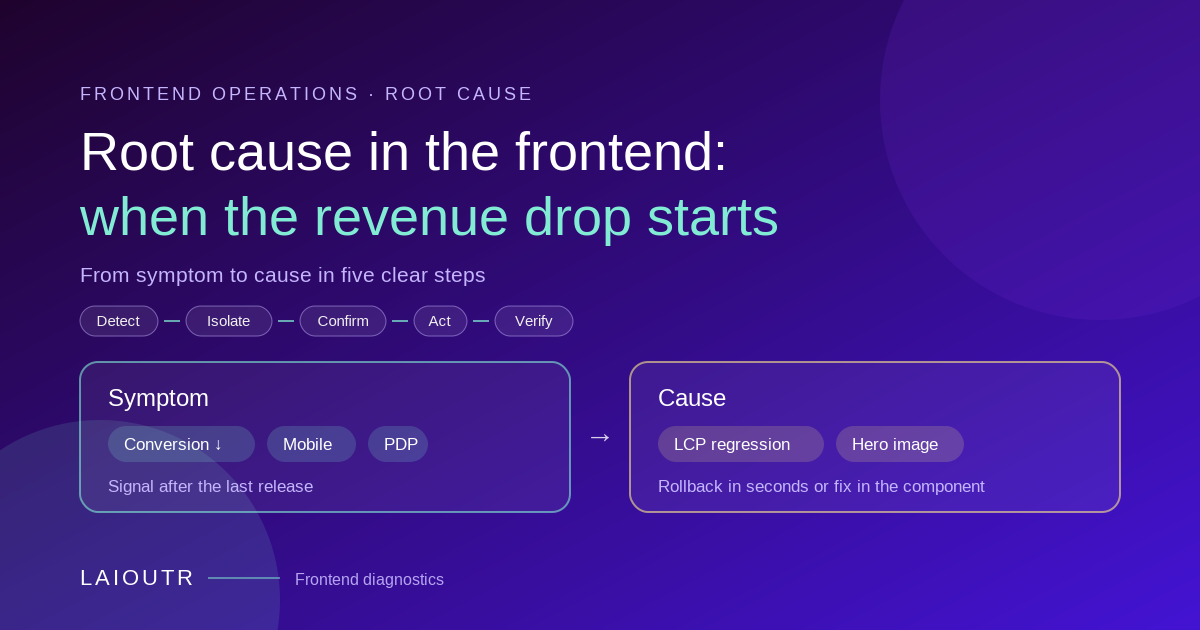Root Cause in the Frontend: When Revenue Drops Start in the Storefront
When revenue or conversion rate drops suddenly, the cause often is not traffic, pricing or the comme…](https://www.laioutr.com/en/blog/frontend-operations-root-cause-revenue-drop-storefront-2026)
[Laioutr Academy Is Live: The Video Manual for Laioutr
Since October 15, 2026, the Laioutr Academy has been live at academy.laioutr.com. It is the user man…](https://www.laioutr.com/en/blog/laioutr-academy-launch-video-manual-certification)
[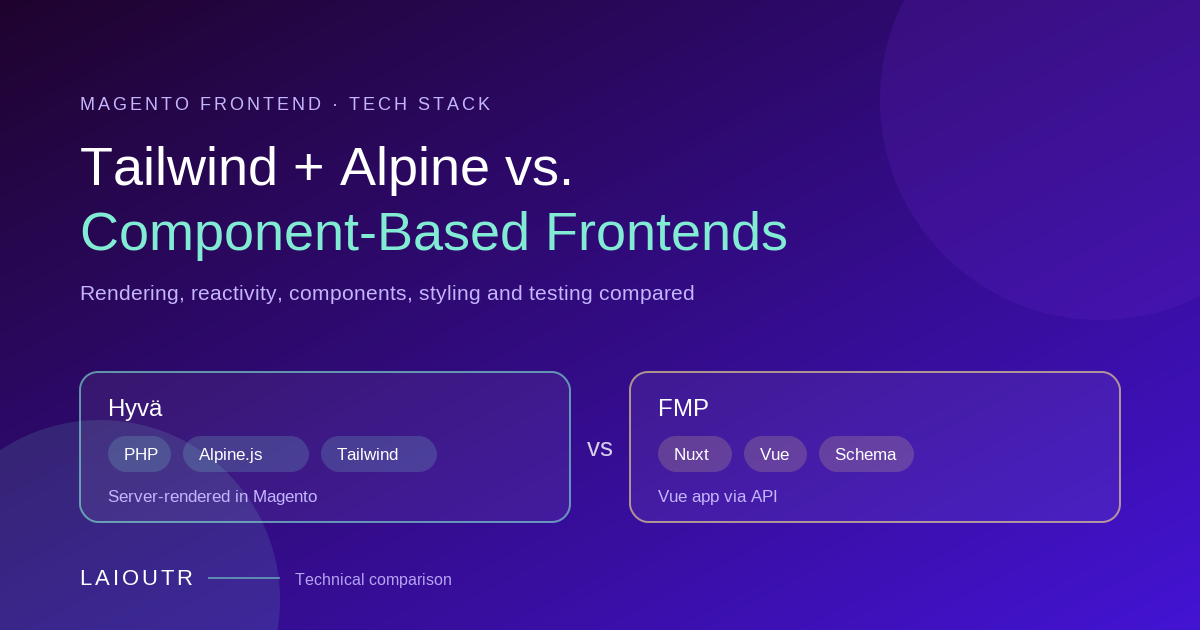Tailwind + Alpine vs. Component-Based Frontends for Magento
Hyvä renders Magento pages on the server with PHP templates and layout XML, adds interactivity throu…](https://www.laioutr.com/en/blog/tailwind-alpine-magento-vs-component-based-frontend-2026)
[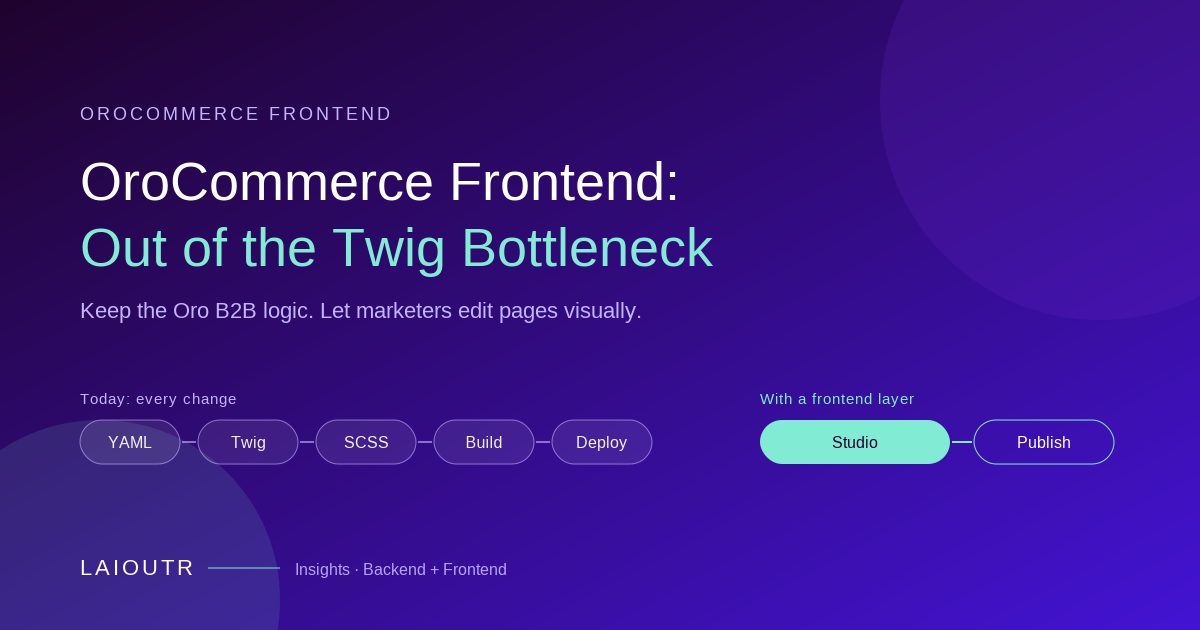OroCommerce Frontend: Out of the Twig and Layouts Bottleneck
The OroCommerce frontend is a server-rendered storefront built from Symfony bundles, OroLayouts and …](https://www.laioutr.com/en/blog/orocommerce-frontend-twig-layouts-bottleneck)
[One Magento Backend, Many Channels: Personalization in Practice
Personalization across web, mobile and voice on a single Magento backend does not start with a featu…](https://www.laioutr.com/en/blog/magento-multichannel-personalization-web-mobile-voice-2026)
[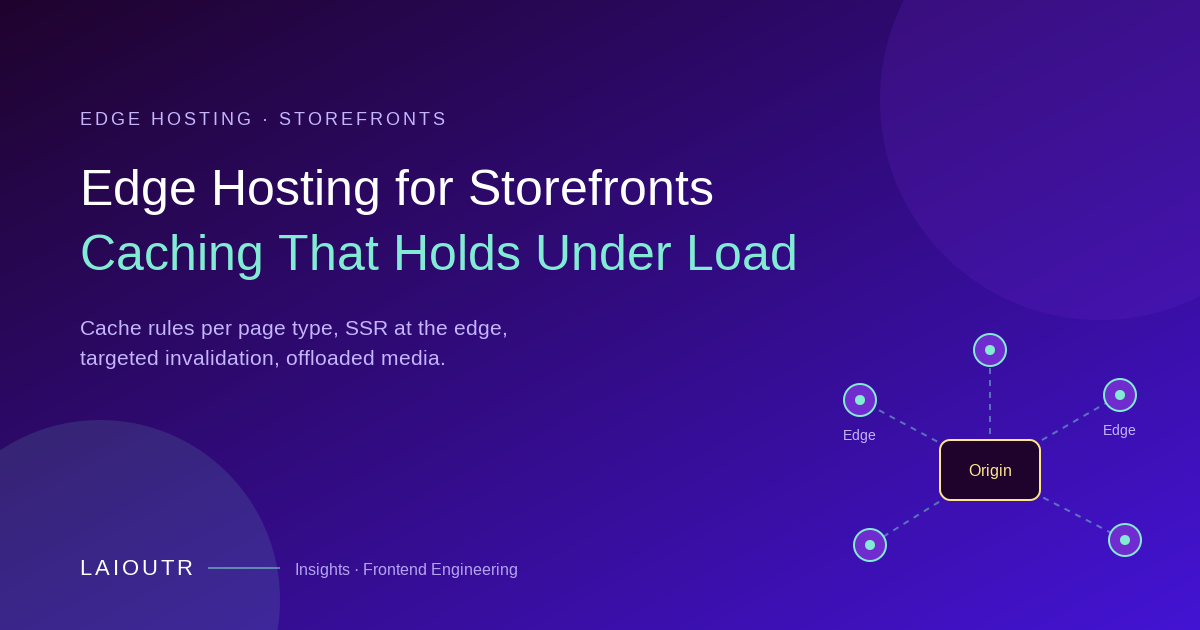Edge Hosting for Storefronts: Caching That Holds Under Peak Load
Edge hosting keeps a storefront fast under load when most requests never reach the origin: pages and…](https://www.laioutr.com/en/blog/edge-hosting-storefronts-peak-traffic-caching-2026)
[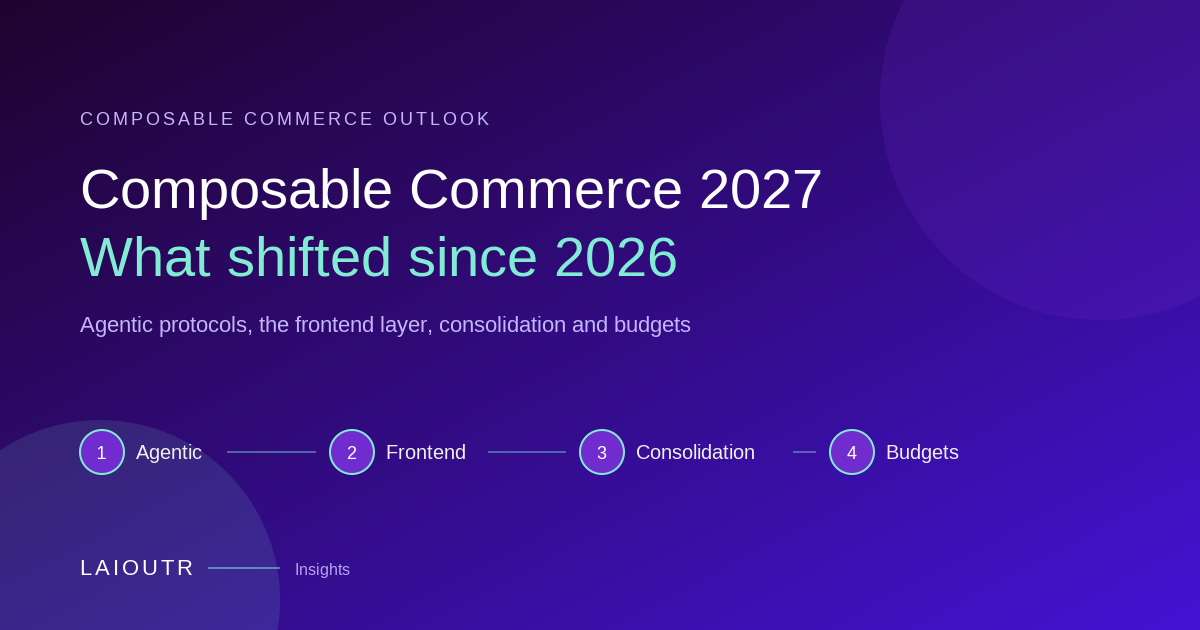Composable Commerce 2027: What Shifted and What Comes Next
Composable commerce enters 2027 with a different agenda than a year ago. The architecture question i…](https://www.laioutr.com/en/blog/composable-commerce-2027-outlook)
[AI Engagement and Conversion: Personalization on the Frontend
AI-driven engagement and conversion on the frontend rests on five mechanics: segments decide who see…](https://www.laioutr.com/en/blog/ai-engagement-conversion-frontend-personalization)
## Apps for the Laioutr platform
[View all apps](https://www.laioutr.com/en/apps)
[](https://www.laioutr.com/en/apps/shopify)
Laioutr
[Shopify](https://www.laioutr.com/en/apps/shopify)
Shopify is a commerce platform for selling online and in physical retail.
[](https://www.laioutr.com/en/apps/shopware)
Laioutr
[Shopware](https://www.laioutr.com/en/apps/shopware)
Shopware is a flexible ecommerce platform from Europe for product catalogs and omnichannel commerce.
[](https://www.laioutr.com/en/apps/adobe-commerce)
Laioutr
[Adobe Commerce](https://www.laioutr.com/en/apps/adobe-commerce)
Adobe Commerce is an enterprise commerce platform for complex, global B2C and B2B scenarios.
Planned
[](https://www.laioutr.com/en/apps/b2b-sellers)
Laioutr
[B2Bsellers](https://www.laioutr.com/en/apps/b2b-sellers)
B2B suite for Shopware that turns an online store into a professional B2B commerce platform.
Planned
[](https://www.laioutr.com/en/apps/commerce-layer)
Laioutr
[Commerce Layer](https://www.laioutr.com/en/apps/commerce-layer)
Commerce Layer is a headless commerce platform for making inventory and catalogs available online.
[](https://www.laioutr.com/en/apps/commercetools)
Laioutr
[Commercetools](https://www.laioutr.com/en/apps/commercetools)
Commercetools is a SaaS-based headless ecommerce platform used worldwide.
[](https://www.laioutr.com/en/apps/emporix)
Laioutr
[Emporix](https://www.laioutr.com/en/apps/emporix)
Emporix is a composable, API-first commerce platform for scalable B2B and B2C scenarios.
Planned
[](https://www.laioutr.com/en/apps/hcl-software)
Laioutr
[HCL Software](https://www.laioutr.com/en/apps/hcl-software)
Enterprise suite for digital commerce and experience with extensive configurability.
Planned
[](https://www.laioutr.com/en/apps/intershop)
Laioutr
[Intershop](https://www.laioutr.com/en/apps/intershop)
Enterprise commerce platform for complex B2B and B2C business models.
Planned
[](https://www.laioutr.com/en/apps/magento-2)
Laioutr
[Magento 2](https://www.laioutr.com/en/apps/magento-2)
Widely used, extensible commerce platform for B2C and B2B scenarios.
[](https://www.laioutr.com/en/apps/oxid-eshop)
Laioutr
[OXID eShop](https://www.laioutr.com/en/apps/oxid-eshop)
OXID eShop is an extensible commerce platform for complex B2B and B2C requirements.
Planned
[](https://www.laioutr.com/en/apps/patchworks)
Laioutr
[Patchworks](https://www.laioutr.com/en/apps/patchworks)
Patchworks is a low-code iPaaS that connects ecommerce, ERP, WMS, 3PL, and marketplaces.
Planned
[](https://www.laioutr.com/en/apps/PrestaShop)
Laioutr
[Prestashop](https://www.laioutr.com/en/apps/PrestaShop)
Open-source commerce platform for small and midsize merchants in Europe and beyond.
Planned
[](https://www.laioutr.com/en/apps/saleor)
Laioutr
[Saleor](https://www.laioutr.com/en/apps/saleor)
Open-source, API-first commerce platform built on GraphQL for custom storefronts.
Planned
[](https://www.laioutr.com/en/apps/salesforce-commerce-cloud)
Laioutr
[Salesforce Commerce Cloud](https://www.laioutr.com/en/apps/salesforce-commerce-cloud)
Salesforce Commerce Cloud is a cloud-based enterprise commerce platform for businesses of any size.
Planned
[](https://www.laioutr.com/en/apps/sap-commerce-cloud)
Laioutr
[SAP Commerce Cloud](https://www.laioutr.com/en/apps/sap-commerce-cloud)
Enterprise commerce platform for complex catalogs, pricing models, and omnichannel journeys.
Planned
[](https://www.laioutr.com/en/apps/scayle)
Laioutr
[Scayle](https://www.laioutr.com/en/apps/scayle)
SCAYLE is a commerce engine that helps brands and retailers scale their business.
Planned
[](https://www.laioutr.com/en/apps/spryker)
Laioutr
[Spryker](https://www.laioutr.com/en/apps/spryker)
Composable commerce platform for sophisticated B2B and B2C business models.
[](https://www.laioutr.com/en/apps/sylius)
Laioutr
[Sylius](https://www.laioutr.com/en/apps/sylius)
Sylius is a developer-friendly ecommerce framework for B2C and B2B shopping experiences.
Planned
[](https://www.laioutr.com/en/apps/vendure)
Laioutr
[Vendure](https://www.laioutr.com/en/apps/vendure)
Vendure is a headless commerce platform for businesses with complex requirements.
Coming Soon
[](https://www.laioutr.com/en/apps/vtex)
Laioutr
[VTEX](https://www.laioutr.com/en/apps/vtex)
Cloud-native, composable commerce platform for B2B and B2C at scale.
Planned
[](https://www.laioutr.com/en/apps/websale)
Laioutr
[Websale](https://www.laioutr.com/en/apps/websale)
Stable, enterprise-ready commerce backend for complex retail environments.

Strategy call
## The frontend as a control layer
A conversation about stack, roadmap and replatforming scenario. The outcome: a clear picture of how Laioutr fits, what it costs and how fast the go-live can happen.
*"After 30 minutes, we knew Laioutr makes our replatforming feasible."*
*Daniel B., CEO,* [*hygibox.de*](https://hygibox.de)
[Book a demo](https://www.laioutr.com/en/contact)
## Structured Data
```json
{
"@context": "https://schema.org",
"@graph": [
{
"@type": "Organization",
"@id": "https://www.laioutr.com/#identity",
"name": "Laioutr",
"legalName": "Laioutr GmbH",
"url": "https://www.laioutr.com/",
"logo": {
"@type": "ImageObject",
"url": "https://www.laioutr.com/laioutr-logo.png",
"width": 400,
"height": 400
},
"email": "info@laioutr.com",
"telephone": "+49 30 75435715",
"address": {
"@type": "PostalAddress",
"streetAddress": "Münchweilersteig 5",
"postalCode": "12559",
"addressLocality": "Berlin",
"addressCountry": "DE"
},
"vatID": "DE450905846",
"sameAs": [
"https://www.linkedin.com/company/laioutr",
"https://www.youtube.com/@Laioutr",
"https://x.com/laioutr"
]
},
{
"@type": "WebSite",
"@id": "https://www.laioutr.com/en/#website",
"url": "https://www.laioutr.com/en/",
"name": "Laioutr",
"inLanguage": "en",
"publisher": {
"@id": "https://www.laioutr.com/#identity"
}
},
{
"@type": "BlogPosting",
"@id": "https://www.laioutr.com/en/blog/pwa-vs-native#article",
"headline": "PWA vs Native Apps in E-Commerce: Why Native Apps Still Win in Certain Scenarios",
"description": "Why native apps still win in certain ecommerce scenarios, despite the prevailing progressive web app narrative.",
"image": [
"https://eu-west-2.graphassets.com/cmii2mlqi0dux06l5543v7nkc/cmnucypviw8mi07mgmwsd5asa"
],
"datePublished": "2026-07-09T04:43:18.788314+00:00",
"dateModified": "2026-07-09T04:43:18.550583+00:00",
"inLanguage": "en",
"articleSection": "Insights",
"keywords": "Industry & Trends, Adobe Commerce, Salesforce Commerce Cloud",
"author": {
"@type": "Person",
"name": "Marcel Thiesies",
"jobTitle": "Co-Founder & CEO, Laioutr",
"image": "https://eu-west-2.graphassets.com/cmii2mlqi0dux06l5543v7nkc/cmj01b962364n07lb0iguvts5"
},
"publisher": {
"@id": "https://www.laioutr.com/#identity"
},
"mainEntityOfPage": {
"@id": "https://www.laioutr.com/en/blog/pwa-vs-native#webpage"
},
"isPartOf": {
"@id": "https://www.laioutr.com/en/#website"
}
},
{
"@type": "WebPage",
"@id": "https://www.laioutr.com/en/blog/pwa-vs-native#webpage",
"url": "https://www.laioutr.com/en/blog/pwa-vs-native",
"name": "PWA vs Native Apps in E-Commerce: Why Native Apps Still Win in Certain Scenarios",
"description": "Why native apps still win in certain ecommerce scenarios, despite the prevailing progressive web app narrative.",
"inLanguage": "en",
"isPartOf": {
"@id": "https://www.laioutr.com/en/#website"
},
"breadcrumb": {
"@id": "https://www.laioutr.com/en/blog/pwa-vs-native#breadcrumb"
},
"primaryImageOfPage": {
"@type": "ImageObject",
"url": "https://eu-west-2.graphassets.com/cmii2mlqi0dux06l5543v7nkc/cmnucypviw8mi07mgmwsd5asa"
},
"datePublished": "2026-07-09T04:43:18.788314+00:00",
"dateModified": "2026-07-09T04:43:18.550583+00:00",
"mainEntity": {
"@id": "https://www.laioutr.com/en/blog/pwa-vs-native#article"
}
},
{
"@type": "BreadcrumbList",
"@id": "https://www.laioutr.com/en/blog/pwa-vs-native#breadcrumb",
"itemListElement": [
{
"@type": "ListItem",
"position": 1,
"name": "Laioutr",
"item": "https://www.laioutr.com/en/"
},
{
"@type": "ListItem",
"position": 2,
"name": "Insights",
"item": "https://www.laioutr.com/en/blogs/insights"
},
{
"@type": "ListItem",
"position": 3,
"name": "PWA vs Native Apps in E-Commerce: Why Native Apps Still Win in Certain Scenarios"
}
]
}
]
}
```