---
title: "The Hidden Tax of Headless CMS: Why Teams Overspend"
canonical_url: "https://www.laioutr.com/en/blog/reining-in-headless-cms-costs"
locale: en
meta:
description: "Why most organizations overspend on headless CMS and practical ways to rein in the hidden costs."
"og:description": "Why most organizations overspend on headless CMS and practical ways to rein in the hidden costs."
"og:title": "The Hidden Tax of Headless CMS: Why Teams Overspend"
---

# The Hidden Tax of Headless CMS: Why Most Organizations Overspend and How to Stop
Table of contents
1. [1.The Cost Multiplication Problem](#the-cost-multiplication-problem)
2. [2.Why Teams Make These Mistakes](#why-teams-make-these-mistakes)
3. [3.Strategy One: Semantic Content Modeling as Your Anchor](#strategy-one-semantic-content-modeling-as-your-anchor)
4. [4.Strategy Two: Unified Infrastructure Over Distributed Autonomy](#strategy-two-unified-infrastructure-over-distributed-autonomy)
5. [5.Strategy Three: Reduce Development Dependency Through Configuration](#strategy-three-reduce-development-dependency-through-configuration)
6. [6.Implementation: From Strategy to Execution](#implementation-from-strategy-to-execution)
7. [7.The Multiplier Effect](#the-multiplier-effect)
8. [8.Conclusion: Headless CMS Cost Control Is Architectural, Not Operational](#conclusion-headless-cms-cost-control-is-architectural-not-operational)
When organizations first adopted headless CMS platforms, the narrative was clear: decoupling content from presentation would bring freedom, flexibility, and cost efficiency. Today, we see a different reality playing out across enterprise organizations worldwide. Headless CMS implementations routinely consume 2-3 times the budget originally allocated, not because of technical failures, but because of architectural decisions made in the first 90 days.
At Laioutr, we've observed this pattern consistently across our work with mid-market and enterprise commerce teams. The problem isn't the technology. The problem is that most teams treat headless CMS architecture as a solved problem when, in fact, it requires fundamentally different thinking about content modeling, infrastructure organization, and governance.
## The Cost Multiplication Problem
Let's be direct: headless CMS costs scale in ways that traditional CMS platforms never did. When you commit to a headless architecture, you're signing up for a licensing model that penalizes poor planning with exponential cost growth.
Here's the typical trajectory we observe:
A team starts with a single project containing core product content, news articles, and marketing materials. The cost seems reasonable. Then the first expansion arrives. A new product line needs its own content model. Rather than integrating into the existing project structure, teams often create a second project because it feels cleaner, more isolated, and easier to manage independently.
Within two years, organizations find themselves managing 8-12 projects where 2-3 would have sufficed. Each additional project carries licensing overhead, infrastructure complexity, and deployment friction.
But project multiplication is only half the story.
The second cost driver involves content type architecture. Teams without clear semantic content models tend to create "presentation-specific" content types: a "Hero Banner Card" type here, a "Feature Comparison Type" there, a "Product Spotlight Type" somewhere else. Each type exists because a designer needed a specific layout variant. Each type adds complexity to the content model, increases administrative burden, and more importantly, triggers licensing tier escalation.
What teams often don't realize is that these presentation variants should never exist as separate content types. They should be styling and formatting options applied to semantic content types that represent actual business concepts: products, articles, testimonials, events.
This distinction between semantic content modeling and presentation-specific modeling is where the financial bleeding happens.
## Why Teams Make These Mistakes
Understanding the source of these architectural problems helps explain why so many organizations end up overspending.
First, headless CMS adoption happens in a vacuum at most companies. Teams rarely audit their content infrastructure before implementation. They don't conduct a business-wide inventory of existing content, duplicated content models, or conflicting governance structures. They start fresh with headless, which feels cleaner, but this clean slate becomes a blank canvas for recreating all the same mistakes.
Second, the cost implications of architectural decisions aren't visible until 12-18 months into the implementation. By then, content creators have adapted to the structure, integrations are built around the model, and changing course feels prohibitively expensive. Teams discover they've optimized for short-term implementation speed at the cost of long-term operational efficiency.
Third, most teams lack the institutional knowledge to think about content as a strategic asset that should drive architectural decisions. Instead, architecture drives content creation requirements. This backwards relationship creates unnecessary complexity and multiplies costs.
## Strategy One: Semantic Content Modeling as Your Anchor
The first cost-control strategy involves reconceiving how you design content types from the ground up.
Semantic content modeling means designing types around business concepts and editorial intentions, not around presentation requirements. A "Blog Post" type should contain title, body, metadata, and author information. A "Product" type should contain product attributes, specifications, and capabilities. An "Event" type should contain date, location, and registration details.
What should never happen: creating a "Blog Post Hero Variant" type or a "Blog Post Social Media Card" type or a "Blog Post Search Result Summary" type. These are presentation concerns, not content concerns.
The practical implementation involves three steps.
First, audit existing content across your organization. Don't just look at current CMS systems. Look at content living in spreadsheets, documentation platforms, email systems, and legacy databases. You're looking for patterns: what distinct types of content does your business consistently create?
Second, map your presentation requirements against those semantic types. A single Blog Post type should serve your full-width article page, your blog listing page, your social media card, your search results, and your email newsletter. The flexibility comes from templating and formatting logic on the presentation layer, not from creating separate content types.
Third, establish governance around content type creation. This is critical. Most organizations need between 15-25 content types to represent their entire business. If you find yourself creating your 40th type, you've likely veered into presentation-specific modeling and need to reconsider.
This approach typically reduces project licensing costs by 30-40% because you're operating within standard tier constraints rather than constantly scaling up.
## Strategy Two: Unified Infrastructure Over Distributed Autonomy
The second cost lever involves how you organize projects and governance.
Many organizations adopt a federated model where different business units, product teams, or geographic regions maintain their own CMS instances. The appeal is intuitive: autonomy, independent decision-making, and separated workflows.
The cost is severe.
Each additional project carries infrastructure overhead, governance complexity, and licensing multiplication. When you multiply that across five regional organizations or four business units, the cost becomes prohibitive.
The better approach involves designing a unified content infrastructure that serves multiple channels and use cases through intelligent configuration, not through infrastructure proliferation.
This requires investment in three areas: taxonomy design, access control architecture, and content publication workflows.
Taxonomy design involves creating shared classification systems that allow different business units to organize content within a shared space without stepping on each other's toes. One project with proper taxonomy and access controls is infinitely cheaper than two separate projects.
Access control architecture means configuring role-based permissions that restrict what different teams can see and modify. You can have regional marketing teams, product teams, and corporate communications teams all operating within the same CMS infrastructure while maintaining appropriate separation.
Content publication workflows involve setting up sophisticated approval processes that route content through the right stakeholders before publication. This eliminates the need for separate staging environments and projects for different organizational units.
Organizations that consolidate from 5-6 projects into a unified infrastructure typically see 45-60% cost reduction while actually improving content consistency and cross-team collaboration.
## Strategy Three: Reduce Development Dependency Through Configuration
The third cost-control strategy involves shifting work from engineers to configuration.
Many organizations build custom integrations between their headless CMS and their frontend applications. These integrations handle data mapping, transformation, filtering, and composition logic. Teams hire engineers to maintain these integrations, create new ones for new channels, and optimize them as content scales.
This is a recurring expense that scales with your development organization size.
The alternative involves leveraging built-in CMS capabilities for filtering, querying, relationships, and content composition. Most modern headless platforms provide query languages, content modeling relationships, and content composition features that eliminate the need for custom integration logic.
The shift involves moving from "let's build a custom integration layer to handle this" to "let's configure the CMS to handle this natively."
For example, rather than building an integration that fetches product content, filters by category, sorts by popularity, and transforms fields for display, configure these operations directly within the CMS using its native query capabilities. This reduces your code footprint, accelerates feature delivery, and most importantly, reduces your ongoing development expense.
Organizations that aggressively shift logic from engineering to CMS configuration typically reduce development overhead by 25-35% while improving time-to-market for new features.
## Implementation: From Strategy to Execution
These strategies sound clean in principle. Execution requires discipline and clear decision-making.
Start with an audit. Before optimizing for cost, understand your current state. How many projects do you actually have? How many content types? Which types are presentation-specific versus semantic? What logic lives in engineering integrations that could live in the CMS?
Establish governance. Create clear policies around content type creation, project creation, and infrastructure expansion. Who can request new types? Who approves them? What criteria must they meet?
Build incrementally. You don't need to restructure your entire content infrastructure overnight. Start with new initiatives. Apply semantic modeling to new content types. Pilot new publication workflows with one business unit before organization-wide rollout.
Track metrics. Monitor licensing tier usage, project count, content type count, and integration complexity. These metrics should trend downward as your optimization efforts take hold.
## The Multiplier Effect
The financial benefit of these strategies extends beyond direct licensing cost reduction.
Lower infrastructure complexity reduces onboarding friction for new team members. Clearer content modeling improves content consistency and editorial decision-making. Unified infrastructure enables better content reuse and reduces duplication. Configuration-driven logic reduces bugs and maintenance overhead.
These indirect benefits often exceed the direct licensing savings, creating a compounding effect where cost optimization and organizational efficiency reinforce each other.
## Conclusion: Headless CMS Cost Control Is Architectural, Not Operational
Many organizations approach CMS cost reduction as an operational problem: negotiating better licensing terms, consolidating vendors, or cutting features. These tactics provide marginal relief.
Real cost control is architectural. It flows from thoughtful decisions about content modeling, infrastructure organization, and governance made early in the project lifecycle. It requires resisting the urge to create presentation-specific content types, consolidating projects ruthlessly, and leveraging native platform capabilities instead of building custom integrations.
In typical projects, these transitions deliver consistent results: 40-60% cost reductions within 18 months, improved content consistency, faster time-to-market for new features, and more sustainable governance models.
Your headless CMS cost problem isn't a technology problem. It's an architecture and discipline problem. The solution lies in approaching content infrastructure with the same strategic rigor you'd apply to any other critical business system.
### **More from the Laioutr Platform**
- [Composable Headless Frontend](https://www.laioutr.com/en/composable-headless-frontend)
- [Content Management](https://www.laioutr.com/en/product/content-management)
- [Agentic Frontend Management Platform](https://www.laioutr.com/en/agentic-frontend-management-platform)
Related reading: [Headless frontend that survives any CMS, patterns from 50+ stack integrations](https://www.laioutr.com/en/blog/headless-frontend-any-cms-patterns-anti-patterns-2026) and [Headless CMS for SAP CC: A Comparison of the Top 5 Options in 2026](https://www.laioutr.com/en/blog/headless-cms-comparison-sap-cc).
---
Share this article
[Share on Facebook](https://www.facebook.com/sharer/sharer.php?u=https%3A%2F%2Fwww.laioutr.com%2Fen%2Fblog%2Freining-in-headless-cms-costs) [Share on X](https://x.com/intent/post?url=https%3A%2F%2Fwww.laioutr.com%2Fen%2Fblog%2Freining-in-headless-cms-costs&text=) [Share on LinkedIn](https://www.linkedin.com/sharing/share-offsite/?url=https%3A%2F%2Fwww.laioutr.com%2Fen%2Fblog%2Freining-in-headless-cms-costs) [Share on Pinterest](https://pinterest.com/pin/create/button/?url=https%3A%2F%2Fwww.laioutr.com%2Fen%2Fblog%2Freining-in-headless-cms-costs&description=) [Share via email](mailto:?subject=&body=%0A%0Ahttps%3A%2F%2Fwww.laioutr.com%2Fen%2Fblog%2Freining-in-headless-cms-costs)
## More articles on frontend and headless
Practical know-how for frontend development, smart agents, and headless
[To the blog](https://www.laioutr.com/en/blogs/insights)
[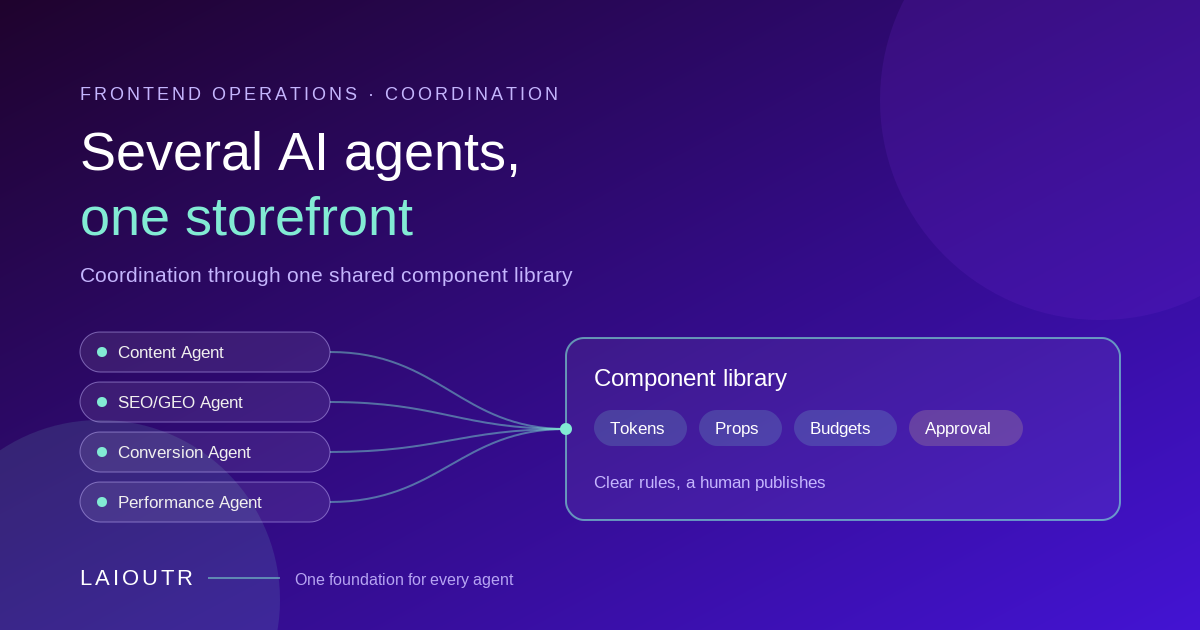Several AI Agents, One Storefront: Coordination Without Collisions
When several AI agents work on the same storefront, conflicts rarely happen between the agents thems…](https://www.laioutr.com/en/blog/frontend-operations-multi-agent-coordination-storefront-2026)
[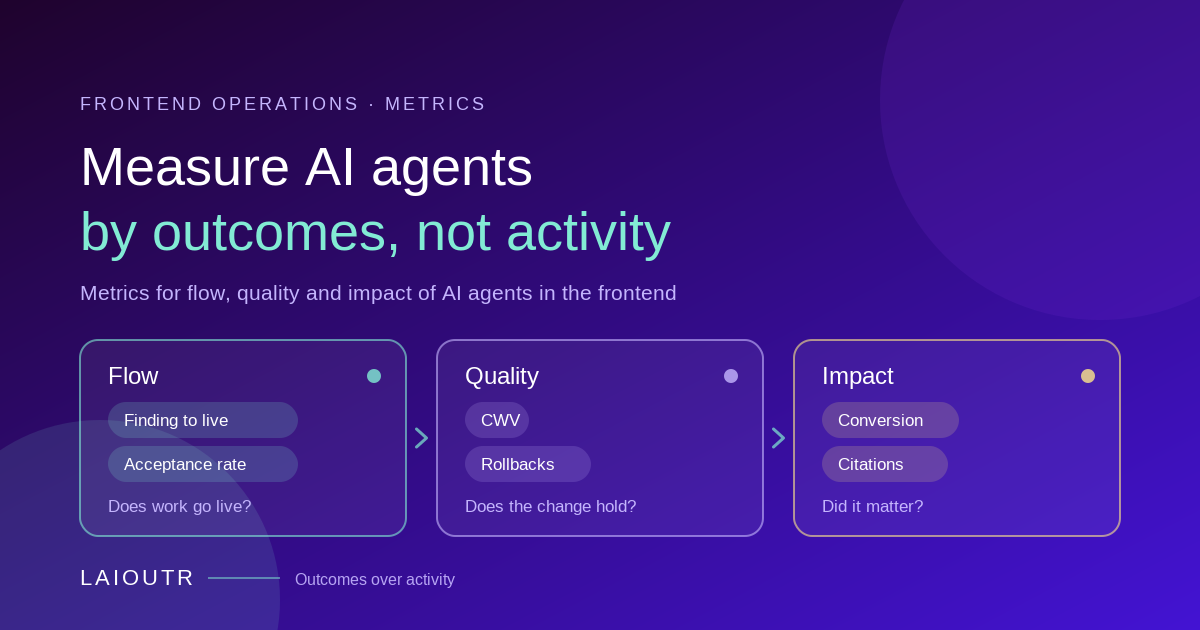Measuring AI Agents by Outcomes: Agentic Frontend Management Metrics
AI agents in the frontend should be measured by outcomes, not by activity. The number of prompts, ge…](https://www.laioutr.com/en/blog/frontend-operations-measuring-ai-agents-outcomes-2026)
[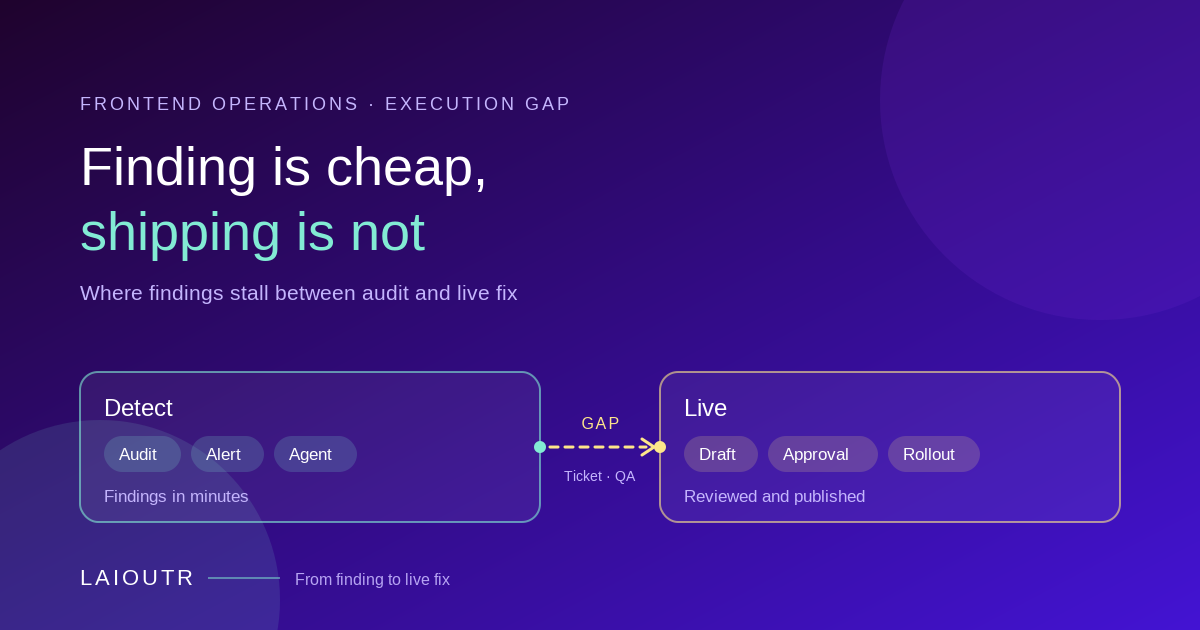The Execution Gap in the Frontend: Finding Is Cheap, Shipping Is Not
The execution gap in the frontend is the time, and the number of handoffs, between "we know wha…](https://www.laioutr.com/en/blog/frontend-operations-execution-gap-detect-vs-deploy-2026)
[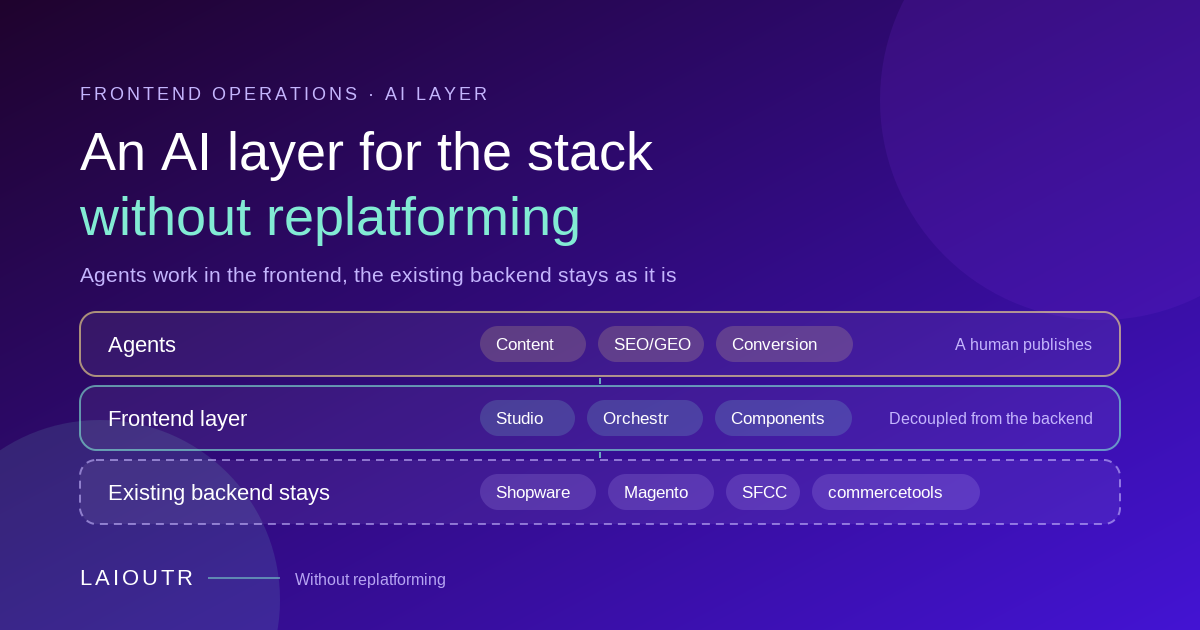Adding an AI Layer to an Existing Commerce Stack Without Replatforming
An AI layer can be added to an existing commerce stack without replacing the shop system. The most p…](https://www.laioutr.com/en/blog/frontend-operations-ai-layer-existing-stack-without-replatforming-2026)
[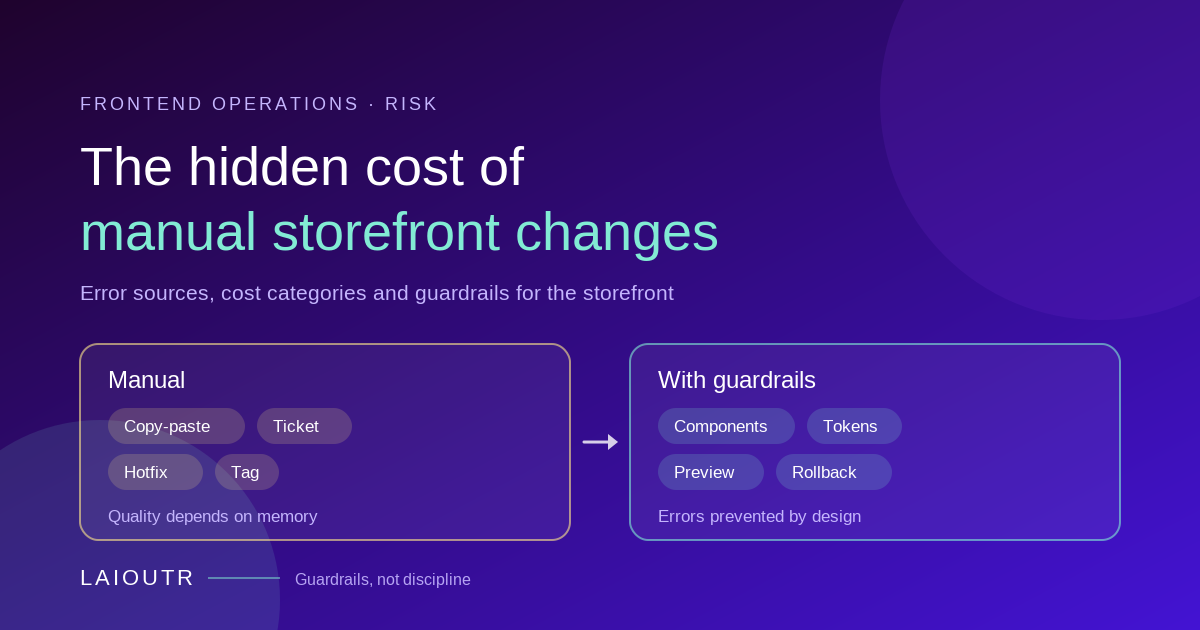The Hidden Cost of Manual Storefront Changes and How to Cut It
Manual frontend changes are the many small edits that keep a storefront running day to day: a new ba…](https://www.laioutr.com/en/blog/frontend-operations-hidden-cost-manual-storefront-changes-2026)
[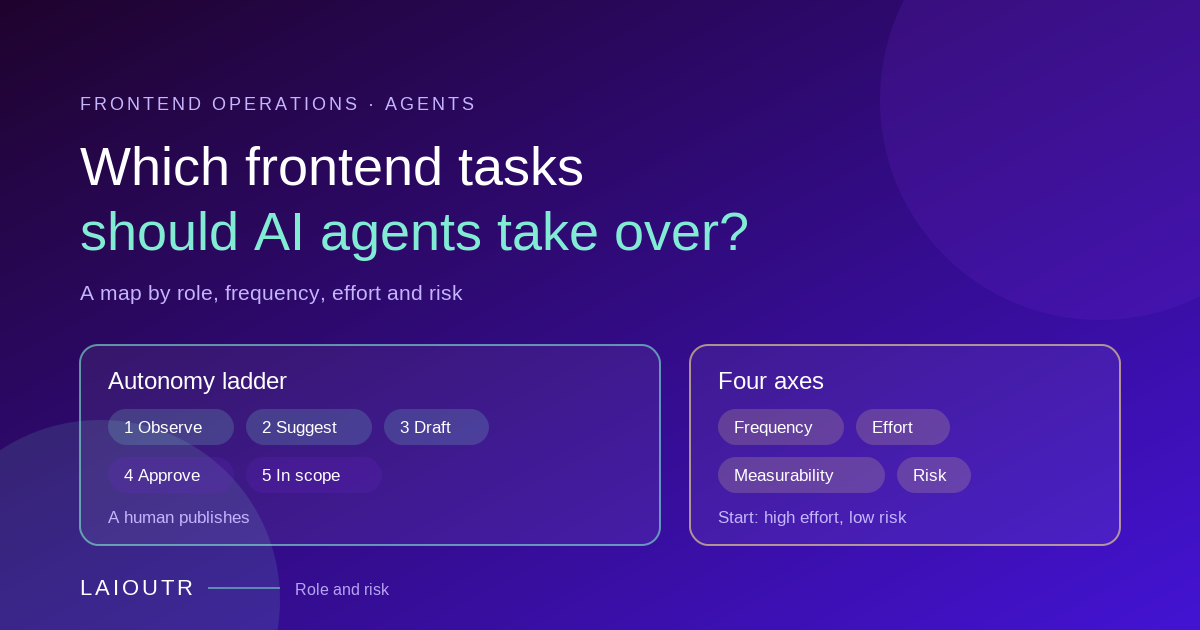Which Frontend Tasks Should AI Agents Take Over? Role and Risk Map
AI agents should first take over the frontend tasks that come up often, involve a lot of manual work…](https://www.laioutr.com/en/blog/frontend-operations-agent-task-map-role-risk-2026)
[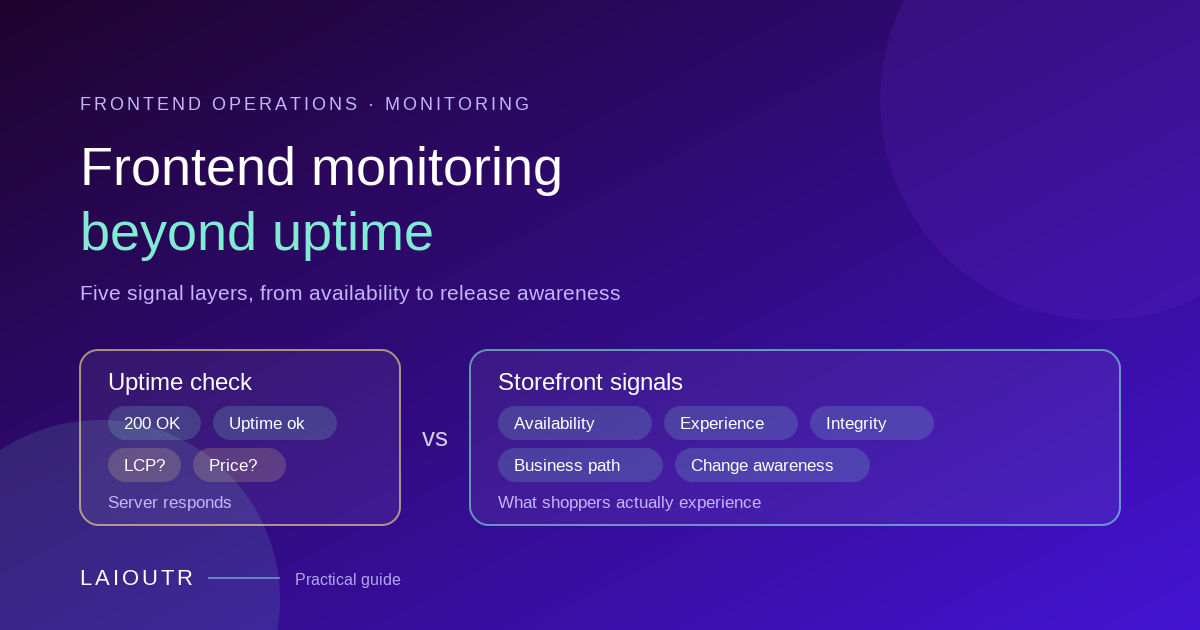Frontend Monitoring Beyond Uptime: Signals a Storefront Needs
Frontend monitoring beyond uptime means checking a storefront not only for availability but for what…](https://www.laioutr.com/en/blog/frontend-operations-monitoring-beyond-uptime-2026)
[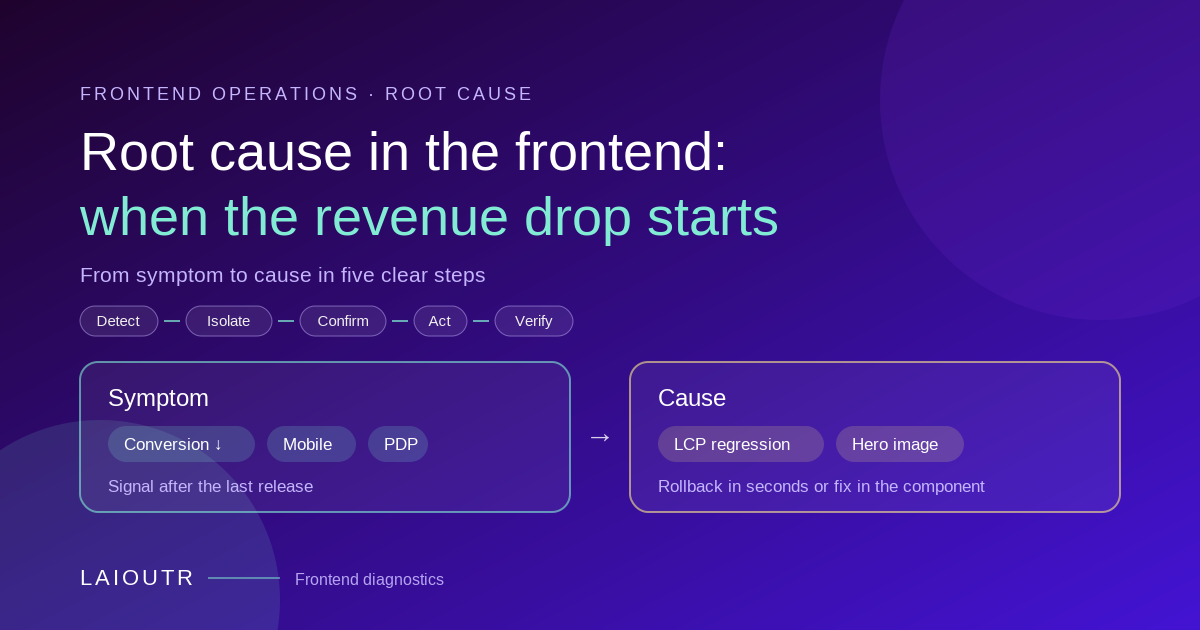Root Cause in the Frontend: When Revenue Drops Start in the Storefront
When revenue or conversion rate drops suddenly, the cause often is not traffic, pricing or the comme…](https://www.laioutr.com/en/blog/frontend-operations-root-cause-revenue-drop-storefront-2026)
[Laioutr Academy Is Live: The Video Manual for Laioutr
Since October 15, 2026, the Laioutr Academy has been live at academy.laioutr.com. It is the user man…](https://www.laioutr.com/en/blog/laioutr-academy-launch-video-manual-certification)
[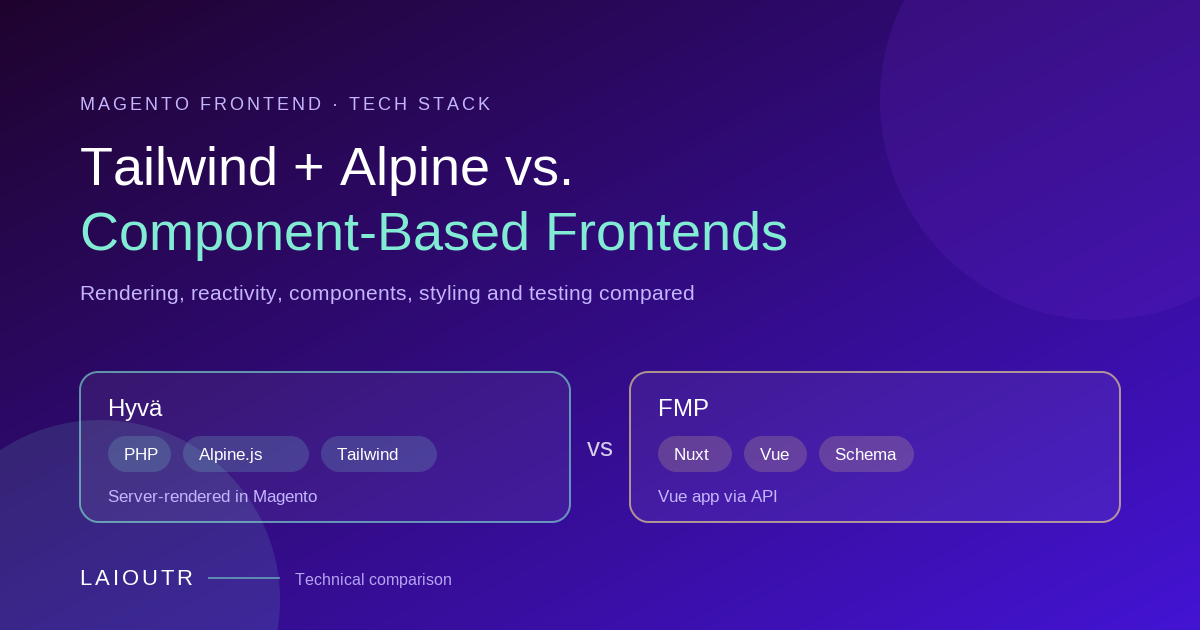Tailwind + Alpine vs. Component-Based Frontends for Magento
Hyvä renders Magento pages on the server with PHP templates and layout XML, adds interactivity throu…](https://www.laioutr.com/en/blog/tailwind-alpine-magento-vs-component-based-frontend-2026)
[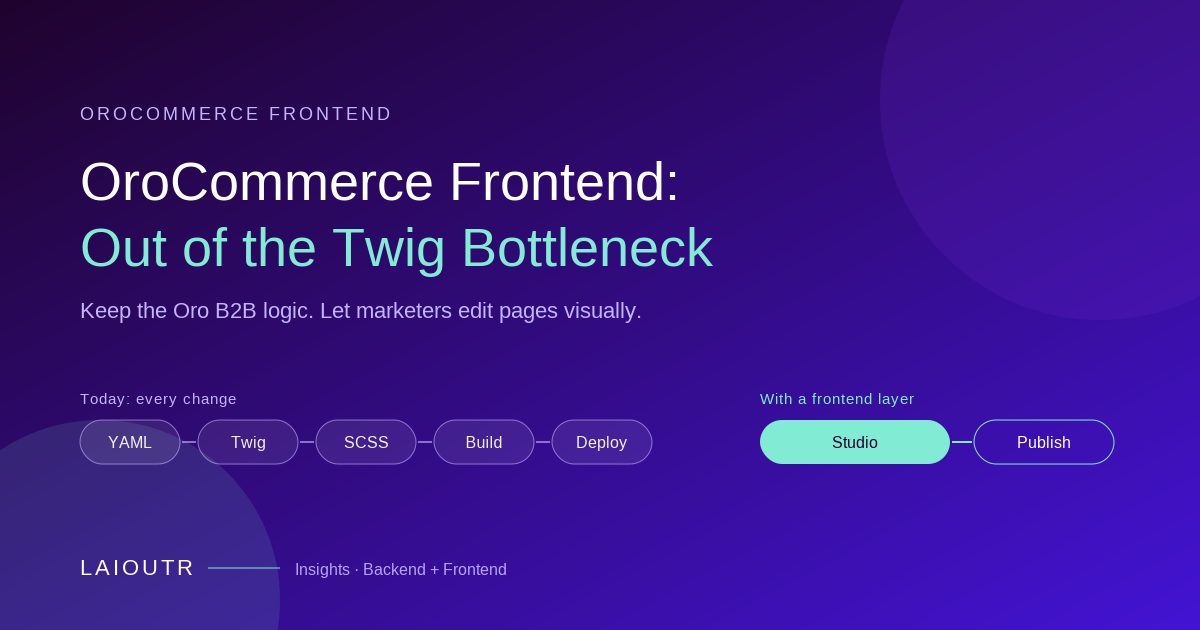OroCommerce Frontend: Out of the Twig and Layouts Bottleneck
The OroCommerce frontend is a server-rendered storefront built from Symfony bundles, OroLayouts and …](https://www.laioutr.com/en/blog/orocommerce-frontend-twig-layouts-bottleneck)
[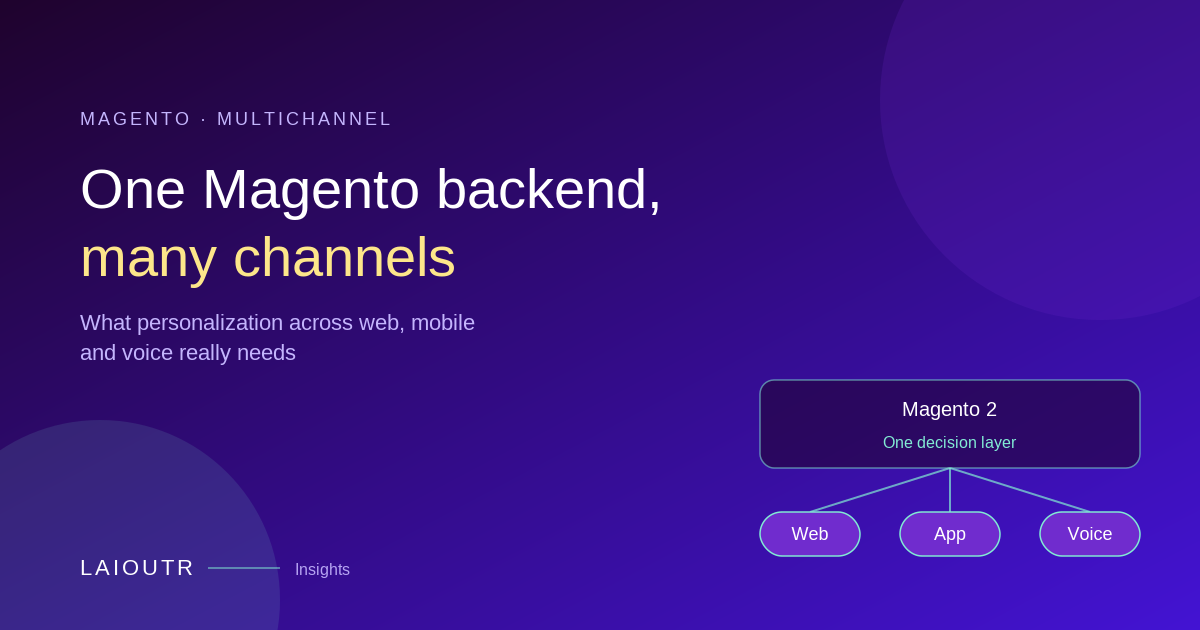One Magento Backend, Many Channels: Personalization in Practice
Personalization across web, mobile and voice on a single Magento backend does not start with a featu…](https://www.laioutr.com/en/blog/magento-multichannel-personalization-web-mobile-voice-2026)
[Edge Hosting for Storefronts: Caching That Holds Under Peak Load
Edge hosting keeps a storefront fast under load when most requests never reach the origin: pages and…](https://www.laioutr.com/en/blog/edge-hosting-storefronts-peak-traffic-caching-2026)
[Composable Commerce 2027: What Shifted and What Comes Next
Composable commerce enters 2027 with a different agenda than a year ago. The architecture question i…](https://www.laioutr.com/en/blog/composable-commerce-2027-outlook)
[AI Engagement and Conversion: Personalization on the Frontend
AI-driven engagement and conversion on the frontend rests on five mechanics: segments decide who see…](https://www.laioutr.com/en/blog/ai-engagement-conversion-frontend-personalization)
## Apps for the Laioutr platform
[View all apps](https://www.laioutr.com/en/apps)
[](https://www.laioutr.com/en/apps/shopify)
Laioutr
[Shopify](https://www.laioutr.com/en/apps/shopify)
Shopify is a commerce platform for selling online and in physical retail.
[](https://www.laioutr.com/en/apps/shopware)
Laioutr
[Shopware](https://www.laioutr.com/en/apps/shopware)
Shopware is a flexible ecommerce platform from Europe for product catalogs and omnichannel commerce.
[](https://www.laioutr.com/en/apps/adobe-commerce)
Laioutr
[Adobe Commerce](https://www.laioutr.com/en/apps/adobe-commerce)
Adobe Commerce is an enterprise commerce platform for complex, global B2C and B2B scenarios.
Planned
[](https://www.laioutr.com/en/apps/b2b-sellers)
Laioutr
[B2Bsellers](https://www.laioutr.com/en/apps/b2b-sellers)
B2B suite for Shopware that turns an online store into a professional B2B commerce platform.
Planned
[](https://www.laioutr.com/en/apps/commerce-layer)
Laioutr
[Commerce Layer](https://www.laioutr.com/en/apps/commerce-layer)
Commerce Layer is a headless commerce platform for making inventory and catalogs available online.
[](https://www.laioutr.com/en/apps/commercetools)
Laioutr
[Commercetools](https://www.laioutr.com/en/apps/commercetools)
Commercetools is a SaaS-based headless ecommerce platform used worldwide.
[](https://www.laioutr.com/en/apps/emporix)
Laioutr
[Emporix](https://www.laioutr.com/en/apps/emporix)
Emporix is a composable, API-first commerce platform for scalable B2B and B2C scenarios.
Planned
[](https://www.laioutr.com/en/apps/hcl-software)
Laioutr
[HCL Software](https://www.laioutr.com/en/apps/hcl-software)
Enterprise suite for digital commerce and experience with extensive configurability.
Planned
[](https://www.laioutr.com/en/apps/intershop)
Laioutr
[Intershop](https://www.laioutr.com/en/apps/intershop)
Enterprise commerce platform for complex B2B and B2C business models.
Planned
[](https://www.laioutr.com/en/apps/magento-2)
Laioutr
[Magento 2](https://www.laioutr.com/en/apps/magento-2)
Widely used, extensible commerce platform for B2C and B2B scenarios.
[](https://www.laioutr.com/en/apps/oxid-eshop)
Laioutr
[OXID eShop](https://www.laioutr.com/en/apps/oxid-eshop)
OXID eShop is an extensible commerce platform for complex B2B and B2C requirements.
Planned
[](https://www.laioutr.com/en/apps/patchworks)
Laioutr
[Patchworks](https://www.laioutr.com/en/apps/patchworks)
Patchworks is a low-code iPaaS that connects ecommerce, ERP, WMS, 3PL, and marketplaces.
Planned
[](https://www.laioutr.com/en/apps/PrestaShop)
Laioutr
[Prestashop](https://www.laioutr.com/en/apps/PrestaShop)
Open-source commerce platform for small and midsize merchants in Europe and beyond.
Planned
[](https://www.laioutr.com/en/apps/saleor)
Laioutr
[Saleor](https://www.laioutr.com/en/apps/saleor)
Open-source, API-first commerce platform built on GraphQL for custom storefronts.
Planned
[](https://www.laioutr.com/en/apps/salesforce-commerce-cloud)
Laioutr
[Salesforce Commerce Cloud](https://www.laioutr.com/en/apps/salesforce-commerce-cloud)
Salesforce Commerce Cloud is a cloud-based enterprise commerce platform for businesses of any size.
Planned
[](https://www.laioutr.com/en/apps/sap-commerce-cloud)
Laioutr
[SAP Commerce Cloud](https://www.laioutr.com/en/apps/sap-commerce-cloud)
Enterprise commerce platform for complex catalogs, pricing models, and omnichannel journeys.
Planned
[](https://www.laioutr.com/en/apps/scayle)
Laioutr
[Scayle](https://www.laioutr.com/en/apps/scayle)
SCAYLE is a commerce engine that helps brands and retailers scale their business.
Planned
[](https://www.laioutr.com/en/apps/spryker)
Laioutr
[Spryker](https://www.laioutr.com/en/apps/spryker)
Composable commerce platform for sophisticated B2B and B2C business models.
[](https://www.laioutr.com/en/apps/sylius)
Laioutr
[Sylius](https://www.laioutr.com/en/apps/sylius)
Sylius is a developer-friendly ecommerce framework for B2C and B2B shopping experiences.
Planned
[](https://www.laioutr.com/en/apps/vendure)
Laioutr
[Vendure](https://www.laioutr.com/en/apps/vendure)
Vendure is a headless commerce platform for businesses with complex requirements.
Coming Soon
[](https://www.laioutr.com/en/apps/vtex)
Laioutr
[VTEX](https://www.laioutr.com/en/apps/vtex)
Cloud-native, composable commerce platform for B2B and B2C at scale.
Planned
[](https://www.laioutr.com/en/apps/websale)
Laioutr
[Websale](https://www.laioutr.com/en/apps/websale)
Stable, enterprise-ready commerce backend for complex retail environments.
Strategy call
## The frontend as a control layer
A conversation about stack, roadmap and replatforming scenario. The outcome: a clear picture of how Laioutr fits, what it costs and how fast the go-live can happen.
*"After 30 minutes, we knew Laioutr makes our replatforming feasible."*
*Daniel B., CEO,* [*hygibox.de*](https://hygibox.de)
[Book a demo](https://www.laioutr.com/en/contact)
## Structured Data
```json
{
"@context": "https://schema.org",
"@graph": [
{
"@type": "Organization",
"@id": "https://www.laioutr.com/#identity",
"name": "Laioutr",
"legalName": "Laioutr GmbH",
"url": "https://www.laioutr.com/",
"logo": {
"@type": "ImageObject",
"url": "https://www.laioutr.com/laioutr-logo.png",
"width": 400,
"height": 400
},
"email": "info@laioutr.com",
"telephone": "+49 30 75435715",
"address": {
"@type": "PostalAddress",
"streetAddress": "Münchweilersteig 5",
"postalCode": "12559",
"addressLocality": "Berlin",
"addressCountry": "DE"
},
"vatID": "DE450905846",
"sameAs": [
"https://www.linkedin.com/company/laioutr",
"https://www.youtube.com/@Laioutr",
"https://x.com/laioutr"
]
},
{
"@type": "WebSite",
"@id": "https://www.laioutr.com/en/#website",
"url": "https://www.laioutr.com/en/",
"name": "Laioutr",
"inLanguage": "en",
"publisher": {
"@id": "https://www.laioutr.com/#identity"
}
},
{
"@type": "BlogPosting",
"@id": "https://www.laioutr.com/en/blog/reining-in-headless-cms-costs#article",
"headline": "The Hidden Tax of Headless CMS: Why Most Organizations Overspend and How to Stop",
"description": "Why most organizations overspend on headless CMS and practical ways to rein in the hidden costs.",
"image": [
"https://eu-west-2.graphassets.com/cmii2mlqi0dux06l5543v7nkc/cmnucypviw8mi07mgmwsd5asa"
],
"datePublished": "2026-10-26T13:23:26.629085+00:00",
"dateModified": "2026-10-26T13:23:22.520668+00:00",
"inLanguage": "en",
"articleSection": "Insights",
"keywords": "Performance, Experience Operations",
"author": {
"@type": "Person",
"name": "Marcel Thiesies",
"jobTitle": "Co-Founder & CEO, Laioutr",
"image": "https://eu-west-2.graphassets.com/cmii2mlqi0dux06l5543v7nkc/cmj01b962364n07lb0iguvts5"
},
"publisher": {
"@id": "https://www.laioutr.com/#identity"
},
"mainEntityOfPage": {
"@id": "https://www.laioutr.com/en/blog/reining-in-headless-cms-costs#webpage"
},
"isPartOf": {
"@id": "https://www.laioutr.com/en/#website"
}
},
{
"@type": "WebPage",
"@id": "https://www.laioutr.com/en/blog/reining-in-headless-cms-costs#webpage",
"url": "https://www.laioutr.com/en/blog/reining-in-headless-cms-costs",
"name": "The Hidden Tax of Headless CMS: Why Most Organizations Overspend and How to Stop",
"description": "Why most organizations overspend on headless CMS and practical ways to rein in the hidden costs.",
"inLanguage": "en",
"isPartOf": {
"@id": "https://www.laioutr.com/en/#website"
},
"breadcrumb": {
"@id": "https://www.laioutr.com/en/blog/reining-in-headless-cms-costs#breadcrumb"
},
"primaryImageOfPage": {
"@type": "ImageObject",
"url": "https://eu-west-2.graphassets.com/cmii2mlqi0dux06l5543v7nkc/cmnucypviw8mi07mgmwsd5asa"
},
"datePublished": "2026-10-26T13:23:26.629085+00:00",
"dateModified": "2026-10-26T13:23:22.520668+00:00",
"mainEntity": {
"@id": "https://www.laioutr.com/en/blog/reining-in-headless-cms-costs#article"
}
},
{
"@type": "BreadcrumbList",
"@id": "https://www.laioutr.com/en/blog/reining-in-headless-cms-costs#breadcrumb",
"itemListElement": [
{
"@type": "ListItem",
"position": 1,
"name": "Laioutr",
"item": "https://www.laioutr.com/en/"
},
{
"@type": "ListItem",
"position": 2,
"name": "Insights",
"item": "https://www.laioutr.com/en/blogs/insights"
},
{
"@type": "ListItem",
"position": 3,
"name": "The Hidden Tax of Headless CMS: Why Most Organizations Overspend and How to Stop"
}
]
}
]
}
```