---
title: "Visual Workspaces vs DXPs"
canonical_url: "https://www.laioutr.com/en/blog/visual-workspace-vs-dxp-difference"
locale: en
meta:
description: "Why visual workspaces represent the future of digital experience architecture, beyond the traditional platform."
"og:description": "Why visual workspaces represent the future of digital experience architecture, beyond the traditional platform."
"og:title": "Visual Workspaces vs DXPs"
---
# Beyond the Platform: Why Visual Workspaces Represent the Future of Digital Experience Architecture
Table of contents
1. [1.The Promise and Limitations of the Platform Consolidation Era](#the-promise-and-limitations-of-the-platform-consolidation-era)
2. [2.The Rise of the Experience-First Organization](#the-rise-of-the-experience-first-organization)
3. [3.The Content Multiplicity Reality](#the-content-multiplicity-reality)
4. [4.Design Freedom and Team Empowerment](#design-freedom-and-team-empowerment)
5. [5.Risk Mitigation and Organizational Resilience](#risk-mitigation-and-organizational-resilience)
6. [6.The Transformation Path Forward](#the-transformation-path-forward)
7. [7.Navigating the Vendor Landscape](#navigating-the-vendor-landscape)
8. [8.The Competitive Imperative](#the-competitive-imperative)
The digital experience landscape is undergoing a fundamental shift. For nearly a decade, Digital Experience Platforms (DXPs) positioned themselves as the central nervous system for enterprise organizations managing complex customer journeys. Yet today, forward-thinking organizations are questioning whether a single, all-encompassing platform is actually the right architectural approach. The emergence of visual workspaces signals a profound change in how enterprises think about experience delivery, content management, and technological independence.
This isn't merely a new product category. It represents a philosophical realignment in digital strategy, one that prioritizes organizational flexibility, rapid innovation, and freedom over vendor consolidation. Understanding this shift is critical for decision-makers who will shape their digital roadmap over the next three to five years.
## The Promise and Limitations of the Platform Consolidation Era
The DXP movement arrived at a critical moment in enterprise technology evolution. Organizations were drowning in disconnected systems: separate CMS platforms, email marketing engines, analytics tools, and customer data platforms, each operating in isolation. The DXP promised salvation through integration: a single vendor would manage content creation, personalization, delivery, and optimization across all channels.
The logic was compelling. A unified system would eliminate data silos, reduce training overhead, streamline workflows, and provide a single source of truth for customer experiences. Enterprise procurement loved the model. IT departments appreciated having fewer vendor relationships to manage. Marketing leaders envisioned faster campaign execution.
For a specific subset of organizations with relatively straightforward digital experiences and homogeneous customer needs, this worked reasonably well. But the real world is messier than that. Most enterprises operate multiple business units, each with distinct customer personas and experience requirements. Some divisions favor one content management approach, while others need different tooling entirely. Global organizations struggle with region-specific compliance requirements that don't map neatly onto a single platform's architecture.
More importantly, the platform consolidation model created a dangerous dependency. Once an organization invested thousands of hours migrating content, training teams, building custom integrations, and embedding DXP logic into business processes, switching costs became astronomical. Vendors understood this dynamic. The result was gradual price increases, slower innovation cycles, and organizational frustration.
The DXP model also embedded a particular worldview: content-first thinking. In this paradigm, content is created and managed within the platform, then deployed to experience channels. This works when the platform's content management philosophy aligns with organizational needs. It becomes a constraint when your organization requires different content architectures for different use cases.
## The Rise of the Experience-First Organization
Visual workspaces emerge from a different fundamental premise: experience design should drive architecture decisions, not the reverse.
In this model, organizations start with customer needs and desired experiences, then assemble the best-in-class tools required to deliver those experiences. A B2B SaaS company might need one approach for customer onboarding experiences, another for community platforms, and yet another for data-driven personalization. Rather than forcing all of these into a single platform's paradigm, visual workspace thinking acknowledges this diversity.
This shift requires a new layer in the technology stack: a presentation and composition layer that can aggregate content, data, and functionality from multiple sources. This layer doesn't manage content itself. Instead, it orchestrates how content from various sources flows into experiences, without requiring developers to write custom integration code for each scenario.
The strategic advantage is profound. Your organization can adopt best-in-class CMS solutions for different use cases. When your document management system becomes outdated, you can replace it without forcing a complete experience redesign. When a new customer data platform emerges that better serves your personalization needs, you can adopt it incrementally. The composition layer stays constant while the underlying systems evolve.
This is not a move toward fragmentation. Rather, it's architectural clarity about how different systems should relate to one another. It acknowledges that no single vendor is equally excellent at everything. Content management, personalization, data analytics, customer identity, and experience composition are genuinely difficult problems. Expecting one company to excel at all of them is unrealistic.
## The Content Multiplicity Reality
Research and real-world observation reveal a stubborn fact that platform vendors prefer to ignore: most large organizations do not manage content in a single system. Enterprise environments typically contain multiple CMSs, each serving a particular business need or organizational history.
A healthcare provider might have a main CMS for patient-facing content, a separate knowledge management system for clinical documentation, a specialized DAM (Digital Asset Management) system for medical imaging, and a legacy system still managing important content for internal stakeholders. A financial services firm operates a main website CMS, separate systems for product documentation, regulatory content management, and legacy systems from acquired companies.
This multiplicity isn't a failure of implementation or a temporary condition. It's the rational outcome of how enterprises actually grow, acquire capabilities, and specialize their infrastructure. Trying to force all content into a single system creates more problems than it solves.
Visual workspaces acknowledge this reality. Rather than demanding that organizations consolidate content sources, they ask: "How can we help teams compose compelling experiences from the content sources that actually exist?" This is a fundamentally different question, and it leads to different solutions.
## Design Freedom and Team Empowerment
The composition approach creates unexpected but powerful organizational benefits. When experience designers aren't constrained by a platform's templates, workflows, and data structures, they think differently about problem-solving.
Visual workspace thinking separates the concerns of system administration, content authoring, and experience design into distinct layers. A content author might manage copy in one system optimized for editing workflows. A data analyst might prepare personalization rules in a specialized tool built for statistical rigor. A designer composes these elements together in a visual environment focused entirely on the user experience.
This separation of concerns eliminates the constant compromise that platform consolidation requires. The CMS doesn't need to be perfect for everyone, because not everyone uses it the same way. The personalization engine doesn't need to satisfy both power users and occasional marketers, because specialized tools can be designed for specific expertise levels.
Teams move faster when they're working with tools optimized for their specific roles and workflows. Developers focus on building the composition layer and critical integrations, not on customizing a massive platform to fit an organizational square peg into a round platform hole. Marketers spend less time understanding platform architecture and more time understanding their customers.
## Risk Mitigation and Organizational Resilience
Perhaps the most underestimated advantage of the visual workspace approach is organizational resilience in the face of vendor challenges.
What happens when your primary DXP vendor makes a strategic pivot away from your use case? What if they acquire a competitor and integrate its features in ways that disrupt your workflows? What if financial difficulties slow their innovation, or acquisition by a larger company redirects their development roadmap away from features you depend on?
In a consolidated platform model, these scenarios create existential organizational crises. Migrating away from your DXP means rebuilding experiences, retraining teams, and potentially recreating years of customization. This lock-in is intentional from a vendor perspective, but it's a liability from an organizational resilience perspective.
A visual workspace architecture reduces this risk significantly. Your composition layer depends on a vendor or technology, but your content remains in systems you've chosen independently. If your composition vendor becomes problematic, you can migrate to an alternative while keeping your content sources intact. If a particular CMS vendor disappoints you, you can migrate that content to a different system without rebuilding your entire experience infrastructure.
This isn't theoretical risk mitigation. It's competitive advantage. Organizations that can adapt quickly when vendors underperform, when new capabilities emerge elsewhere, or when strategic priorities shift fundamentally outmaneuver competitors locked into consolidation commitments.
## The Transformation Path Forward
Embracing visual workspace thinking doesn't require organizations to rip and replace existing DXP investments overnight. Instead, it suggests a more measured evolution.
Teams can introduce a composition layer alongside existing DXP investments, using it to manage new experiences while existing systems continue supporting legacy services. Over time, as the composition layer proves its value, organizations migrate experiences gradually. This reduces risk and allows teams to learn the new architecture without disrupting ongoing operations.
Similarly, organizations don't need to immediately adopt six different best-in-class content management systems. Instead, they can introduce specialized tools as specific use cases demand them. A team managing community experiences might adopt a specialized platform built specifically for that use case. As that specialized platform proves valuable, other teams adopt similar approaches for their distinct requirements.
This evolutionary path is more realistic than revolutionary transformation. It acknowledges organizational inertia while still moving decisively toward a more resilient and flexible architecture.
## Navigating the Vendor Landscape
The emergence of visual workspace thinking creates both opportunity and complexity for organizations evaluating technology.
The critical evaluation question shifts from "Which DXP is best?" to "Which composition layer best enables our specific needs, and which content systems best serve our content strategy?" This requires more nuanced thinking about the relationship between different systems, but it ultimately leads to better decisions.
Organizations should evaluate composition platforms not on the breadth of features they claim, but on how elegantly they integrate with multiple content sources, how quickly teams can compose new experiences, and how cleanly they abstract away integration complexity.
Content management system selection becomes decoupled from overall experience platform choice. You might choose one CMS for your main website, another for product documentation, and another for community content, based on the specific strengths of each rather than forced compromise.
This disaggregated thinking requires more sophisticated procurement and technical governance, but it's worth the effort. Teams get better tools, organizations gain flexibility, and strategic decisions drive architecture rather than vendor choices driving strategy.
## The Competitive Imperative
Organizations that delay this architectural evolution will find themselves at competitive disadvantage. As markets accelerate and customer preferences shift unpredictably, the ability to rapidly repurpose content for new channels, to test new personalization approaches without re-architecting core systems, and to incorporate new capabilities without enterprise-wide migrations becomes a competitive superpower.
Your competitor who can launch a new customer experience in weeks because they're not constrained by monolithic platform architecture will outpace your organization if you're still negotiating custom configuration requests with a platform vendor.
The visual workspace approach isn't just about technology. It's about organizational agility, team autonomy, and strategic freedom. In an era where digital experience excellence is table stakes for customer retention and acquisition, that freedom matters enormously.
The future of digital experience architecture belongs to organizations that recognize platforms as tools in service of strategy, not as constraints that drive strategy. Visual workspaces represent that future, and organizations that embrace this thinking will find themselves better positioned for whatever comes next.
### **Related Insights**
- [Reimagining the Digital Experience Platform: Building the Future with Composable Architecture](https://www.laioutr.com/en/blog/reimagining-dxp-modern-architecture)
- [AI in Digital Experience: Moving Beyond Vendor Hype to Practical Architecture](https://www.laioutr.com/en/blog/ai-driven-composable-dx-beyond-hype)
### **More from the Laioutr Platform**
- [Composable Digital Experience Platform](https://www.laioutr.com/en/composable-digital-experience-platform)
- [Agentic Frontend Management Platform](https://www.laioutr.com/en/agentic-frontend-management-platform)
- [Personalization](https://www.laioutr.com/en/product/personalization)
- [Composable Visual Page Builder](https://www.laioutr.com/en/composable-visual-page-builder)
---
Share this article
[Share on Facebook](https://www.facebook.com/sharer/sharer.php?u=https%3A%2F%2Fwww.laioutr.com%2Fen%2Fblog%2Fvisual-workspace-vs-dxp-difference) [Share on X](https://x.com/intent/post?url=https%3A%2F%2Fwww.laioutr.com%2Fen%2Fblog%2Fvisual-workspace-vs-dxp-difference&text=) [Share on LinkedIn](https://www.linkedin.com/sharing/share-offsite/?url=https%3A%2F%2Fwww.laioutr.com%2Fen%2Fblog%2Fvisual-workspace-vs-dxp-difference) [Share on Pinterest](https://pinterest.com/pin/create/button/?url=https%3A%2F%2Fwww.laioutr.com%2Fen%2Fblog%2Fvisual-workspace-vs-dxp-difference&description=) [Share via email](mailto:?subject=&body=%0A%0Ahttps%3A%2F%2Fwww.laioutr.com%2Fen%2Fblog%2Fvisual-workspace-vs-dxp-difference)
## More articles on frontend and headless
Practical know-how for frontend development, smart agents, and headless
[To the blog](https://www.laioutr.com/en/blogs/insights)
[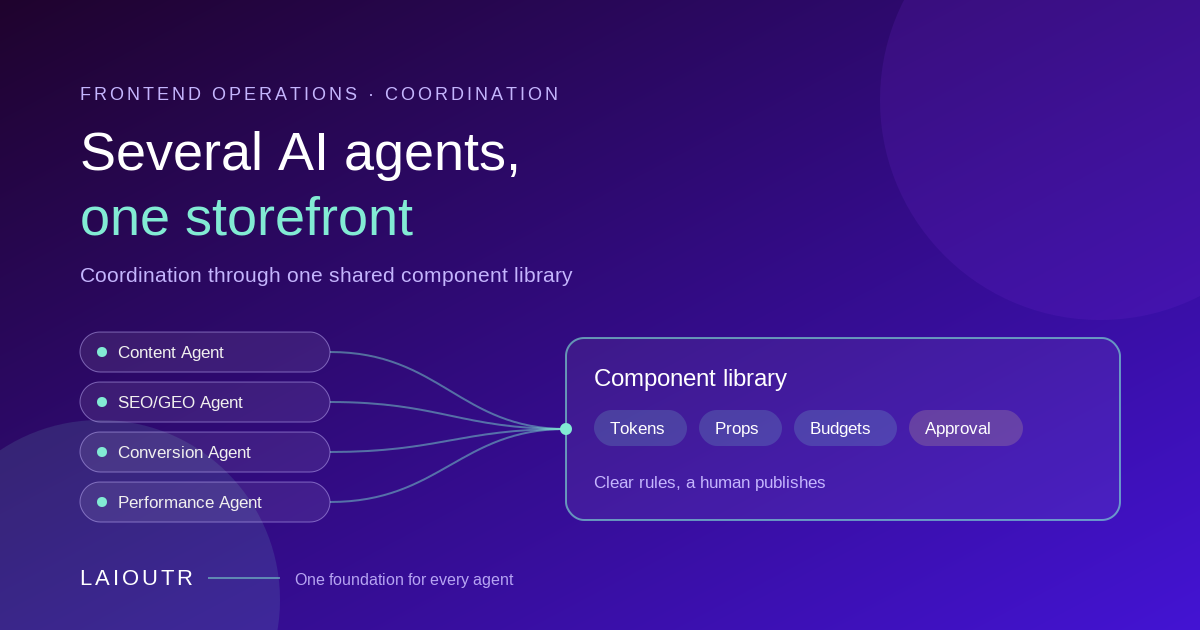Several AI Agents, One Storefront: Coordination Without Collisions
When several AI agents work on the same storefront, conflicts rarely happen between the agents thems…](https://www.laioutr.com/en/blog/frontend-operations-multi-agent-coordination-storefront-2026)
[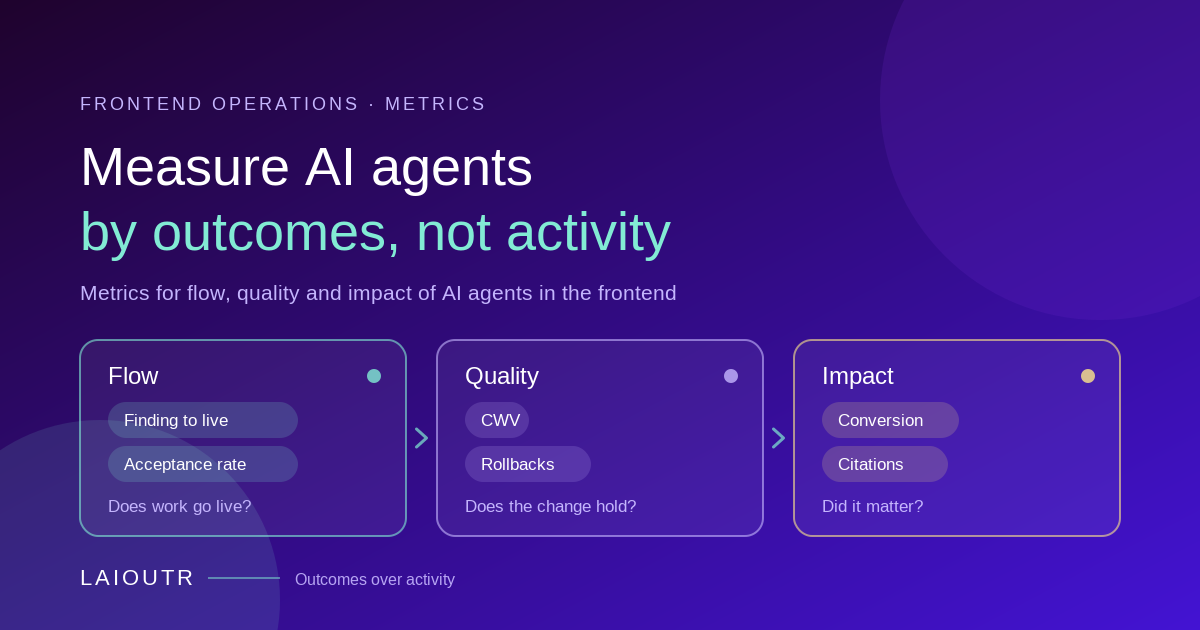Measuring AI Agents by Outcomes: Agentic Frontend Management Metrics
AI agents in the frontend should be measured by outcomes, not by activity. The number of prompts, ge…](https://www.laioutr.com/en/blog/frontend-operations-measuring-ai-agents-outcomes-2026)
[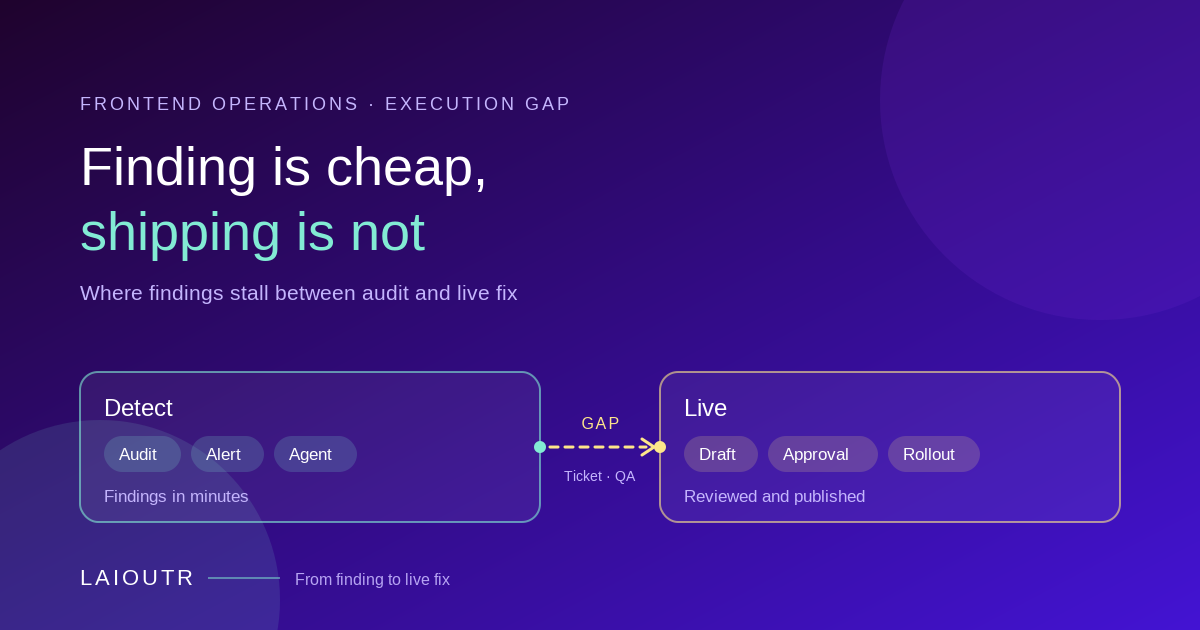The Execution Gap in the Frontend: Finding Is Cheap, Shipping Is Not
The execution gap in the frontend is the time, and the number of handoffs, between "we know wha…](https://www.laioutr.com/en/blog/frontend-operations-execution-gap-detect-vs-deploy-2026)
[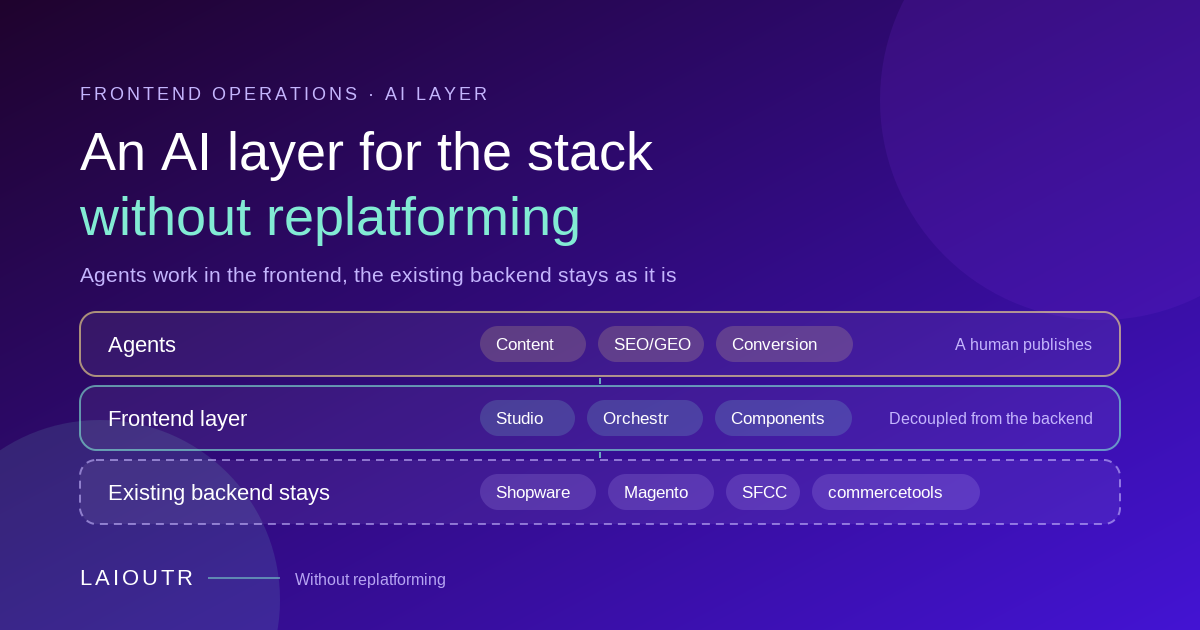Adding an AI Layer to an Existing Commerce Stack Without Replatforming
An AI layer can be added to an existing commerce stack without replacing the shop system. The most p…](https://www.laioutr.com/en/blog/frontend-operations-ai-layer-existing-stack-without-replatforming-2026)
[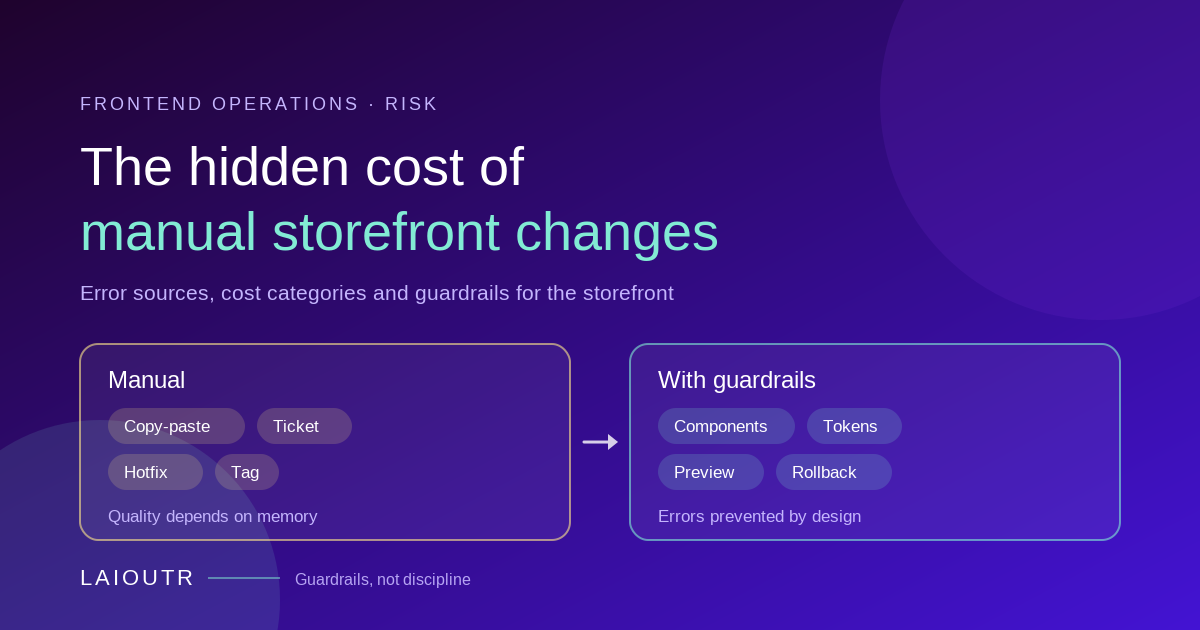The Hidden Cost of Manual Storefront Changes and How to Cut It
Manual frontend changes are the many small edits that keep a storefront running day to day: a new ba…](https://www.laioutr.com/en/blog/frontend-operations-hidden-cost-manual-storefront-changes-2026)
[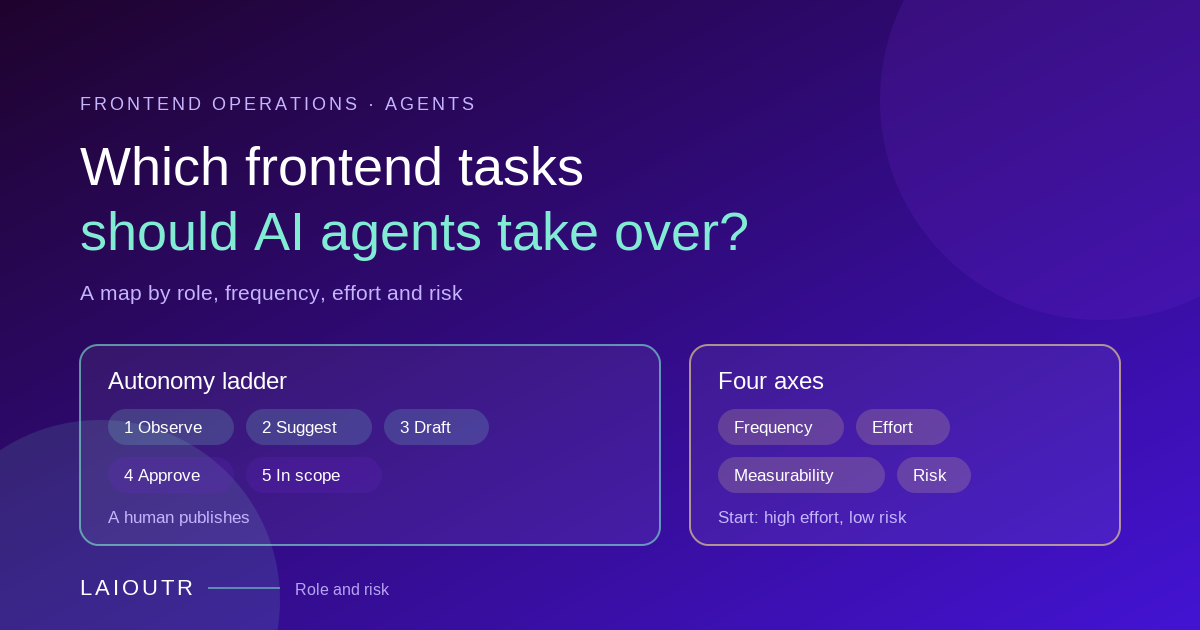Which Frontend Tasks Should AI Agents Take Over? Role and Risk Map
AI agents should first take over the frontend tasks that come up often, involve a lot of manual work…](https://www.laioutr.com/en/blog/frontend-operations-agent-task-map-role-risk-2026)
[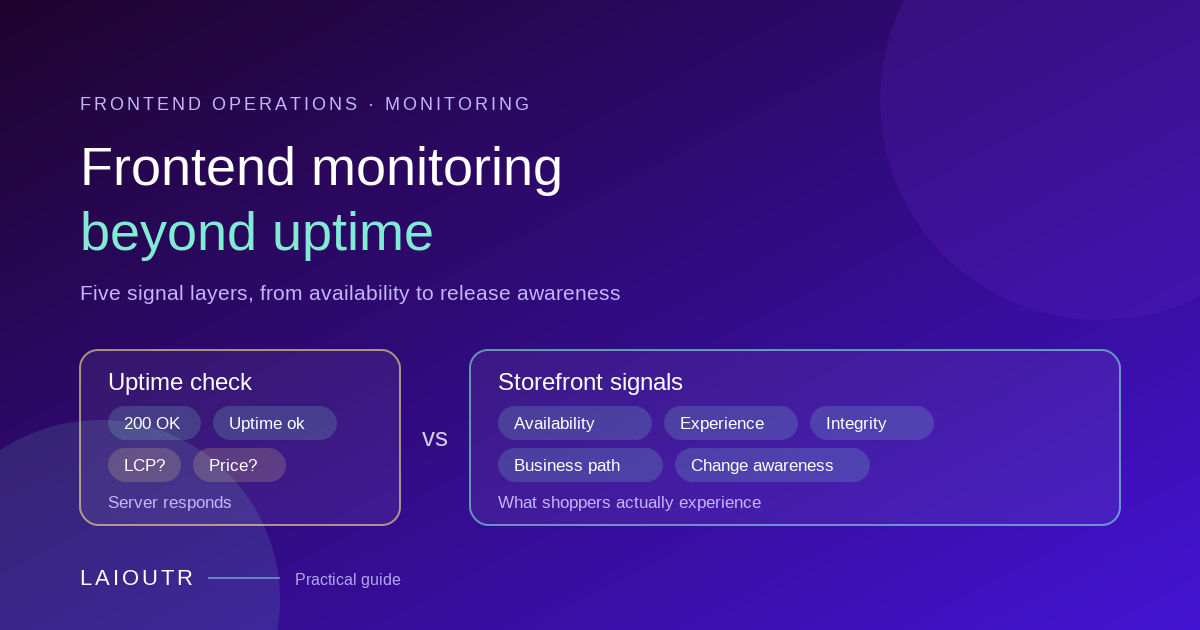Frontend Monitoring Beyond Uptime: Signals a Storefront Needs
Frontend monitoring beyond uptime means checking a storefront not only for availability but for what…](https://www.laioutr.com/en/blog/frontend-operations-monitoring-beyond-uptime-2026)
[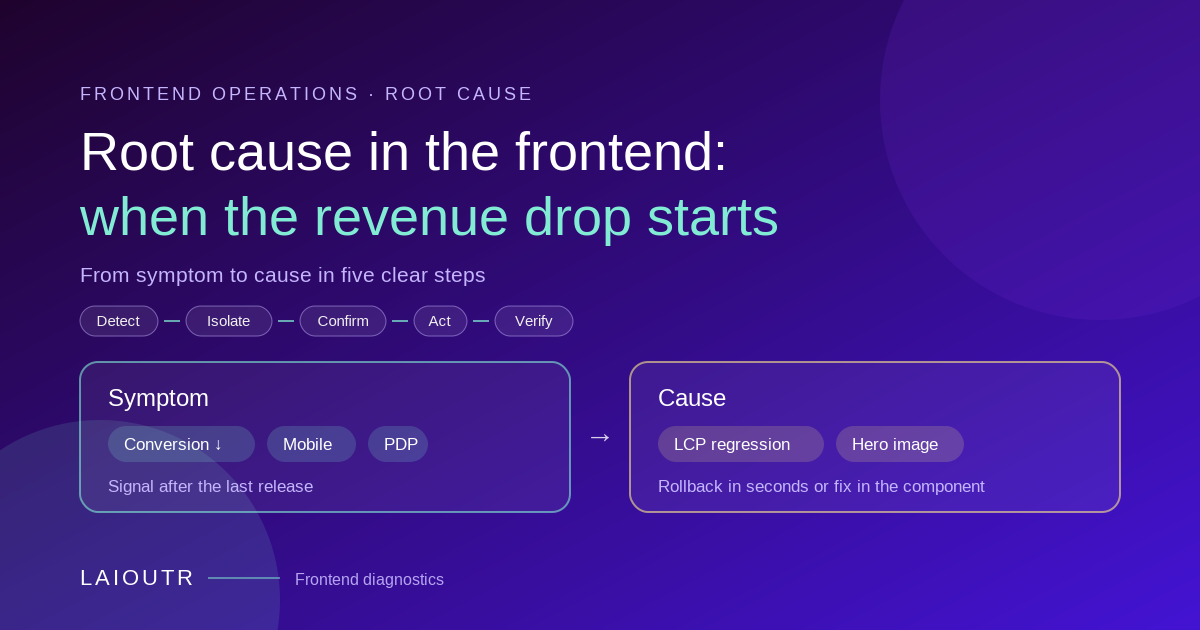Root Cause in the Frontend: When Revenue Drops Start in the Storefront
When revenue or conversion rate drops suddenly, the cause often is not traffic, pricing or the comme…](https://www.laioutr.com/en/blog/frontend-operations-root-cause-revenue-drop-storefront-2026)
[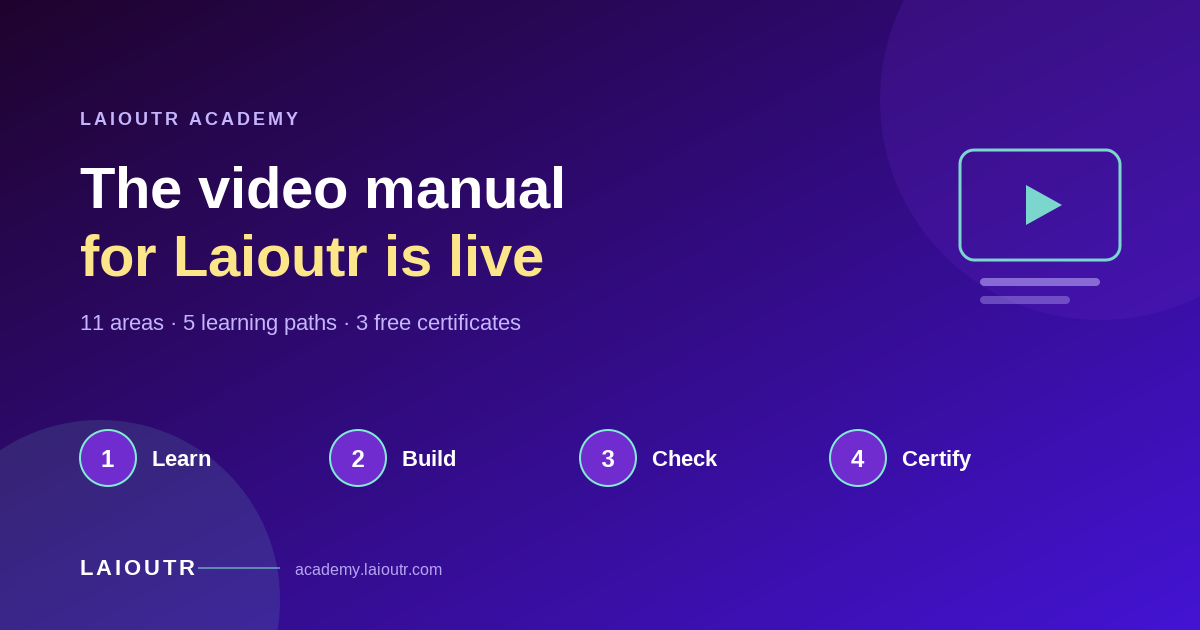Laioutr Academy Is Live: The Video Manual for Laioutr
Since October 15, 2026, the Laioutr Academy has been live at academy.laioutr.com. It is the user man…](https://www.laioutr.com/en/blog/laioutr-academy-launch-video-manual-certification)
[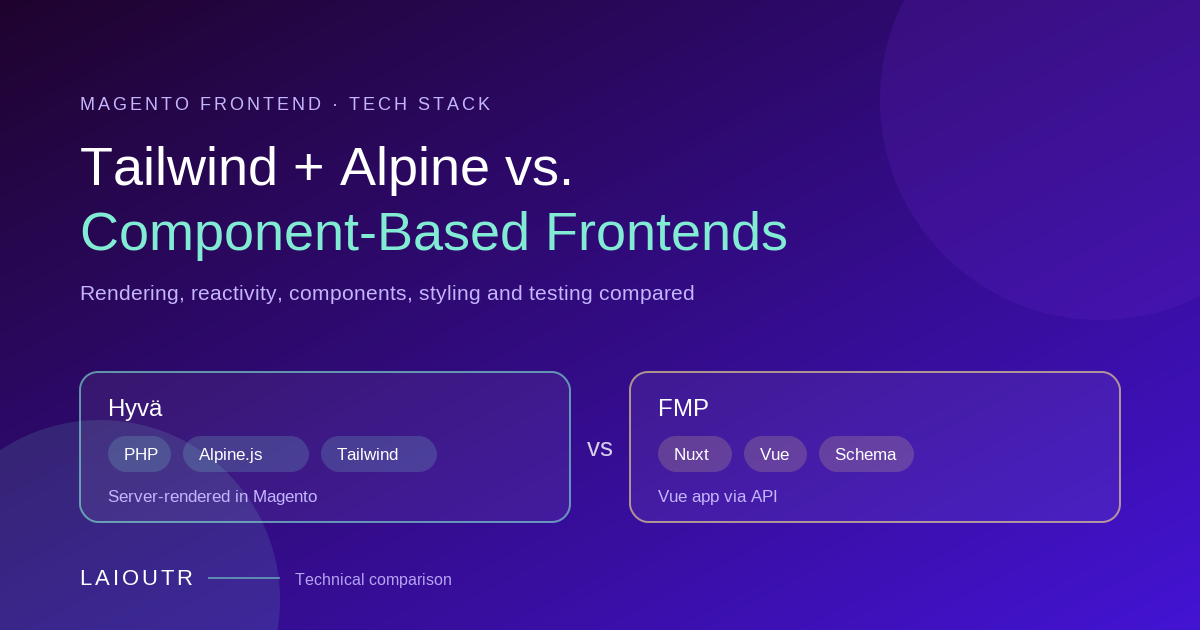Tailwind + Alpine vs. Component-Based Frontends for Magento
Hyvä renders Magento pages on the server with PHP templates and layout XML, adds interactivity throu…](https://www.laioutr.com/en/blog/tailwind-alpine-magento-vs-component-based-frontend-2026)
[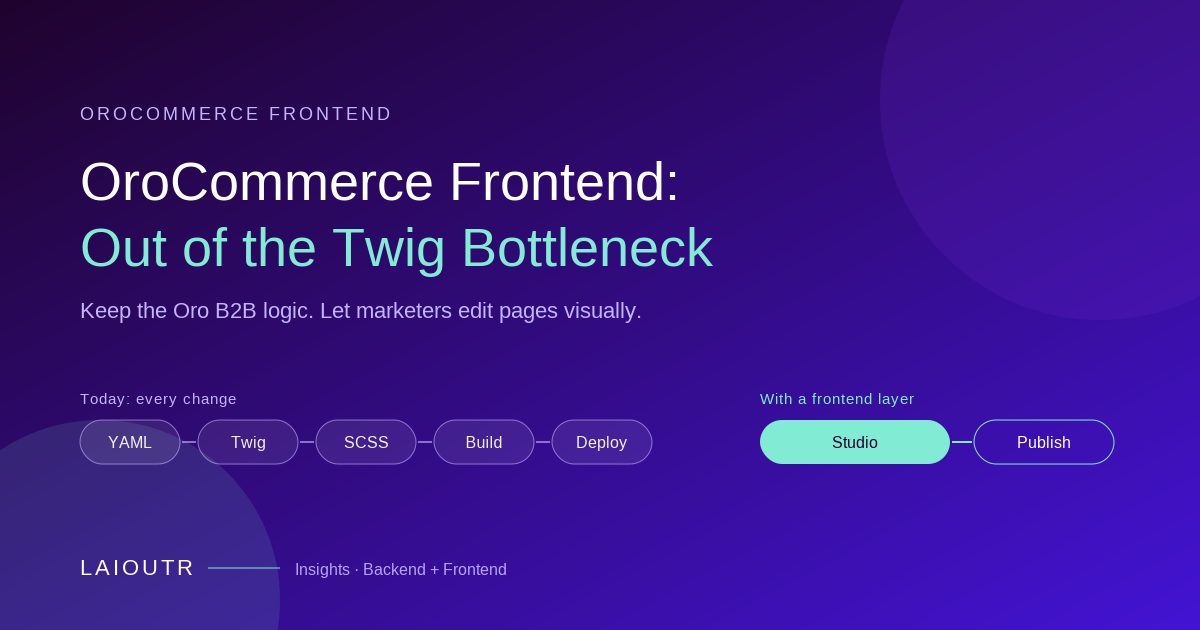OroCommerce Frontend: Out of the Twig and Layouts Bottleneck
The OroCommerce frontend is a server-rendered storefront built from Symfony bundles, OroLayouts and …](https://www.laioutr.com/en/blog/orocommerce-frontend-twig-layouts-bottleneck)
[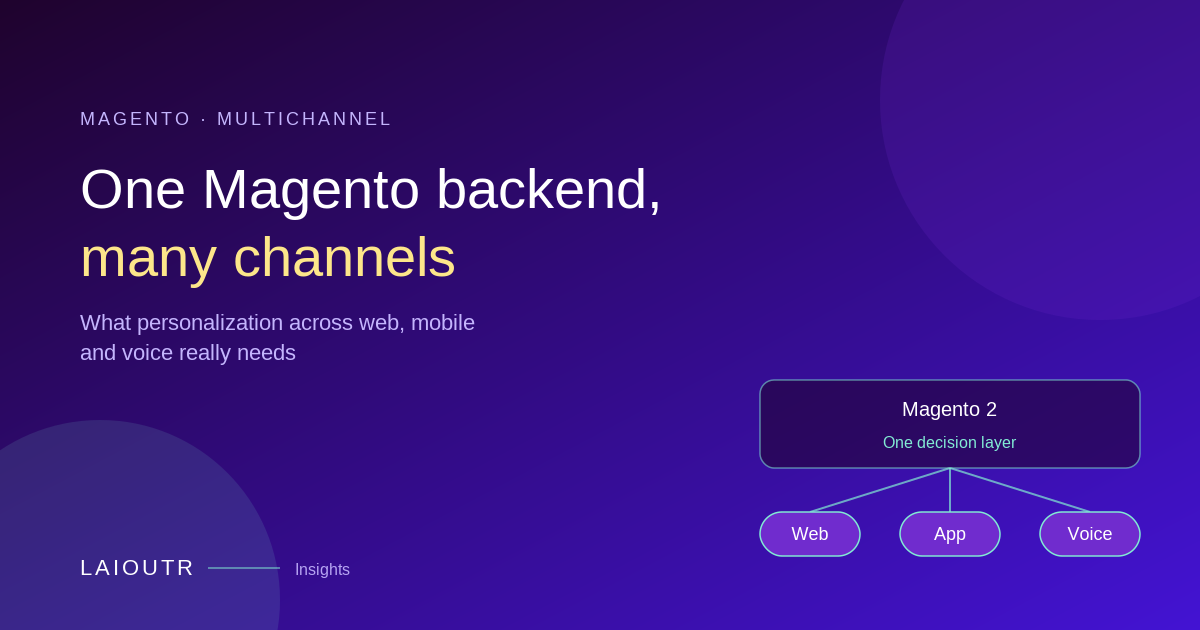One Magento Backend, Many Channels: Personalization in Practice
Personalization across web, mobile and voice on a single Magento backend does not start with a featu…](https://www.laioutr.com/en/blog/magento-multichannel-personalization-web-mobile-voice-2026)
[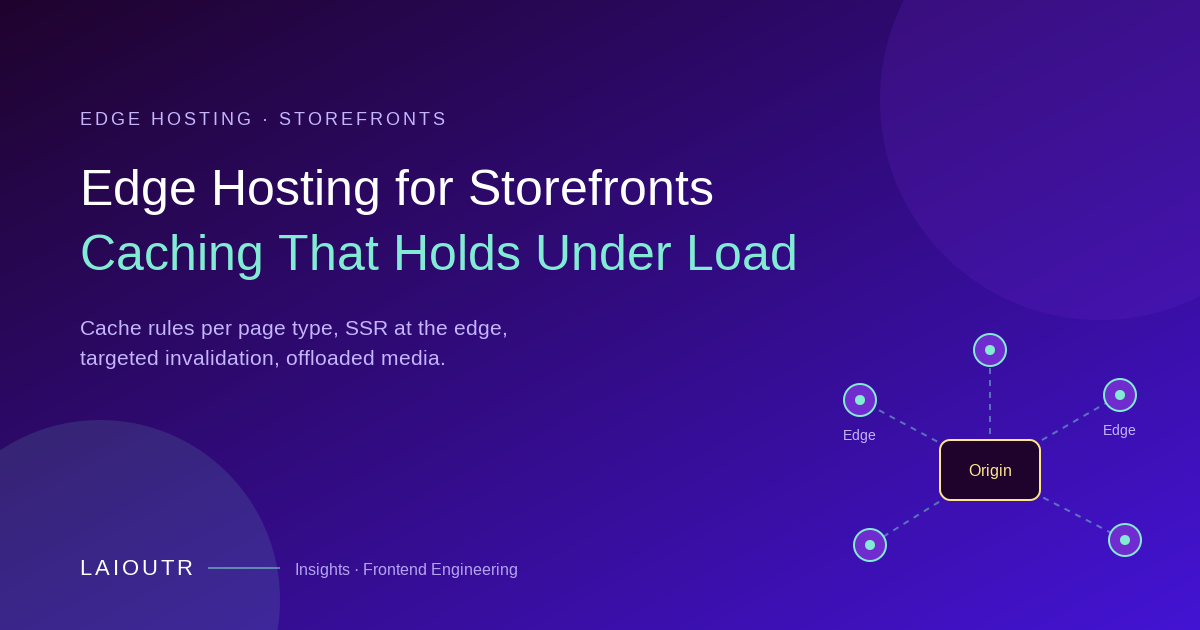Edge Hosting for Storefronts: Caching That Holds Under Peak Load
Edge hosting keeps a storefront fast under load when most requests never reach the origin: pages and…](https://www.laioutr.com/en/blog/edge-hosting-storefronts-peak-traffic-caching-2026)
[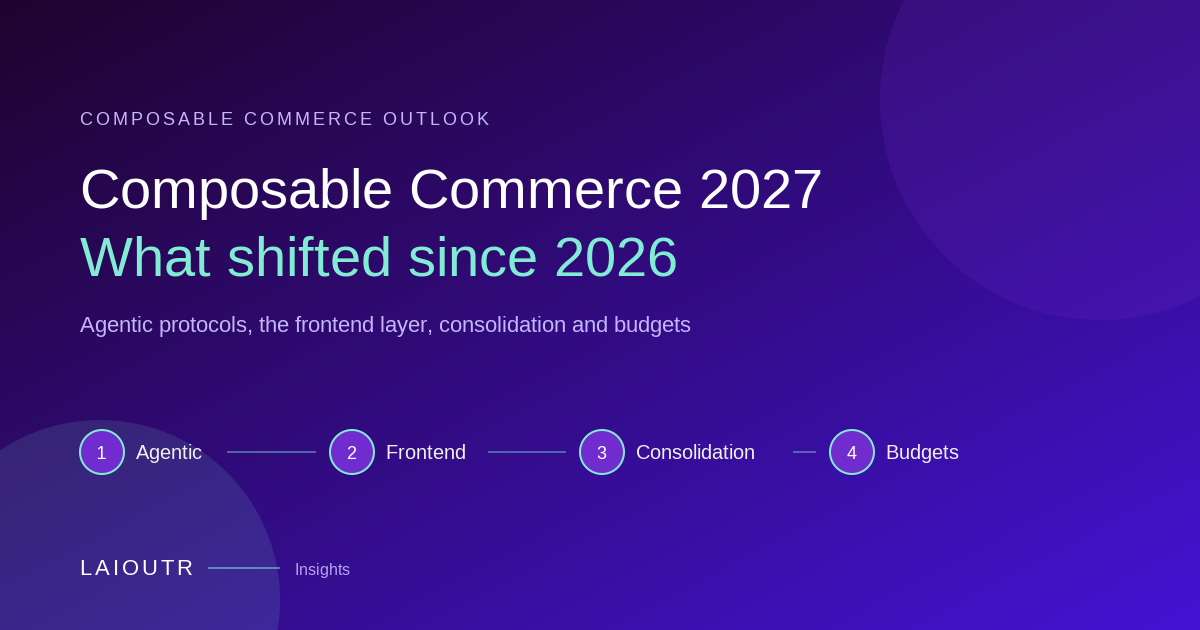Composable Commerce 2027: What Shifted and What Comes Next
Composable commerce enters 2027 with a different agenda than a year ago. The architecture question i…](https://www.laioutr.com/en/blog/composable-commerce-2027-outlook)
[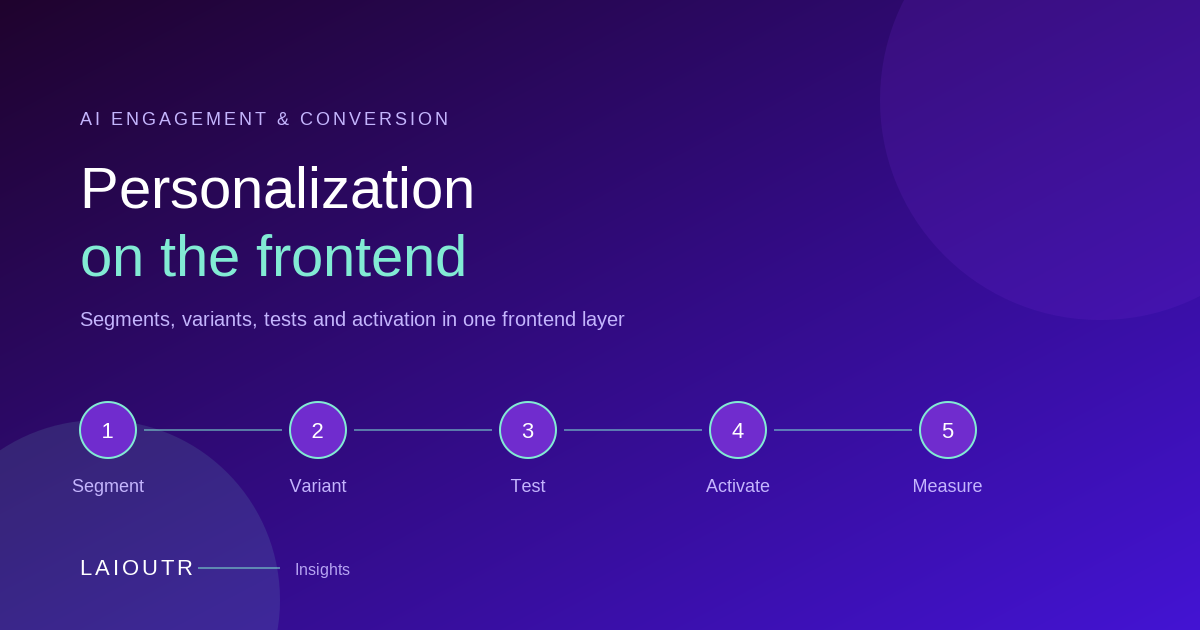AI Engagement and Conversion: Personalization on the Frontend
AI-driven engagement and conversion on the frontend rests on five mechanics: segments decide who see…](https://www.laioutr.com/en/blog/ai-engagement-conversion-frontend-personalization)
## Apps for the Laioutr platform
[View all apps](https://www.laioutr.com/en/apps)
[](https://www.laioutr.com/en/apps/shopify)
Laioutr
[Shopify](https://www.laioutr.com/en/apps/shopify)
Shopify is a commerce platform for selling online and in physical retail.
[](https://www.laioutr.com/en/apps/shopware)
Laioutr
[Shopware](https://www.laioutr.com/en/apps/shopware)
Shopware is a flexible ecommerce platform from Europe for product catalogs and omnichannel commerce.
[](https://www.laioutr.com/en/apps/adobe-commerce)
Laioutr
[Adobe Commerce](https://www.laioutr.com/en/apps/adobe-commerce)
Adobe Commerce is an enterprise commerce platform for complex, global B2C and B2B scenarios.
Planned
[](https://www.laioutr.com/en/apps/b2b-sellers)
Laioutr
[B2Bsellers](https://www.laioutr.com/en/apps/b2b-sellers)
B2B suite for Shopware that turns an online store into a professional B2B commerce platform.
Planned
[](https://www.laioutr.com/en/apps/commerce-layer)
Laioutr
[Commerce Layer](https://www.laioutr.com/en/apps/commerce-layer)
Commerce Layer is a headless commerce platform for making inventory and catalogs available online.
[](https://www.laioutr.com/en/apps/commercetools)
Laioutr
[Commercetools](https://www.laioutr.com/en/apps/commercetools)
Commercetools is a SaaS-based headless ecommerce platform used worldwide.
[](https://www.laioutr.com/en/apps/emporix)
Laioutr
[Emporix](https://www.laioutr.com/en/apps/emporix)
Emporix is a composable, API-first commerce platform for scalable B2B and B2C scenarios.
Planned
[](https://www.laioutr.com/en/apps/hcl-software)
Laioutr
[HCL Software](https://www.laioutr.com/en/apps/hcl-software)
Enterprise suite for digital commerce and experience with extensive configurability.
Planned
[](https://www.laioutr.com/en/apps/intershop)
Laioutr
[Intershop](https://www.laioutr.com/en/apps/intershop)
Enterprise commerce platform for complex B2B and B2C business models.
Planned
[](https://www.laioutr.com/en/apps/magento-2)
Laioutr
[Magento 2](https://www.laioutr.com/en/apps/magento-2)
Widely used, extensible commerce platform for B2C and B2B scenarios.
[](https://www.laioutr.com/en/apps/oxid-eshop)
Laioutr
[OXID eShop](https://www.laioutr.com/en/apps/oxid-eshop)
OXID eShop is an extensible commerce platform for complex B2B and B2C requirements.
Planned
[](https://www.laioutr.com/en/apps/patchworks)
Laioutr
[Patchworks](https://www.laioutr.com/en/apps/patchworks)
Patchworks is a low-code iPaaS that connects ecommerce, ERP, WMS, 3PL, and marketplaces.
Planned
[](https://www.laioutr.com/en/apps/PrestaShop)
Laioutr
[Prestashop](https://www.laioutr.com/en/apps/PrestaShop)
Open-source commerce platform for small and midsize merchants in Europe and beyond.
Planned
[](https://www.laioutr.com/en/apps/saleor)
Laioutr
[Saleor](https://www.laioutr.com/en/apps/saleor)
Open-source, API-first commerce platform built on GraphQL for custom storefronts.
Planned
[](https://www.laioutr.com/en/apps/salesforce-commerce-cloud)
Laioutr
[Salesforce Commerce Cloud](https://www.laioutr.com/en/apps/salesforce-commerce-cloud)
Salesforce Commerce Cloud is a cloud-based enterprise commerce platform for businesses of any size.
Planned
[](https://www.laioutr.com/en/apps/sap-commerce-cloud)
Laioutr
[SAP Commerce Cloud](https://www.laioutr.com/en/apps/sap-commerce-cloud)
Enterprise commerce platform for complex catalogs, pricing models, and omnichannel journeys.
Planned
[](https://www.laioutr.com/en/apps/scayle)
Laioutr
[Scayle](https://www.laioutr.com/en/apps/scayle)
SCAYLE is a commerce engine that helps brands and retailers scale their business.
Planned
[](https://www.laioutr.com/en/apps/spryker)
Laioutr
[Spryker](https://www.laioutr.com/en/apps/spryker)
Composable commerce platform for sophisticated B2B and B2C business models.
[](https://www.laioutr.com/en/apps/sylius)
Laioutr
[Sylius](https://www.laioutr.com/en/apps/sylius)
Sylius is a developer-friendly ecommerce framework for B2C and B2B shopping experiences.
Planned
[](https://www.laioutr.com/en/apps/vendure)
Laioutr
[Vendure](https://www.laioutr.com/en/apps/vendure)
Vendure is a headless commerce platform for businesses with complex requirements.
Coming Soon
[](https://www.laioutr.com/en/apps/vtex)
Laioutr
[VTEX](https://www.laioutr.com/en/apps/vtex)
Cloud-native, composable commerce platform for B2B and B2C at scale.
Planned
[](https://www.laioutr.com/en/apps/websale)
Laioutr
[Websale](https://www.laioutr.com/en/apps/websale)
Stable, enterprise-ready commerce backend for complex retail environments.
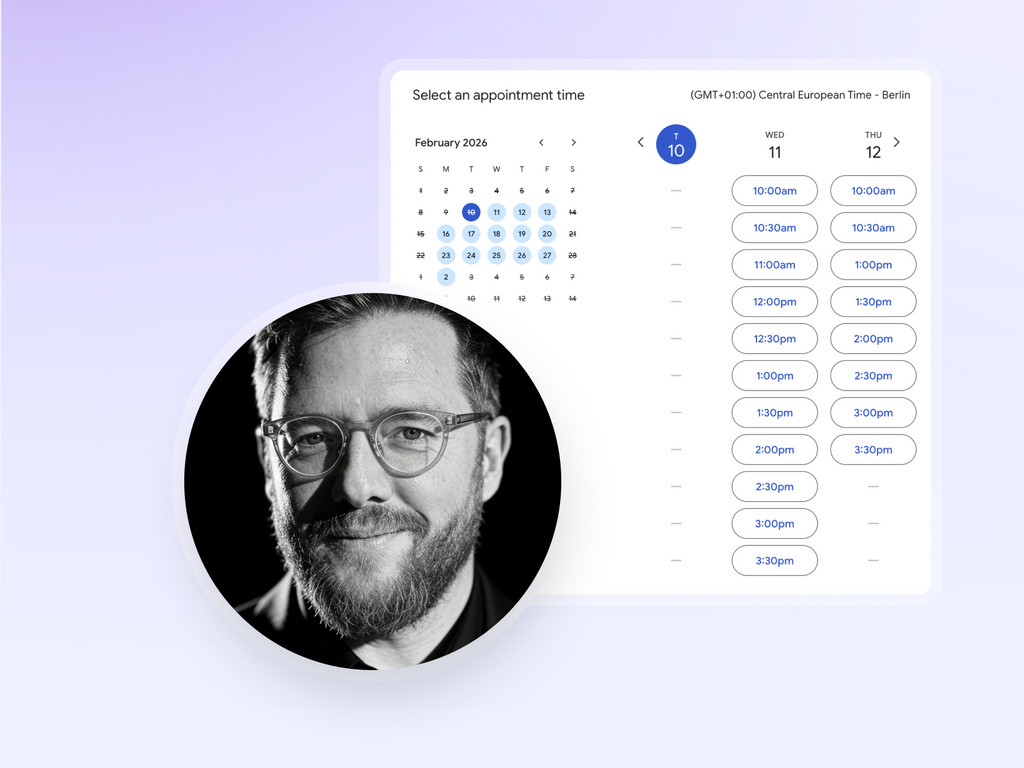
Strategy call
## The frontend as a control layer
A conversation about stack, roadmap and replatforming scenario. The outcome: a clear picture of how Laioutr fits, what it costs and how fast the go-live can happen.
*"After 30 minutes, we knew Laioutr makes our replatforming feasible."*
*Daniel B., CEO,* [*hygibox.de*](https://hygibox.de)
[Book a demo](https://www.laioutr.com/en/contact)
## Structured Data
```json
{
"@context": "https://schema.org",
"@graph": [
{
"@type": "Organization",
"@id": "https://www.laioutr.com/#identity",
"name": "Laioutr",
"legalName": "Laioutr GmbH",
"url": "https://www.laioutr.com/",
"logo": {
"@type": "ImageObject",
"url": "https://www.laioutr.com/laioutr-logo.png",
"width": 400,
"height": 400
},
"email": "info@laioutr.com",
"telephone": "+49 30 75435715",
"address": {
"@type": "PostalAddress",
"streetAddress": "Münchweilersteig 5",
"postalCode": "12559",
"addressLocality": "Berlin",
"addressCountry": "DE"
},
"vatID": "DE450905846",
"sameAs": [
"https://www.linkedin.com/company/laioutr",
"https://www.youtube.com/@Laioutr",
"https://x.com/laioutr"
]
},
{
"@type": "WebSite",
"@id": "https://www.laioutr.com/en/#website",
"url": "https://www.laioutr.com/en/",
"name": "Laioutr",
"inLanguage": "en",
"publisher": {
"@id": "https://www.laioutr.com/#identity"
}
},
{
"@type": "BlogPosting",
"@id": "https://www.laioutr.com/en/blog/visual-workspace-vs-dxp-difference#article",
"headline": "Beyond the Platform: Why Visual Workspaces Represent the Future of Digital Experience Architecture",
"description": "Why visual workspaces represent the future of digital experience architecture, beyond the traditional platform.",
"image": [
"https://eu-west-2.graphassets.com/cmii2mlqi0dux06l5543v7nkc/cmnucypviw8mi07mgmwsd5asa"
],
"datePublished": "2026-06-30T17:28:48.704846+00:00",
"dateModified": "2026-06-30T17:28:48.059043+00:00",
"inLanguage": "en",
"articleSection": "Insights",
"keywords": "Composable, Experience Operations, Digital Experience Platform (DXP), Visual Editing",
"author": {
"@type": "Person",
"name": "Marcel Thiesies",
"jobTitle": "Co-Founder & CEO, Laioutr",
"image": "https://eu-west-2.graphassets.com/cmii2mlqi0dux06l5543v7nkc/cmj01b962364n07lb0iguvts5"
},
"publisher": {
"@id": "https://www.laioutr.com/#identity"
},
"mainEntityOfPage": {
"@id": "https://www.laioutr.com/en/blog/visual-workspace-vs-dxp-difference#webpage"
},
"isPartOf": {
"@id": "https://www.laioutr.com/en/#website"
}
},
{
"@type": "WebPage",
"@id": "https://www.laioutr.com/en/blog/visual-workspace-vs-dxp-difference#webpage",
"url": "https://www.laioutr.com/en/blog/visual-workspace-vs-dxp-difference",
"name": "Beyond the Platform: Why Visual Workspaces Represent the Future of Digital Experience Architecture",
"description": "Why visual workspaces represent the future of digital experience architecture, beyond the traditional platform.",
"inLanguage": "en",
"isPartOf": {
"@id": "https://www.laioutr.com/en/#website"
},
"breadcrumb": {
"@id": "https://www.laioutr.com/en/blog/visual-workspace-vs-dxp-difference#breadcrumb"
},
"primaryImageOfPage": {
"@type": "ImageObject",
"url": "https://eu-west-2.graphassets.com/cmii2mlqi0dux06l5543v7nkc/cmnucypviw8mi07mgmwsd5asa"
},
"datePublished": "2026-06-30T17:28:48.704846+00:00",
"dateModified": "2026-06-30T17:28:48.059043+00:00",
"mainEntity": {
"@id": "https://www.laioutr.com/en/blog/visual-workspace-vs-dxp-difference#article"
}
},
{
"@type": "BreadcrumbList",
"@id": "https://www.laioutr.com/en/blog/visual-workspace-vs-dxp-difference#breadcrumb",
"itemListElement": [
{
"@type": "ListItem",
"position": 1,
"name": "Laioutr",
"item": "https://www.laioutr.com/en/"
},
{
"@type": "ListItem",
"position": 2,
"name": "Insights",
"item": "https://www.laioutr.com/en/blogs/insights"
},
{
"@type": "ListItem",
"position": 3,
"name": "Beyond the Platform: Why Visual Workspaces Represent the Future of Digital Experience Architecture"
}
]
}
]
}
```