---
title: "Composability & Orchestration with Orchestr | Laioutr"
canonical_url: "https://www.laioutr.com/en/product/composability-orchestration"
locale: en
meta:
description: "Composability & orchestration with Orchestr: connect any backend type-safely to any frontend component. Canonical or custom data model, one layer."
"og:description": "Composability & orchestration with Orchestr: connect any backend type-safely to any frontend component. Canonical or custom data model, one layer."
"og:title": "Composability & Orchestration with Orchestr | Laioutr"
---
[Go to home](https://www.laioutr.com/en)
- [Agentic Frontend Management Platform](https://www.laioutr.com/en/agentic-frontend-management-platform)
- [Composability & Orchestration](https://www.laioutr.com/)

COMPOSABILITY & ORCHESTRATION
# Composability & orchestration: every data source, every component, one layer in between
Backend-agnostic. Frontend-agnostic. No compromises.
Orchestr connects any backend with frontend components from any library. One data layer instead of two systems, one data model instead of data islands. That is how composability stops being a claim and becomes code.
[Book a demo](https://www.laioutr.com/en/contact)
## Why data integration eats up so much time today
Every new backend system means a new integration project: its own interfaces, its own data model, its own maintenance. Content teams and engineering end up running two software stacks in parallel, while every frontend library needs its own connections. The result: delays, duplicated work, and an architecture that gets more brittle with every new system.

## Orchestr makes data integration part of the platform
Instead of treating data integration as a separate project, Laioutr builds it directly into the platform: Orchestr fetches data from any backend and makes it available type-safely to every frontend component. No extra system, no parallel stack: data integration is part of the frontend from day one.
## How it works
From the request in the frontend to the finished component, in four steps.
### Query
The component requests data via a slug, search term or filter. Orchestr translates that into a query.
### Connect
A component resolver fetches the matching data from the backend, whichever system runs behind it.
### Link
Relationships between entities, like a product and its variants, are resolved and delivered alongside.
### Deliver
The finished, type-safe response goes straight to the frontend component, from any library.

## Every component knows what it needs
Component resolvers declare exactly which data they provide. The frontend only requests what a page actually needs, Orchestr skips the rest. No overfetching, no wasted API calls.

## One layer instead of two systems
Hosting content and integrating data are not an either-or at Laioutr. Through Apps, our Nuxt modules, the backend is connected and content is managed in the same system, without running two software stacks in parallel.
[More on content management](https://www.laioutr.com/en/product/content-management)

## Custom data model or canonical model
For standard entities like product or category, Laioutr's canonical data model is ready to use. For whatever makes a business model distinct, a custom schema can be defined. Both run type-safely through the same layer.

## Every component, from any library
Orchestr isn't tied to Laioutr components. Any frontend component, from any library, can consume the same data. That's how composability becomes real freedom of choice instead of vendor lock-in.

## Tokens: the contract between frontend and backend
Every query, every link, every component is defined through a token: a clear contract between the frontend and the systems providing the data. That is how Orchestr always knows which app is responsible for which request, with no hard-wired integrations.
This layer of abstraction is exactly where composability comes from: not from interchangeable UI building blocks alone, but from clearly defined, reusable contracts between data and presentation.
[More on Orchestr](https://docs.laioutr.com/frontend/orchestr)
## Everything real composability needs
### Query handlers
Fetch entities by slug, search term or filter, with pagination and sorting.
### Link handlers
Resolve relationships between entities, like product to variant or category to product.
### Component resolvers
Attach data from any system to any entity, without changing existing code.
### Action handlers
Process mutations like cart changes or orders, type-safe and server-side.
### Canonical data model
Standard entities like product, category or cart are predefined and ready to use.
### Custom schema
New entities and components for whatever makes a business model distinct.
### Three-level caching
Queries, links and component resolvers cache independently, for low latency without stale data.
### Any frontend library
Whether Laioutr UI, a custom component library or third-party components: Orchestr serves them all.
1 layer
for content and data
Any backend
without changing the architecture
Any library
for frontend components
3 cache levels
for stable performance

## Full control for developers
Queries, links, component resolvers and actions are defined in code, with full type safety from the data source to the component. New backends are connected through Apps without touching existing integrations.
[See the documentation](https://docs.laioutr.com/frontend/orchestr)
READ MORE
## More on composability and Laioutr
### Agentic Frontend Management Platform
The hub for all features: Studio, Orchestr, content management and agents in one platform.
[AFMP overview](https://www.laioutr.com/en/agentic-frontend-management-platform)
### Feed management with Distributr
Send product data from the same backends to marketplaces and channels, in each channel's format.
[More on feed management](https://www.laioutr.com/en/product/feed-management)
### Composable headless frontend
Headless frontends for 50+ backends, from Shopware to SAP Commerce Cloud.
[View supported backends](https://www.laioutr.com/en/composable-headless-frontend)
Strategy call
## The frontend as a control layer
A conversation about stack, roadmap and replatforming scenario. The outcome: a clear picture of how Laioutr fits, what it costs and how fast the go-live can happen.
*"After 30 minutes, we knew Laioutr makes our replatforming feasible."*
*Daniel B., CEO,* [*hygibox.de*](https://hygibox.de)
[Book a demo](https://www.laioutr.com/en/contact)
## Latest on composability
[View insights](https://www.laioutr.com/en/blogs/insights)
[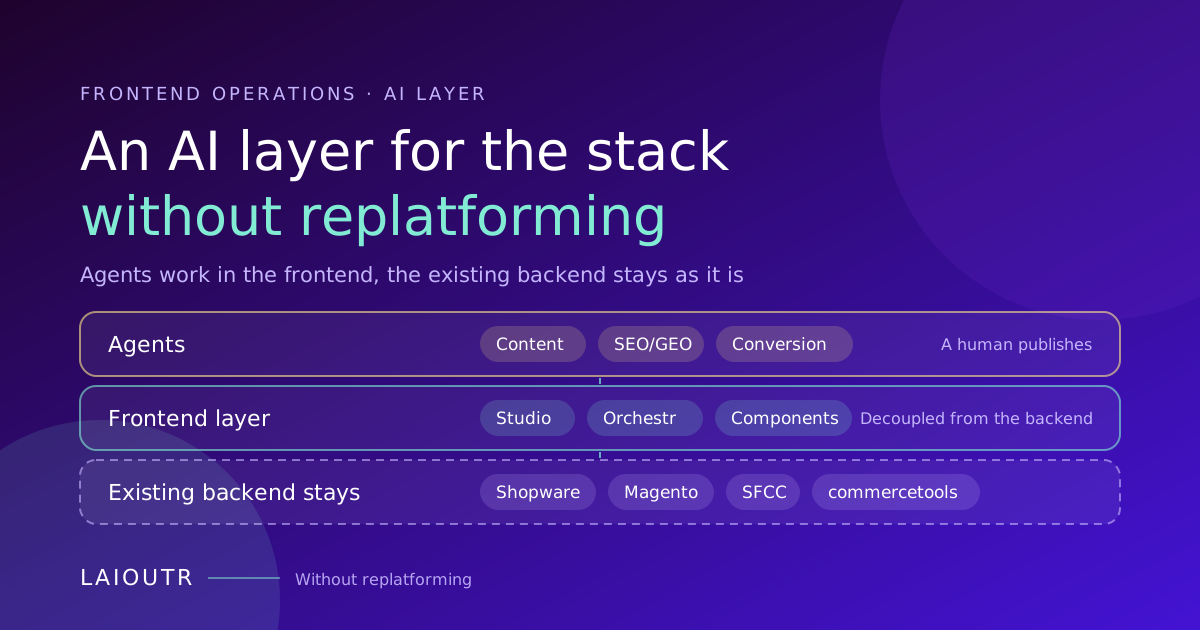Adding an AI Layer to an Existing Commerce Stack Without Replatforming
An AI layer can be added to an existing commerce stack without replacing the shop system. The most p…](https://www.laioutr.com/en/blog/frontend-operations-ai-layer-existing-stack-without-replatforming-2026)
[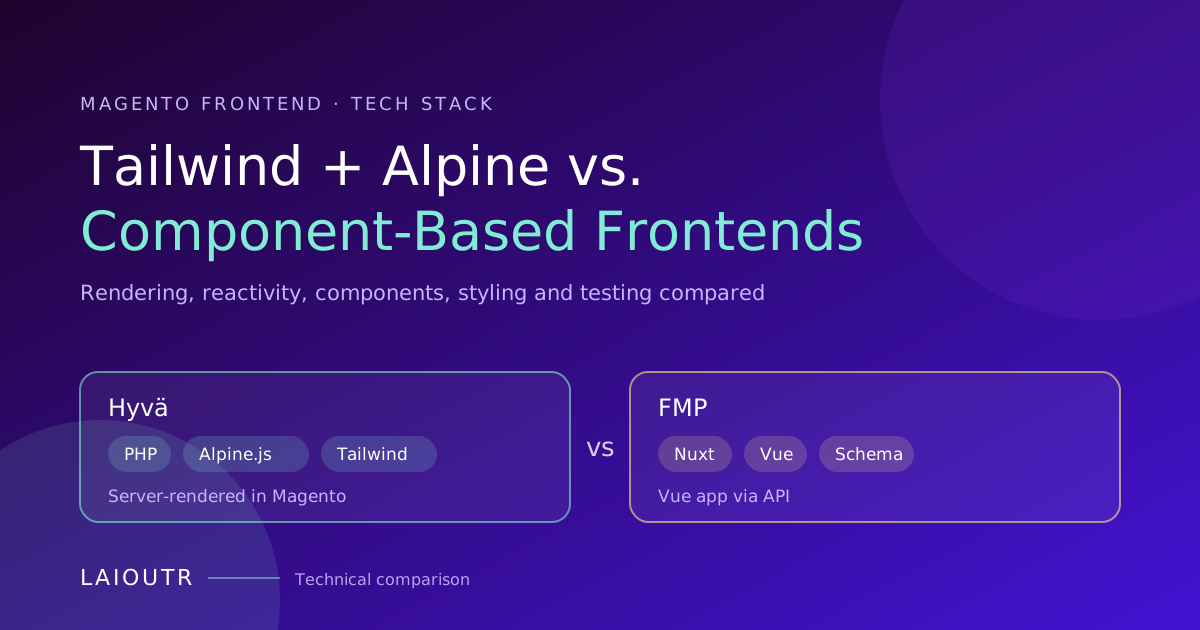Tailwind + Alpine vs. Component-Based Frontends for Magento
Hyvä renders Magento pages on the server with PHP templates and layout XML, adds interactivity throu…](https://www.laioutr.com/en/blog/tailwind-alpine-magento-vs-component-based-frontend-2026)
[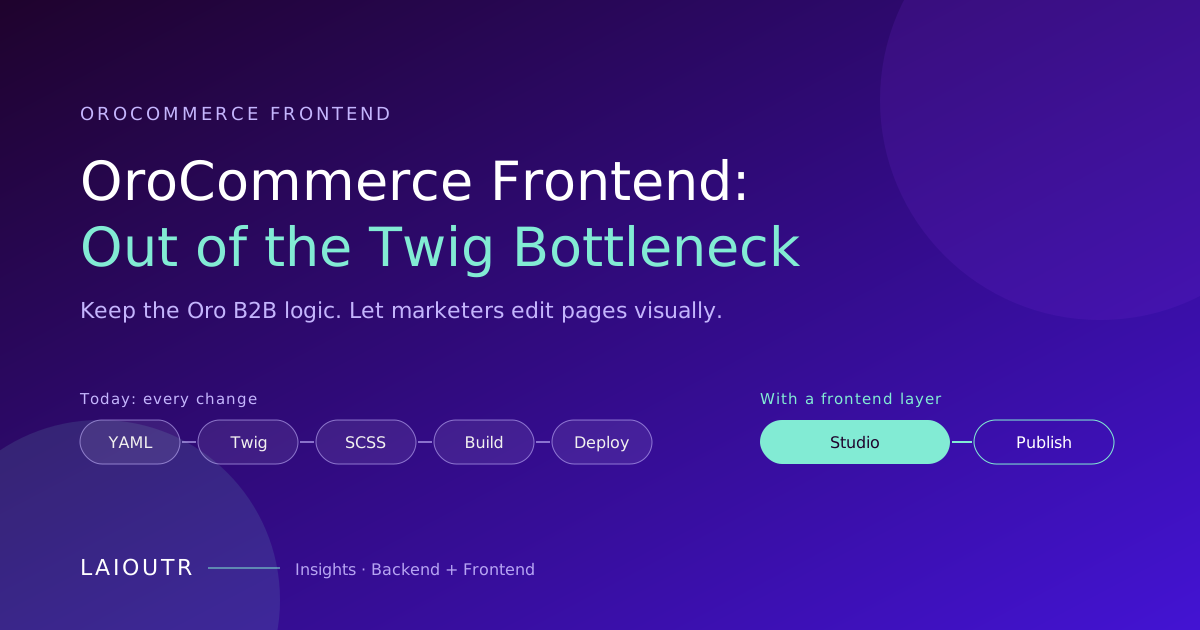OroCommerce Frontend: Out of the Twig and Layouts Bottleneck
The OroCommerce frontend is a server-rendered storefront built from Symfony bundles, OroLayouts and …](https://www.laioutr.com/en/blog/orocommerce-frontend-twig-layouts-bottleneck)
[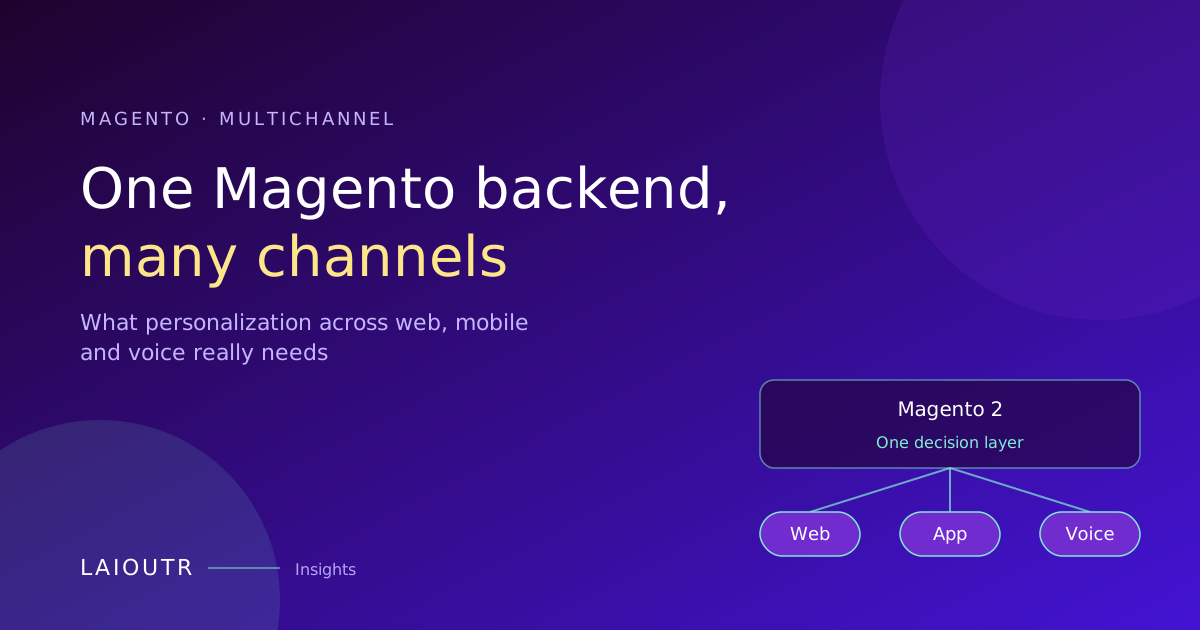One Magento Backend, Many Channels: Personalization in Practice
Personalization across web, mobile and voice on a single Magento backend does not start with a featu…](https://www.laioutr.com/en/blog/magento-multichannel-personalization-web-mobile-voice-2026)
[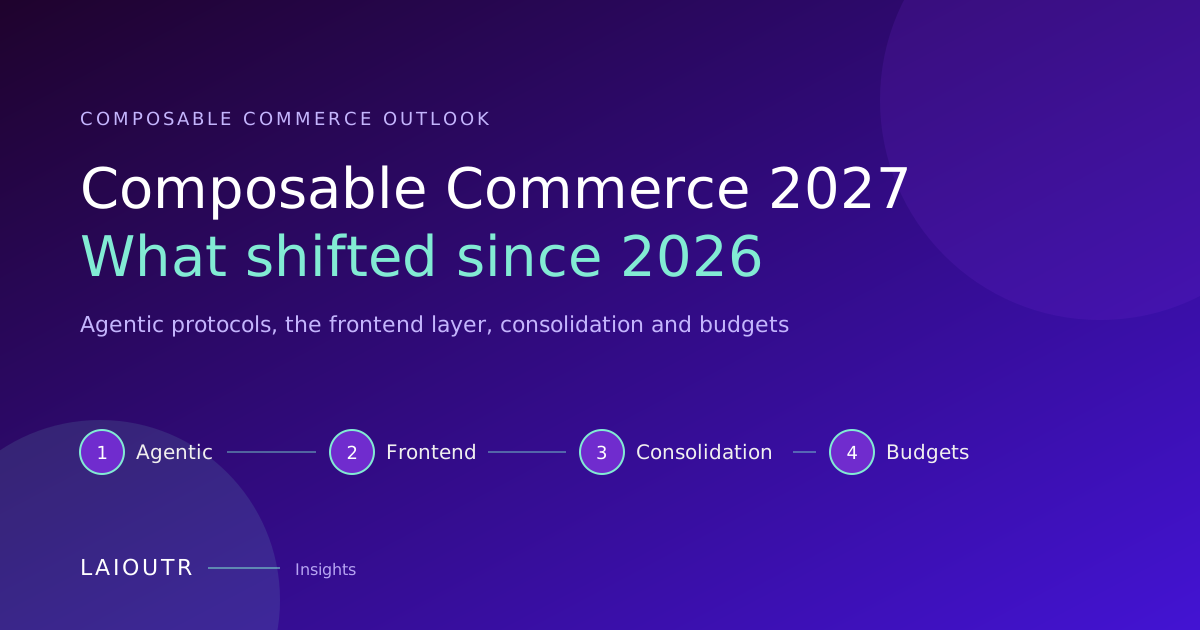Composable Commerce 2027: What Shifted and What Comes Next
Composable commerce enters 2027 with a different agenda than a year ago. The architecture question i…](https://www.laioutr.com/en/blog/composable-commerce-2027-outlook)
[Website Tracking in E-Commerce 2026: An Honest Stack Overview
Website tracking in e-commerce is not one tool but a stack of five layers: consent management, tag m…](https://www.laioutr.com/en/blog/website-tracking-ecommerce-stack-overview-2026)
[One Content Source, Every Channel: Print to Storefront
Re-keying happens when the same product text, specification or image is typed in again for every cha…](https://www.laioutr.com/en/blog/unified-content-source-print-to-storefront-omnichannel-2026)
[Third-Party Cookies Are Not Dead: Why Data Still Has Gaps
Third-party cookies still exist in 2026. Google decided in 2025 not to remove them from Chrome and r…](https://www.laioutr.com/en/blog/third-party-cookies-2026-why-tracking-data-has-gaps)
[Google Tag Manager Only With Consent: The Hanover Court Ruling
Google Tag Manager may only be loaded after a visitor has given valid consent. That is the core of a…](https://www.laioutr.com/en/blog/google-tag-manager-consent-vg-hannover-ruling-2026)
[Content Hub Into Composable Storefront: Connectors, APIs, No-Code
A content hub reaches a composable storefront in one of three ways: through a ready-made connector, …](https://www.laioutr.com/en/blog/content-hub-composable-storefront-connectors-nocode-2026)
[Composable Commerce Agency 2026: Three Offers Instead of One
A composable commerce agency does not win in 2026 with one standard package. It wins with three clea…](https://www.laioutr.com/en/blog/composable-commerce-agency-three-offer-models-2026)
[Algolia in a Composable Frontend: Indexing, Events, Integration
An Algolia integration in a composable frontend consists of three layers that are best planned separ…](https://www.laioutr.com/en/blog/algolia-indexing-events-composable-frontend-2026)
[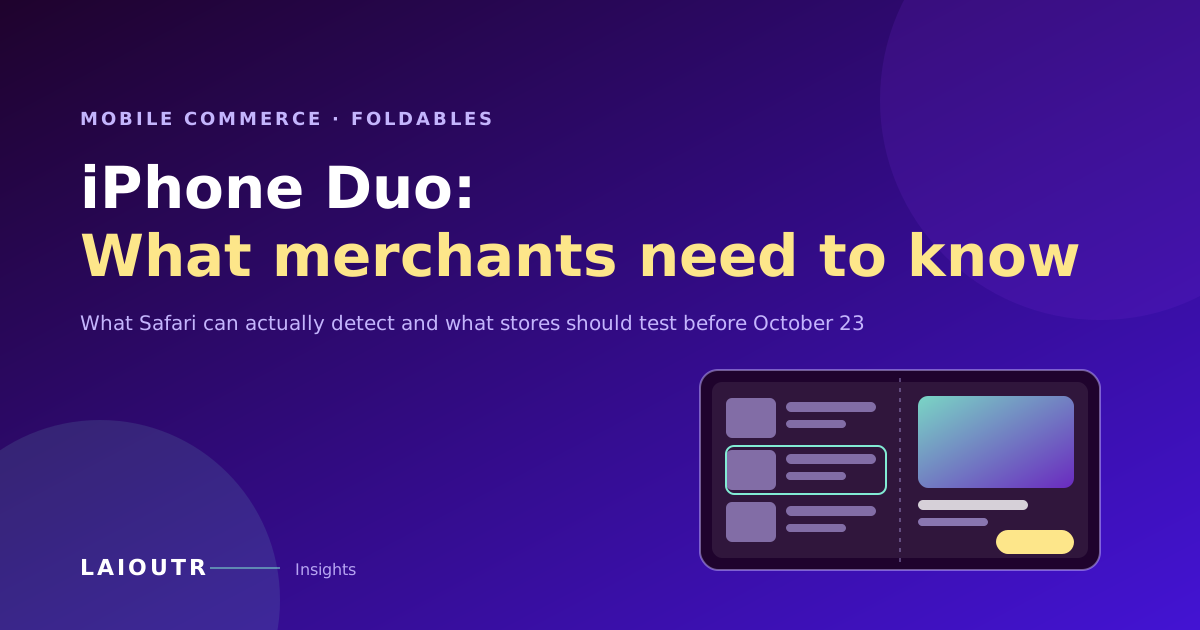iPhone Duo and Ecommerce: What Merchants Need to Know Now
iPhone Duo goes on sale on October 23, 2026. Online stores don't need a dedicated app or a custo…](https://www.laioutr.com/en/blog/iphone-duo-ecommerce-foldable-storefront)
[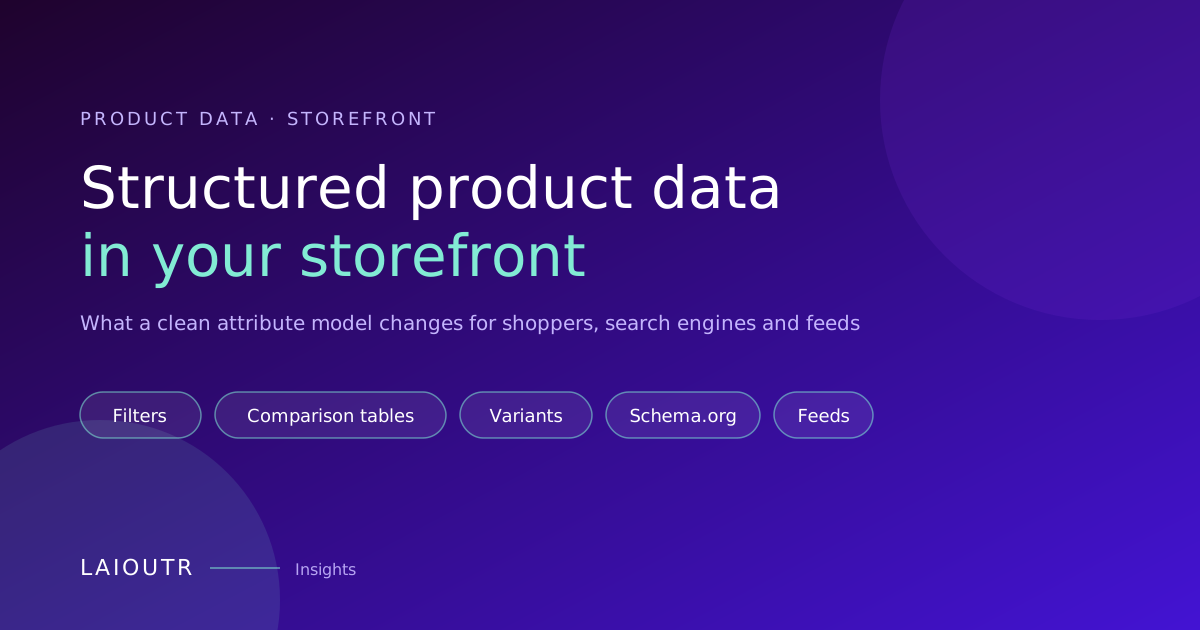Structured Product Data: How It Shows Up in Your Storefront
Structured product data means every product fact lives in a typed attribute with a unit, a stable id…](https://www.laioutr.com/en/blog/structured-product-data-pim-frontend-2026)
[44% Decide via Trial or PoC: How to Run a Storefront PoC in DACH
In DACH, software decisions are increasingly made hands-on: in the study "Software Buying in DA…](https://www.laioutr.com/en/blog/storefront-proof-of-concept-dach-buyers-2026)
## Structured Data
```json
{
"@context": "https://schema.org",
"@graph": [
{
"@type": "Organization",
"@id": "https://www.laioutr.com/#identity",
"name": "Laioutr",
"legalName": "Laioutr GmbH",
"url": "https://www.laioutr.com/",
"logo": {
"@type": "ImageObject",
"url": "https://www.laioutr.com/laioutr-logo.png",
"width": 400,
"height": 400
},
"email": "info@laioutr.com",
"telephone": "+49 30 75435715",
"address": {
"@type": "PostalAddress",
"streetAddress": "Münchweilersteig 5",
"postalCode": "12559",
"addressLocality": "Berlin",
"addressCountry": "DE"
},
"vatID": "DE450905846",
"sameAs": [
"https://www.linkedin.com/company/laioutr",
"https://www.youtube.com/@Laioutr",
"https://x.com/laioutr"
]
},
{
"@type": "WebSite",
"@id": "https://www.laioutr.com/en/#website",
"url": "https://www.laioutr.com/en/",
"name": "Laioutr",
"inLanguage": "en",
"publisher": {
"@id": "https://www.laioutr.com/#identity"
}
},
{
"@type": "SoftwareApplication",
"@id": "https://www.laioutr.com/#platform",
"name": "Laioutr",
"applicationCategory": "BusinessApplication",
"applicationSubCategory": "Agentic Frontend Management Platform",
"operatingSystem": "Web",
"url": "https://www.laioutr.com/",
"publisher": {
"@id": "https://www.laioutr.com/#identity"
}
},
{
"@type": "WebPage",
"@id": "https://www.laioutr.com/en/product/composability-orchestration#webpage",
"url": "https://www.laioutr.com/en/product/composability-orchestration",
"name": "Composability & Orchestration with Orchestr | Laioutr",
"description": "Composability & orchestration with Orchestr: connect any backend type-safely to any frontend component. Canonical or custom data model, one layer.",
"inLanguage": "en",
"isPartOf": {
"@id": "https://www.laioutr.com/en/#website"
},
"breadcrumb": {
"@id": "https://www.laioutr.com/en/product/composability-orchestration#breadcrumb"
},
"primaryImageOfPage": {
"@type": "ImageObject",
"url": "https://d07mv3ph228kj0ki2nlg.cdn.laioutr.cloud/d9tih1i3p0v000em5kmg.png"
},
"about": {
"@id": "https://www.laioutr.com/#platform"
}
},
{
"@type": "BreadcrumbList",
"@id": "https://www.laioutr.com/en/product/composability-orchestration#breadcrumb",
"itemListElement": [
{
"@type": "ListItem",
"position": 1,
"name": "Laioutr",
"item": "https://www.laioutr.com/en/"
},
{
"@type": "ListItem",
"position": 2,
"name": "Composability & Orchestration with Orchestr"
}
]
}
]
}
```
```json
{
"@context": "https://schema.org",
"@graph": [
{
"@id": "https://www.laioutr.com/en/product/composability-orchestration#breadcrumb",
"@type": "BreadcrumbList",
"itemListElement": [
{
"@type": "ListItem",
"name": "Home",
"item": "https://www.laioutr.com/en",
"position": 1
},
{
"@type": "ListItem",
"name": "Agentic Frontend Management Platform",
"item": "https://www.laioutr.com/en/agentic-frontend-management-platform",
"position": 2
},
{
"@type": "ListItem",
"name": "Composability & Orchestration",
"position": 3
}
]
}
]
}
```