---
title: "Composable Storefront for Composable Commerce | Laioutr"
canonical_url: "https://www.laioutr.com/en/composable-storefront"
locale: en
meta:
description: "What is a composable storefront? The storefront layer of a composable commerce stack that unites backend, search, CMS and checkout in one shopping journey."
"og:description": "What is a composable storefront? The storefront layer of a composable commerce stack that unites backend, search, CMS and checkout in one shopping journey."
"og:title": "Composable Storefront for Composable Commerce | Laioutr"
---
COMPOSABLE COMMERCE
# Composable storefront: the storefront layer in the composable commerce stack
What a composable storefront is, what role it plays in the stack and how it connects backend, search, CMS and checkout into one shopping experience.
In composable commerce, backend, search, content, personalization, checkout and payment are combined as specialized services via APIs. The composable storefront is the layer in which these services become visible to customers: category pages, product pages, cart and checkout. This page explains what a composable storefront has to deliver and how Laioutr implements it.
[Book a demo](https://www.laioutr.com/en/contact)

The definition
## What is a composable storefront?
A composable storefront is the customer-facing layer of a composable commerce stack. It pulls products, prices and stock from the commerce backend, content from the CMS and results from search, and combines them into pages that load fast and can be maintained without code.
Unlike a template tied to one shop system, it addresses every service via APIs.
If a service is replaced, such as search or the backend, the storefront stays in place and is reconfigured instead of rebuilt.
### Orchestrated
Data from backend, CMS, search and other services comes together in a unified data model instead of being wired individually into every component.
### Interchangeable
Services can be switched without rebuilding the storefront. New providers are connected while existing pages stay in place.
### Built for performance
Server-side rendering, caching and targeted hydration keep the storefront fast, even as more services are added. In live frontends the median LCP is 1.2 s.
Why the storefront matters
## Why the storefront decides the success of composable commerce
Composable commerce promises best-of-breed. Whether customers actually experience it is decided by the storefront.
### One shopping experience from many services
Search, recommendations, reviews and checkout come from different providers. **The storefront joins them into one seamless purchase.**
### Swap services without a relaunch
New backend, new search, new CMS: the switch happens in the data layer. **The storefront stays, and pages and campaigns keep running.**
### Brands and markets from one stack
Components, Blueprints and integrations can be reused across several brands and markets instead of being rebuilt for every shop.
Not like this
## Where composable commerce fails at the storefront
Many composable projects invest in backend and services and underestimate the storefront. Three typical pain points.
### #1 Integration remains manual work
Every API is wired into the frontend individually. Without a shared data layer, integration code grows with every service, and **composable ends up meaning just: many vendors.**
### #2 Every service brings its own maintenance
Without a shared foundation, the effort adds up: every tool with its own updates, its own breaking changes and its own support contact.
### #3 Patchwork instead of a shopping experience
Without a shared design system and data model, the result is inconsistent UX, duplicated logic and a storefront that is harder to keep track of than a monolith.
In brief
## Composable storefront vs. composable commerce
The two terms are often used interchangeably. They belong together but describe two different levels of the same stack.
TERM 1
### Composable commerce
The stack-wide architecture strategy: backend, search, personalization, content and checkout are interchangeable, specialized services connected via APIs. Example: commercetools, a search solution and a headless CMS.
[More on the composable DXP](https://www.laioutr.com/en/composable-digital-experience-platform)
TERM 2
### Composable storefront
The layer in which these services come together for customers: pages, components, data connection and delivery. Example: Laioutr.
[More on the headless frontend](https://www.laioutr.com/en/composable-headless-frontend)
## The composable storefront along the customer journey
From the first search term to the repeat purchase.
DISCOVER
### Category and search
Finding products
Category pages, filters and search draw their data from the backend and the search service. AI Search & Discovery adds semantic search and recommendations as an add-on.
DECIDE
### Product page
Learn and compare
Product data, variants, images, reviews and CMS content come together on one page, server-side rendered and with structured data.
BUY
### Cart and checkout
Completing the purchase
Cart and checkout talk directly to the backend and the payment provider. Checkoutr provides a backend-agnostic checkout that can be designed in the visual builder.
[More on Checkoutr](https://www.laioutr.com/en/platform/checkout)
RETURN
### Content and campaigns
Building loyalty
Marketing manages landing pages, campaigns and wishlists in Studio, without an engineering ticket. Agents propose variants; a human publishes.
Composable commerce is not decided in the backend. **It is decided where people buy: in the storefront.**

The solution
## How Laioutr implements the composable storefront
Laioutr is the platform that turns individual commerce services into one storefront.
Five building blocks designed to work together, that remain interchangeable and function as one platform.
STUDIO
### Visual frontend editor
A visual editor as flexible as Webflow, but built for composable storefronts. Marketing builds pages, engineering extends with its own components. Both work on the same building block.
[Explore the visual page builder](https://www.laioutr.com/en/composable-visual-page-builder)
UI LIBRARY
### 70+ ready-made e-commerce components
A component library built on design tokens. The foundation is in place, so the team focuses on customers instead of the 38th carousel rebuild.
[More on brand consistency](https://www.laioutr.com/en/product/brand-consistency)
ORCHESTR & APPS
### One data layer for all services
Orchestr connects backend, search, CMS and other services through a unified data model, plus 300+ integrations as pre-integrated apps, without custom mapping.
[More on composability & orchestration](https://www.laioutr.com/en/product/composability-orchestration)
BLUEPRINTS & THEMES
### Templates for a quick start
Choose an industry Blueprint as a pre-composed starter site and adapt it to the brand with one of the Themes. As flexible as a custom setup, but with the speed of a ready-made template.
[Browse the Blueprints](https://www.laioutr.com/en/blueprints)
CLOUD
### Edge hosting as an add-on
With the cloud add-on, Laioutr takes care of the infrastructure: hosting, CI/CD, monitoring and edge delivery across 100+ edge locations. Alternatively, the storefront runs on the company's own infrastructure.
[More on edge hosting](https://www.laioutr.com/en/cloud/edge-hosting)
## Everything around the composable storefront
Features, demos and solutions around the storefront.
### Performance and Core Web Vitals
Performance by architecture: edge delivery, the Orchestr data layer and performance monitoring for green Core Web Vitals.
[Explore performance](https://www.laioutr.com/en/product/performance-core-web-vitals)
### AI Search & Discovery
Semantic AI product search, auto-suggest and recommendations on product pages and in the cart, cookieless and GDPR-compliant. Available as an add-on.
[Explore AI search](https://www.laioutr.com/en/product/search-and-discovery)
### Accessible storefronts
Clean HTML, ARIA, keyboard navigation and screen reader support in every component, designed for WCAG and the BFSG.
[Explore WCAG Ready](https://www.laioutr.com/en/product/wcag-ready)
### Headless checkout
A headless checkout for any backend and any payment provider, with conversion-optimized flows from the visual builder.
[Explore headless checkout](https://www.laioutr.com/en/platform/checkout)
### Wishlists
Save, find again, share: wishlists as part of the storefront, for guests and logged-in customers across devices.
[Explore wishlists](https://www.laioutr.com/en/product/wishlist)
### Reviews and social proof
Ratings, photos and trust signals right in the frontend, rendered server-side and with rich snippets.
[Explore reviews](https://www.laioutr.com/en/product/reviews)
### Shop demos
Live storefronts on different backends: see components, live preview and performance in real stores.
[View shop demos](https://www.laioutr.com/en/shop-demos)
### Online stores and e-commerce
B2C, B2B, marketplace and D2C storefronts on any commerce backend, managed centrally in one platform.
[Solution for online stores](https://www.laioutr.com/en/solutions/online-shops-ecommerce)
### Configurators and checkout flows
Guided configurator and checkout flows for automotive, telco, finance and energy, connected to the existing backend.
[Solution for configurators](https://www.laioutr.com/en/solutions/configurators-checkout-flows)
FAQ
## Frequently asked questions about the composable storefront
What is the difference between a composable storefront and composable commerce?
Composable commerce refers to the entire stack: backend, search, personalization, content and checkout are interchangeable services. The composable storefront is the layer in which these services become pages, cart and checkout for customers. Both belong together but describe different levels of the same stack.
How does a composable storefront relate to a composable DXP?
A composable DXP is the overarching strategy for all digital experiences, from website and portals to the shop. The composable storefront is its commerce part: the layer through which products are sold. More on the [composable DXP](https://www.laioutr.com/en/composable-digital-experience-platform) page.
Does a composable storefront need its own engineering team?
Without a platform, yes, because every service has to be integrated and maintained in the frontend individually. With Laioutr, the Orchestr data layer handles the connection; marketing works visually in Studio and engineering extends with its own components when needed.
Which services can be connected to a composable storefront?
Commerce backends, search, CMS, PIM, personalization, reviews, payment and tracking. Laioutr provides 300+ integrations as apps for this; custom services can be connected via REST or GraphQL.
Which commerce backends does Laioutr support?
Laioutr connects 50+ backends, including Shopify, Shopware, commercetools, Adobe Commerce/Magento 2, OXID, Sylius, Spryker, VTEX, Salesforce Commerce Cloud and SAP Commerce Cloud. Custom backends with REST or GraphQL can be connected via custom adapters.
How does Laioutr differ from Hydrogen, Alokai or Builder.io?
Hydrogen is Shopify's storefront framework and is tied to Shopify as the backend. Alokai (formerly Vue Storefront) is a frontend framework that developer teams use to build and run a storefront themselves. Builder.io is a visual CMS for frontend content but does not replace the data and delivery layer. Laioutr combines Studio, a component library, the Orchestr data layer and Blueprints in one platform; cloud hosting is available as an add-on.
Is a composable storefront worthwhile for a small shop?
Not necessarily. Anyone who uses just one backend, does not want to connect further services and does well with a standard template does not need a composable stack. A composable storefront pays off as soon as search, CMS, checkout or several brands and markets need to work together.
What does the path to a composable storefront look like?
In three phases:
(1) Keep the existing backend and set up a pilot storefront in Laioutr in parallel; the pilot is usually live within 14 days.
(2) Connect further services such as search or CMS and migrate one brand or market.
(3) Gradually switch over further storefronts. Founder-guided migration is standard, not an extra charge.
READ MORE
## More on the platform behind the storefront
### Agentic Frontend Management Platform
The category behind the composable storefront: definition, architecture and agents.
[Explore the AFMP category](https://www.laioutr.com/en/agentic-frontend-management-platform)
### Composable headless frontend
The architecture behind it: a decoupled frontend for any commerce backend.
[More on the headless frontend](https://www.laioutr.com/en/composable-headless-frontend)
### Frontend as a Service
The storefront as an ongoing service instead of an in-house build.
[More on frontend as a service](https://www.laioutr.com/en/frontend-as-a-service)
STRATEGY CALL
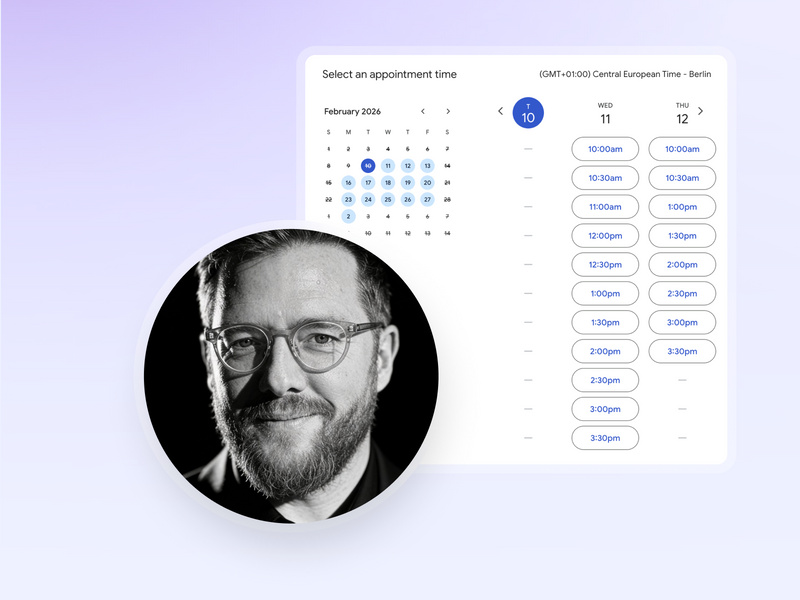
## Turn the storefront into a control layer
Walk through the stack, roadmap and replatforming scenario together: in the call, the Laioutr team shows what a composable storefront with Laioutr looks like, what effort is involved and how fast a go-live is possible.
*"After 30 minutes, we knew Laioutr makes our replatforming feasible." Daniel B., CEO,* [*hygibox.de*](https://hygibox.de)
[Book a demo](https://www.laioutr.com/en/contact)
## Structured Data
```json
{
"@context": "https://schema.org",
"@graph": [
{
"@type": "Organization",
"@id": "https://www.laioutr.com/#identity",
"name": "Laioutr",
"legalName": "Laioutr GmbH",
"url": "https://www.laioutr.com/",
"logo": {
"@type": "ImageObject",
"url": "https://www.laioutr.com/laioutr-logo.png",
"width": 400,
"height": 400
},
"email": "info@laioutr.com",
"telephone": "+49 30 75435715",
"address": {
"@type": "PostalAddress",
"streetAddress": "Münchweilersteig 5",
"postalCode": "12559",
"addressLocality": "Berlin",
"addressCountry": "DE"
},
"vatID": "DE450905846",
"sameAs": [
"https://www.linkedin.com/company/laioutr",
"https://www.youtube.com/@Laioutr",
"https://x.com/laioutr"
]
},
{
"@type": "WebSite",
"@id": "https://www.laioutr.com/en/#website",
"url": "https://www.laioutr.com/en/",
"name": "Laioutr",
"inLanguage": "en",
"publisher": {
"@id": "https://www.laioutr.com/#identity"
}
},
{
"@type": "SoftwareApplication",
"@id": "https://www.laioutr.com/#platform",
"name": "Laioutr",
"applicationCategory": "BusinessApplication",
"applicationSubCategory": "Agentic Frontend Management Platform",
"operatingSystem": "Web",
"url": "https://www.laioutr.com/",
"publisher": {
"@id": "https://www.laioutr.com/#identity"
}
},
{
"@type": [
"WebPage",
"FAQPage"
],
"@id": "https://www.laioutr.com/en/composable-storefront#webpage",
"url": "https://www.laioutr.com/en/composable-storefront",
"name": "Composable Storefront for Composable Commerce | Laioutr",
"description": "What is a composable storefront? The storefront layer of a composable commerce stack that unites backend, search, CMS and checkout in one shopping journey.",
"inLanguage": "en",
"isPartOf": {
"@id": "https://www.laioutr.com/en/#website"
},
"breadcrumb": {
"@id": "https://www.laioutr.com/en/composable-storefront#breadcrumb"
},
"primaryImageOfPage": {
"@type": "ImageObject",
"url": "https://eu-west-2.graphassets.com/cmii2mlqi0dux06l5543v7nkc/cmpvdc8cltsm907mh4gw84kcd"
},
"about": {
"@id": "https://www.laioutr.com/#platform"
},
"mainEntity": [
{
"@type": "Question",
"name": "What is the difference between a composable storefront and composable commerce?",
"acceptedAnswer": {
"@type": "Answer",
"text": "Composable commerce refers to the entire stack: backend, search, personalization, content and checkout are interchangeable services. The composable storefront is the layer in which these services become pages, cart and checkout for customers. Both belong together but describe different levels of the same stack."
}
},
{
"@type": "Question",
"name": "How does a composable storefront relate to a composable DXP?",
"acceptedAnswer": {
"@type": "Answer",
"text": "A composable DXP is the overarching strategy for all digital experiences, from website and portals to the shop. The composable storefront is its commerce part: the layer through which products are sold. More on the composable DXP page."
}
},
{
"@type": "Question",
"name": "Does a composable storefront need its own engineering team?",
"acceptedAnswer": {
"@type": "Answer",
"text": "Without a platform, yes, because every service has to be integrated and maintained in the frontend individually. With Laioutr, the Orchestr data layer handles the connection; marketing works visually in Studio and engineering extends with its own components when needed."
}
},
{
"@type": "Question",
"name": "Which services can be connected to a composable storefront?",
"acceptedAnswer": {
"@type": "Answer",
"text": "Commerce backends, search, CMS, PIM, personalization, reviews, payment and tracking. Laioutr provides 300+ integrations as apps for this; custom services can be connected via REST or GraphQL."
}
},
{
"@type": "Question",
"name": "Which commerce backends does Laioutr support?",
"acceptedAnswer": {
"@type": "Answer",
"text": "Laioutr connects 50+ backends, including Shopify, Shopware, commercetools, Adobe Commerce/Magento 2, OXID, Sylius, Spryker, VTEX, Salesforce Commerce Cloud and SAP Commerce Cloud. Custom backends with REST or GraphQL can be connected via custom adapters."
}
},
{
"@type": "Question",
"name": "How does Laioutr differ from Hydrogen, Alokai or Builder.io?",
"acceptedAnswer": {
"@type": "Answer",
"text": "Hydrogen is Shopify's storefront framework and is tied to Shopify as the backend. Alokai (formerly Vue Storefront) is a frontend framework that developer teams use to build and run a storefront themselves. Builder.io is a visual CMS for frontend content but does not replace the data and delivery layer. Laioutr combines Studio, a component library, the Orchestr data layer and Blueprints in one platform; cloud hosting is available as an add-on."
}
},
{
"@type": "Question",
"name": "Is a composable storefront worthwhile for a small shop?",
"acceptedAnswer": {
"@type": "Answer",
"text": "Not necessarily. Anyone who uses just one backend, does not want to connect further services and does well with a standard template does not need a composable stack. A composable storefront pays off as soon as search, CMS, checkout or several brands and markets need to work together."
}
},
{
"@type": "Question",
"name": "What does the path to a composable storefront look like?",
"acceptedAnswer": {
"@type": "Answer",
"text": "In three phases: (1) Keep the existing backend and set up a pilot storefront in Laioutr in parallel; the pilot is usually live within 14 days. (2) Connect further services such as search or CMS and migrate one brand or market. (3) Gradually switch over further storefronts. Founder-guided migration is standard, not an extra charge."
}
}
]
},
{
"@type": "BreadcrumbList",
"@id": "https://www.laioutr.com/en/composable-storefront#breadcrumb",
"itemListElement": [
{
"@type": "ListItem",
"position": 1,
"name": "Laioutr",
"item": "https://www.laioutr.com/en/"
},
{
"@type": "ListItem",
"position": 2,
"name": "Composable Storefront for Composable Commerce"
}
]
}
]
}
```
```json
{
"@context": "https://schema.org",
"@graph": [
{
"@id": "https://www.laioutr.com/en/composable-storefront#webpage",
"description": "What is a composable storefront? The storefront layer of a composable commerce stack that unites backend, search, CMS and checkout in one shopping journey.",
"name": "Composable Storefront for Composable Commerce | Laioutr",
"url": "https://www.laioutr.com/en/composable-storefront",
"@type": [
"WebPage",
"FAQPage"
],
"mainEntity": [
{
"@id": "https://www.laioutr.com/en/composable-storefront#/schema/question/1"
},
{
"@id": "https://www.laioutr.com/en/composable-storefront#/schema/question/2"
},
{
"@id": "https://www.laioutr.com/en/composable-storefront#/schema/question/3"
},
{
"@id": "https://www.laioutr.com/en/composable-storefront#/schema/question/4"
},
{
"@id": "https://www.laioutr.com/en/composable-storefront#/schema/question/5"
},
{
"@id": "https://www.laioutr.com/en/composable-storefront#/schema/question/6"
},
{
"@id": "https://www.laioutr.com/en/composable-storefront#/schema/question/7"
},
{
"@id": "https://www.laioutr.com/en/composable-storefront#/schema/question/8"
}
]
},
{
"@id": "https://www.laioutr.com/en/composable-storefront#/schema/question/1",
"@type": "Question",
"inLanguage": "en",
"name": "What is the difference between a composable storefront and composable commerce?",
"acceptedAnswer": {
"@type": "Answer",
"text": "Composable commerce refers to the entire stack: backend, search, personalization, content and checkout are interchangeable services. The composable storefront is the layer in which these services become pages, cart and checkout for customers. Both belong together but describe different levels of the same stack.
"
}
},
{
"@id": "https://www.laioutr.com/en/composable-storefront#/schema/question/2",
"@type": "Question",
"inLanguage": "en",
"name": "How does a composable storefront relate to a composable DXP?",
"acceptedAnswer": {
"@type": "Answer",
"text": "A composable DXP is the overarching strategy for all digital experiences, from website and portals to the shop. The composable storefront is its commerce part: the layer through which products are sold. More on the composable DXP page.
"
}
},
{
"@id": "https://www.laioutr.com/en/composable-storefront#/schema/question/3",
"@type": "Question",
"inLanguage": "en",
"name": "Does a composable storefront need its own engineering team?",
"acceptedAnswer": {
"@type": "Answer",
"text": "Without a platform, yes, because every service has to be integrated and maintained in the frontend individually. With Laioutr, the Orchestr data layer handles the connection; marketing works visually in Studio and engineering extends with its own components when needed.
"
}
},
{
"@id": "https://www.laioutr.com/en/composable-storefront#/schema/question/4",
"@type": "Question",
"inLanguage": "en",
"name": "Which services can be connected to a composable storefront?",
"acceptedAnswer": {
"@type": "Answer",
"text": "Commerce backends, search, CMS, PIM, personalization, reviews, payment and tracking. Laioutr provides 300+ integrations as apps for this; custom services can be connected via REST or GraphQL.
"
}
},
{
"@id": "https://www.laioutr.com/en/composable-storefront#/schema/question/5",
"@type": "Question",
"inLanguage": "en",
"name": "Which commerce backends does Laioutr support?",
"acceptedAnswer": {
"@type": "Answer",
"text": "Laioutr connects 50+ backends, including Shopify, Shopware, commercetools, Adobe Commerce/Magento 2, OXID, Sylius, Spryker, VTEX, Salesforce Commerce Cloud and SAP Commerce Cloud. Custom backends with REST or GraphQL can be connected via custom adapters.
"
}
},
{
"@id": "https://www.laioutr.com/en/composable-storefront#/schema/question/6",
"@type": "Question",
"inLanguage": "en",
"name": "How does Laioutr differ from Hydrogen, Alokai or Builder.io?",
"acceptedAnswer": {
"@type": "Answer",
"text": "Hydrogen is Shopify's storefront framework and is tied to Shopify as the backend. Alokai (formerly Vue Storefront) is a frontend framework that developer teams use to build and run a storefront themselves. Builder.io is a visual CMS for frontend content but does not replace the data and delivery layer. Laioutr combines Studio, a component library, the Orchestr data layer and Blueprints in one platform; cloud hosting is available as an add-on.
"
}
},
{
"@id": "https://www.laioutr.com/en/composable-storefront#/schema/question/7",
"@type": "Question",
"inLanguage": "en",
"name": "Is a composable storefront worthwhile for a small shop?",
"acceptedAnswer": {
"@type": "Answer",
"text": "Not necessarily. Anyone who uses just one backend, does not want to connect further services and does well with a standard template does not need a composable stack. A composable storefront pays off as soon as search, CMS, checkout or several brands and markets need to work together.
"
}
},
{
"@id": "https://www.laioutr.com/en/composable-storefront#/schema/question/8",
"@type": "Question",
"inLanguage": "en",
"name": "What does the path to a composable storefront look like?",
"acceptedAnswer": {
"@type": "Answer",
"text": "In three phases:
(1) Keep the existing backend and set up a pilot storefront in Laioutr in parallel; the pilot is usually live within 14 days.
(2) Connect further services such as search or CMS and migrate one brand or market.
(3) Gradually switch over further storefronts. Founder-guided migration is standard, not an extra charge.
"
}
}
]
}
```