---
title: "A/B Testing Add-on without Performance Loss | Laioutr"
canonical_url: "https://www.laioutr.com/en/product/ab-testing"
locale: en
meta:
description: "A/B testing as an add-on to the Laioutr platform: Display Conditions in Studio, multi-armed bandit via AI A/B Testing, variants at the edge. GDPR-compliant."
"og:description": "A/B testing as an add-on to the Laioutr platform: Display Conditions in Studio, multi-armed bandit via AI A/B Testing, variants at the edge. GDPR-compliant."
"og:title": "A/B Testing Add-on without Performance Loss | Laioutr"
---
A/B TESTING: LEARN WITHOUT SACRIFICING PERFORMANCE
# A/B testing that drives conversion without costing page speed.
Display Conditions in Studio for classic A/B tests. The AI A/B Testing add-on for multi-armed bandit optimization. Variant selection at the edge for performance out of the box. Learning with no trade-off.
[Book a demo](https://www.laioutr.com/en/contact)
In modern commerce, A/B testing is no longer optional but mandatory. Classic A/B tools, however, sit on top of the frontend, cost performance, need engineering setup per test and often deliver results only once the campaign is long over. At Laioutr it works differently.
A/B testing is a layer of the frontend platform: Display Conditions in Studio, the AI A/B Testing add-on for continuous optimization and variant delivery at the edge that leaves performance untouched.
The definition
## What A/B testing means at Laioutr.
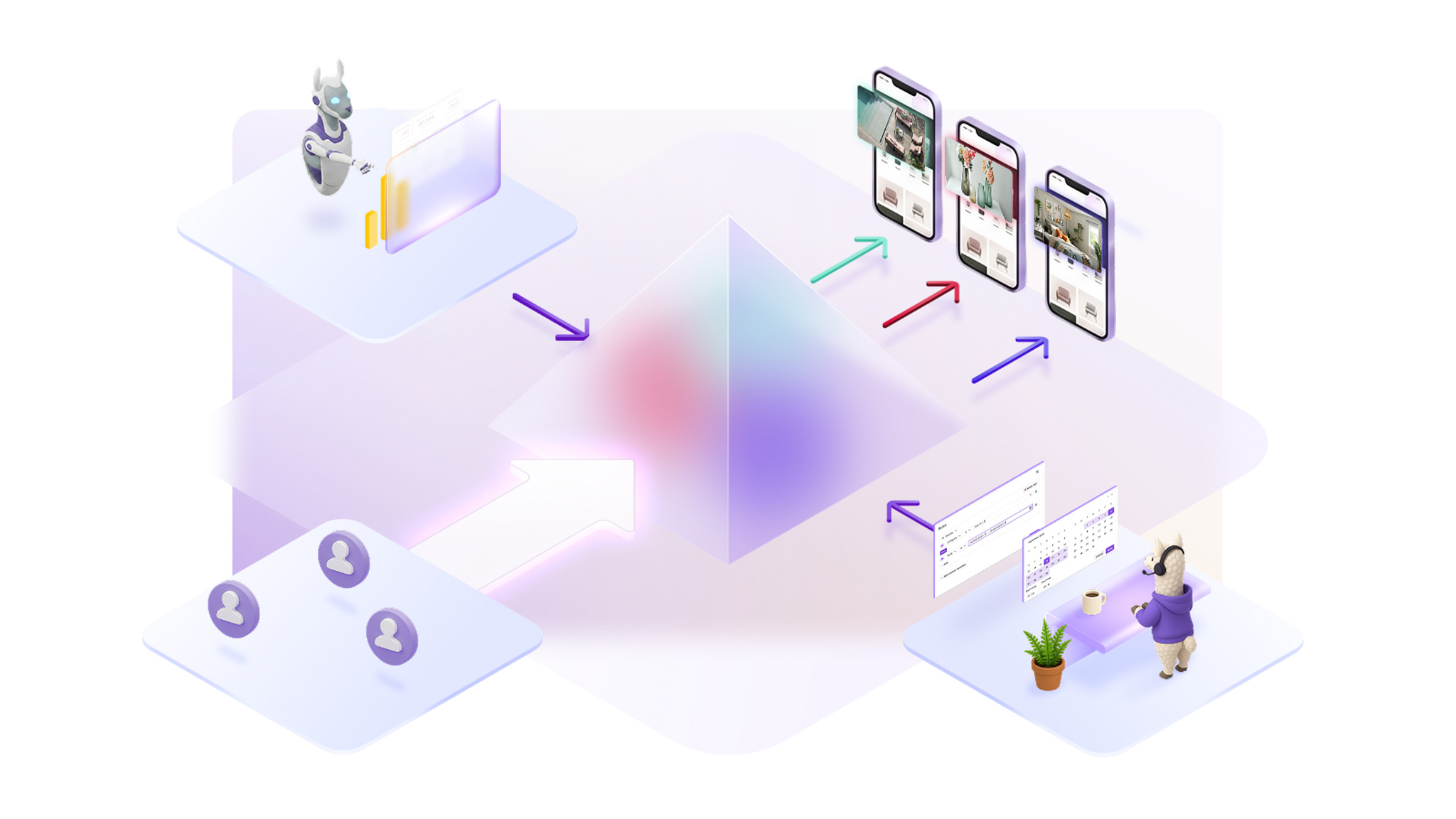
A/B testing at Laioutr is an architectural layer of the frontend platform: no separate software, no plugin, no tracking-pixel bolt-on. In the layer available today, tests are set up via Display Conditions in Studio: marketing configures the variants, the system distributes traffic and captures conversion data.
The AI layer adds the AI A/B Testing add-on: it controls multi-armed bandit distribution and detects statistical significance. The Conversion Agent proposes hypotheses and variants, and the team approves when winners are adopted. Both layers run at the edge: no render-blocking pixels, no client-side hydration issues, no SEO losses.
A/B Testing
### Three key properties
### Statistically sound, AI-accelerated
Classic A/B tests for statistical clarity. Multi-armed bandit for learning speed. Both from one platform.
### Performance out of the box
Edge delivery, server-side variant selection, no render blocking. LCP under 1.2 s even with active tests.
### GDPR-compliant
Test cookies controllable per data source. EU hosting available. Test data stays with the company.
TWO LAYERS
## A/B testing in two layers, today and tomorrow, together.
As with personalization, we draw a clear line between the layer available today and the AI layer. Both belong to the same platform and work together. The team frames the hypothesis, the add-on runs the test.
RULE-BASED
### Display Conditions, classic A/B tests
In Studio, variants and traffic distribution are configured per component, for example 50/50, 70/30 or 90/10. Marketing builds tests without an engineering ticket, the system splits users across variants and captures conversion data in real time.
**What that means:**
- Tests per component (hero banner, CTA, recommendations, layout variants)
- Clear traffic distribution (manually configured)
- Statistical significance calculated automatically
- Test evaluation visible in the platform, no data island
[More on Display Conditions](https://www.laioutr.com/en/composable-visual-page-builder)
AGENTIC
### AI A/B Testing add-on (AI-driven)
The AI A/B Testing add-on distributes traffic dynamically using multi-armed bandit methods. The Conversion Agent proposes tests and variants, and the team approves adopting winners into the components, with no engineering sprint and no manual evaluation.
**What that means:**
- Tests run continuously, not in sprints
- Traffic automatically flows to where it converts best
- Learning speed doubles, opportunity cost halves
- Decay detection: when a winner gets "stale", the agent proposes a new variant
[More on the Conversion Agent](https://www.laioutr.com/en/agent/conversion)
AI A/B TESTING
## What the AI A/B Testing add-on actually automates.
A/B testing beyond "50/50 split with spreadsheet evaluation". Together with the Conversion Agent, the add-on handles tasks that in a classic setup keep a dedicated CRO team busy for quarters. A/B testing turns from a sprint into a background process, while decisions stay with the team.
### Test setup
The Conversion Agent identifies sensible test candidates at component or page level and proposes hypotheses based on performance data. Tests start after approval.
### Multi-armed bandit
Instead of a rigid 50/50 split, the add-on distributes traffic dynamically: the winner gets more, the loser less. Learning speed doubles, opportunity cost halves.
### Significance detection
Statistical significance is calculated continuously, and as soon as it's reached, the test can be closed. No more "how many conversions do we still need?" spreadsheets.
### Variant generation
Together with the Content Agent, new test variants are proposed: headlines, CTAs, descriptions. Two variants become five, and the bandit finds the winner.
### Adopting winners
Once a test is decided, the winner is adopted into the component after approval, with no engineering deploy. Studio shows the historical test trail, so iterations remain traceable.
### Decay detection
When a variant "ages" over time (conversion drops), the agent detects it and proposes a new test round with fresh variants.
METHODS
## Classic A/B test or multi-armed bandit: which one when?
Both methods have their place. The difference lies in the trade-off between statistical clarity and learning speed. At Laioutr there is no either-or decision: the right method is chosen per test, and both run in the same platform.
Pricing Plans Comparison
| Compare differences | Klassischer A/B-Test | Multi-Armed-Bandit |
| --- | --- | --- |
| Klassischer A/B-Test Multi-Armed-Bandit |
| Klassischer A/B-Test vs. Multi-Armed-Bandit Beide Methoden haben ihren Platz. Der Unterschied liegt im Trade-off zwischen statistischer Klarheit und Lerngeschwindigkeit. Bei Laioutr gibt es keine Entweder-oder-Entscheidung: Pro Test wird die passende Methode gewählt. |
| Traffic-Verteilung Wie der Test-Traffic auf die Varianten verteilt wird. | Starr: von Beginn bis Ende des Tests fest definiert (50/50, 70/30 usw.). | Dynamisch: Der Gewinner bekommt fortlaufend mehr Traffic, der Verlierer weniger. |
| Lerngeschwindigkeit Wie schnell erkennbar ist, welche Variante gewinnt. | Langsamer: Alle Varianten werden gleich getestet, bis statistische Signifikanz erreicht ist. | Schneller: Traffic fließt zur besseren Variante, Lernen passiert kontinuierlich. |
| Statistische Klarheit Wie sauber sich Test-Ergebnisse statistisch belegen lassen. | Hoch: saubere Confidence Intervals, reproduzierbare p-Werte, gut dokumentierbar. | Indirekter: Signifikanz wird laufend geprüft, die formale Auswertung ist weniger streng als beim klassischen Test. |
| Opportunitätskosten Wie viel Conversion-Verlust durch laufende Tests entsteht. | Höher: Bis zu 50 % des Traffics laufen während des Tests auf die Verlierer-Variante. | Niedriger: Traffic verschiebt sich zum Gewinner, sobald sich ein Trend abzeichnet. |
| Wann sinnvoll Welche Test-Szenarien zur Methode passen. | Strategische Entscheidungen mit hohen Stakes: Layout-Änderungen, Brand-Positionierung, Audit-relevante Tests. | Continuous Optimization im Tagesgeschäft: Banner, CTAs, Empfehlungen, Headlines, Saison-Kampagnen. |
| Voraussetzung Was die Methode braucht, um zu funktionieren. | Klare Hypothese vor Test-Start, definierter Test-Zeitraum, kalkulierte Mindest-Sample-Size. | Saubere Performance-Metriken und ein kontinuierlicher Datenstrom: Der Bandit lernt aus jeder Conversion. |
| Ergebnis-Form Wie das Test-Ergebnis am Ende aussieht. | Eine binäre Entscheidung mit klarer statistischer Aussage, etwa: Variante A ist mit 95 Prozent Konfidenz besser als Variante B. | Eine fortlaufende Allokation, die sich weiter anpasst, etwa: Variante A bekommt jetzt 80 Prozent des Traffics, Tendenz steigend. |
| Engineering-Aufwand Wie viel Setup, Pflege und Auswertung pro Test nötig ist. | Setup pro Test: Hypothese, Variante, Sample-Size kalkulieren. Auswertung manuell oder per Tool. | Vorgeschlagen vom Conversion Agent, ausgeführt vom Add-on AI A/B Testing nach Freigabe. Engineering ist nur für Strategie-Entscheidungen nötig. |
PERFORMANCE
## Tests without render blocking, no trade-off.
Classic A/B testing tools have a weakness that is now measurable: they cost performance. Render-blocking scripts, layout shifts, hydration mismatches. Laioutr solves it differently, at the edge. LCP under 1.2 s even with an active A/B test.
### Variant selection at the edge
Which variant a user sees is decided at the edge, before the HTML reaches the browser. No client-side logic that swaps content after the fact. No flicker.
### No render-blocking scripts
Classic tools load test scripts synchronously in the \, which blocks rendering. At Laioutr the test logic runs server-side, not in the browser. Core Web Vitals stay green.
### SEO stays SEO
Search engine crawlers are consistently treated as a single "bucket" and see the default variant. No cloaking, no duplicate-content risk, no hreflang confusion.
A/B Testing and analytics united
## How A/B testing works with the analytics stack.
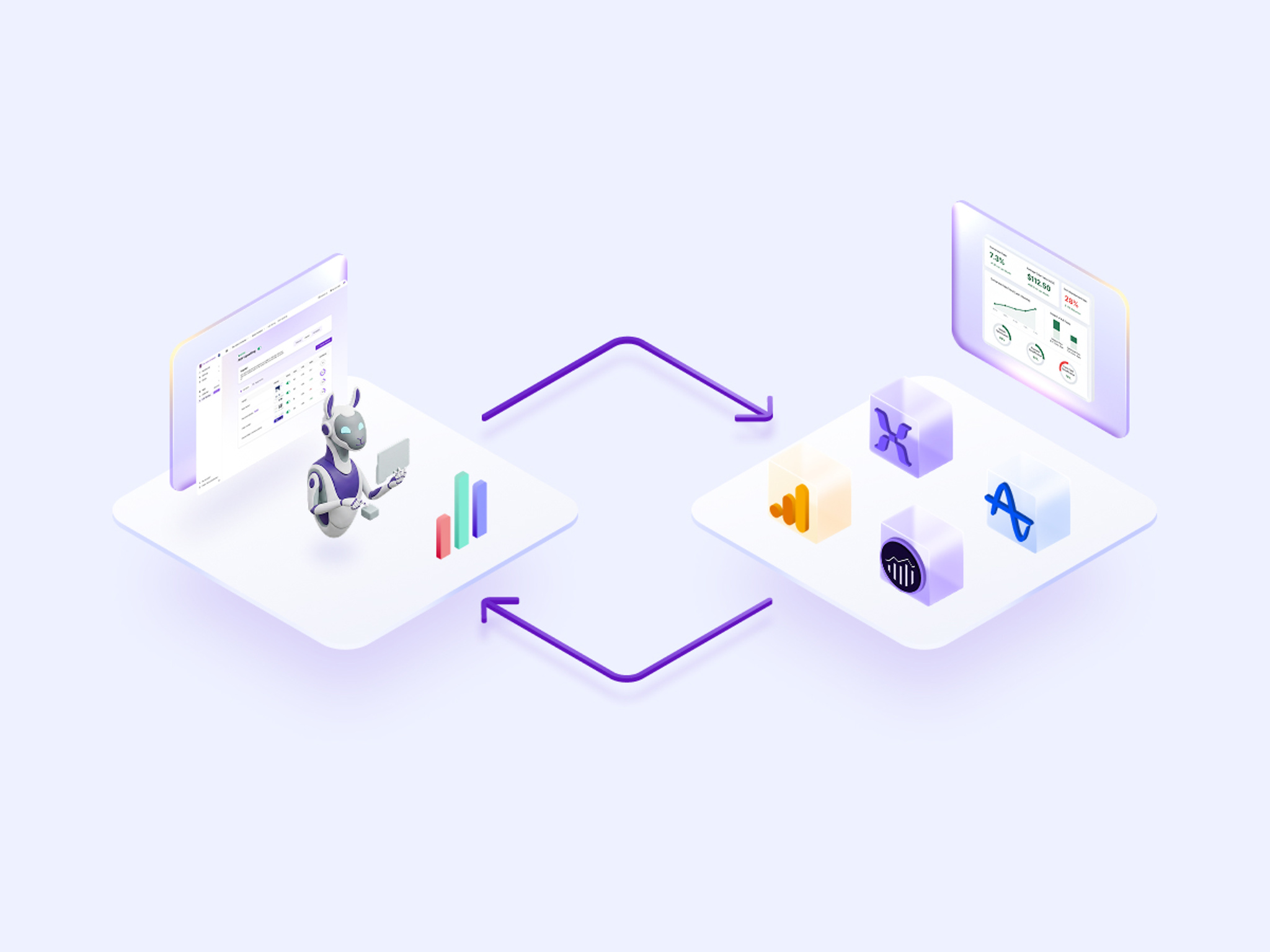
Tests are worthless if their results do not reach the analytics system. Laioutr connects directly with the common tools, so test results land where the team is already looking. Through pre-built apps, conversion data flows to GA4, Amplitude, Mixpanel, Adobe Analytics, Segment or a company's own data warehouse. The other way around too: performance data from the analytics tool feeds into the AI A/B Testing add-on as a signal, so it works with the company's real conversion definitions instead of defaults.
GA4 · Amplitude · Mixpanel · Adobe Analytics · Segment · Matomo · Custom via REST/GraphQL
[More on tracking & analytics](https://www.laioutr.com/en/product/tracking-analytics)
AI WORKFLOW
## A/B testing, personalization and content: three building blocks, one workflow.
What would classically be three tools is one workflow at Laioutr: the Content Agent proposes variants, the AI A/B Testing add-on tests them, and the AI Personalisation add-on delivers the winners per segment. One layer, one learning effect. The test sprint becomes a test routine.
### Content Agent
Proposes new variants: headlines, CTAs, product copy. Provides the material that gets tested.
### AI A/B Testing (Add-on)
Tests the variants: distributes traffic via multi-armed bandit and detects significance. Winners are adopted into the components after approval. Continuously, not in sprints.
### AI Personalisation (Add-on)
Delivers the winners per segment: what wins with VIPs is not necessarily the same as with first-time customers.
GDPR
## A/B testing in Europe: GDPR-compliant out of the box.
A/B testing in Europe makes no sense without a clear compliance strategy. We make GDPR compliance a prerequisite of the platform, not a bolt-on feature.
### GDPR-compliant
- EU hosting available, test data stays in the chosen region
- Built-in cookie consent layer (TCF 2.0 compatible)
- Test-variant cookies controllable per data source
- Anonymized bucket assignment possible (no personal data)
- DPA (Data Processing Agreement) included in the contract by default
- Audit logs are delivered as part of the Enterprise package
- Test data is not used for model training and stays with the company
### Technical guarantees
- Test buckets via edge cookies, not tracking pixels
- Consistent bucket assignment (the user always sees the same variant within a session)
- Bucket reset cleanly implemented on cookie deletion
- Cross-device tracking optional (via user ID, not fingerprint)
- Secure transfer (TLS 1.3) for all test data
- Pseudonymization of test data in reports
USE CASES
## What commerce teams actually test.
Six concrete test scenarios from real commerce setups, not theoretical workflows but tasks that keep CRO teams busy today.
### Which hero banner converts best?
Three banner variants in parallel, the multi-armed bandit continuously shifts traffic toward the winner, with no one having to evaluate the test by hand.
**Method:** *Multi-armed bandit*
### "Buy now" or "Add to cart"?
A classic A/B test with a fixed 50/50 split. Clean statistical evaluation after 14 days or 10,000 conversions.
**Method:** *Classic A/B test*
### Show price with or without VAT?
High stakes, we want statistical clarity. A classic A/B test with a longer runtime, clear confidence intervals, documented evaluation.
**Method:** *Classic A/B test*
### Which recommendation logic converts?
Bestseller-first, personalized-first, seasonal-first, the bandit distributes traffic dynamically, and the winner per segment flows into the component.
**Method:** *Multi-armed bandit + personalization*
### Sticky CTA or floating CTA on mobile?
A layout variant with performance implications, we test with a multi-armed bandit and additionally track CWV per variant.
**Method:** *Multi-armed bandit with performance constraint*
### Which Black Friday message works?
Three variants, a short test window, high learning speed required. Multi-armed bandit combined with Content Agent variant generation, five variants, one winner.
**Method:** *Multi-armed bandit + Content Agent*
FAQ
## FAQ on A/B testing
What is the difference between Display Conditions and the AI A/B Testing add-on?
Display Conditions are explicitly configured: variants and traffic distribution are set manually. Ideal for classic A/B tests against clear hypotheses. The AI A/B Testing add-on automates distribution via multi-armed bandit, the Conversion Agent proposes tests and variants, and the team approves adopting winners. Both run in parallel, and the method is chosen per test scenario.
When is a classic A/B test better than a multi-armed bandit?
For strategic, high-stakes decisions such as pricing, layout changes or brand positioning, when statistical clarity matters more than learning speed. Classic tests deliver clean confidence intervals and are easier to defend in audit reports. For continuous optimization (banners, CTAs, recommendations), a multi-armed bandit is almost always the better choice.
Is a separate A/B testing tool like Optimizely or VWO needed?
Not necessarily. A/B testing is part of the platform: Display Conditions in Studio, variant selection at the edge and the AI A/B Testing add-on. Teams that still want a dedicated tool, for example because of an existing integration pipeline, connect it through the Connect layer.
How performant are tests in Laioutr, is there render blocking?
No render blocking. Variant selection happens server-side at the edge, before the HTML reaches the browser. LCP under 1.2 s is standard even with an active A/B test. Render-blocking scripts in the \, as used by classic A/B tools, are not needed in this architecture model.
Are A/B tests with Laioutr GDPR-compliant?
Yes. Test buckets via edge cookies (no pixel tracking), a cookie consent layer controllable per data source, EU hosting available. Anonymized bucket assignment is possible. DPA in the contract by default, audit logs as part of the Enterprise package. Test data stays with the company and is not used for model training.
How does A/B testing in Laioutr integrate with analytics tools?
Pre-built Connect adapters for GA4, Amplitude, Mixpanel, Adobe Analytics, Segment and Matomo. Conversion data flows into the analytics system in real time, and custom event definitions are respected. The other way around too: conversion data from the analytics tool feeds into the AI A/B Testing add-on as a signal.
How many parallel tests can I run?
Architecturally unlimited: the platform is built for tests running in parallel per component. In practice, we recommend staggering tests per funnel step (no simultaneous hero banner test and CTA test on the same page) to avoid cross-effects. The Conversion Agent proposes a sensible order.
Can I run multivariate tests (MVT) with Laioutr, not just A/B?
Yes. Tests with more than two variants (A/B/C/D) work natively in Laioutr, either as a classic MVT with a fixed split or as a multi-armed bandit across all variants. The bandit is especially strong here, because with many variants it significantly increases learning speed.
How is it ensured that users see the same variant within a session?
Bucket assignment happens via edge cookies and is consistent across the entire session. Even on page reloads, order changes, or cross-page journeys, the user sees the same variant. Cross-device consistency (via user ID) can be enabled optionally.
Can the AI A/B Testing add-on be switched off?
Yes. Per feature, per brand, per market. Some teams only use classic A/B tests via Display Conditions, some also enable the multi-armed bandit, some work entirely without agents. There is no "all or nothing" mode.
## More on A/B testing and Laioutr
The overarching topic, related pages and matching solutions.
### All add-ons
AI A/B Testing, AI Personalisation, AI Search & Discovery and more add-ons at a glance.
[Explore add-ons](https://www.laioutr.com/en/add-ons)
### Personalization
Target content with Display Conditions in Studio, with the AI Personalisation add-on as an AI layer and delivery at the edge.
[Explore personalization](https://www.laioutr.com/en/product/personalization)
### Conversion Agent
The agent that proposes test hypotheses and variants. Publishing stays with the team.
[Explore the Conversion Agent](https://www.laioutr.com/en/agent/conversion)
### Commerce pricing
Licenses and add-ons for commerce projects at a glance.
[View pricing](https://www.laioutr.com/en/pricing/commerce)

Strategy call
## The frontend as a control layer: where to start?
The call covers stack, roadmap and replatforming scenario: how Laioutr fits, what it costs and how fast the go-live can happen.
*"After 30 minutes, we knew Laioutr makes our replatforming feasible." Daniel B., CEO,* [*hygibox.de*](https://hygibox.de)
[Book a demo](https://www.laioutr.com/en/contact)
## Structured Data
```json
{
"@context": "https://schema.org",
"@graph": [
{
"@type": "Organization",
"@id": "https://www.laioutr.com/#identity",
"name": "Laioutr",
"legalName": "Laioutr GmbH",
"url": "https://www.laioutr.com/",
"logo": {
"@type": "ImageObject",
"url": "https://www.laioutr.com/laioutr-logo.png",
"width": 400,
"height": 400
},
"email": "info@laioutr.com",
"telephone": "+49 30 75435715",
"address": {
"@type": "PostalAddress",
"streetAddress": "Münchweilersteig 5",
"postalCode": "12559",
"addressLocality": "Berlin",
"addressCountry": "DE"
},
"vatID": "DE450905846",
"sameAs": [
"https://www.linkedin.com/company/laioutr",
"https://www.youtube.com/@Laioutr",
"https://x.com/laioutr"
]
},
{
"@type": "WebSite",
"@id": "https://www.laioutr.com/en/#website",
"url": "https://www.laioutr.com/en/",
"name": "Laioutr",
"inLanguage": "en",
"publisher": {
"@id": "https://www.laioutr.com/#identity"
}
},
{
"@type": "SoftwareApplication",
"@id": "https://www.laioutr.com/#platform",
"name": "Laioutr",
"applicationCategory": "BusinessApplication",
"applicationSubCategory": "Agentic Frontend Management Platform",
"operatingSystem": "Web",
"url": "https://www.laioutr.com/",
"publisher": {
"@id": "https://www.laioutr.com/#identity"
}
},
{
"@type": [
"WebPage",
"FAQPage"
],
"@id": "https://www.laioutr.com/en/product/ab-testing#webpage",
"url": "https://www.laioutr.com/en/product/ab-testing",
"name": "A/B Testing Add-on without Performance Loss | Laioutr",
"description": "A/B testing as an add-on to the Laioutr platform: Display Conditions in Studio, multi-armed bandit via AI A/B Testing, variants at the edge. GDPR-compliant.",
"inLanguage": "en",
"isPartOf": {
"@id": "https://www.laioutr.com/en/#website"
},
"breadcrumb": {
"@id": "https://www.laioutr.com/en/product/ab-testing#breadcrumb"
},
"primaryImageOfPage": {
"@type": "ImageObject",
"url": "https://eu-west-2.graphassets.com/cmii2mlqi0dux06l5543v7nkc/cmqhtf09kcl9m07mhglqoesra"
},
"about": {
"@id": "https://www.laioutr.com/#platform"
},
"mainEntity": [
{
"@type": "Question",
"name": "What is the difference between Display Conditions and the AI A/B Testing add-on?",
"acceptedAnswer": {
"@type": "Answer",
"text": "Display Conditions are explicitly configured: variants and traffic distribution are set manually. Ideal for classic A/B tests against clear hypotheses. The AI A/B Testing add-on automates distribution via multi-armed bandit, the Conversion Agent proposes tests and variants, and the team approves adopting winners. Both run in parallel, and the method is chosen per test scenario."
}
},
{
"@type": "Question",
"name": "When is a classic A/B test better than a multi-armed bandit?",
"acceptedAnswer": {
"@type": "Answer",
"text": "For strategic, high-stakes decisions such as pricing, layout changes or brand positioning, when statistical clarity matters more than learning speed. Classic tests deliver clean confidence intervals and are easier to defend in audit reports. For continuous optimization (banners, CTAs, recommendations), a multi-armed bandit is almost always the better choice."
}
},
{
"@type": "Question",
"name": "Is a separate A/B testing tool like Optimizely or VWO needed?",
"acceptedAnswer": {
"@type": "Answer",
"text": "Not necessarily. A/B testing is part of the platform: Display Conditions in Studio, variant selection at the edge and the AI A/B Testing add-on. Teams that still want a dedicated tool, for example because of an existing integration pipeline, connect it through the Connect layer."
}
},
{
"@type": "Question",
"name": "How performant are tests in Laioutr, is there render blocking?",
"acceptedAnswer": {
"@type": "Answer",
"text": "No render blocking. Variant selection happens server-side at the edge, before the HTML reaches the browser. LCP under 1.2 s is standard even with an active A/B test. Render-blocking scripts in the , as used by classic A/B tools, are not needed in this architecture model."
}
},
{
"@type": "Question",
"name": "Are A/B tests with Laioutr GDPR-compliant?",
"acceptedAnswer": {
"@type": "Answer",
"text": "Yes. Test buckets via edge cookies (no pixel tracking), a cookie consent layer controllable per data source, EU hosting available. Anonymized bucket assignment is possible. DPA in the contract by default, audit logs as part of the Enterprise package. Test data stays with the company and is not used for model training."
}
},
{
"@type": "Question",
"name": "How does A/B testing in Laioutr integrate with analytics tools?",
"acceptedAnswer": {
"@type": "Answer",
"text": "Pre-built Connect adapters for GA4, Amplitude, Mixpanel, Adobe Analytics, Segment and Matomo. Conversion data flows into the analytics system in real time, and custom event definitions are respected. The other way around too: conversion data from the analytics tool feeds into the AI A/B Testing add-on as a signal."
}
},
{
"@type": "Question",
"name": "How many parallel tests can I run?",
"acceptedAnswer": {
"@type": "Answer",
"text": "Architecturally unlimited: the platform is built for tests running in parallel per component. In practice, we recommend staggering tests per funnel step (no simultaneous hero banner test and CTA test on the same page) to avoid cross-effects. The Conversion Agent proposes a sensible order."
}
},
{
"@type": "Question",
"name": "Can I run multivariate tests (MVT) with Laioutr, not just A/B?",
"acceptedAnswer": {
"@type": "Answer",
"text": "Yes. Tests with more than two variants (A/B/C/D) work natively in Laioutr, either as a classic MVT with a fixed split or as a multi-armed bandit across all variants. The bandit is especially strong here, because with many variants it significantly increases learning speed."
}
},
{
"@type": "Question",
"name": "How is it ensured that users see the same variant within a session?",
"acceptedAnswer": {
"@type": "Answer",
"text": "Bucket assignment happens via edge cookies and is consistent across the entire session. Even on page reloads, order changes, or cross-page journeys, the user sees the same variant. Cross-device consistency (via user ID) can be enabled optionally."
}
},
{
"@type": "Question",
"name": "Can the AI A/B Testing add-on be switched off?",
"acceptedAnswer": {
"@type": "Answer",
"text": "Yes. Per feature, per brand, per market. Some teams only use classic A/B tests via Display Conditions, some also enable the multi-armed bandit, some work entirely without agents. There is no \"all or nothing\" mode."
}
}
]
},
{
"@type": "BreadcrumbList",
"@id": "https://www.laioutr.com/en/product/ab-testing#breadcrumb",
"itemListElement": [
{
"@type": "ListItem",
"position": 1,
"name": "Laioutr",
"item": "https://www.laioutr.com/en/"
},
{
"@type": "ListItem",
"position": 2,
"name": "A/B Testing Add-on without Performance Loss"
}
]
}
]
}
```
```json
{
"@context": "https://schema.org",
"@graph": [
{
"@id": "https://www.laioutr.com/en/product/ab-testing#webpage",
"description": "A/B testing as an add-on to the Laioutr platform: Display Conditions in Studio, multi-armed bandit via AI A/B Testing, variants at the edge. GDPR-compliant.",
"name": "A/B Testing Add-on without Performance Loss | Laioutr",
"url": "https://www.laioutr.com/en/product/ab-testing",
"@type": [
"WebPage",
"FAQPage"
],
"mainEntity": [
{
"@id": "https://www.laioutr.com/en/product/ab-testing#/schema/question/1"
},
{
"@id": "https://www.laioutr.com/en/product/ab-testing#/schema/question/2"
},
{
"@id": "https://www.laioutr.com/en/product/ab-testing#/schema/question/3"
},
{
"@id": "https://www.laioutr.com/en/product/ab-testing#/schema/question/4"
},
{
"@id": "https://www.laioutr.com/en/product/ab-testing#/schema/question/5"
},
{
"@id": "https://www.laioutr.com/en/product/ab-testing#/schema/question/6"
},
{
"@id": "https://www.laioutr.com/en/product/ab-testing#/schema/question/7"
},
{
"@id": "https://www.laioutr.com/en/product/ab-testing#/schema/question/8"
},
{
"@id": "https://www.laioutr.com/en/product/ab-testing#/schema/question/9"
},
{
"@id": "https://www.laioutr.com/en/product/ab-testing#/schema/question/10"
}
]
},
{
"@id": "https://www.laioutr.com/en/product/ab-testing#/schema/question/1",
"@type": "Question",
"inLanguage": "en",
"name": "What is the difference between Display Conditions and the AI A/B Testing add-on?",
"acceptedAnswer": {
"@type": "Answer",
"text": "Display Conditions are explicitly configured: variants and traffic distribution are set manually. Ideal for classic A/B tests against clear hypotheses. The AI A/B Testing add-on automates distribution via multi-armed bandit, the Conversion Agent proposes tests and variants, and the team approves adopting winners. Both run in parallel, and the method is chosen per test scenario.
"
}
},
{
"@id": "https://www.laioutr.com/en/product/ab-testing#/schema/question/2",
"@type": "Question",
"inLanguage": "en",
"name": "When is a classic A/B test better than a multi-armed bandit?",
"acceptedAnswer": {
"@type": "Answer",
"text": "For strategic, high-stakes decisions such as pricing, layout changes or brand positioning, when statistical clarity matters more than learning speed. Classic tests deliver clean confidence intervals and are easier to defend in audit reports. For continuous optimization (banners, CTAs, recommendations), a multi-armed bandit is almost always the better choice.
"
}
},
{
"@id": "https://www.laioutr.com/en/product/ab-testing#/schema/question/3",
"@type": "Question",
"inLanguage": "en",
"name": "Is a separate A/B testing tool like Optimizely or VWO needed?",
"acceptedAnswer": {
"@type": "Answer",
"text": "Not necessarily. A/B testing is part of the platform: Display Conditions in Studio, variant selection at the edge and the AI A/B Testing add-on. Teams that still want a dedicated tool, for example because of an existing integration pipeline, connect it through the Connect layer.
"
}
},
{
"@id": "https://www.laioutr.com/en/product/ab-testing#/schema/question/4",
"@type": "Question",
"inLanguage": "en",
"name": "How performant are tests in Laioutr, is there render blocking?",
"acceptedAnswer": {
"@type": "Answer",
"text": "No render blocking. Variant selection happens server-side at the edge, before the HTML reaches the browser. LCP under 1.2 s is standard even with an active A/B test. Render-blocking scripts in the <head>, as used by classic A/B tools, are not needed in this architecture model.
"
}
},
{
"@id": "https://www.laioutr.com/en/product/ab-testing#/schema/question/5",
"@type": "Question",
"inLanguage": "en",
"name": "Are A/B tests with Laioutr GDPR-compliant?",
"acceptedAnswer": {
"@type": "Answer",
"text": "Yes. Test buckets via edge cookies (no pixel tracking), a cookie consent layer controllable per data source, EU hosting available. Anonymized bucket assignment is possible. DPA in the contract by default, audit logs as part of the Enterprise package. Test data stays with the company and is not used for model training.
"
}
},
{
"@id": "https://www.laioutr.com/en/product/ab-testing#/schema/question/6",
"@type": "Question",
"inLanguage": "en",
"name": "How does A/B testing in Laioutr integrate with analytics tools?",
"acceptedAnswer": {
"@type": "Answer",
"text": "Pre-built Connect adapters for GA4, Amplitude, Mixpanel, Adobe Analytics, Segment and Matomo. Conversion data flows into the analytics system in real time, and custom event definitions are respected. The other way around too: conversion data from the analytics tool feeds into the AI A/B Testing add-on as a signal.
"
}
},
{
"@id": "https://www.laioutr.com/en/product/ab-testing#/schema/question/7",
"@type": "Question",
"inLanguage": "en",
"name": "How many parallel tests can I run?",
"acceptedAnswer": {
"@type": "Answer",
"text": "Architecturally unlimited: the platform is built for tests running in parallel per component. In practice, we recommend staggering tests per funnel step (no simultaneous hero banner test and CTA test on the same page) to avoid cross-effects. The Conversion Agent proposes a sensible order.
"
}
},
{
"@id": "https://www.laioutr.com/en/product/ab-testing#/schema/question/8",
"@type": "Question",
"inLanguage": "en",
"name": "Can I run multivariate tests (MVT) with Laioutr, not just A/B?",
"acceptedAnswer": {
"@type": "Answer",
"text": "Yes. Tests with more than two variants (A/B/C/D) work natively in Laioutr, either as a classic MVT with a fixed split or as a multi-armed bandit across all variants. The bandit is especially strong here, because with many variants it significantly increases learning speed.
"
}
},
{
"@id": "https://www.laioutr.com/en/product/ab-testing#/schema/question/9",
"@type": "Question",
"inLanguage": "en",
"name": "How is it ensured that users see the same variant within a session?",
"acceptedAnswer": {
"@type": "Answer",
"text": "Bucket assignment happens via edge cookies and is consistent across the entire session. Even on page reloads, order changes, or cross-page journeys, the user sees the same variant. Cross-device consistency (via user ID) can be enabled optionally.
"
}
},
{
"@id": "https://www.laioutr.com/en/product/ab-testing#/schema/question/10",
"@type": "Question",
"inLanguage": "en",
"name": "Can the AI A/B Testing add-on be switched off?",
"acceptedAnswer": {
"@type": "Answer",
"text": "Yes. Per feature, per brand, per market. Some teams only use classic A/B tests via Display Conditions, some also enable the multi-armed bandit, some work entirely without agents. There is no \"all or nothing\" mode.
"
}
}
]
}
```