---
title: "Generative Engine Optimization: GEO in 2026"
canonical_url: "https://www.laioutr.com/en/blog/generative-engine-optimization-why-geo-will-decide-brand-visibility-in-2026"
locale: en
meta:
description: "How AI answer engines replace the ten blue links with one synthesized response, and why GEO decides brand visibility in 2026."
"og:description": "How AI answer engines replace the ten blue links with one synthesized response, and why GEO decides brand visibility in 2026."
"og:title": "Generative Engine Optimization: GEO in 2026"
---
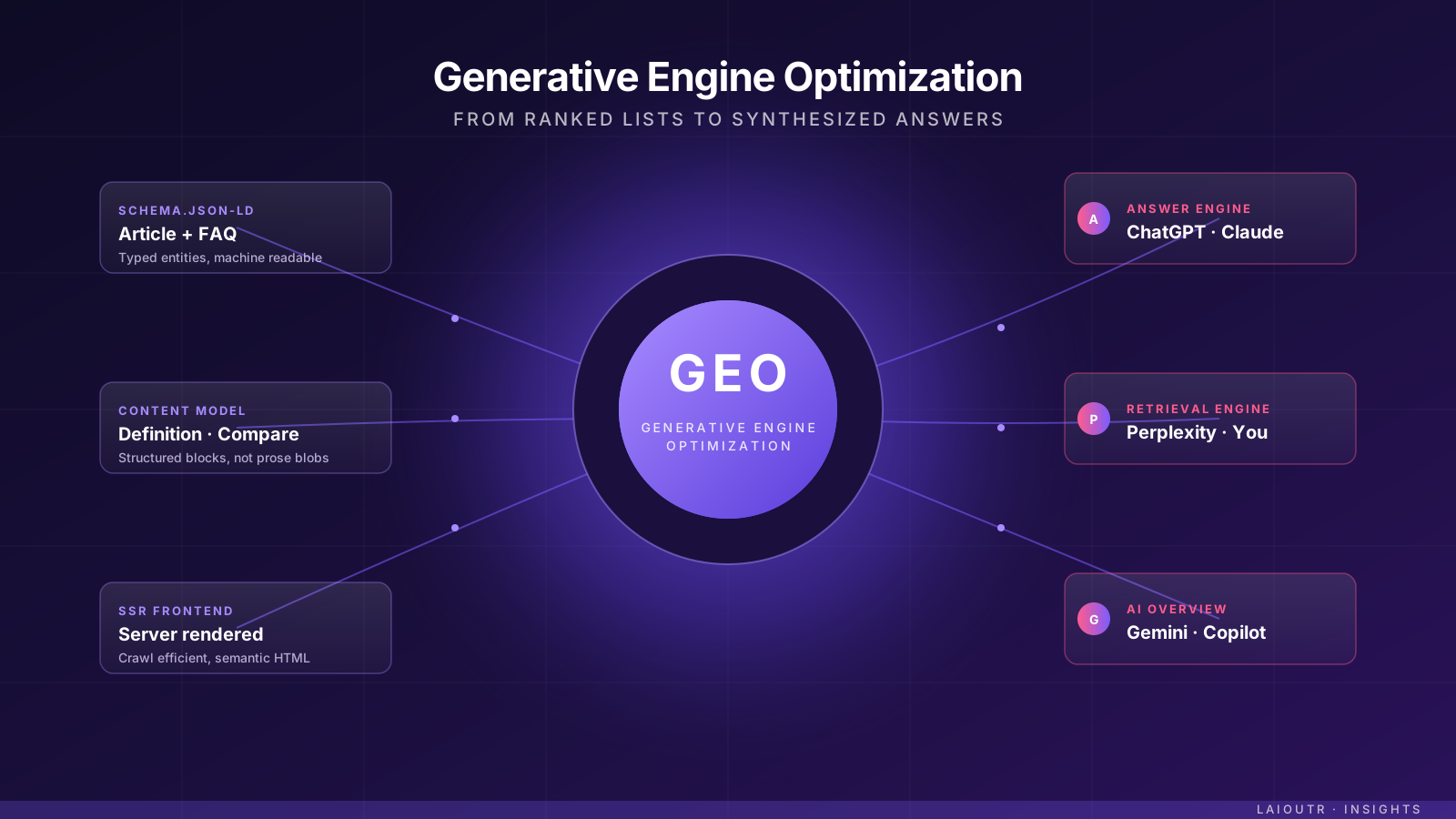
# Generative Engine Optimization: Why GEO Will Decide Brand Visibility in 2026
Table of contents
1. [1.What Generative Engine Optimization Actually Is](#what-generative-engine-optimization-actually-is)
2. [2.Why GEO Is Not Solely a Marketing Problem](#why-geo-is-not-solely-a-marketing-problem)
3. [3.The Five Pillars of Generative Engine Optimization](#the-five-pillars-of-generative-engine-optimization)
4. [4.What GEO Means for Composable Commerce Stacks](#what-geo-means-for-composable-commerce-stacks)
5. [5.A Practical GEO Playbook](#a-practical-geo-playbook)
6. [6.What to Expect Over the Next Twelve Months](#what-to-expect-over-the-next-twelve-months)
7. [7.Common Misconceptions About GEO](#common-misconceptions-about-geo)
8. [8.Closing Thoughts for Enterprise Teams](#closing-thoughts-for-enterprise-teams)
1. [1.What Generative Engine Optimization Actually Is](#what-generative-engine-optimization-actually-is)
2. [2.Why GEO Is Not Solely a Marketing Problem](#why-geo-is-not-solely-a-marketing-problem)
3. [3.The Five Pillars of Generative Engine Optimization](#the-five-pillars-of-generative-engine-optimization)
4. [4.What GEO Means for Composable Commerce Stacks](#what-geo-means-for-composable-commerce-stacks)
5. [5.A Practical GEO Playbook](#a-practical-geo-playbook)
6. [6.What to Expect Over the Next Twelve Months](#what-to-expect-over-the-next-twelve-months)
7. [7.Common Misconceptions About GEO](#common-misconceptions-about-geo)
8. [8.Closing Thoughts for Enterprise Teams](#closing-thoughts-for-enterprise-teams)
The mechanics of search are being rewritten in real time. The blue link list, the canonical SERP, the keyword-driven ranking auction, all of it is being reshuffled by a generation of AI answer engines that no longer hand users ten options to pick from. They hand them one synthesized response. Brands that do not show up in that response, either as a citation, a paraphrased source, or a recommended choice, are functionally invisible to a fast-growing slice of the buyer journey. Generative Engine Optimization, or GEO, is the discipline emerging to fix that. And contrary to how it is often framed, GEO is not a marketing-only problem. It plays out, to a surprising degree, inside the frontend architecture.
## What Generative Engine Optimization Actually Is
Generative Engine Optimization is the structural optimization of content, data, and delivery so that brands appear, are quoted, paraphrased, or cited inside the responses produced by generative AI systems. That sounds like SEO with a new label, but the mechanics are different in ways that matter. Classic SEO optimizes for placement on a list. GEO optimizes for inclusion in a single fused answer composed from multiple sources. In SEO there are roughly ten visible slots per query. In GEO there are often only two or three citations behind a synthesized paragraph.
That collapse of available real estate changes everything. Keyword density does not solve the problem when the engine is aggregating ideas across documents. Backlinks still help, but their role shifts from ranking signal to authority confirmation. Pagespeed alone is no longer the deciding factor for whether content is consumable by a retrieval pipeline. New mechanics are at work, and they reward content that is structured for machines, delivered cleanly, and authored with a level of precision that traditional content marketing rarely demanded.
## Why GEO Is Not Solely a Marketing Problem
Marketing teams instinctively respond to the shift by rewriting briefs, introducing FAQ blocks, simplifying language, and adding clearer summaries. That is the right reflex, but it is incomplete. A growing share of GEO performance is decided at the technical delivery layer. AI crawlers reward content that is fast, semantically explicit, and accessible without client-side JavaScript gymnastics. They penalize content trapped behind hydration cycles, lazy-loaded text, or layout systems that scramble document order. They favor schema-annotated documents, well-defined heading structures, and stable canonical URLs.
That responsibility lands on the frontend team. A modern storefront in 2026 is no longer a presentation layer. It is the orchestration plane where content blocks, product data, schema markup, performance budgets, and semantic markup converge. The architectural decisions made here either enable or undermine GEO before the marketing team even gets started.
## The Five Pillars of Generative Engine Optimization
### Structured Content Instead of Marketing Prose
Generative models prefer information that is shaped like information. One assertion per paragraph. Defined terms before they are used. Comparison tables with consistent attributes. FAQ blocks with literal questions and direct answers. Clean lists where order matters. Pages that read like marketing brochures get skipped in favor of pages that read like reference documents. Brands that want to be quoted have to write quotably.
### Schema and Semantic Markup
JSON-LD, Article, FAQ, HowTo, Product, Review, Organization, Breadcrumb. These are the lingua franca that lets AI engines categorize what a page is and what it claims. Schema does not replace good writing. It makes good writing legible to the retrieval layer. Headless CMS setups that model content as typed entities with explicit relationships hold a structural advantage. Page-builder stacks that flatten everything into mixed markdown blobs do not.
### Authority Signals and Source Profiles
AI engines do not just paraphrase. They select. They prefer sources that show up consistently in their training and retrieval data with credible markers. Stable author bios with checkable credentials. Coherent About pages with verifiable facts. A clean domain identity rather than a maze of subdomains. Direct citations to primary sources rather than chains of secondary references. Authority is no longer a vanity metric. It is a retrieval signal that determines whether a domain becomes a default citation in a category.
### Frontend Performance and Crawl Efficiency
AI crawlers operate under a budget. They crawl deeper and more frequently when the frontend serves content cleanly. Server-side rendering or static-site generation for citation-worthy content is no longer a nice-to-have. It is the entry ticket. Content that is rendered exclusively client-side risks being absent from retrieval indexes entirely, regardless of how good the underlying writing is. There is a hard divide between sites that ship semantic HTML out of the box and sites that hide their content behind JavaScript runtime quirks.
### Freshness and Data Integrity
Generative engines weight freshness. Outdated statistics, expired study citations, and obviously stale pages are demoted in favor of content that the engine can confidently mark as current. Composable commerce stacks and headless CMS setups, where content is centrally maintained and properly versioned, win on speed: a single correction propagates everywhere within minutes. Monolithic stacks where the same fact lives in five places win nothing here.
## What GEO Means for Composable Commerce Stacks
In legacy monolithic platforms, visibility optimization is a slow negotiation between marketing, IT, and hosting. Every schema change, every layout adjustment, every new content block needs a release. That cadence is incompatible with the pace at which AI engines change their preferences. In composable commerce architectures with a decoupled frontend, the dynamic shifts.
Marketing teams can shape FAQ blocks, comparison modules, and structured product responses directly in the CMS without touching application code. Frontend teams can ship schema annotations, semantic markup, server-side rendering pipelines, and crawl-efficiency improvements per template without blocking marketing. The discipline that used to be called SEO becomes a horizontal workflow with the CMS as its seam.
This is one reason GEO is becoming a quiet but important driver behind replatforming decisions in 2026. Teams whose stack does not natively support schema, server-side rendering, semantic content models, and granular content typing find themselves fighting their own platform rather than the engines.
## A Practical GEO Playbook
For teams ready to start, the work breaks down into four priorities.
First, baseline visibility. Without measurement, there is no progress. A growing market of monitoring tools tracks brand mentions across ChatGPT, Perplexity, Gemini, Copilot, Claude, and other answer engines for branded and unbranded prompts. Establishing a baseline turns GEO from an abstract worry into a measurable program.
Second, content audit. Pages that look fine in a marketing review often fail GEO criteria spectacularly. Vague claims, unclear definitions, missing schema, JavaScript-only content rendering, broken canonical signals, dated statistics. Building a triage list and ranking pages by visibility potential prevents teams from spreading effort thinly.
Third, content modeling in the CMS. The right model has dedicated block types for definitions, FAQ pairs, comparison rows, source references, and author signatures. A model designed this way turns every new article into a structured, machine-friendly package by default. Composable CMS platforms that work with structural content models, not just drag-and-drop page builders, sit on the right side of this divide.
Fourth, frontend delivery. If server-side rendering is not already the default for citation-worthy content, that is the next architectural priority. Answers belong in the HTML source, not behind a hydration step.
## What to Expect Over the Next Twelve Months
The major answer engines are likely to expand dedicated crawler identities, formalize their own citation standards, and introduce verification mechanisms for sources that recur as defaults in their answers. Brands willing to operate as data objects, not just communication objects, will benefit. Data consistency, schema accuracy, frontend delivery quality, and semantic clarity will become the marketing levers that separate visible brands from invisible ones.
The deeper insight is that GEO is not an addition to SEO. It is a shift in the visibility economy from ranked lists to synthesized answers. Brands that bake the right content models and frontend behaviors into their architecture early will appear more often as the default reference in their category. Brands that wait until standards stabilize will discover that the standards stabilized around someone else.
## Common Misconceptions About GEO
Three misconceptions persist in marketing conversations across the industry. The first claims that GEO is just SEO with a new acronym, fully covered by existing teams and tactics. That assumption is partially true and entirely misleading. SEO foundations help, but GEO demands a fundamentally different content shape and a different delivery posture.
The second misconception is the assumption that engines will adapt over time, eventually learning to interpret messy or weakly delivered content correctly. Engines optimize for efficiency and trust, not patience. Content that is hard to process tends to drop out permanently rather than recovering later.
The third and most damaging misconception is that GEO only matters for short, generic queries. The opposite is true. The earliest and largest visibility shifts show up in mid-tail and long-tail queries, especially the ones buyers use during the late research phase. That is where conversion lives, and that is where the visibility loss is most expensive.
## Closing Thoughts for Enterprise Teams
GEO is the visibility discipline of the next several years, and it requires a tighter alignment between marketing, content, frontend, and architecture than SEO ever did. Orchestrated inside a composable, headless architecture, the work is achievable and the gains compound. Tackled inside a monolithic platform, the same work hits structural ceilings that marketing investment cannot overcome. Teams that already have a replatforming program, a frontend refactor, or a content audit on the roadmap should treat GEO not as a separate workstream but as the leading criterion for architectural choice. The most expensive way to get to GEO maturity is to build twice. The least expensive is to build once with the right model from the start.
### **More from the Laioutr Platform**
- [Composable Digital Experience Platform](https://www.laioutr.com/en/composable-digital-experience-platform)
- [Agentic Frontend Management Platform](https://www.laioutr.com/en/agentic-frontend-management-platform)
- [A/B Testing](https://www.laioutr.com/en/product/ab-testing)
- [Composable Visual Page Builder](https://www.laioutr.com/en/composable-visual-page-builder)
Related: [SEO and GEO with AI](https://www.laioutr.com/en/product/seo-and-geo).
Related reading: [Generative Engine Optimization for E-Commerce: The Strategic Guide to AI Search Visibility](https://www.laioutr.com/en/blog/generative-engine-optimization-for-e-commerce-the-strategic-guide-to-ai-search-visibility) and [SEO vs. GEO vs. AEO: Who Decides Your Visibility in 2026?](https://www.laioutr.com/en/blog/seo-vs-geo-vs-aeo).
---
Share this article
[Share on Facebook](https://www.facebook.com/sharer/sharer.php?u=https%3A%2F%2Fwww.laioutr.com%2Fen%2Fblog%2Fgenerative-engine-optimization-why-geo-will-decide-brand-visibility-in-2026) [Share on X](https://x.com/intent/post?url=https%3A%2F%2Fwww.laioutr.com%2Fen%2Fblog%2Fgenerative-engine-optimization-why-geo-will-decide-brand-visibility-in-2026&text=) [Share on LinkedIn](https://www.linkedin.com/sharing/share-offsite/?url=https%3A%2F%2Fwww.laioutr.com%2Fen%2Fblog%2Fgenerative-engine-optimization-why-geo-will-decide-brand-visibility-in-2026) [Share on Pinterest](https://pinterest.com/pin/create/button/?url=https%3A%2F%2Fwww.laioutr.com%2Fen%2Fblog%2Fgenerative-engine-optimization-why-geo-will-decide-brand-visibility-in-2026&description=) [Share via email](mailto:?subject=&body=%0A%0Ahttps%3A%2F%2Fwww.laioutr.com%2Fen%2Fblog%2Fgenerative-engine-optimization-why-geo-will-decide-brand-visibility-in-2026)
## More articles on frontend and headless
Practical know-how for frontend development, smart agents, and headless
[To the blog](https://www.laioutr.com/en/blogs/insights)
[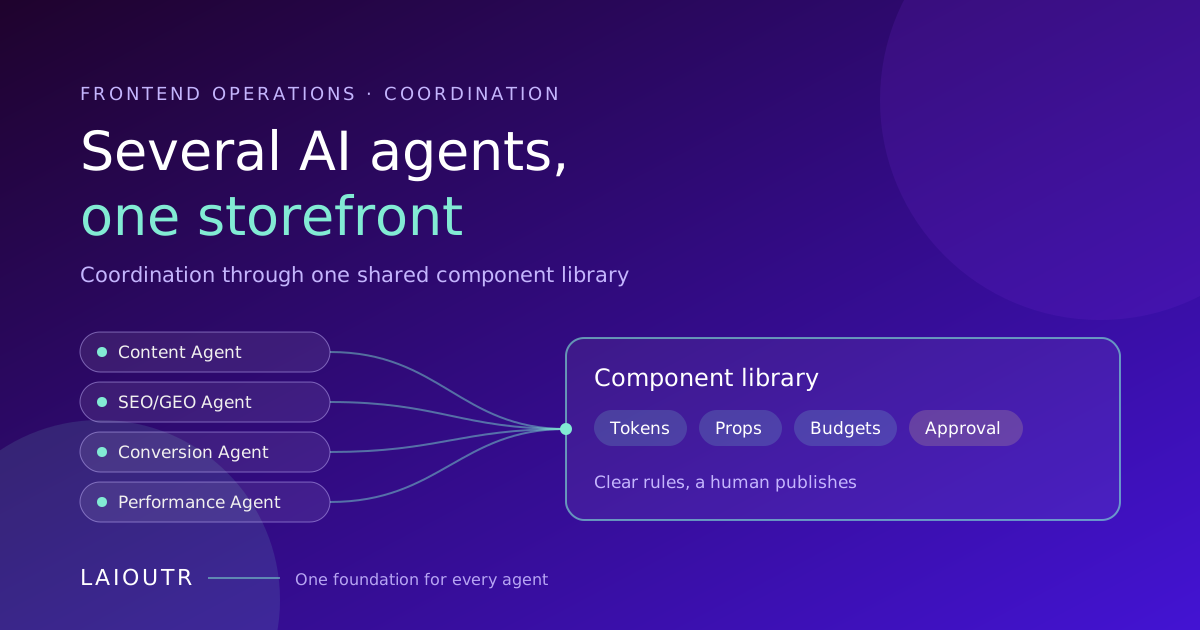Several AI Agents, One Storefront: Coordination Without Collisions
When several AI agents work on the same storefront, conflicts rarely happen between the agents thems…](https://www.laioutr.com/en/blog/frontend-operations-multi-agent-coordination-storefront-2026)
[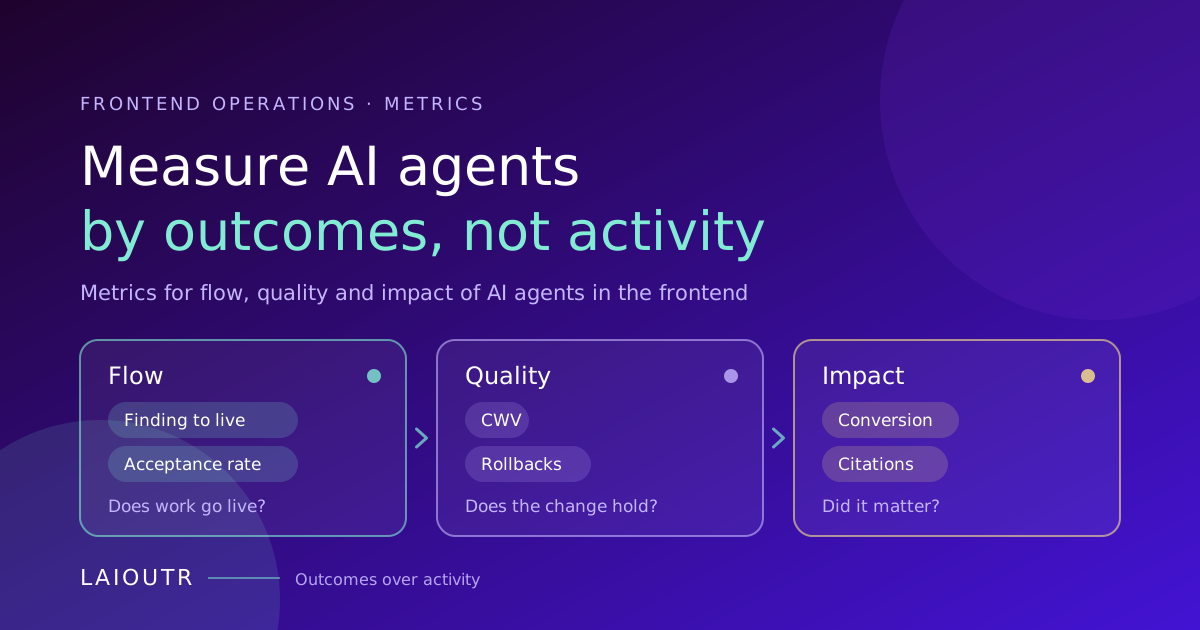Measuring AI Agents by Outcomes: Agentic Frontend Management Metrics
AI agents in the frontend should be measured by outcomes, not by activity. The number of prompts, ge…](https://www.laioutr.com/en/blog/frontend-operations-measuring-ai-agents-outcomes-2026)
[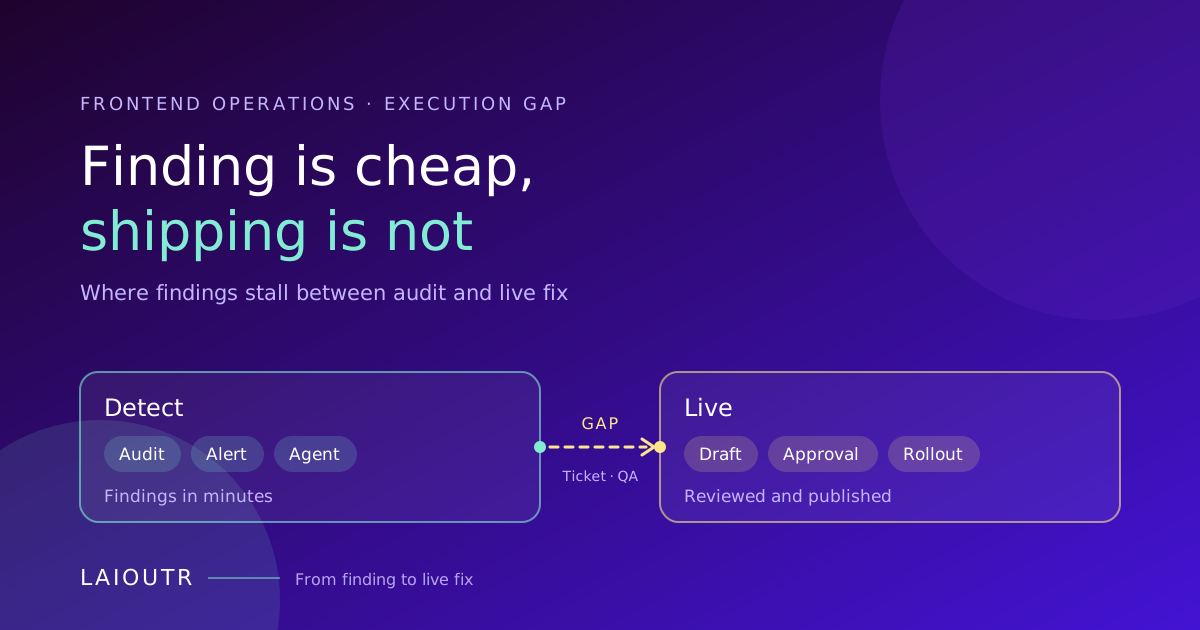The Execution Gap in the Frontend: Finding Is Cheap, Shipping Is Not
The execution gap in the frontend is the time, and the number of handoffs, between "we know wha…](https://www.laioutr.com/en/blog/frontend-operations-execution-gap-detect-vs-deploy-2026)
[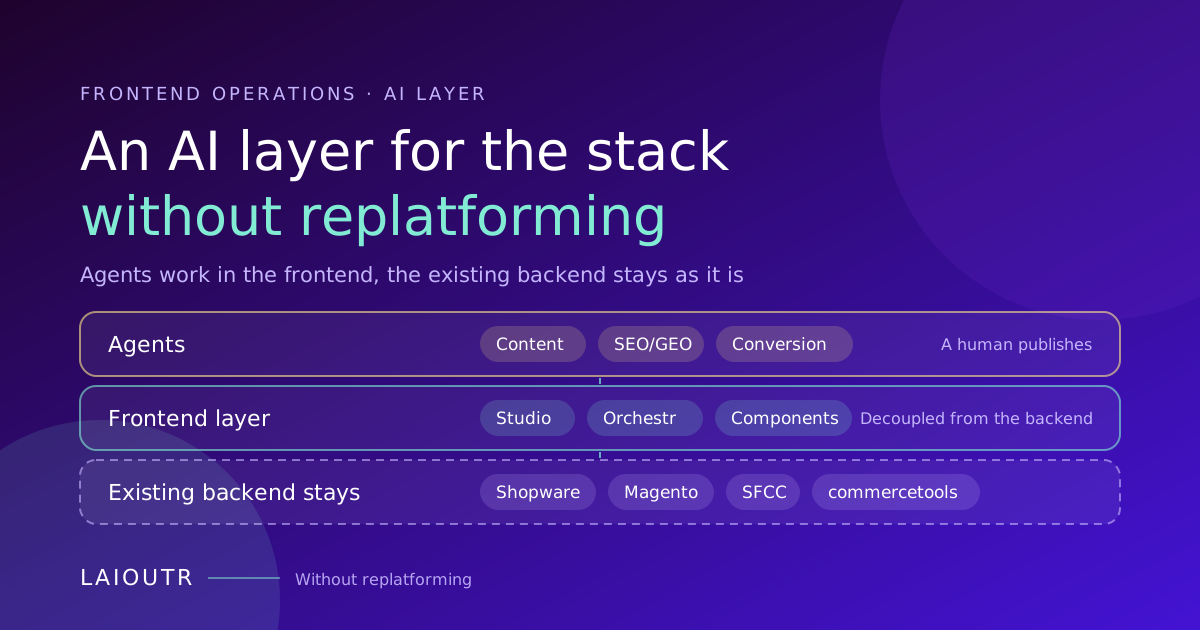Adding an AI Layer to an Existing Commerce Stack Without Replatforming
An AI layer can be added to an existing commerce stack without replacing the shop system. The most p…](https://www.laioutr.com/en/blog/frontend-operations-ai-layer-existing-stack-without-replatforming-2026)
[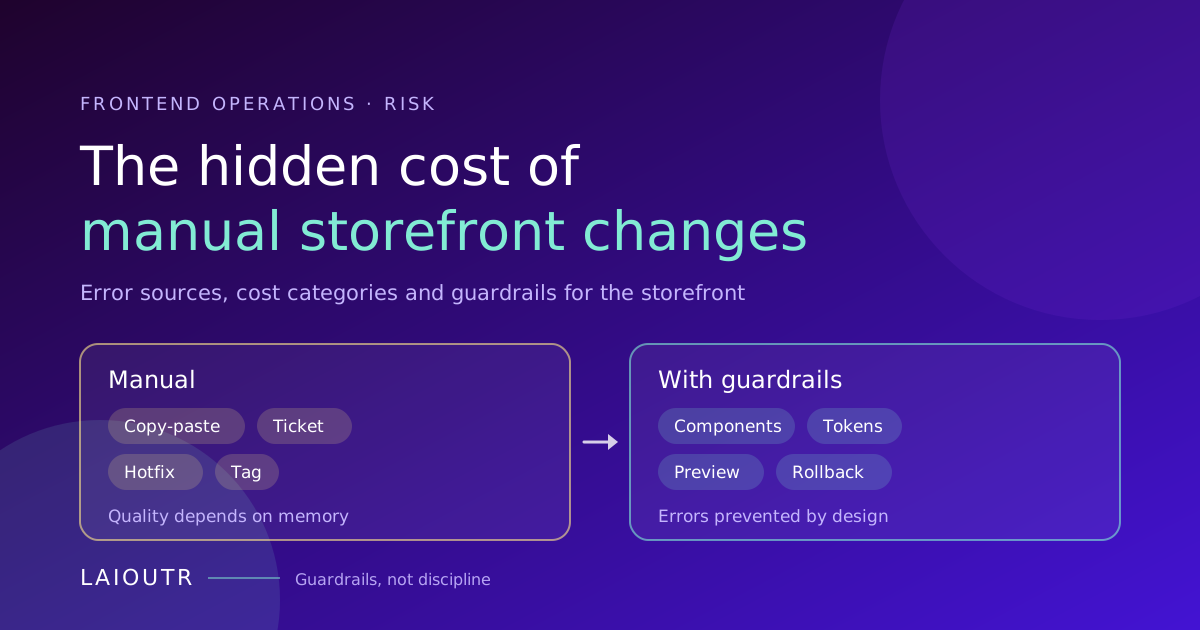The Hidden Cost of Manual Storefront Changes and How to Cut It
Manual frontend changes are the many small edits that keep a storefront running day to day: a new ba…](https://www.laioutr.com/en/blog/frontend-operations-hidden-cost-manual-storefront-changes-2026)
[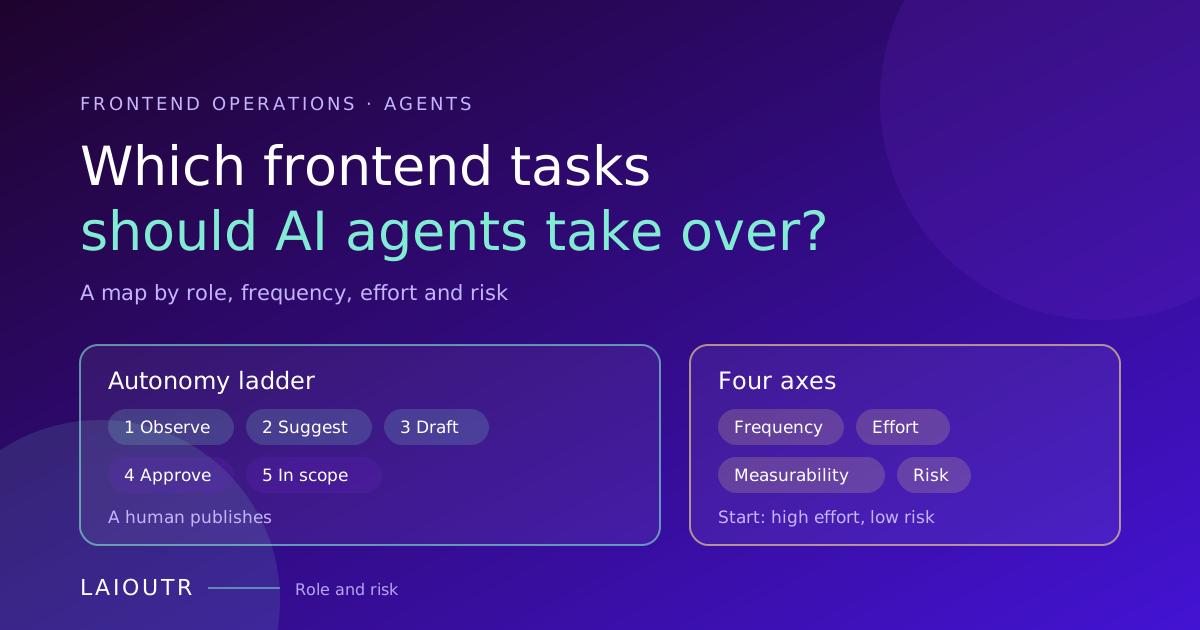Which Frontend Tasks Should AI Agents Take Over? Role and Risk Map
AI agents should first take over the frontend tasks that come up often, involve a lot of manual work…](https://www.laioutr.com/en/blog/frontend-operations-agent-task-map-role-risk-2026)
[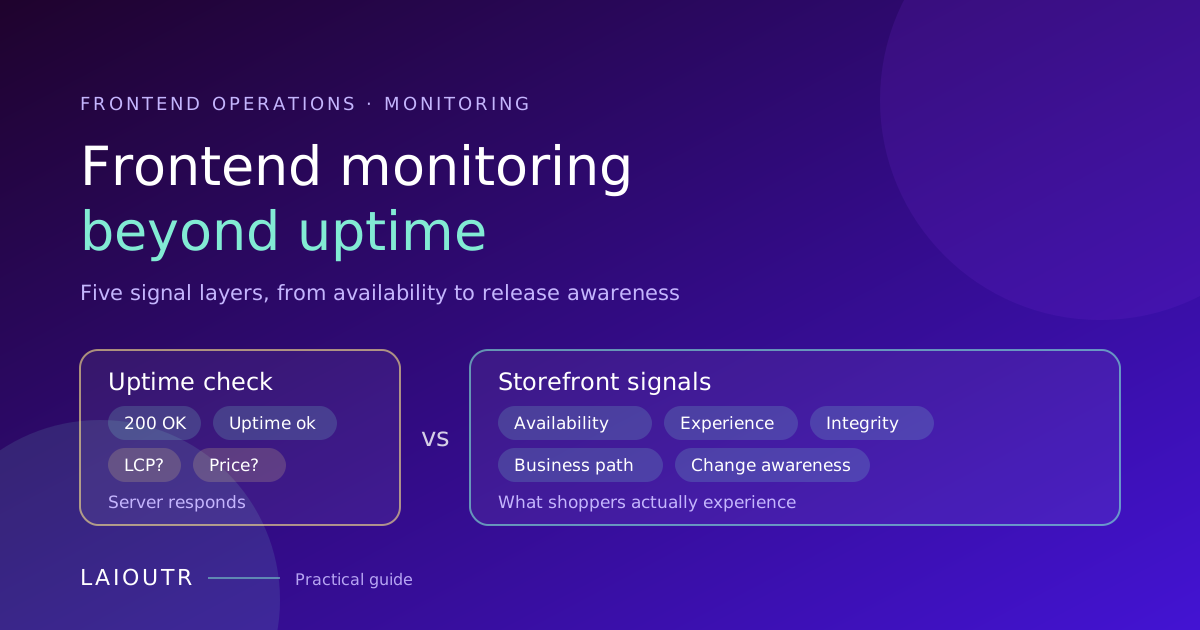Frontend Monitoring Beyond Uptime: Signals a Storefront Needs
Frontend monitoring beyond uptime means checking a storefront not only for availability but for what…](https://www.laioutr.com/en/blog/frontend-operations-monitoring-beyond-uptime-2026)
[Root Cause in the Frontend: When Revenue Drops Start in the Storefront
When revenue or conversion rate drops suddenly, the cause often is not traffic, pricing or the comme…](https://www.laioutr.com/en/blog/frontend-operations-root-cause-revenue-drop-storefront-2026)
[Laioutr Academy Is Live: The Video Manual for Laioutr
Since October 15, 2026, the Laioutr Academy has been live at academy.laioutr.com. It is the user man…](https://www.laioutr.com/en/blog/laioutr-academy-launch-video-manual-certification)
[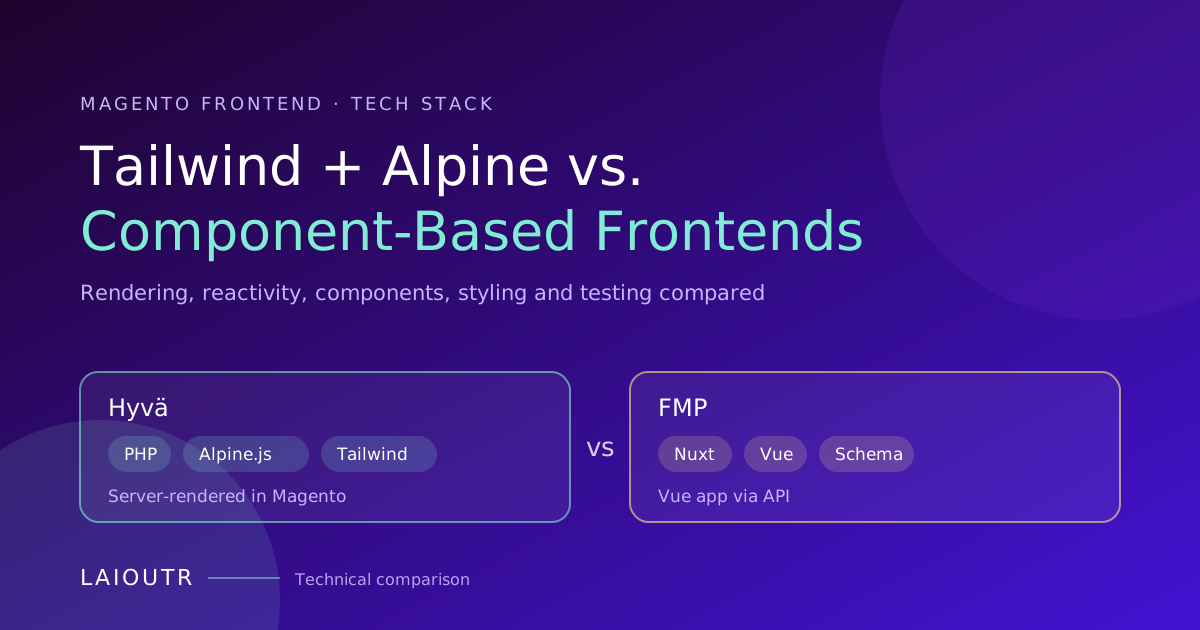Tailwind + Alpine vs. Component-Based Frontends for Magento
Hyvä renders Magento pages on the server with PHP templates and layout XML, adds interactivity throu…](https://www.laioutr.com/en/blog/tailwind-alpine-magento-vs-component-based-frontend-2026)
[OroCommerce Frontend: Out of the Twig and Layouts Bottleneck
The OroCommerce frontend is a server-rendered storefront built from Symfony bundles, OroLayouts and …](https://www.laioutr.com/en/blog/orocommerce-frontend-twig-layouts-bottleneck)
[One Magento Backend, Many Channels: Personalization in Practice
Personalization across web, mobile and voice on a single Magento backend does not start with a featu…](https://www.laioutr.com/en/blog/magento-multichannel-personalization-web-mobile-voice-2026)
[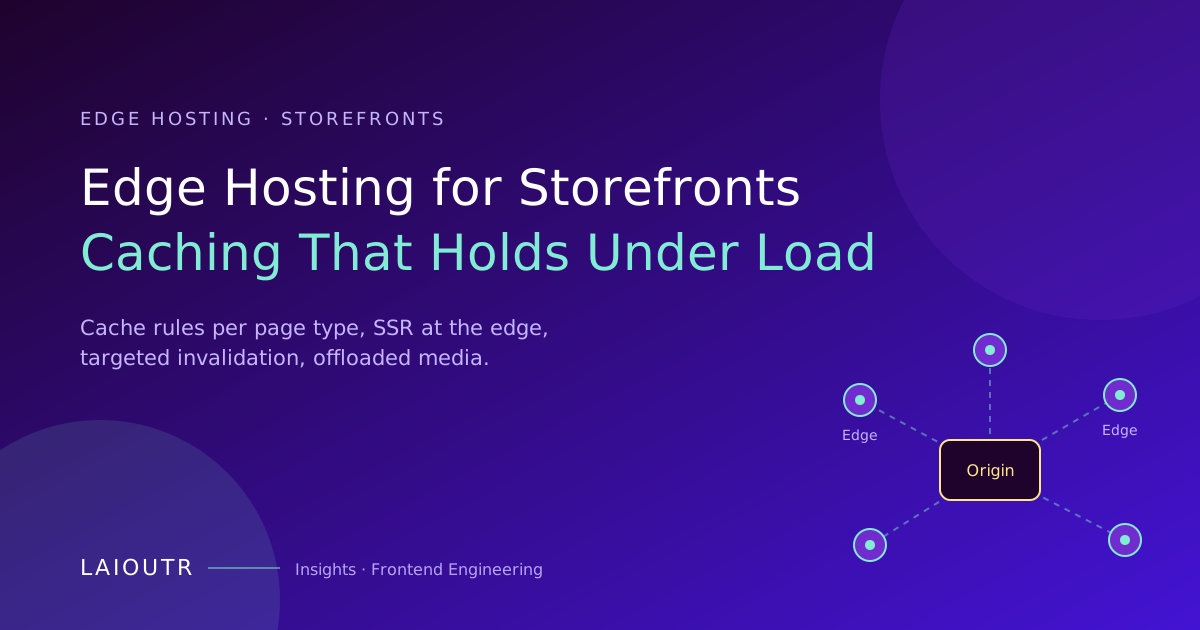Edge Hosting for Storefronts: Caching That Holds Under Peak Load
Edge hosting keeps a storefront fast under load when most requests never reach the origin: pages and…](https://www.laioutr.com/en/blog/edge-hosting-storefronts-peak-traffic-caching-2026)
[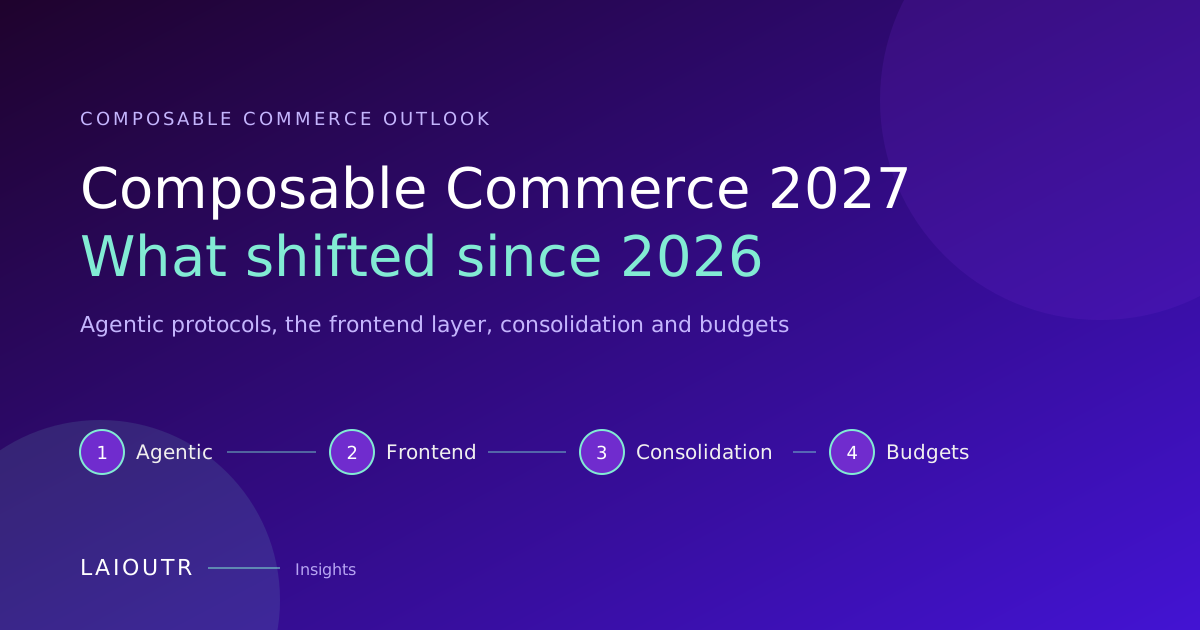Composable Commerce 2027: What Shifted and What Comes Next
Composable commerce enters 2027 with a different agenda than a year ago. The architecture question i…](https://www.laioutr.com/en/blog/composable-commerce-2027-outlook)
[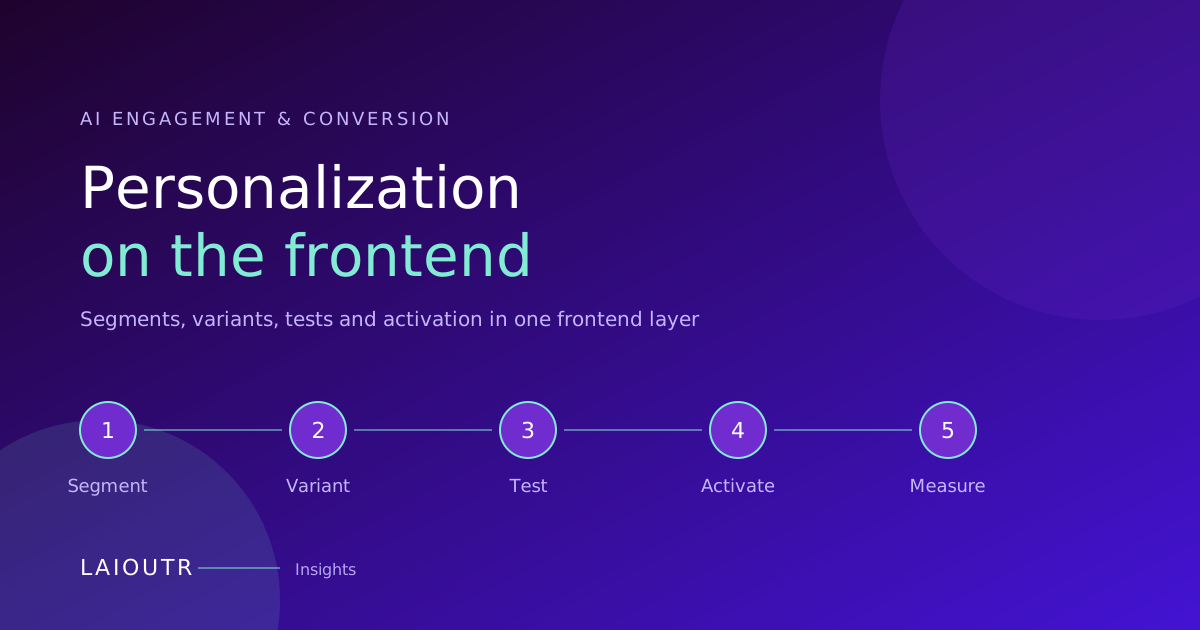AI Engagement and Conversion: Personalization on the Frontend
AI-driven engagement and conversion on the frontend rests on five mechanics: segments decide who see…](https://www.laioutr.com/en/blog/ai-engagement-conversion-frontend-personalization)
## Apps for the Laioutr platform
[View all apps](https://www.laioutr.com/en/apps)
[](https://www.laioutr.com/en/apps/shopify)
Laioutr
[Shopify](https://www.laioutr.com/en/apps/shopify)
Shopify is a commerce platform for selling online and in physical retail.
[](https://www.laioutr.com/en/apps/shopware)
Laioutr
[Shopware](https://www.laioutr.com/en/apps/shopware)
Shopware is a flexible ecommerce platform from Europe for product catalogs and omnichannel commerce.
[](https://www.laioutr.com/en/apps/adobe-commerce)
Laioutr
[Adobe Commerce](https://www.laioutr.com/en/apps/adobe-commerce)
Adobe Commerce is an enterprise commerce platform for complex, global B2C and B2B scenarios.
Planned
[](https://www.laioutr.com/en/apps/b2b-sellers)
Laioutr
[B2Bsellers](https://www.laioutr.com/en/apps/b2b-sellers)
B2B suite for Shopware that turns an online store into a professional B2B commerce platform.
Planned
[](https://www.laioutr.com/en/apps/commerce-layer)
Laioutr
[Commerce Layer](https://www.laioutr.com/en/apps/commerce-layer)
Commerce Layer is a headless commerce platform for making inventory and catalogs available online.
[](https://www.laioutr.com/en/apps/commercetools)
Laioutr
[Commercetools](https://www.laioutr.com/en/apps/commercetools)
Commercetools is a SaaS-based headless ecommerce platform used worldwide.
[](https://www.laioutr.com/en/apps/emporix)
Laioutr
[Emporix](https://www.laioutr.com/en/apps/emporix)
Emporix is a composable, API-first commerce platform for scalable B2B and B2C scenarios.
Planned
[](https://www.laioutr.com/en/apps/hcl-software)
Laioutr
[HCL Software](https://www.laioutr.com/en/apps/hcl-software)
Enterprise suite for digital commerce and experience with extensive configurability.
Planned
[](https://www.laioutr.com/en/apps/intershop)
Laioutr
[Intershop](https://www.laioutr.com/en/apps/intershop)
Enterprise commerce platform for complex B2B and B2C business models.
Planned
[](https://www.laioutr.com/en/apps/magento-2)
Laioutr
[Magento 2](https://www.laioutr.com/en/apps/magento-2)
Widely used, extensible commerce platform for B2C and B2B scenarios.
[](https://www.laioutr.com/en/apps/oxid-eshop)
Laioutr
[OXID eShop](https://www.laioutr.com/en/apps/oxid-eshop)
OXID eShop is an extensible commerce platform for complex B2B and B2C requirements.
Planned
[](https://www.laioutr.com/en/apps/patchworks)
Laioutr
[Patchworks](https://www.laioutr.com/en/apps/patchworks)
Patchworks is a low-code iPaaS that connects ecommerce, ERP, WMS, 3PL, and marketplaces.
Planned
[](https://www.laioutr.com/en/apps/PrestaShop)
Laioutr
[Prestashop](https://www.laioutr.com/en/apps/PrestaShop)
Open-source commerce platform for small and midsize merchants in Europe and beyond.
Planned
[](https://www.laioutr.com/en/apps/saleor)
Laioutr
[Saleor](https://www.laioutr.com/en/apps/saleor)
Open-source, API-first commerce platform built on GraphQL for custom storefronts.
Planned
[](https://www.laioutr.com/en/apps/salesforce-commerce-cloud)
Laioutr
[Salesforce Commerce Cloud](https://www.laioutr.com/en/apps/salesforce-commerce-cloud)
Salesforce Commerce Cloud is a cloud-based enterprise commerce platform for businesses of any size.
Planned
[](https://www.laioutr.com/en/apps/sap-commerce-cloud)
Laioutr
[SAP Commerce Cloud](https://www.laioutr.com/en/apps/sap-commerce-cloud)
Enterprise commerce platform for complex catalogs, pricing models, and omnichannel journeys.
Planned
[](https://www.laioutr.com/en/apps/scayle)
Laioutr
[Scayle](https://www.laioutr.com/en/apps/scayle)
SCAYLE is a commerce engine that helps brands and retailers scale their business.
Planned
[](https://www.laioutr.com/en/apps/spryker)
Laioutr
[Spryker](https://www.laioutr.com/en/apps/spryker)
Composable commerce platform for sophisticated B2B and B2C business models.
[](https://www.laioutr.com/en/apps/sylius)
Laioutr
[Sylius](https://www.laioutr.com/en/apps/sylius)
Sylius is a developer-friendly ecommerce framework for B2C and B2B shopping experiences.
Planned
[](https://www.laioutr.com/en/apps/vendure)
Laioutr
[Vendure](https://www.laioutr.com/en/apps/vendure)
Vendure is a headless commerce platform for businesses with complex requirements.
Coming Soon
[](https://www.laioutr.com/en/apps/vtex)
Laioutr
[VTEX](https://www.laioutr.com/en/apps/vtex)
Cloud-native, composable commerce platform for B2B and B2C at scale.
Planned
[](https://www.laioutr.com/en/apps/websale)
Laioutr
[Websale](https://www.laioutr.com/en/apps/websale)
Stable, enterprise-ready commerce backend for complex retail environments.

Strategy call
## The frontend as a control layer
A conversation about stack, roadmap and replatforming scenario. The outcome: a clear picture of how Laioutr fits, what it costs and how fast the go-live can happen.
*"After 30 minutes, we knew Laioutr makes our replatforming feasible."*
*Daniel B., CEO,* [*hygibox.de*](https://hygibox.de)
[Book a demo](https://www.laioutr.com/en/contact)
## Structured Data
```json
{
"@context": "https://schema.org",
"@graph": [
{
"@type": "Organization",
"@id": "https://www.laioutr.com/#identity",
"name": "Laioutr",
"legalName": "Laioutr GmbH",
"url": "https://www.laioutr.com/",
"logo": {
"@type": "ImageObject",
"url": "https://www.laioutr.com/laioutr-logo.png",
"width": 400,
"height": 400
},
"email": "info@laioutr.com",
"telephone": "+49 30 75435715",
"address": {
"@type": "PostalAddress",
"streetAddress": "Münchweilersteig 5",
"postalCode": "12559",
"addressLocality": "Berlin",
"addressCountry": "DE"
},
"vatID": "DE450905846",
"sameAs": [
"https://www.linkedin.com/company/laioutr",
"https://www.youtube.com/@Laioutr",
"https://x.com/laioutr"
]
},
{
"@type": "WebSite",
"@id": "https://www.laioutr.com/en/#website",
"url": "https://www.laioutr.com/en/",
"name": "Laioutr",
"inLanguage": "en",
"publisher": {
"@id": "https://www.laioutr.com/#identity"
}
},
{
"@type": "BlogPosting",
"@id": "https://www.laioutr.com/en/blog/generative-engine-optimization-why-geo-will-decide-brand-visibility-in-2026#article",
"headline": "Generative Engine Optimization: Why GEO Will Decide Brand Visibility in 2026",
"description": "How AI answer engines replace the ten blue links with one synthesized response, and why GEO decides brand visibility in 2026.",
"image": [
"https://eu-west-2.graphassets.com/cmii2mlqi0dux06l5543v7nkc/cmov1tuqelbrt07mqsas1g1uf"
],
"datePublished": "2026-06-30T17:34:34.691385+00:00",
"dateModified": "2026-06-30T17:34:34.357389+00:00",
"inLanguage": "en",
"articleSection": "Insights",
"keywords": "Industry & Trends",
"author": {
"@type": "Person",
"name": "Marcel Thiesies",
"jobTitle": "Co-Founder & CEO, Laioutr",
"image": "https://eu-west-2.graphassets.com/cmii2mlqi0dux06l5543v7nkc/cmj01b962364n07lb0iguvts5"
},
"publisher": {
"@id": "https://www.laioutr.com/#identity"
},
"mainEntityOfPage": {
"@id": "https://www.laioutr.com/en/blog/generative-engine-optimization-why-geo-will-decide-brand-visibility-in-2026#webpage"
},
"isPartOf": {
"@id": "https://www.laioutr.com/en/#website"
}
},
{
"@type": "WebPage",
"@id": "https://www.laioutr.com/en/blog/generative-engine-optimization-why-geo-will-decide-brand-visibility-in-2026#webpage",
"url": "https://www.laioutr.com/en/blog/generative-engine-optimization-why-geo-will-decide-brand-visibility-in-2026",
"name": "Generative Engine Optimization: Why GEO Will Decide Brand Visibility in 2026",
"description": "How AI answer engines replace the ten blue links with one synthesized response, and why GEO decides brand visibility in 2026.",
"inLanguage": "en",
"isPartOf": {
"@id": "https://www.laioutr.com/en/#website"
},
"breadcrumb": {
"@id": "https://www.laioutr.com/en/blog/generative-engine-optimization-why-geo-will-decide-brand-visibility-in-2026#breadcrumb"
},
"primaryImageOfPage": {
"@type": "ImageObject",
"url": "https://eu-west-2.graphassets.com/cmii2mlqi0dux06l5543v7nkc/cmov1tuqelbrt07mqsas1g1uf"
},
"datePublished": "2026-06-30T17:34:34.691385+00:00",
"dateModified": "2026-06-30T17:34:34.357389+00:00",
"mainEntity": {
"@id": "https://www.laioutr.com/en/blog/generative-engine-optimization-why-geo-will-decide-brand-visibility-in-2026#article"
}
},
{
"@type": "BreadcrumbList",
"@id": "https://www.laioutr.com/en/blog/generative-engine-optimization-why-geo-will-decide-brand-visibility-in-2026#breadcrumb",
"itemListElement": [
{
"@type": "ListItem",
"position": 1,
"name": "Laioutr",
"item": "https://www.laioutr.com/en/"
},
{
"@type": "ListItem",
"position": 2,
"name": "Insights",
"item": "https://www.laioutr.com/en/blogs/insights"
},
{
"@type": "ListItem",
"position": 3,
"name": "Generative Engine Optimization: Why GEO Will Decide Brand Visibility in 2026"
}
]
}
]
}
```