---
title: "Personalization Without Breaking Speed"
canonical_url: "https://www.laioutr.com/en/blog/marketer-driven-personalization"
locale: en
meta:
description: "A composable commerce approach to building personalization without sacrificing the performance engineers protect."
"og:description": "A composable commerce approach to building personalization without sacrificing the performance engineers protect."
"og:title": "Personalization Without Breaking Speed"
---

# Building Personalization Without Breaking Speed: A Composable Commerce Approach
Table of contents
1. [1.The Performance Penalty Problem](#the-performance-penalty-problem)
2. [2.Separating Configuration from Execution](#separating-configuration-from-execution)
3. [3.Moving Execution to the Edge](#moving-execution-to-the-edge)
4. [4.Empowering Marketers Without Technical Debt](#empowering-marketers-without-technical-debt)
5. [5.The Integration Complexity Worth Embracing](#the-integration-complexity-worth-embracing)
6. [6.Building Your Personalization Foundation](#building-your-personalization-foundation)
7. [7.The Business Case Is Clear](#the-business-case-is-clear)
8. [8.The Future Is Composable and Fast](#the-future-is-composable-and-fast)
1. [1.The Performance Penalty Problem](#the-performance-penalty-problem)
2. [2.Separating Configuration from Execution](#separating-configuration-from-execution)
3. [3.Moving Execution to the Edge](#moving-execution-to-the-edge)
4. [4.Empowering Marketers Without Technical Debt](#empowering-marketers-without-technical-debt)
5. [5.The Integration Complexity Worth Embracing](#the-integration-complexity-worth-embracing)
6. [6.Building Your Personalization Foundation](#building-your-personalization-foundation)
7. [7.The Business Case Is Clear](#the-business-case-is-clear)
8. [8.The Future Is Composable and Fast](#the-future-is-composable-and-fast)
There's a fundamental tension at the heart of modern digital commerce that has frustrated technology leaders and marketers for years. Business teams want to deliver individualized experiences that drive conversion rates and customer loyalty. Meanwhile, performance engineers obsess over milliseconds, knowing that every second of latency costs revenue.
For too long, these competing demands have felt irreconcilable. Implement personalization and watch your Core Web Vitals deteriorate. Optimize for speed and watch your personalization capabilities shrivel. Many organizations have resigned themselves to this trade-off as an unavoidable cost of doing business.
At Laioutr, we focus on helping brands navigate this exact challenge. In our experience with retail, financial services, and B2B marketplace teams, we've found that the trade-off between speed and personalization is not actually inevitable. It's the product of outdated architecture patterns.
The path forward requires rethinking how personalization gets designed, built, and executed in composable commerce systems.
## The Performance Penalty Problem
Let's start with why personalization traditionally tanks performance. In legacy monolithic systems, personalization logic lives in the application layer. A visitor lands on your homepage. Their browser sends a request to your origin server. The server needs to:
1. Identify the visitor (checking cookies, running recognition algorithms)
2. Query databases for their history, preferences, and segment membership
3. Evaluate business rules and personalization logic
4. Retrieve personalized content variants
5. Render the response
All of this happens before your visitor sees a single pixel. These round-trips introduce latency that compounds as your personalization rules grow more sophisticated.
In a world where visitor patience is measured in single-digit seconds, this approach becomes a performance bottleneck. Studies consistently show that delays of 100-500ms can meaningfully impact conversion rates, especially in competitive categories like retail and financial services.
The fundamental problem is architectural. Personalization has been treated as part of the core application request-response cycle rather than as a separate concern that could be optimized independently.
## Separating Configuration from Execution
The breakthrough comes from a simple insight: personalization has two distinct phases that don't need to happen on the same infrastructure or at the same time.
The first phase is configuration. This is where marketing and business teams work. They define audience segments, create rules, choose content variants, and set business logic. Crucially, this is infrequent. A marketer might update personalization rules a handful of times per week or month. This configuration work should absolutely happen in tools that empower non-technical users and integrate with their existing martech stack.
The second phase is execution. This is where every visitor interaction happens, thousands of times per second. A request arrives, personalization rules get evaluated, and a decision gets made about which content variant to serve. This is where performance becomes critical.
By decoupling these two phases, you can optimize each independently. Let your marketing team work in rich, visual tools. Let your engineers optimize the execution layer with aggressive performance tuning.
This is the architectural foundation of composable commerce. Individual systems (discovery, personalization, content, commerce) operate autonomously, with integration happening at defined boundaries rather than through monolithic application logic.
## Moving Execution to the Edge
Once you've decoupled configuration from execution, the next optimization becomes possible: moving execution to edge infrastructure.
Content Delivery Networks (CDNs) have evolved dramatically over the past five years. Modern edge platforms don't just cache static assets anymore. They can run code, access key-value stores, make intelligent routing decisions, and generate dynamic content at locations distributed globally.
By pushing personalization logic to edge locations, you eliminate the round-trip to your origin server. Instead of a visitor's request traveling from Brazil to your servers in Frankfurt, getting personalized, and traveling back to Brazil, personalization happens right at the edge node closest to that visitor.
The implications are profound. Where monolithic systems might add 200-500ms to your response time through personalization logic, edge-based execution can add mere milliseconds. You're no longer trading performance for sophistication.
The technical requirements are straightforward. Your personalization system needs to:
1. Pre-compute or cache audience segment membership and rules at the edge
2. Export personalization configurations in a format that edge runtimes can understand
3. Support API-driven approaches to content management and variant selection
4. Generate HTML or modify responses at edge locations before they reach visitors
This is feasible today with modern edge platforms, and it enables you to have both sophisticated personalization and world-class performance.
## Empowering Marketers Without Technical Debt
One concern we hear frequently: won't decoupling and edge-based architecture limit what marketers can do?
The answer is no, provided you choose the right tools and integrations. Marketers should work in interfaces designed for their needs. Visual rule builders, drag-and-drop content composition, integration with data platforms they already use (CDP, analytics, CRM). These tools should abstract away the technical complexity of edge infrastructure.
The technical team's job is to ensure that whatever the marketer configures gets properly exported and deployed to the edge execution layer. This is an integration problem, not a capability limitation.
In practice, we've seen organizations expand their personalization sophistication significantly after moving to composable architectures. Because performance is no longer a constraint, they can afford more granular segments, more complex rules, and more frequent testing and iteration.
A fashion retailer we worked with went from having 12 major personalization variants (limited by performance concerns) to managing over 200 active personalization rules. Their average page load time actually improved while their conversion rate lifted 11% within three months.
A B2B SaaS company shifted from batch-based personalization (updates every 24 hours) to real-time personalization based on current behavior and engagement signals. Their sales team reported dramatically higher qualification rates because prospects saw relevant content immediately upon landing.
These aren't marginal improvements. They're transformative changes in what's possible when architecture no longer constrains vision.
## The Integration Complexity Worth Embracing
Moving to composable architecture with edge-based personalization does introduce integration complexity. You need to think about data flow between systems, synchronization patterns, and edge deployment pipelines.
This complexity is worth embracing because it's the right kind of complexity. It's architectural complexity that you manage once, then benefit from indefinitely. It's not the kind of complexity that compounds with every new feature or every new marketing tool.
In traditional monolithic systems, complexity accumulates silently. Each personalization rule adds overhead to your application server. Each new variant requires more logic, more database queries, more rendering cycles. This kind of complexity is hidden, hard to reason about, and causes performance to deteriorate unpredictably.
Composable architecture makes complexity visible and manageable. You know exactly what's happening in each layer. You can measure and optimize independently. You can replace a tool or service without affecting others.
## Building Your Personalization Foundation
If you're interested in moving toward composable architecture for personalization, the journey typically has distinct phases.
First, assess your current personalization approach. How much is powered by monolithic application logic versus external services? How frequently do marketing teams need to make changes? What are your performance bottlenecks?
Second, identify quick wins. Often there are specific personalization use cases that are performance-sensitive and could be extracted to edge infrastructure. Start there rather than attempting a wholesale architectural rewrite.
Third, establish the integration backbone. This typically means data pipelines that keep your edge infrastructure synchronized with your authoritative data sources (CDPs, analytics platforms, content repositories). Get this right and the subsequent work becomes dramatically easier.
Finally, migrate incrementally. Move personalization rules and variants to the new system in phases. Maintain parallel execution while you build confidence. Run comparative testing to validate that the new approach performs better.
This phased approach reduces risk while building organizational capability with the new architecture.
## The Business Case Is Clear
The financial impact of improving both personalization and performance simultaneously is substantial. Conversion rate improvements typically range from 5-20% depending on your industry and baseline. Performance improvements reduce page abandonment, which shows up clearly in your funnel metrics.
For a high-traffic store, reducing page load time by 400ms (for example through edge-based personalization) can prevent enough cart abandonment to generate substantial additional annual revenue. That's not profit improvement; that's incremental revenue from engineering work.
Equally important is organizational impact. When marketers can iterate on personalization strategies without waiting for engineering resources, time-to-insight accelerates. When engineers can optimize infrastructure without consulting dozens of business stakeholders, velocity improves. Composable architecture creates organizational clarity by removing friction points.
## The Future Is Composable and Fast
The personalization paradox we described at the beginning is not a paradox at all when you approach it with composable architecture. Speed and sophistication are not trade-offs; they're the natural outcome of separating concerns and optimizing each appropriately.
The organizations winning in digital commerce today are not the ones making do with monolithic architectures. They're the ones building on composable foundations that let them move faster, iterate more frequently, and deliver experiences that convert.
Your customers expect personalized experiences delivered with exceptional speed. Composable architecture is how you deliver both. The question is not whether you need to move in this direction, but how quickly you can get there.
If you're thinking about modernizing your personalization approach, Laioutr can help you navigate the transition. We've guided organizations through this transformation and we know the patterns, pitfalls, and opportunities that emerge along the way.
The future of digital commerce is composable, performant, and personalized. And it's available to your organization today.
### **Related Insights**
- [Building Your E-commerce Personalization Framework: A Composable Commerce Approach](https://www.laioutr.com/en/blog/building-your-e-commerce-personalization-framework-a-composable-commerce-approach)
- [Tactical Personalization in Composable Commerce: Building High-Impact Experiences Without Complexity](https://www.laioutr.com/en/blog/tactical-personalization-strategy)
### **More from the Laioutr Platform**
- [Composable Digital Experience Platform](https://www.laioutr.com/en/composable-digital-experience-platform)
- [Agentic Frontend Management Platform](https://www.laioutr.com/en/agentic-frontend-management-platform)
- [Personalization](https://www.laioutr.com/en/product/personalization)
- [Composable Visual Page Builder](https://www.laioutr.com/en/composable-visual-page-builder)
---
Share this article
[Share on Facebook](https://www.facebook.com/sharer/sharer.php?u=https%3A%2F%2Fwww.laioutr.com%2Fen%2Fblog%2Fmarketer-driven-personalization) [Share on X](https://x.com/intent/post?url=https%3A%2F%2Fwww.laioutr.com%2Fen%2Fblog%2Fmarketer-driven-personalization&text=) [Share on LinkedIn](https://www.linkedin.com/sharing/share-offsite/?url=https%3A%2F%2Fwww.laioutr.com%2Fen%2Fblog%2Fmarketer-driven-personalization) [Share on Pinterest](https://pinterest.com/pin/create/button/?url=https%3A%2F%2Fwww.laioutr.com%2Fen%2Fblog%2Fmarketer-driven-personalization&description=) [Share via email](mailto:?subject=&body=%0A%0Ahttps%3A%2F%2Fwww.laioutr.com%2Fen%2Fblog%2Fmarketer-driven-personalization)
## More articles on frontend and headless
Practical know-how for frontend development, smart agents, and headless
[To the blog](https://www.laioutr.com/en/blogs/insights)
[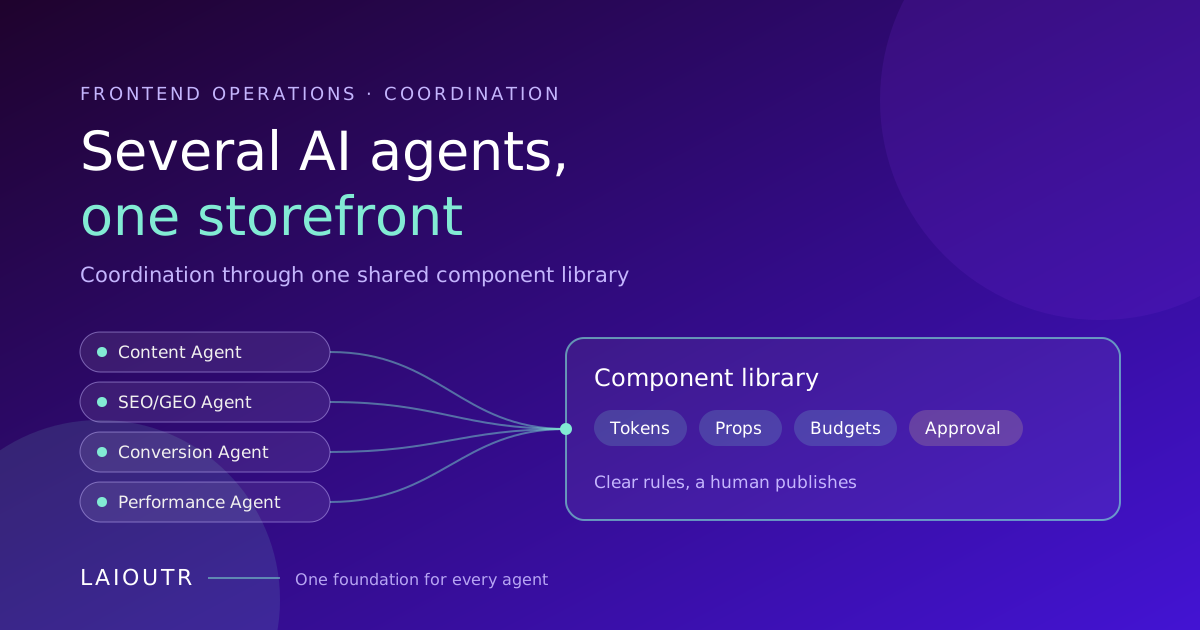Several AI Agents, One Storefront: Coordination Without Collisions
When several AI agents work on the same storefront, conflicts rarely happen between the agents thems…](https://www.laioutr.com/en/blog/frontend-operations-multi-agent-coordination-storefront-2026)
[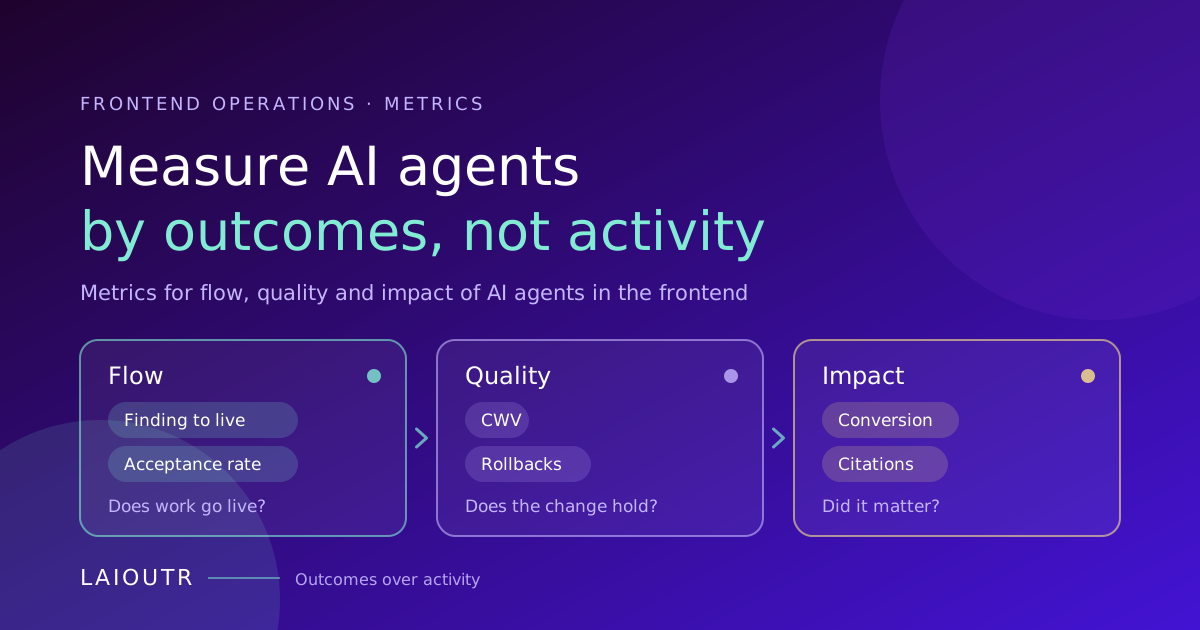Measuring AI Agents by Outcomes: Agentic Frontend Management Metrics
AI agents in the frontend should be measured by outcomes, not by activity. The number of prompts, ge…](https://www.laioutr.com/en/blog/frontend-operations-measuring-ai-agents-outcomes-2026)
[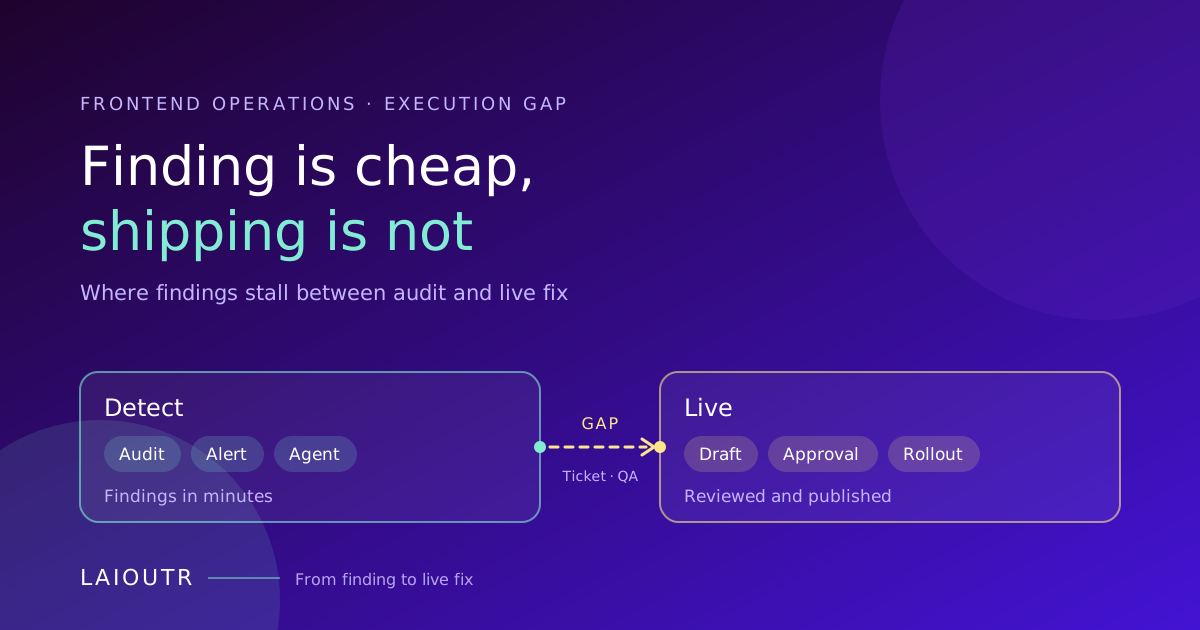The Execution Gap in the Frontend: Finding Is Cheap, Shipping Is Not
The execution gap in the frontend is the time, and the number of handoffs, between "we know wha…](https://www.laioutr.com/en/blog/frontend-operations-execution-gap-detect-vs-deploy-2026)
[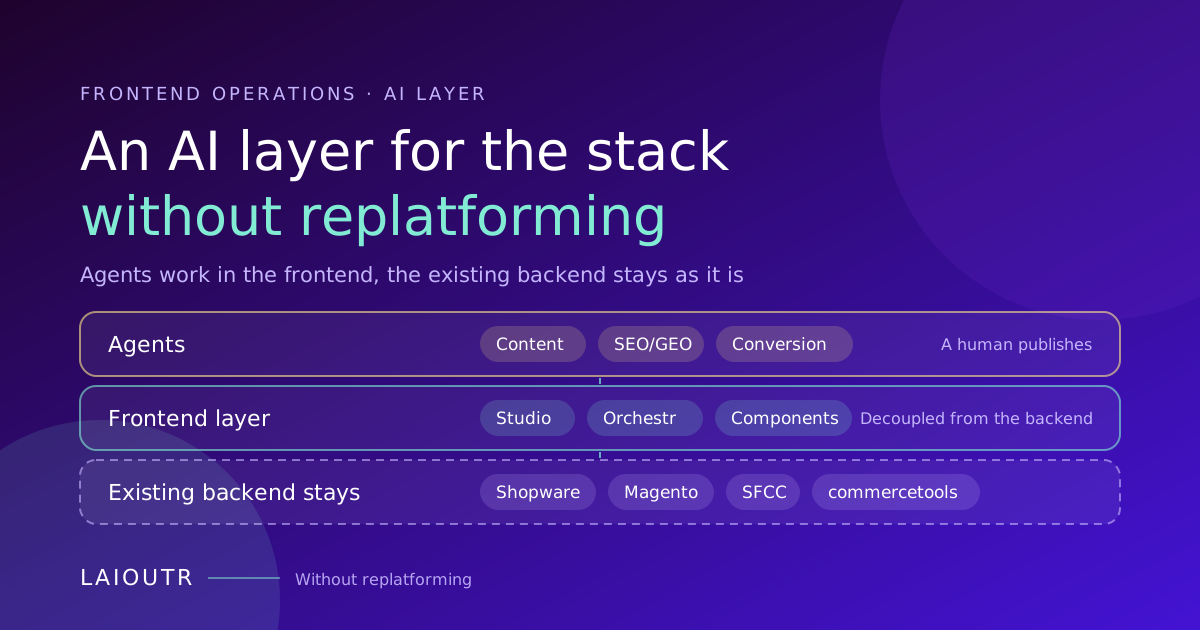Adding an AI Layer to an Existing Commerce Stack Without Replatforming
An AI layer can be added to an existing commerce stack without replacing the shop system. The most p…](https://www.laioutr.com/en/blog/frontend-operations-ai-layer-existing-stack-without-replatforming-2026)
[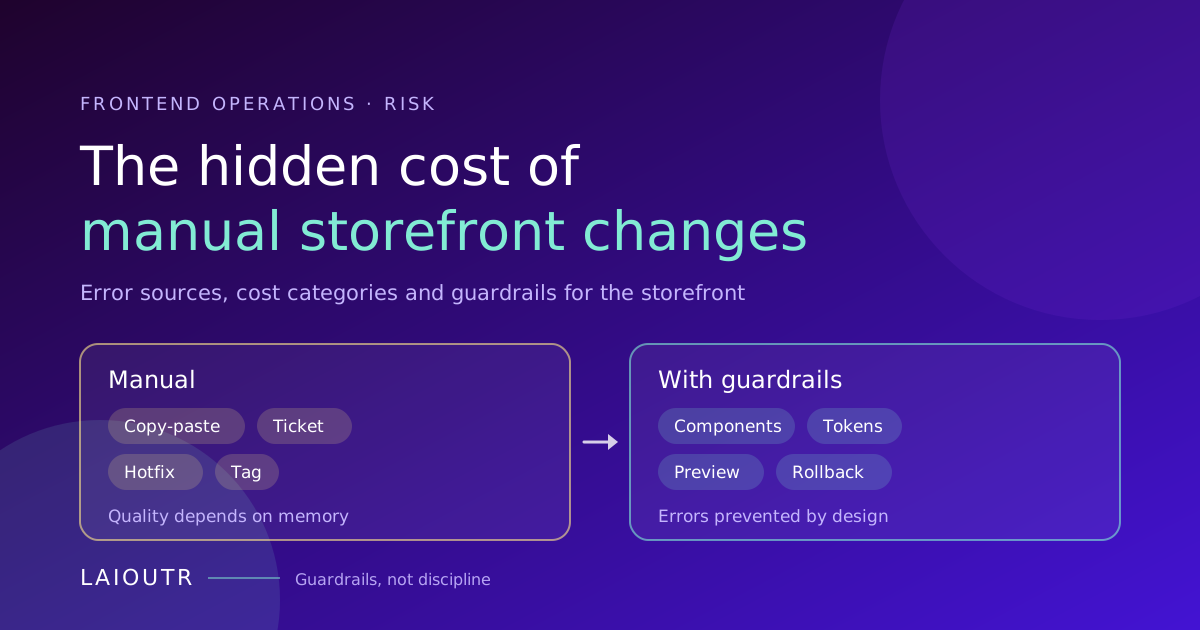The Hidden Cost of Manual Storefront Changes and How to Cut It
Manual frontend changes are the many small edits that keep a storefront running day to day: a new ba…](https://www.laioutr.com/en/blog/frontend-operations-hidden-cost-manual-storefront-changes-2026)
[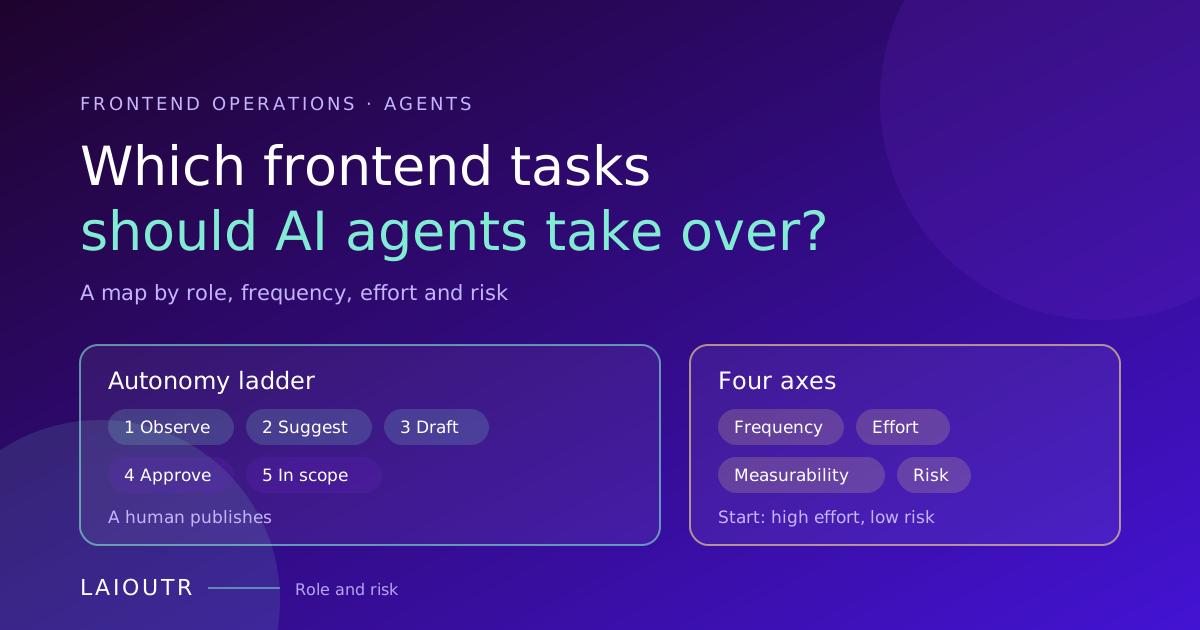Which Frontend Tasks Should AI Agents Take Over? Role and Risk Map
AI agents should first take over the frontend tasks that come up often, involve a lot of manual work…](https://www.laioutr.com/en/blog/frontend-operations-agent-task-map-role-risk-2026)
[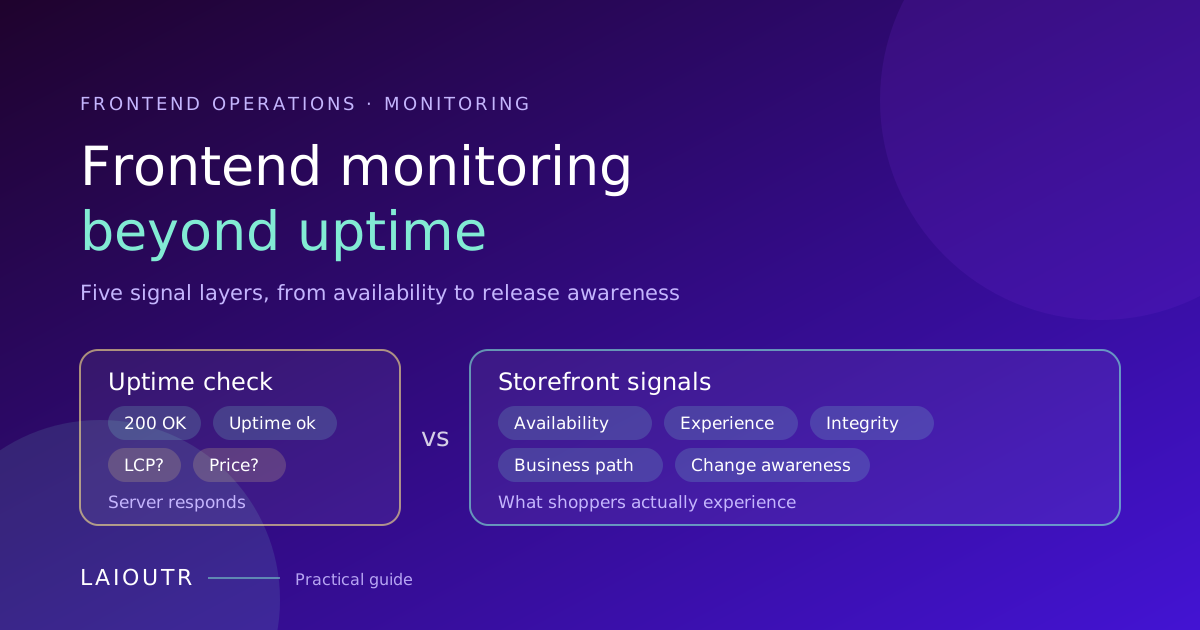Frontend Monitoring Beyond Uptime: Signals a Storefront Needs
Frontend monitoring beyond uptime means checking a storefront not only for availability but for what…](https://www.laioutr.com/en/blog/frontend-operations-monitoring-beyond-uptime-2026)
[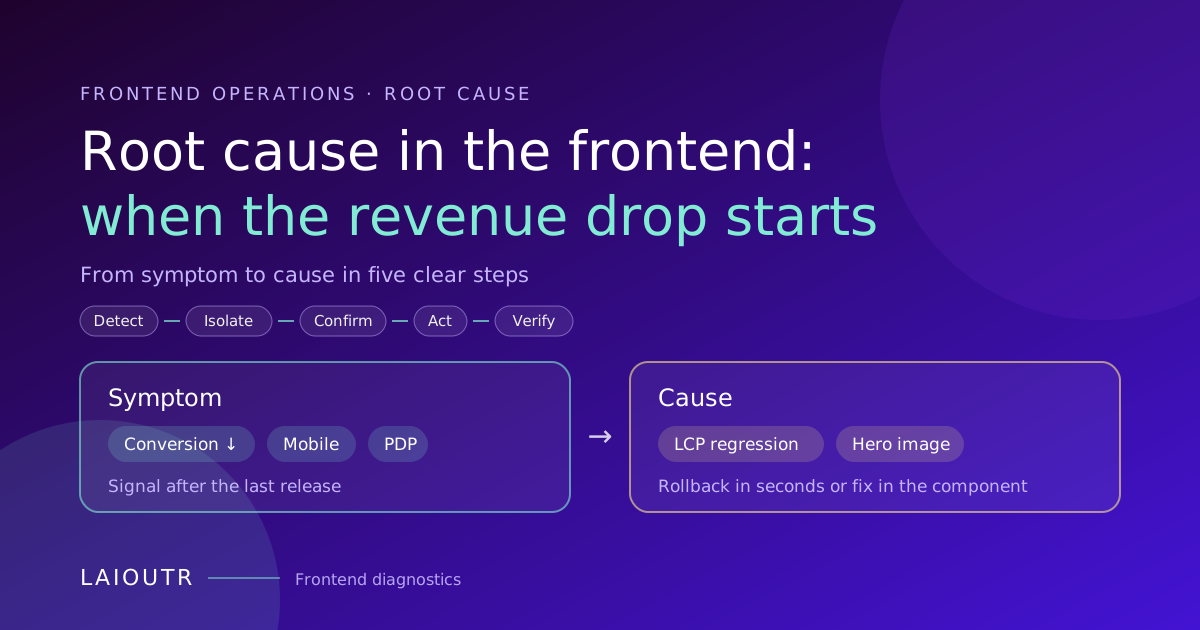Root Cause in the Frontend: When Revenue Drops Start in the Storefront
When revenue or conversion rate drops suddenly, the cause often is not traffic, pricing or the comme…](https://www.laioutr.com/en/blog/frontend-operations-root-cause-revenue-drop-storefront-2026)
[Laioutr Academy Is Live: The Video Manual for Laioutr
Since October 15, 2026, the Laioutr Academy has been live at academy.laioutr.com. It is the user man…](https://www.laioutr.com/en/blog/laioutr-academy-launch-video-manual-certification)
[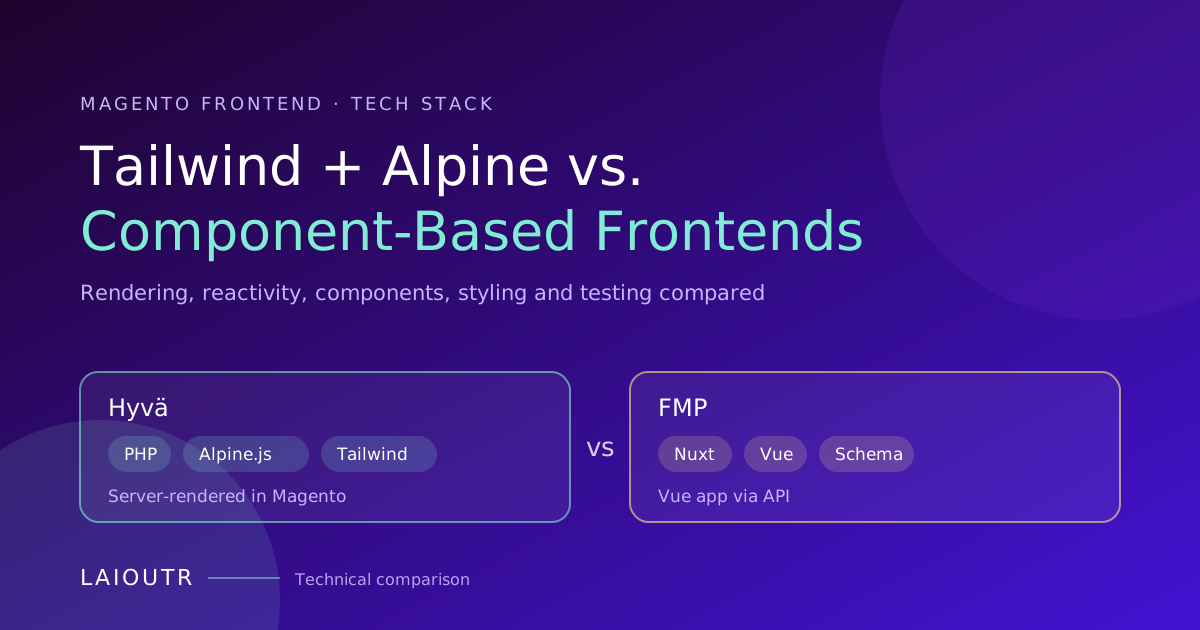Tailwind + Alpine vs. Component-Based Frontends for Magento
Hyvä renders Magento pages on the server with PHP templates and layout XML, adds interactivity throu…](https://www.laioutr.com/en/blog/tailwind-alpine-magento-vs-component-based-frontend-2026)
[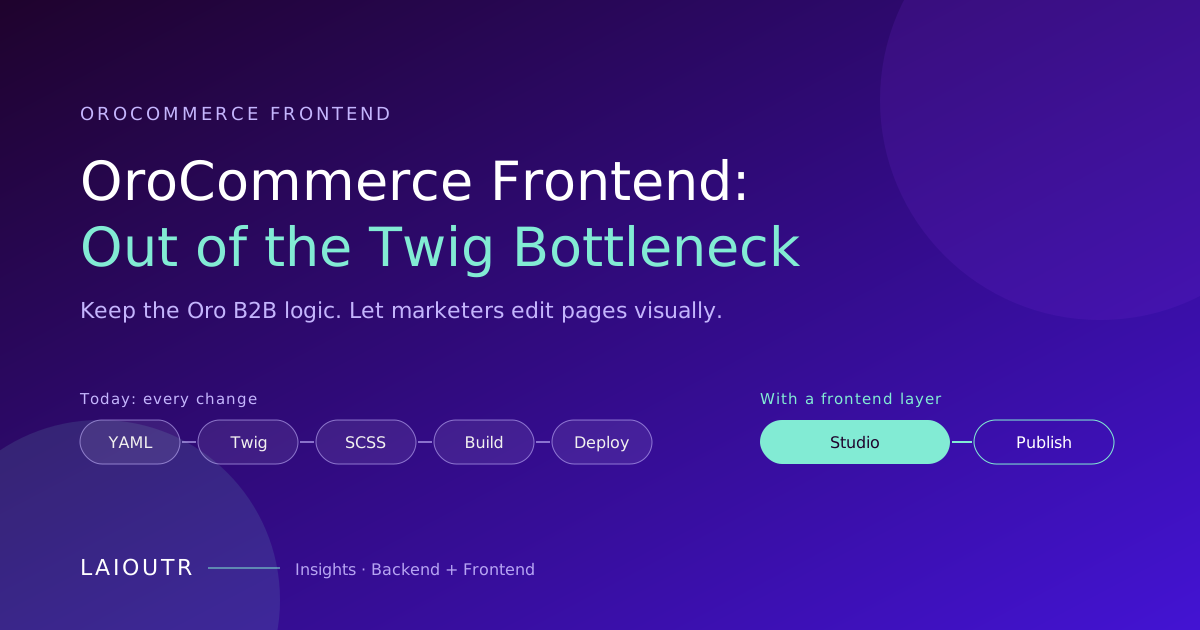OroCommerce Frontend: Out of the Twig and Layouts Bottleneck
The OroCommerce frontend is a server-rendered storefront built from Symfony bundles, OroLayouts and …](https://www.laioutr.com/en/blog/orocommerce-frontend-twig-layouts-bottleneck)
[One Magento Backend, Many Channels: Personalization in Practice
Personalization across web, mobile and voice on a single Magento backend does not start with a featu…](https://www.laioutr.com/en/blog/magento-multichannel-personalization-web-mobile-voice-2026)
[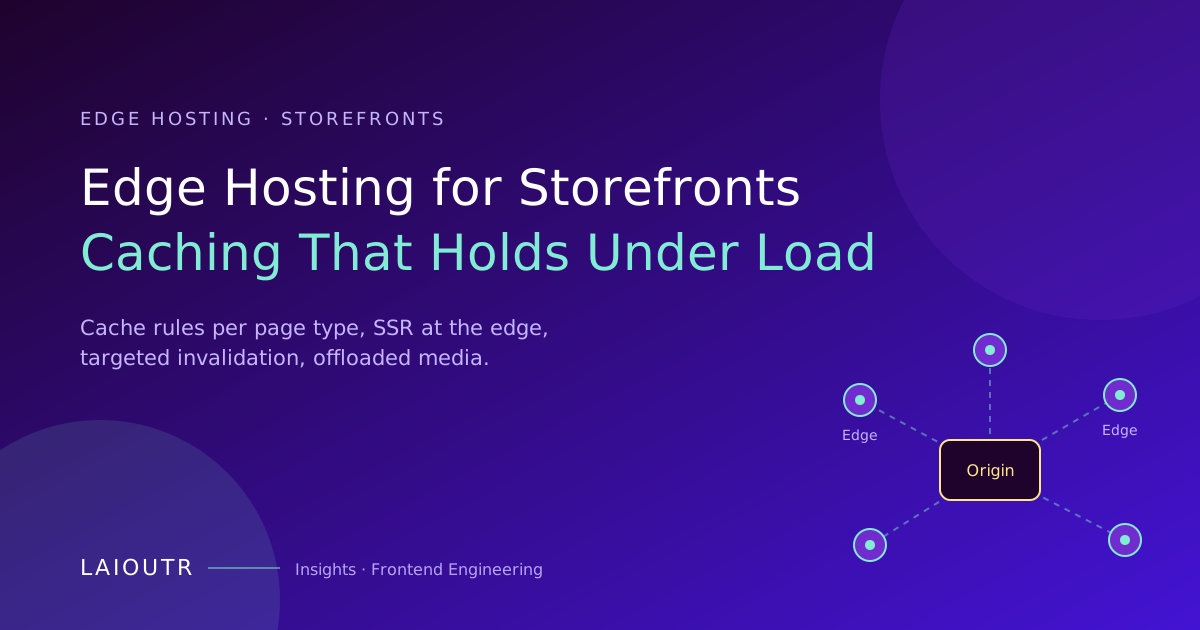Edge Hosting for Storefronts: Caching That Holds Under Peak Load
Edge hosting keeps a storefront fast under load when most requests never reach the origin: pages and…](https://www.laioutr.com/en/blog/edge-hosting-storefronts-peak-traffic-caching-2026)
[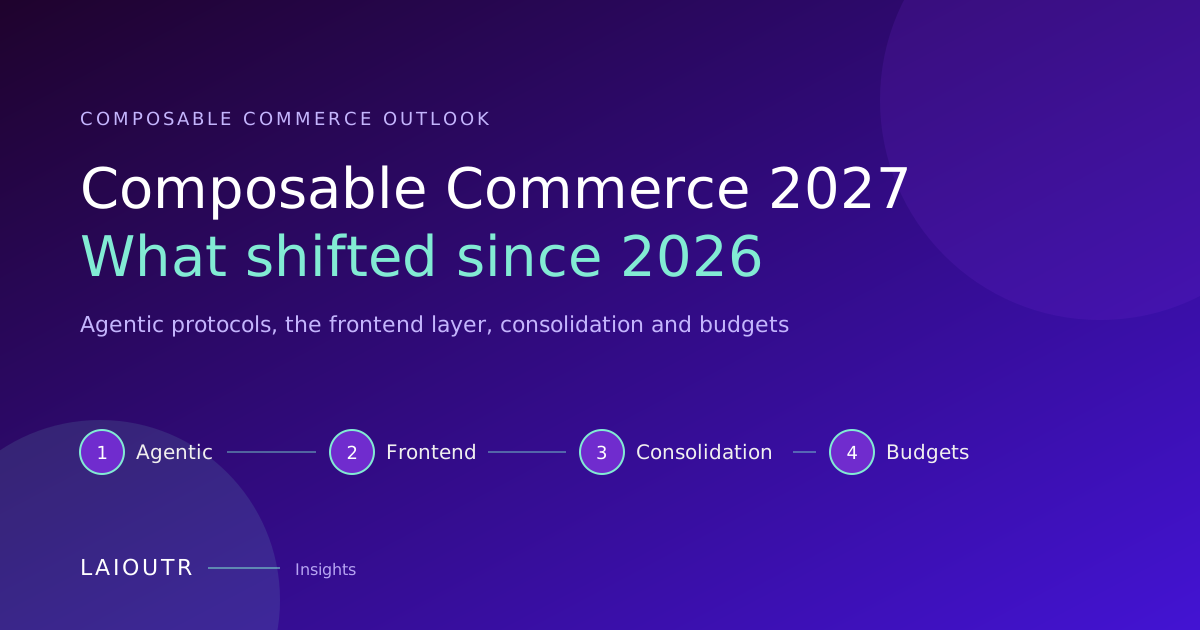Composable Commerce 2027: What Shifted and What Comes Next
Composable commerce enters 2027 with a different agenda than a year ago. The architecture question i…](https://www.laioutr.com/en/blog/composable-commerce-2027-outlook)
[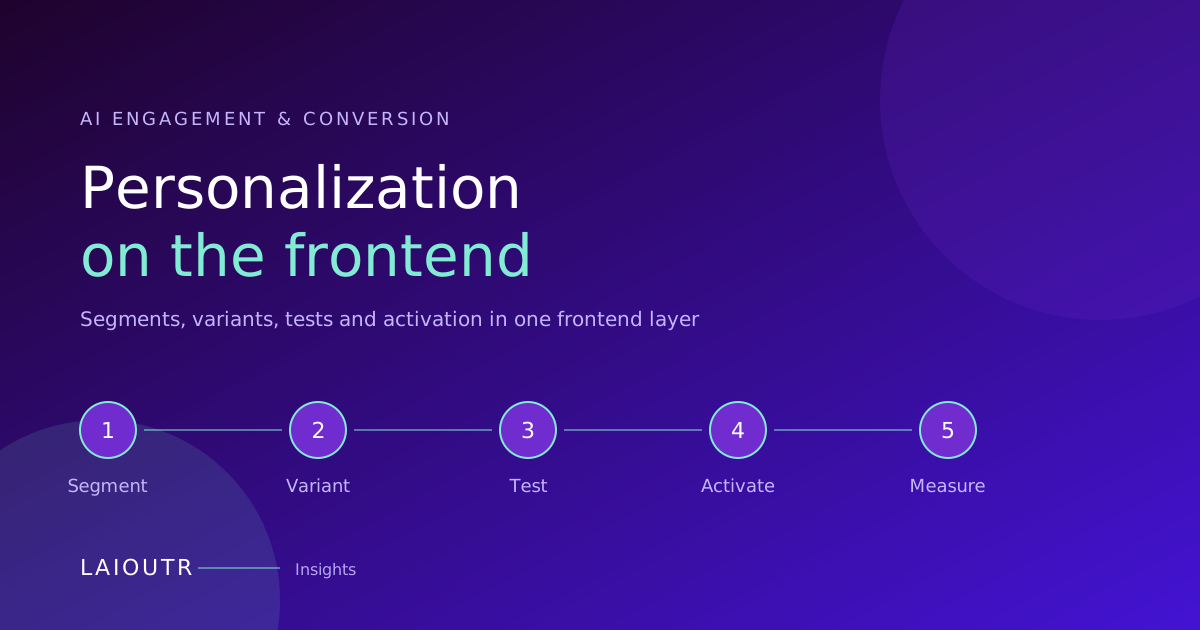AI Engagement and Conversion: Personalization on the Frontend
AI-driven engagement and conversion on the frontend rests on five mechanics: segments decide who see…](https://www.laioutr.com/en/blog/ai-engagement-conversion-frontend-personalization)
## Apps for the Laioutr platform
[View all apps](https://www.laioutr.com/en/apps)
[](https://www.laioutr.com/en/apps/shopify)
Laioutr
[Shopify](https://www.laioutr.com/en/apps/shopify)
Shopify is a commerce platform for selling online and in physical retail.
[](https://www.laioutr.com/en/apps/shopware)
Laioutr
[Shopware](https://www.laioutr.com/en/apps/shopware)
Shopware is a flexible ecommerce platform from Europe for product catalogs and omnichannel commerce.
[](https://www.laioutr.com/en/apps/adobe-commerce)
Laioutr
[Adobe Commerce](https://www.laioutr.com/en/apps/adobe-commerce)
Adobe Commerce is an enterprise commerce platform for complex, global B2C and B2B scenarios.
Planned
[](https://www.laioutr.com/en/apps/b2b-sellers)
Laioutr
[B2Bsellers](https://www.laioutr.com/en/apps/b2b-sellers)
B2B suite for Shopware that turns an online store into a professional B2B commerce platform.
Planned
[](https://www.laioutr.com/en/apps/commerce-layer)
Laioutr
[Commerce Layer](https://www.laioutr.com/en/apps/commerce-layer)
Commerce Layer is a headless commerce platform for making inventory and catalogs available online.
[](https://www.laioutr.com/en/apps/commercetools)
Laioutr
[Commercetools](https://www.laioutr.com/en/apps/commercetools)
Commercetools is a SaaS-based headless ecommerce platform used worldwide.
[](https://www.laioutr.com/en/apps/emporix)
Laioutr
[Emporix](https://www.laioutr.com/en/apps/emporix)
Emporix is a composable, API-first commerce platform for scalable B2B and B2C scenarios.
Planned
[](https://www.laioutr.com/en/apps/hcl-software)
Laioutr
[HCL Software](https://www.laioutr.com/en/apps/hcl-software)
Enterprise suite for digital commerce and experience with extensive configurability.
Planned
[](https://www.laioutr.com/en/apps/intershop)
Laioutr
[Intershop](https://www.laioutr.com/en/apps/intershop)
Enterprise commerce platform for complex B2B and B2C business models.
Planned
[](https://www.laioutr.com/en/apps/magento-2)
Laioutr
[Magento 2](https://www.laioutr.com/en/apps/magento-2)
Widely used, extensible commerce platform for B2C and B2B scenarios.
[](https://www.laioutr.com/en/apps/oxid-eshop)
Laioutr
[OXID eShop](https://www.laioutr.com/en/apps/oxid-eshop)
OXID eShop is an extensible commerce platform for complex B2B and B2C requirements.
Planned
[](https://www.laioutr.com/en/apps/patchworks)
Laioutr
[Patchworks](https://www.laioutr.com/en/apps/patchworks)
Patchworks is a low-code iPaaS that connects ecommerce, ERP, WMS, 3PL, and marketplaces.
Planned
[](https://www.laioutr.com/en/apps/PrestaShop)
Laioutr
[Prestashop](https://www.laioutr.com/en/apps/PrestaShop)
Open-source commerce platform for small and midsize merchants in Europe and beyond.
Planned
[](https://www.laioutr.com/en/apps/saleor)
Laioutr
[Saleor](https://www.laioutr.com/en/apps/saleor)
Open-source, API-first commerce platform built on GraphQL for custom storefronts.
Planned
[](https://www.laioutr.com/en/apps/salesforce-commerce-cloud)
Laioutr
[Salesforce Commerce Cloud](https://www.laioutr.com/en/apps/salesforce-commerce-cloud)
Salesforce Commerce Cloud is a cloud-based enterprise commerce platform for businesses of any size.
Planned
[](https://www.laioutr.com/en/apps/sap-commerce-cloud)
Laioutr
[SAP Commerce Cloud](https://www.laioutr.com/en/apps/sap-commerce-cloud)
Enterprise commerce platform for complex catalogs, pricing models, and omnichannel journeys.
Planned
[](https://www.laioutr.com/en/apps/scayle)
Laioutr
[Scayle](https://www.laioutr.com/en/apps/scayle)
SCAYLE is a commerce engine that helps brands and retailers scale their business.
Planned
[](https://www.laioutr.com/en/apps/spryker)
Laioutr
[Spryker](https://www.laioutr.com/en/apps/spryker)
Composable commerce platform for sophisticated B2B and B2C business models.
[](https://www.laioutr.com/en/apps/sylius)
Laioutr
[Sylius](https://www.laioutr.com/en/apps/sylius)
Sylius is a developer-friendly ecommerce framework for B2C and B2B shopping experiences.
Planned
[](https://www.laioutr.com/en/apps/vendure)
Laioutr
[Vendure](https://www.laioutr.com/en/apps/vendure)
Vendure is a headless commerce platform for businesses with complex requirements.
Coming Soon
[](https://www.laioutr.com/en/apps/vtex)
Laioutr
[VTEX](https://www.laioutr.com/en/apps/vtex)
Cloud-native, composable commerce platform for B2B and B2C at scale.
Planned
[](https://www.laioutr.com/en/apps/websale)
Laioutr
[Websale](https://www.laioutr.com/en/apps/websale)
Stable, enterprise-ready commerce backend for complex retail environments.
Strategy call
## The frontend as a control layer
A conversation about stack, roadmap and replatforming scenario. The outcome: a clear picture of how Laioutr fits, what it costs and how fast the go-live can happen.
*"After 30 minutes, we knew Laioutr makes our replatforming feasible."*
*Daniel B., CEO,* [*hygibox.de*](https://hygibox.de)
[Book a demo](https://www.laioutr.com/en/contact)
## Structured Data
```json
{
"@context": "https://schema.org",
"@graph": [
{
"@type": "Organization",
"@id": "https://www.laioutr.com/#identity",
"name": "Laioutr",
"legalName": "Laioutr GmbH",
"url": "https://www.laioutr.com/",
"logo": {
"@type": "ImageObject",
"url": "https://www.laioutr.com/laioutr-logo.png",
"width": 400,
"height": 400
},
"email": "info@laioutr.com",
"telephone": "+49 30 75435715",
"address": {
"@type": "PostalAddress",
"streetAddress": "Münchweilersteig 5",
"postalCode": "12559",
"addressLocality": "Berlin",
"addressCountry": "DE"
},
"vatID": "DE450905846",
"sameAs": [
"https://www.linkedin.com/company/laioutr",
"https://www.youtube.com/@Laioutr",
"https://x.com/laioutr"
]
},
{
"@type": "WebSite",
"@id": "https://www.laioutr.com/en/#website",
"url": "https://www.laioutr.com/en/",
"name": "Laioutr",
"inLanguage": "en",
"publisher": {
"@id": "https://www.laioutr.com/#identity"
}
},
{
"@type": "BlogPosting",
"@id": "https://www.laioutr.com/en/blog/marketer-driven-personalization#article",
"headline": "Building Personalization Without Breaking Speed: A Composable Commerce Approach",
"description": "A composable commerce approach to building personalization without sacrificing the performance engineers protect.",
"image": [
"https://eu-west-2.graphassets.com/cmii2mlqi0dux06l5543v7nkc/cmnucypviw8mi07mgmwsd5asa"
],
"datePublished": "2026-10-26T13:21:59.964789+00:00",
"dateModified": "2026-10-26T13:21:56.071751+00:00",
"inLanguage": "en",
"articleSection": "Insights",
"keywords": "Storefront Experience",
"author": {
"@type": "Person",
"name": "Marcel Thiesies",
"jobTitle": "Co-Founder & CEO, Laioutr",
"image": "https://eu-west-2.graphassets.com/cmii2mlqi0dux06l5543v7nkc/cmj01b962364n07lb0iguvts5"
},
"publisher": {
"@id": "https://www.laioutr.com/#identity"
},
"mainEntityOfPage": {
"@id": "https://www.laioutr.com/en/blog/marketer-driven-personalization#webpage"
},
"isPartOf": {
"@id": "https://www.laioutr.com/en/#website"
}
},
{
"@type": "WebPage",
"@id": "https://www.laioutr.com/en/blog/marketer-driven-personalization#webpage",
"url": "https://www.laioutr.com/en/blog/marketer-driven-personalization",
"name": "Building Personalization Without Breaking Speed: A Composable Commerce Approach",
"description": "A composable commerce approach to building personalization without sacrificing the performance engineers protect.",
"inLanguage": "en",
"isPartOf": {
"@id": "https://www.laioutr.com/en/#website"
},
"breadcrumb": {
"@id": "https://www.laioutr.com/en/blog/marketer-driven-personalization#breadcrumb"
},
"primaryImageOfPage": {
"@type": "ImageObject",
"url": "https://eu-west-2.graphassets.com/cmii2mlqi0dux06l5543v7nkc/cmnucypviw8mi07mgmwsd5asa"
},
"datePublished": "2026-10-26T13:21:59.964789+00:00",
"dateModified": "2026-10-26T13:21:56.071751+00:00",
"mainEntity": {
"@id": "https://www.laioutr.com/en/blog/marketer-driven-personalization#article"
}
},
{
"@type": "BreadcrumbList",
"@id": "https://www.laioutr.com/en/blog/marketer-driven-personalization#breadcrumb",
"itemListElement": [
{
"@type": "ListItem",
"position": 1,
"name": "Laioutr",
"item": "https://www.laioutr.com/en/"
},
{
"@type": "ListItem",
"position": 2,
"name": "Insights",
"item": "https://www.laioutr.com/en/blogs/insights"
},
{
"@type": "ListItem",
"position": 3,
"name": "Building Personalization Without Breaking Speed: A Composable Commerce Approach"
}
]
}
]
}
```