---
title: "Personalization with an AI agent, without performance loss | Laioutr"
canonical_url: "https://www.laioutr.com/en/product/personalization"
locale: en
meta:
description: "Display Conditions in the Studio. Personalization Agent as the AI layer. Edge delivery for performance out of the box. Personalization as an architectural layer of the frontend platform, GDPR-compliant."
"og:description": "Display Conditions in the Studio. Personalization Agent as the AI layer. Edge delivery for performance out of the box. Personalization as an architectural layer of the frontend platform, GDPR-compliant."
"og:title": "Personalization with an AI agent, without performance loss | Laioutr"
---
PERSONALIZATION - RULE-BASED AND AI-DRIVEN
# Personalization meets performance - and an agent that never sleeps.
Display Conditions in Studio for marketing teams. Personalization Agent for continuous ML-driven optimization. Edge delivery for performance without flicker. Three layers, one platform.
[Book a demo](https://www.laioutr.com/en/contact)
Personalization in commerce is too often a trade-off today: more personalization = more performance issues, more tools, more compliance risk. At Laioutr it works differently.
We think of personalization as an architectural layer of the frontend platform - with clear rules in Studio, an AI agent for continuous optimization, and edge delivery for performance out of the box. GDPR-compliant, on-brand, without flicker.
The definition
## What personalization means at Laioutr.
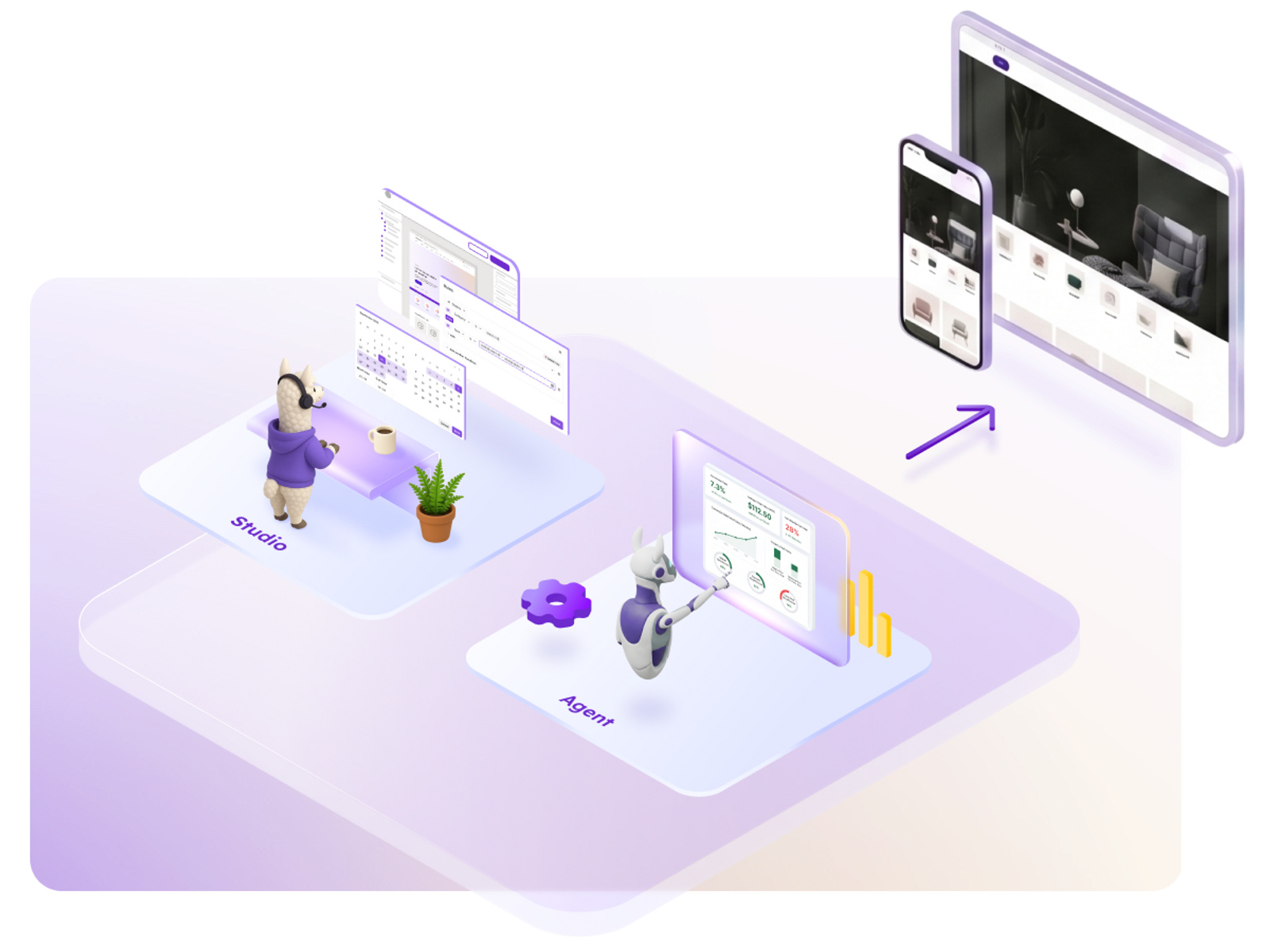
Personalization at Laioutr is an architectural layer of the frontend platform, not a separate piece of software. On the layer that's live today, you use Display Conditions in the Studio to explicitly define when a given component, piece of content, or variant is served, and to whom.
On the AI layer, the Personalization Agent continuously decides which variants perform best for which segments, based on real performance data. Both layers run in parallel, complement each other, and deliver personalization over the edge, with no flicker, no client-side hydration issues, no SEO loss.
FOR WHOM
## Personalization in two layers - today and tomorrow, together.
We draw a clear line between what you can put to work today and what runs in the background as an AI layer. Both belong to the same platform. Both work together. You build the rules. The agent finds the patterns.
RULE-BASED
### Display Conditions - rule-based personalization
Right in Studio you configure per component when it's visible and which content appears. Multiple conditions can be combined - AND, OR, NOT. Marketing works without an engineering ticket.
**Examples of rules:**
- Region (country, state, city)
- Language and locale
- Device type (desktop, tablet, mobile)
- Customer segment (logged in vs. anonymous, VIP vs. standard, etc.)
- Login state and customer lifecycle phase
- Cart value and cart contents
- Date / time / season
- UTM parameters from marketing campaigns
- Custom data fields from your backend or CDP
AGENTIC
### Personalization Agent - continuous ML optimization
The Personalization Agent runs in the background, watching behavior and performance and continuously optimizing which variants work best for which segments.
**What the agent actually does:**
- Segment discovery - finds previously undiscovered customer clusters
- Variant optimization - tests which variant converts best per segment
- Multi-armed bandit - dynamically routes traffic to the best variants
- Decay detection - spots when a variant is getting "old" and losing steam
PERSONALIZATION AGENT
## What the Personalization Agent could actually automate
Personalization beyond "insert first name" or "detect region". The Personalization Agent handles tasks that in a classic setup would keep a dedicated CRO team busy for quarters. Personalization moves from sprint to background process.
### Segment discovery
The agent identifies customer clusters beyond classic segments - behavioral patterns that aren't modeled in your CDP but are relevant to conversion.
### Variant optimization
Per component and segment, the system continuously tests which variant performs best - headlines, CTAs, layouts, recommendation orderings.
### Multi-armed bandit
Instead of rigid A/B tests, the agent dynamically routes traffic to the best-performing variants at any moment - learning speed doubled, opportunity cost halved.
### Gap analysis
The agent spots where personalization is missing — which components and pages aren't yet personalized for which segments, even though it would pay off.
### Decay detection
When a variant gets "old" over time (conversion drops), the agent detects it and automatically proposes a new variant, if needed in collaboration with the Content Agent.
### Cross-channel sync
Personalization insights from the web frontend flow back into the CDP, email tools, and customer service. One layer, one learning effect, visible everywhere.
DATA SOURCES
## What personalization runs on.
Personalization is only as good as the data it's built on. Laioutr uses five data-source categories, each of which can be enabled or disabled per use case.
### Implicit frontend data
Region, language, device, screen size, referrer, UTM parameters, returning vs. first-time visit. Available without cookie consent (edge-detected).
### Customer state
Login status, customer lifecycle phase, cart contents, cart value, wishlist, last order - straight from the commerce backend (Shopify, OXID, Shopware, etc.) via the Connect layer.
### CDP data
Customer profiles from your CDP (Segment, mParticle, Tealium, Bloomreach Engagement, Klaviyo, etc.) - segment assignment, lifetime value, affinities, predictive scores.
### Behavior within the session
What the user viewed, added to cart, or searched for in the current session - real-time signals for same-session personalization.
### Custom data fields
Anything else you have and want to connect through the Connect layer - external APIs, loyalty programs, industry-specific data (B2B terms, price lists, etc.).
Customer data Platform
## How Laioutr personalization works with your CDP.
If your team already runs a CDP, Segment, mParticle, Tealium, Bloomreach, Klaviyo, then that's the right source for customer data. We don't compete with it. We integrate deeply.
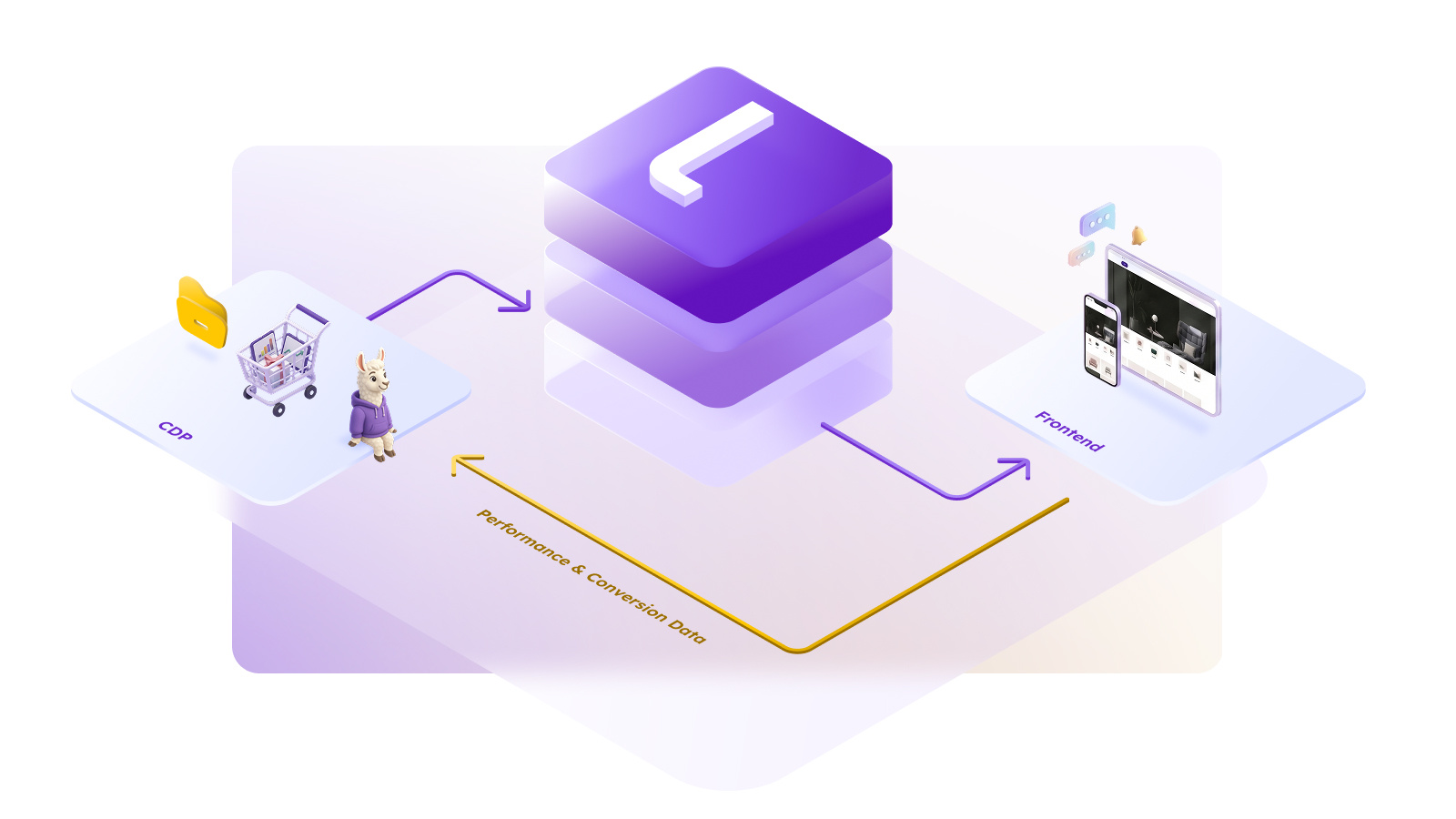
Through pre-built apps, customer profiles flow from your CDP into Laioutr, as an input for Display Conditions in the Studio and as a training signal for the Personalization Agent. Performance and conversion data from the frontend flow back into the CDP, so your customer profiles get richer the more Laioutr works. You keep your CDP as the single source of truth. We deliver the frontend layer that serves those profiles to the customer, fast, in real time, with no code mapping.
Segment · mParticle · Tealium · Bloomreach Engagement · Klaviyo · Customer.io · Twilio Segment · Custom via REST/GraphQL
[More on composability](https://www.laioutr.com/en/composable-digital-experience-platform)
Performance
## Personalization without flicker, without performance loss.
Classic personalization tools have a blind spot: performance. Personalize client-side and you risk flicker (FOUC), hydration problems, and LCP regressions. We solve it differently - at the edge. LCP under 1.5 s even with full personalization.
### Personalization at the edge
Personalized content is already delivered at the edge - with the very first byte that goes to the browser. No client-side logic swapping content in after the fact.
### Server-side personalization hints
Even dynamic personalization (e.g. customer state) is prepared server-side before the HTML renders. No hydration mismatch, no layout shift.
### SEO stays SEO
Personalization is transparent to search engines - Google sees the default variant, users see the personalized one. No cloaking risk, no hreflang confusion.
Personalization x A/B Testing
## Personalization and A/B testing, one layer, two disciplines.
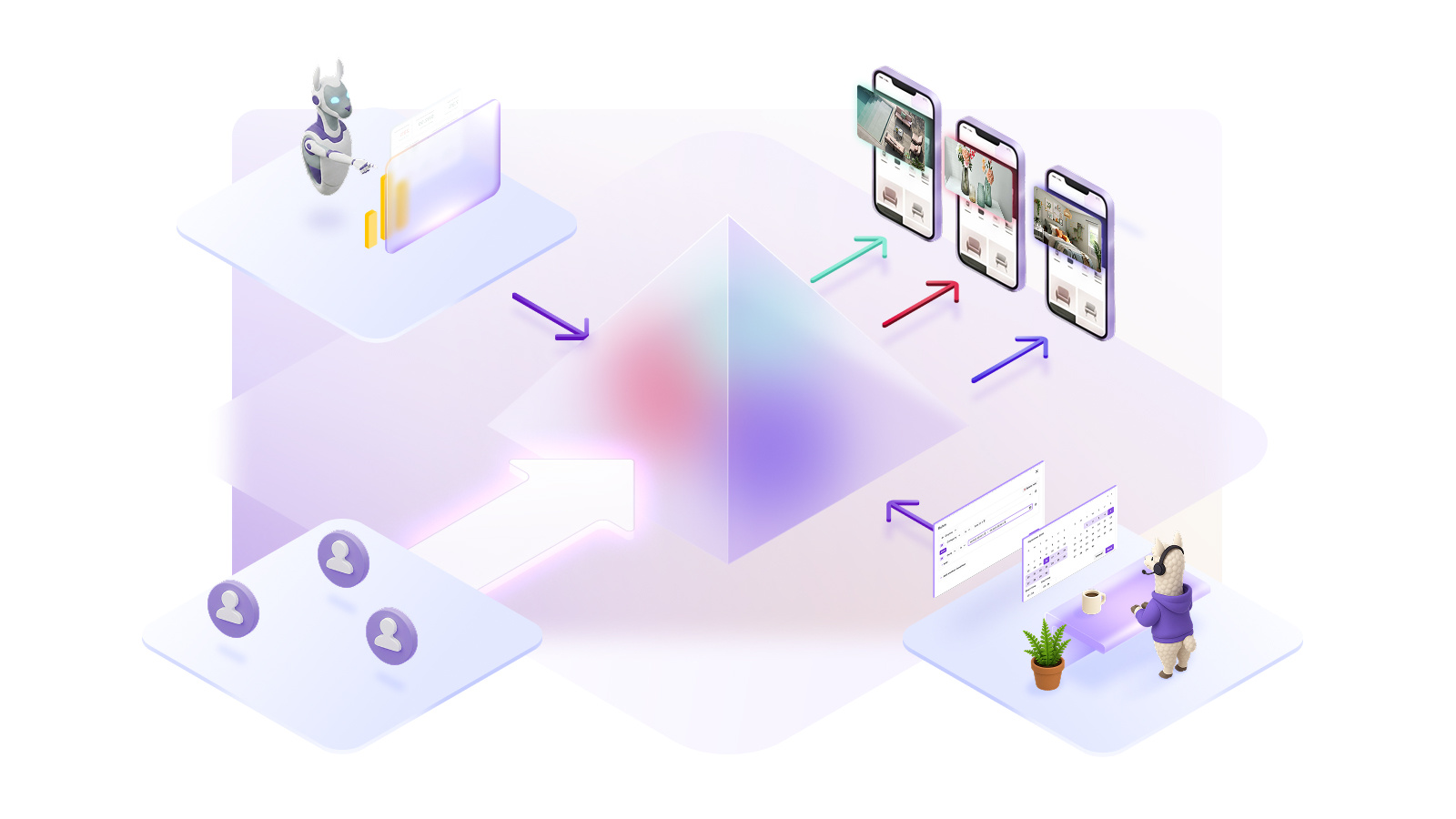
Traditionally, personalization and A/B testing mean two tools and two sprints, two sets of reporting, two sets of component variants. At Laioutr they live in the same layer. Display Conditions in the Studio serve both personalization (a component shown only to segment X) and A/B testing (variant A vs. B with random distribution).
The Personalization Agent runs as a multi-armed bandit, combining both disciplines by dynamically routing traffic to the best-performing variant per segment. The result: instead of classic A/B tests with fixed splits, you get continuous optimization that handles personalization and testing in a single motion. Learning speed doubles, opportunity cost halves.
- Conditions = rule-based personalization **and** explicit A/B testing.
- Personalization Agent = ML-driven optimization **and** dynamic traffic distribution
- Both run on the same edge layer, no double performance hit
[The agent layer of an AFMP](https://www.laioutr.com/en/agentic-frontend-management-platform)
Performance
## GDPR-compliant and on-brand - a precondition, not an add-on.
Personalization in Europe is unthinkable without clear compliance and brand control. We make both a precondition of the platform, not a bolted-on feature. AI without compliance is a risk. Compliance without AI is stagnation. We deliver both.
### GDPR & compliance
- EU hosting available; data stays in the chosen region
- Cookie consent layer built in (TCF 2.0-compatible, controllable per data source)
- Configurable per personalization rule which
- data sources are allowed
- Customer profiles from the CDP aren't used for model training - your content stays with you
- DPA (Data Processing Agreement) included in the contract by default
- Audit logs for all personalized deliveries
(compliance-relevant in audits)
### Brand guardrails
- Tone, style, and imagery rules configurable per brand
- Banned words and taboo topics are automatically excluded by the Personalization Agent
- Approval workflows per personalization variant (what goes live directly, what needs review)
- Cross-brand protection: no mixing of content across brand boundaries
- A/B test results can be isolated per brand
- Audit trail for every variant the agent generates or selects
Performance
## What personalization looks like in everyday commerce.
Six concrete examples from real commerce setups - not theoretical workflows, but tasks that keep marketing teams busy today.
### Region-specific content
The hero banner shows winter products for DE visitors, summer products for AU visitors. Controlled via Display Conditions, without engineering.
**Who:** marketing teams
### First-time customer vs. VIP
Anonymous first-time visitors see the brand story and top products. VIP customers see exclusive offers, wishlist reminders, new releases first.
**Who:** commerce teams with a clearly segmented customer base
### Black Friday / seasonal campaigns
Black Friday banner active from Nov 28 to Dec 1, automatically back to default once it expires. Cart value > 100 EUR? Show a free-shipping banner.
**Who:** marketing teams with a high campaign frequency
### Recommendation optimization
Instead of rigid "customers also bought" lists, the Personalization Agent continuously picks which recommendation logic converts best per segment.
**Who:** commerce teams with a large assortment
### Cross-brand personalization
Brand families can share personalization insights without crossing brand boundaries. What works for brand A is tested for brand B - with brand guardrails as protection.
**Who:** multi-brand holdings
### Mobile-only optimization
Mobile visitors on 3G/4G networks get a lighter hero visual and more compact components. Conversion holds, performance climbs.
**Who:** Commerce teams with heavy mobile traffic
FAQ
## Questions come up often, we answer the most important ones here
What's the difference between Display Conditions and the Personalization Agent?
Display Conditions are rule-based: you explicitly define when a component is visible (e.g. "only for logged-in VIP customers from DE"). The Personalization Agent is ML-driven: it discovers customer clusters on its own and continuously optimizes which variants convert best. Both run in parallel - Display Conditions for clear marketing rules, the agent for optimization beyond explicit rules.
Do I need a CDP to use personalization with Laioutr?
No. Implicit frontend data (region, device, cart value, etc.) is available without a CDP. If you have a CDP, customer profiles feed additionally into personalization. Without a CDP, Display Conditions work based on frontend signals; with a CDP, personalization goes deeper.
Which CDP vendors are supported?
Pre-integrated Connect adapters for Segment, mParticle, Tealium, Bloomreach Engagement, Klaviyo, and Customer.io. Other CDPs can be connected generically via REST or GraphQL - the Connect layer is explicitly designed for multi-source.
How performant is personalization in Laioutr - is there flicker?
No flicker. Personalization happens server-side at the edge, before the HTML reaches the browser. LCP under 1.5 s is the standard even with full personalization, not the exception. Classic client-side personalization tools (with flicker, layout shifts, hydration mismatch) disappear with this architecture model.
Is personalization with Laioutr GDPR-compliant?
Yes. EU hosting available, cookie consent layer built in, controllable per data source. Customer profiles from the CDP aren't used for model training - your content stays with you. A DPA (Data Processing Agreement) is included in the contract by default. Audit logs for compliance audits are built in.
What happens to personalization data - is it used for AI model training?
No. Customer profiles, behavioral data, and content stay in your platform instance. We don't use them for model training. Model improvements happen based on aggregated, anonymized platform statistics - not on individual customer data.
How does Laioutr personalization differ from tools like Dynamic Yield, Bloomreach Engagement, or Klaviyo?
These tools are highly specialized personalization engines with their own architecture. They often work client-side (which costs performance) or require their own frontend integration sprints. Laioutr personalization is a layer of the frontend platform - no separate software, no separate integration. If you already use one of these tools, you connect it as a CDP data source and use Laioutr as the delivery layer.
How do I configure Display Conditions in Studio?
In the Studio editor you pick a component, click the Conditions panel, and combine conditions — region, customer segment, cart value, UTM, etc. AND/OR/NOT combinations are possible.
Can I switch off the Personalization Agent?
Yes. Per capability, per brand, per market, per data source. Some teams only enable variant optimization, some use the agent exclusively for gap analysis, some switch the agent off entirely and work only with Display Conditions. There's no "all or nothing" mode.
How does personalization sit with SEO?
Very well. Search engine crawlers are treated as a single "segment" and see the default variant of your content. Users see the personalized variants. No cloaking risk, no hreflang confusion - your SEO standards stay unchanged.
[Dynamic Pricing Without Confusing Guests: A Storefront Playbook
Dynamic pricing works for attractions only if guests understand it at a glance. Show the price per d…](https://www.laioutr.com/en/blog/dynamic-pricing-ux-attractions-storefront-frontend-2026)
[70% Order Straight From the Newsletter. The Landing Page Can't Keep Up.
A new DACH study shows th…](https://www.laioutr.com/en/blog/dach-newsletter-study-2026-landing-page-gap)
[Algolia Onboarding in a Headless Frontend: From First Index to Relevant Search
Algolia onboarding is more than dropping in an API key: you create an index, decide which attributes…](https://www.laioutr.com/en/blog/algolia-onboarding-headless-storefront-search-setup-2026)
[Conversion Agent: A/B Tests That Roll Themselves Out
Most e-commerce and product teams can already design and launch an A/B test in an afternoon. The rea…](https://www.laioutr.com/en/blog/conversion-agent-self-deploying-ab-tests-2026)
[B2B Commerce Frontend for Emporix: Portals, Custom Pricing, and Guided Selling
B2B buyers do not shop like B2C consumers. They log into an account portal that already knows their …](https://www.laioutr.com/en/blog/emporix-b2b-commerce-frontend-portals-guided-selling-2026)
[Content and Commerce: Brand Worlds That Actually Sell
You know the situation: the brand deck is polished, the tone-of-voice guidelines run to 40 pages, th…](https://www.laioutr.com/en/blog/brand-commerce-markenwelten-content-commerce)
[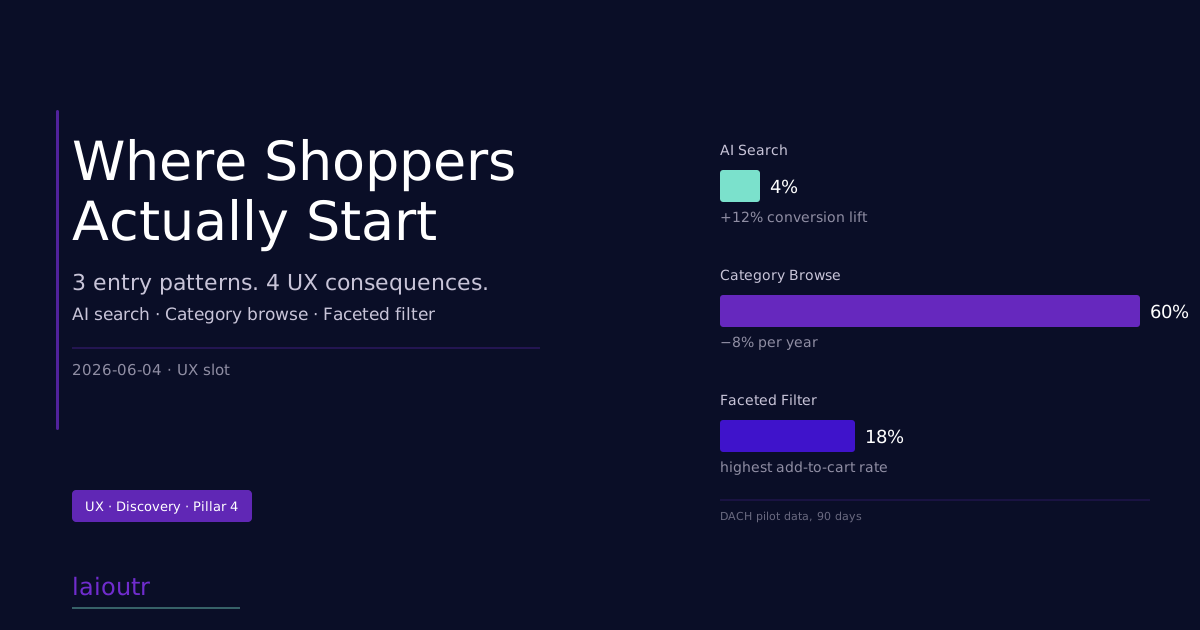Where Shoppers Actually Start in 2026 - AI Search vs. Category Browse vs. Faceted Filter
Webflow launched AEO Enterprise. Storyblok is repositioning toward a marketing platform. Uniform dem…](https://www.laioutr.com/en/blog/ai-search-vs-category-browse-shopper-entry-points-2026)
[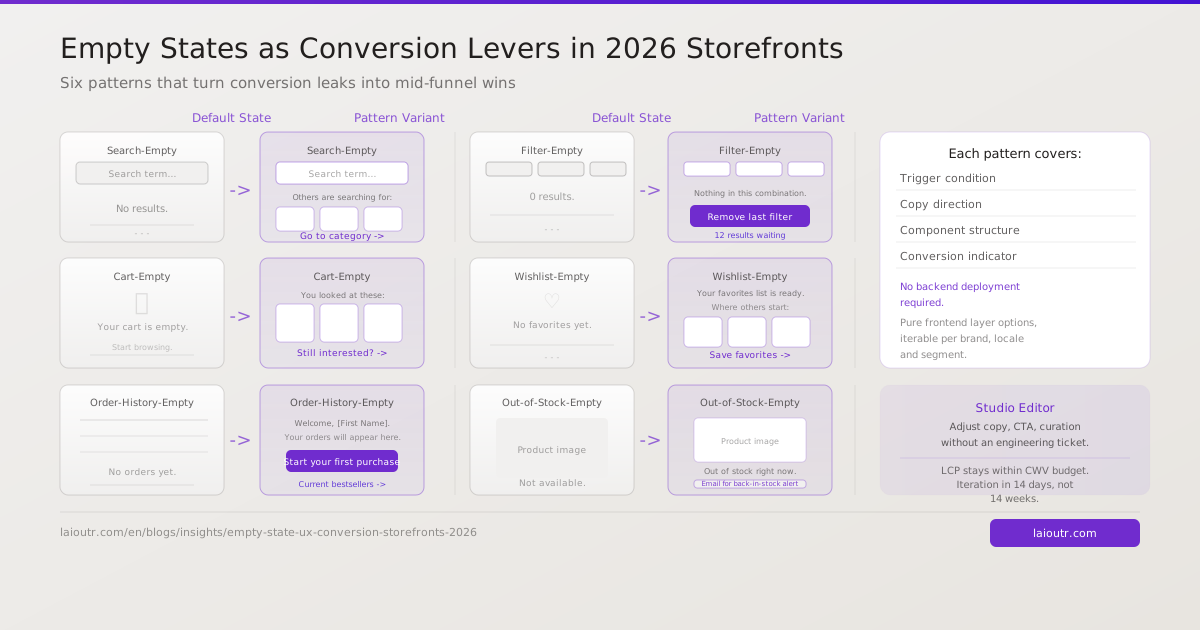Empty States as Conversion Levers in 2026 Storefronts
Empty states are not edge cases. They are systematic conversion leaks that occur far more frequently…](https://www.laioutr.com/en/blog/empty-state-ux-conversion-storefronts-2026)
[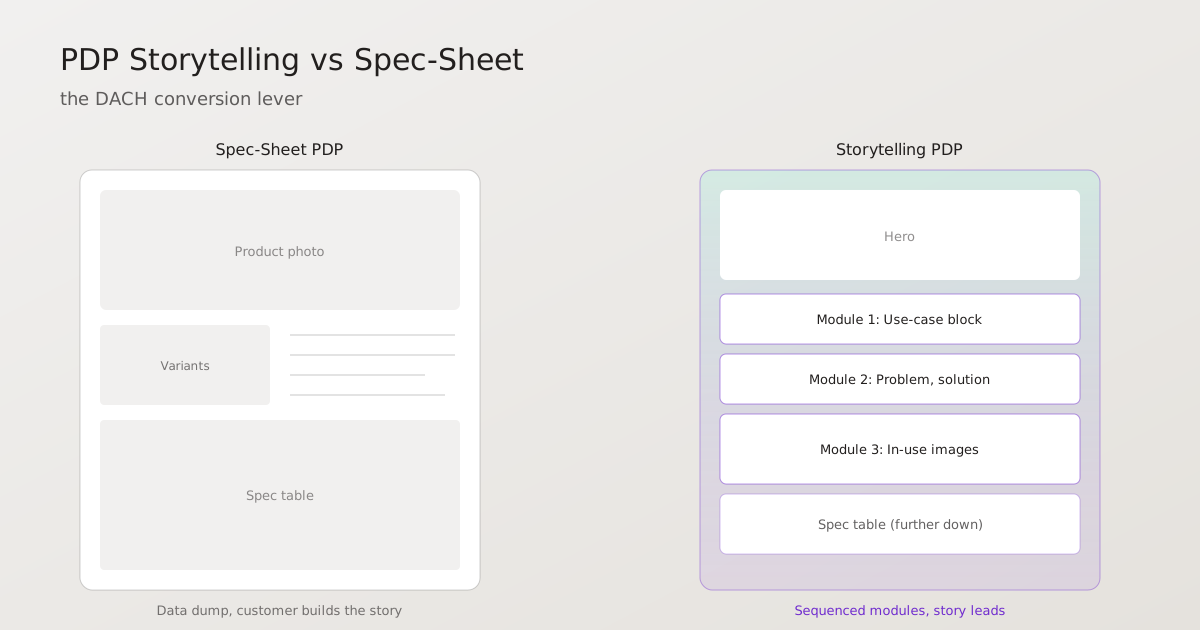PDP Storytelling vs Spec-Sheets: The DACH Conversion Lever
Most DACH mid-market product detail pages in 2026 still look the way they looked in 2020. A hero ima…](https://www.laioutr.com/en/blog/pdp-storytelling-vs-spec-sheet-dach-mid-funnel-conversion-2026)
[Mobile-First Storefronts 2026: 5 Conversion Patterns
Mobile-first is no longer a slogan in 2026, it is a conversion discipline. Five patterns we keep rol…](https://www.laioutr.com/en/blog/mobile-first-storefronts-conversion-patterns-2026)
[Faceted Search UX in Composable Storefronts: from Filter to Conversion
Faceted search is the touchpoint with the highest conversion intent on 9 out of 10 storefronts. It s…](https://www.laioutr.com/en/blog/faceted-search-ux-composable-storefronts-conversion)
[Mobile Checkout 2026: How 7-Field Forms Lift DACH Conversion
A typical German mobile checkout asks for 14 fields before the order goes through. Salutation, first…](https://www.laioutr.com/en/blog/mobile-checkout-2026-7-field-forms-dach-conversion)
[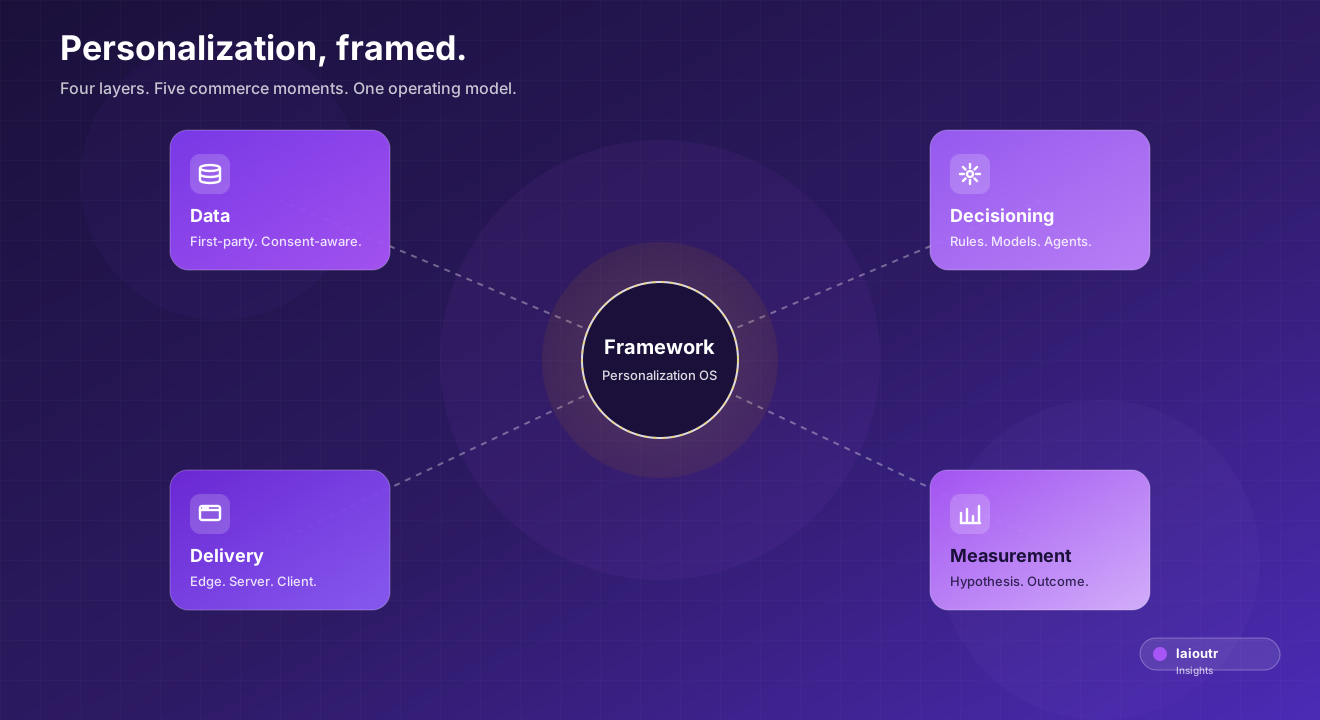The Personalization Framework Playbook: Turning Composable Commerce Into Measurable Revenue
Picture a board meeting in late November. The CMO is presenting Q3 results. Slide twelve shows a bea…](https://www.laioutr.com/en/blog/the-personalization-framework-playbook-turning-composable-commerce-into-measurable-revenue)
[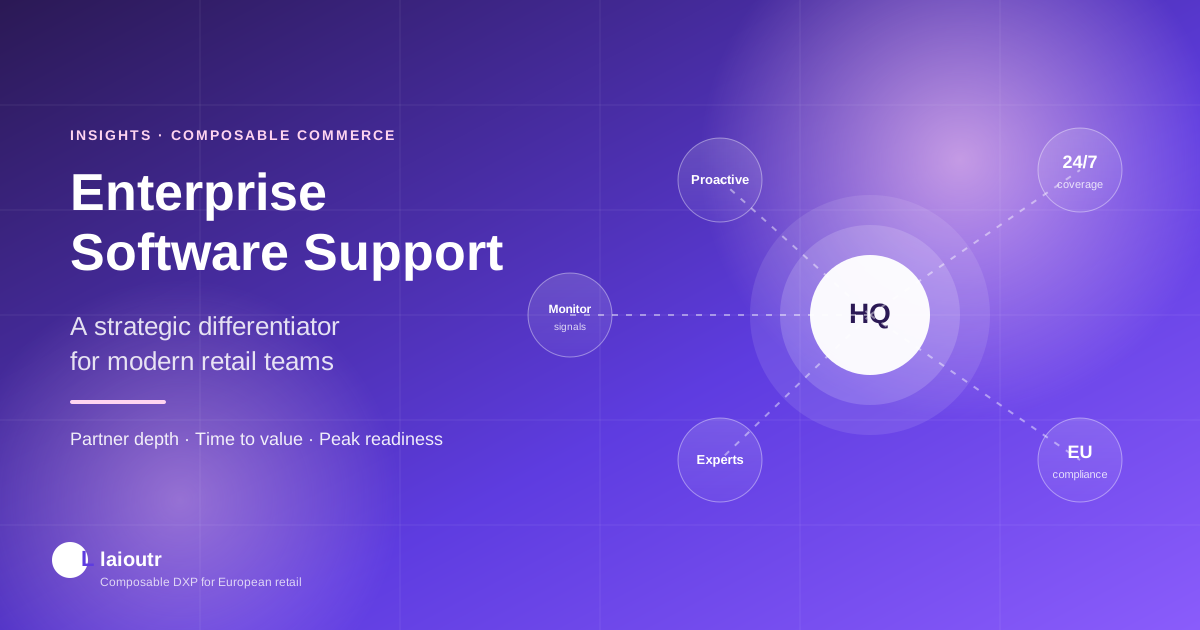Enterprise Software Support in Composable Commerce: Why the Partner Outweighs the Platform
There is a strange asymmetry in how enterprise software is chosen. A procurement committee will weig…](https://www.laioutr.com/en/blog/enterprise-software-support-in-composable-commerce-why-the-partner-outweighs-the-platform)
[Digital Sovereignty in Composable Commerce: Taking Back Control of Your Data, Stack, and Customer Experience
There is a pattern that repeats itself across enterprise e-commerce teams at a certain scale. The da…](https://www.laioutr.com/en/blog/digital-sovereignty-in-composable-commerce-taking-back-control-of-your-data-stack-and-customer-experience)
Strategy call
## Ready to turn your frontend into a control layer?
Show us your stack, your roadmap, your replatforming scenario, and we'll show you how Laioutr fits, what it costs, and how fast you go live.
*"After 30 minutes, we knew Laioutr makes our replatforming feasible." - Daniel B., CEO,* [*hygibox.de*](https://hygibox.de)
[Book a demo](https://www.laioutr.com/en/contact)
## Structured Data
```json
{
"@context": "https://schema.org",
"@graph": [
{
"@type": "Organization",
"@id": "https://www.laioutr.com/#identity",
"name": "Laioutr",
"legalName": "Laioutr GmbH",
"url": "https://www.laioutr.com/",
"logo": {
"@type": "ImageObject",
"url": "https://www.laioutr.com/laioutr-logo.png",
"width": 400,
"height": 400
},
"email": "info@laioutr.com",
"telephone": "+49 30 75435715",
"address": {
"@type": "PostalAddress",
"streetAddress": "Münchweilersteig 5",
"postalCode": "12559",
"addressLocality": "Berlin",
"addressCountry": "DE"
},
"vatID": "DE450905846",
"sameAs": [
"https://www.linkedin.com/company/laioutr",
"https://www.youtube.com/@Laioutr",
"https://x.com/laioutr"
]
},
{
"@type": "WebSite",
"@id": "https://www.laioutr.com/en/#website",
"url": "https://www.laioutr.com/en/",
"name": "Laioutr",
"inLanguage": "en",
"publisher": {
"@id": "https://www.laioutr.com/#identity"
}
},
{
"@type": "SoftwareApplication",
"@id": "https://www.laioutr.com/#platform",
"name": "Laioutr",
"applicationCategory": "BusinessApplication",
"applicationSubCategory": "Agentic Frontend Management Platform",
"operatingSystem": "Web",
"url": "https://www.laioutr.com/",
"publisher": {
"@id": "https://www.laioutr.com/#identity"
}
},
{
"@type": [
"WebPage",
"FAQPage"
],
"@id": "https://www.laioutr.com/en/product/personalization#webpage",
"url": "https://www.laioutr.com/en/product/personalization",
"name": "Personalization with an AI agent, without performance loss | Laioutr",
"description": "Display Conditions in the Studio. Personalization Agent as the AI layer. Edge delivery for performance out of the box. Personalization as an architectural layer of the frontend platform, GDPR-compliant.",
"inLanguage": "en",
"isPartOf": {
"@id": "https://www.laioutr.com/en/#website"
},
"breadcrumb": {
"@id": "https://www.laioutr.com/en/product/personalization#breadcrumb"
},
"primaryImageOfPage": {
"@type": "ImageObject",
"url": "https://eu-west-2.graphassets.com/cmii2mlqi0dux06l5543v7nkc/cmq7qnka1dxiz08l9pdukhl4g"
},
"about": {
"@id": "https://www.laioutr.com/#platform"
},
"mainEntity": [
{
"@type": "Question",
"name": "What's the difference between Display Conditions and the Personalization Agent?",
"acceptedAnswer": {
"@type": "Answer",
"text": "Display Conditions are rule-based: you explicitly define when a component is visible (e.g. \"only for logged-in VIP customers from DE\"). The Personalization Agent is ML-driven: it discovers customer clusters on its own and continuously optimizes which variants convert best. Both run in parallel - Display Conditions for clear marketing rules, the agent for optimization beyond explicit rules."
}
},
{
"@type": "Question",
"name": "Do I need a CDP to use personalization with Laioutr?",
"acceptedAnswer": {
"@type": "Answer",
"text": "No. Implicit frontend data (region, device, cart value, etc.) is available without a CDP. If you have a CDP, customer profiles feed additionally into personalization. Without a CDP, Display Conditions work based on frontend signals; with a CDP, personalization goes deeper."
}
},
{
"@type": "Question",
"name": "Which CDP vendors are supported?",
"acceptedAnswer": {
"@type": "Answer",
"text": "Pre-integrated Connect adapters for Segment, mParticle, Tealium, Bloomreach Engagement, Klaviyo, and Customer.io. Other CDPs can be connected generically via REST or GraphQL - the Connect layer is explicitly designed for multi-source."
}
},
{
"@type": "Question",
"name": "How performant is personalization in Laioutr - is there flicker?",
"acceptedAnswer": {
"@type": "Answer",
"text": "No flicker. Personalization happens server-side at the edge, before the HTML reaches the browser. LCP under 1.5 s is the standard even with full personalization, not the exception. Classic client-side personalization tools (with flicker, layout shifts, hydration mismatch) disappear with this architecture model."
}
},
{
"@type": "Question",
"name": "Is personalization with Laioutr GDPR-compliant?",
"acceptedAnswer": {
"@type": "Answer",
"text": "Yes. EU hosting available, cookie consent layer built in, controllable per data source. Customer profiles from the CDP aren't used for model training - your content stays with you. A DPA (Data Processing Agreement) is included in the contract by default. Audit logs for compliance audits are built in."
}
},
{
"@type": "Question",
"name": "What happens to personalization data - is it used for AI model training?",
"acceptedAnswer": {
"@type": "Answer",
"text": "No. Customer profiles, behavioral data, and content stay in your platform instance. We don't use them for model training. Model improvements happen based on aggregated, anonymized platform statistics - not on individual customer data."
}
},
{
"@type": "Question",
"name": "How does Laioutr personalization differ from tools like Dynamic Yield, Bloomreach Engagement, or Klaviyo?",
"acceptedAnswer": {
"@type": "Answer",
"text": "These tools are highly specialized personalization engines with their own architecture. They often work client-side (which costs performance) or require their own frontend integration sprints. Laioutr personalization is a layer of the frontend platform - no separate software, no separate integration. If you already use one of these tools, you connect it as a CDP data source and use Laioutr as the delivery layer."
}
},
{
"@type": "Question",
"name": "How do I configure Display Conditions in Studio?",
"acceptedAnswer": {
"@type": "Answer",
"text": "In the Studio editor you pick a component, click the Conditions panel, and combine conditions — region, customer segment, cart value, UTM, etc. AND/OR/NOT combinations are possible."
}
},
{
"@type": "Question",
"name": "Can I switch off the Personalization Agent?",
"acceptedAnswer": {
"@type": "Answer",
"text": "Yes. Per capability, per brand, per market, per data source. Some teams only enable variant optimization, some use the agent exclusively for gap analysis, some switch the agent off entirely and work only with Display Conditions. There's no \"all or nothing\" mode."
}
},
{
"@type": "Question",
"name": "How does personalization sit with SEO?",
"acceptedAnswer": {
"@type": "Answer",
"text": "Very well. Search engine crawlers are treated as a single \"segment\" and see the default variant of your content. Users see the personalized variants. No cloaking risk, no hreflang confusion - your SEO standards stay unchanged."
}
}
]
},
{
"@type": "BreadcrumbList",
"@id": "https://www.laioutr.com/en/product/personalization#breadcrumb",
"itemListElement": [
{
"@type": "ListItem",
"position": 1,
"name": "Laioutr",
"item": "https://www.laioutr.com/en/"
},
{
"@type": "ListItem",
"position": 2,
"name": "Personalization with an AI agent, without performance loss"
}
]
}
]
}
```