---
title: "Headless frontend for Salesforce Commerce Cloud | Laioutr"
canonical_url: "https://www.laioutr.com/en/headless-frontend-for-salesforce-commerce-cloud"
locale: en
meta:
description: "Headless frontend for Salesforce Commerce Cloud: visual page builder, 70+ components, SCAPI connectivity. Multi-brand rollouts without a PWA Kit build."
"og:description": "Headless frontend for Salesforce Commerce Cloud: visual page builder, 70+ components, SCAPI connectivity. Multi-brand rollouts without a PWA Kit build."
"og:title": "Headless frontend for Salesforce Commerce Cloud | Laioutr"
---
Salesforce Commerce Cloud × Laioutr
# Headless frontend for Salesforce Commerce Cloud without a PWA Kit build
The Frontend Management Platform for Salesforce Commerce Cloud. Visual page builder, 70+ e-commerce components including B2C and B2B building blocks, EU hosting. Faster to launch than the Salesforce PWA Kit, compatible with SCAPI, multi-brand and multi-region ready.
5.0 stars on OMR Reviews. EU server location. BFSG-ready. In use with DACH Salesforce partners.
[Request a demo](https://www.laioutr.com/en/contact)
Experienced partner agencies support e-commerce frontends built on Laioutr.
[](https://www.laioutr.com/en/partners/valantic "Valantic")
5/5
OMR Reviews
70+
E-commerce components
Lighthouse 100
Performance from day 1
Made in EU
GDPR-compliant by default, EU hosting
DEFINITION
## What is a headless frontend for Salesforce Commerce Cloud?
A headless frontend for Salesforce Commerce Cloud separates the interface shoppers see from the SFCC backend with products, pricebooks, the promotion engine, Einstein recommendations and B2B workflows. Instead of SiteGenesis or SFRA, the frontend connects via the Shopper API Platform (SCAPI) and can be designed freely, without theme limits and with full performance control.
[Book a strategy call](https://www.laioutr.com/en/contact)
### 1. The backend stays SFCC
Salesforce Commerce Cloud continues to manage products, pricebooks, promotions, Einstein recommendations, order management and B2C and B2B workflows. Business Manager stays unchanged, with all Salesforce ecosystem integrations.
### 2. The frontend is chosen
Five established options are available: SiteGenesis (legacy), SFRA (default storefront), Salesforce PWA Kit / Composable Storefront (official headless), a custom build (Next.js with SCAPI) or a Frontend Management Platform like Laioutr.
### 3. Data flows via SCAPI in real time
No data duplication, no sync conflicts. Laioutr talks directly to the Shopper API Platform (SCAPI), including the Shopper API, Customer API, Pricing API, and all B2B endpoints.
OPTIONS
## Which frontend options exist for Salesforce Commerce Cloud?
SFCC has a multi-layered frontend landscape: legacy SiteGenesis, server-rendered SFRA, the official PWA Kit headless, plus custom build and FMP. Four core options are relevant for modern setups. Here's where each one pays off for SFCC buyers.
The trade-off is fundamentally the same everywhere: what a [headless frontend](https://www.laioutr.com/en/composable-headless-frontend) has to deliver, and where a custom build gets expensive, is laid out on the overview page independently of the backend.
[Book a strategy call](https://www.laioutr.com/en/contact)
### 1. SFRA (Storefront Reference Architecture)
The Salesforce default storefront, JS-based, server-rendered. Useful for brands that don't want or can't go headless. The SiteGenesis successor, but not headless. The performance and modernization limits are real.
### 2. Salesforce PWA Kit / Composable Storefront
Salesforce's official React-based headless framework, with Managed Runtime (MRT) and SCAPI connectivity. It makes sense for teams deeply embedded in the Salesforce ecosystem, with a dedicated React team and budget for a six- to twelve-month build phase.
### 3. Custom Build (Next.js, Nuxt) with SCAPI
Maximum control, highest effort. A six- to twelve-month build phase plus ongoing maintenance. Useful for enterprise teams with dedicated frontend engineering and highly specific requirements.
### 4. Laioutr
An Agentic Frontend Management Platform with a visual builder, 70+ components including B2C and B2B building blocks, EU hosting and multi-backend support. It makes sense for a fast go-live and multi-brand or multi-region rollouts in weeks instead of months.
USE CASES
## What teams build with Laioutr for Salesforce Commerce Cloud
Laioutr is built for SFCC setups that serve multi-brand groups and multi-region brands as a platform, without investing in a six- to twelve-month PWA Kit build per brand. From a multi-brand storefront to a B2B portal.
[Book a strategy call](https://www.laioutr.com/en/contact)
### Multi-brand storefronts on a single SFCC realm
Several brands run on one Salesforce Commerce Cloud realm. Laioutr uses the multi-site configuration and delivers multi-storefront setups in which new brand frontends go live quickly: a pilot is usually live within 14 days.
### International multi-region rollouts
SFCC multi-region with localized pricing books, promotions, and language variants. The frontend is configured in Studio, without setting up a PWA Kit build per market.
### B2B portals on Salesforce Commerce Cloud B2B
SFCC B2B Commerce on LWR delivers the complete workflows. Laioutr calls SCAPI directly and renders customer-group-specific frontends with approval flows, quote negotiation, and account hierarchies.
### Modernizing SiteGenesis or SFRA
An existing SiteGenesis or SFRA stack is to be replaced, without touching the SFCC backend. Migration in phases.
### Replacing a PWA Kit build
An existing PWA Kit build, but the engineering team has thinned out. Migration to a Frontend Management Platform without touching the SFCC backend.
### Greenfield storefronts on new SFCC projects
A new SFCC project, a fresh start. With Laioutr Blueprints and the UI library, it goes into production in weeks instead of investing six months in a PWA Kit build.
Laioutr vs. Salesforce PWA Kit
## The honest enterprise comparison
Salesforce PWA Kit / Composable Storefront is Salesforce's official headless framework for SFCC, React-based, with Managed Runtime hosting, native SCAPI connectivity, and roadmap synergies with Einstein AI and the broader Salesforce ecosystem. Laioutr is a complete Frontend Management Platform with a visual builder, component library, and multi-backend support. Both work with SFCC. For teams deeply embedded in the Salesforce ecosystem, PWA Kit is the most native option. Teams that want marketing velocity, multi-brand scaling and predictable TCO are more productive with Laioutr.
Pricing Plans Comparison
| Compare differences | Laioutr | Salesforce PWA Kit |
| --- | --- | --- |
| Laioutr Salesforce PWA Kit |
| Builder und Komponenten Was im Standard enthalten ist, mit Fokus auf Multi-Brand und B2C-Enterprise. |
| Visueller Page Builder Drag-and-Drop-Editor für Marketing- und Content-Teams. | Inklusive (Studio) Live-Preview, komponentenbasiert | Nicht enthalten Reine Code-Entwicklung in React |
| B2C-Komponenten Vorgefertigte UI-Bausteine für Multi-Brand, Multi-Region und Saison-Kampagnen. | 70+ Komponenten Multi-Brand-Bausteine inkl. Theme-Switcher | Demo-Storefront Multi-Brand selbst aufbauen |
| B2B-Komponenten Vorgefertigte UI-Bausteine für Account-Hierarchien und Approval-Workflows. | Enthalten B2B-Bausteine inkl. Quote-Frontends | Selbst bauen B2B-UI als Custom-Build |
| Blueprints und Vorlagen Startpunkt für neue Storefronts ohne Greenfield-Aufwand. | Vorkomponierte Blueprints Sofort einsatzbereit, voll erweiterbar | Starter-Templates Demo-Storefront als Starthilfe |
| Hosting Wo das Frontend ausgeliefert wird und wer es betreibt. | Add-on (Laioutr Cloud) Edge Hosting als Add-on, EU-Hosting verfügbar | Managed Runtime Zusatz-Lizenz, umsatzbasiert |
| Architektur und Salesforce-Integration Wie eng die Integration in den Salesforce-Stack ist. |
| Backend-Flexibilität Welche E-Commerce-Backends sich anbinden lassen. | Multi-Backend SFCC, Adobe Commerce, commercetools, weitere | Nur SFCC Lock-in zum Salesforce-Stack |
| Salesforce-Ecosystem-Integration Wie tief die Anbindung an Einstein AI, Service Cloud, Marketing Cloud ist. | Über API Einstein und Marketing Cloud via SCAPI | Native Integration Tiefste Salesforce-Stack-Bindung |
| Performance und Core Web Vitals Wie viel Aufwand für Lighthouse-100-Niveau nötig ist. | Out of the box Lighthouse 100 als Default-Ziel | Out of the box Performance-First-Architektur |
| EU-Hosting und Souveränität Serverstandort EU plus DSGVO-konforme Datenverarbeitung. | EU-souverän EU-Hosting, EU-Standardvertrag | Globale Region Managed Runtime nicht EU-souverän |
| BFSG und WCAG 3.0 Konformität mit Barrierefreiheitsstärkungsgesetz und WCAG 3.0. | Im Standard WCAG 3.0, BFSG, EN 301 549 | Eigenverantwortung Audit separat erforderlich |
| Team und Wirtschaftlichkeit Wer mit der Plattform produktiv ist und was sie über die Zeit kostet. |
| Lernkurve Wie schnell ein neues Teammitglied produktiv wird. | Niedrig Marketing onboardet in Tagen | Hoch React, SCAPI, Salesforce-Stack |
| Time-to-Launch Realistische Zeitspanne bis zum Live-Gang einer neuen Storefront. | Wochen Mit Blueprints und Komponenten | Monate 6 bis 12 Monate Build-Phase |
| Ideales Team-Setup Wer mit der Plattform arbeiten kann und wer arbeiten muss. | Cross-funktional Marketing, Design und Dev gemeinsam | Engineering-only React-Team mit SFCC-Erfahrung |
| Total Cost of Ownership Software plus Engineering plus Wartung über 3 bis 5 Jahre, inklusive Managed Runtime. | [SaaS (planbar) Komponenten inklusive, Hosting als Add-on](https://www.laioutr.com/pricing) [Preise ansehen](https://www.laioutr.com/pricing) | Engineering plus MRT Hohe Build-Kosten plus Managed Runtime |
*All data is based on publicly available information, insights from sales conversations with DACH e-commerce brands, and our own platform testing. As of April 2026. Salesforce features may have evolved since then.*
SALESFORCE COMMERCE CLOUD
### When PWA Kit is the right choice
Deep integration into the Salesforce ecosystem (Service Cloud, Marketing Cloud, Data Cloud, Einstein), a dedicated React team with SFCC experience (at least three engineers), six- to twelve-month build phases are acceptable, marketing teams work mainly through tickets, and maximum code control matters more than time-to-launch. Classic use case: an enterprise Salesforce customer with an existing Salesforce suite strategy.
LAIOUTR
### When Laioutr is the right choice
Go-live in weeks instead of months, multi-brand or multi-region setups with fast rollouts, marketing should build pages independently, backend optionality should stay strategically open, total cost of ownership including Managed Runtime matters, and BFSG compliance must be covered without a separate audit. Classic use case: a multi-brand group or an international brand on SFCC that prioritizes fast rollouts.
BLUEPRINTS
## Start with a Blueprint instead of from scratch
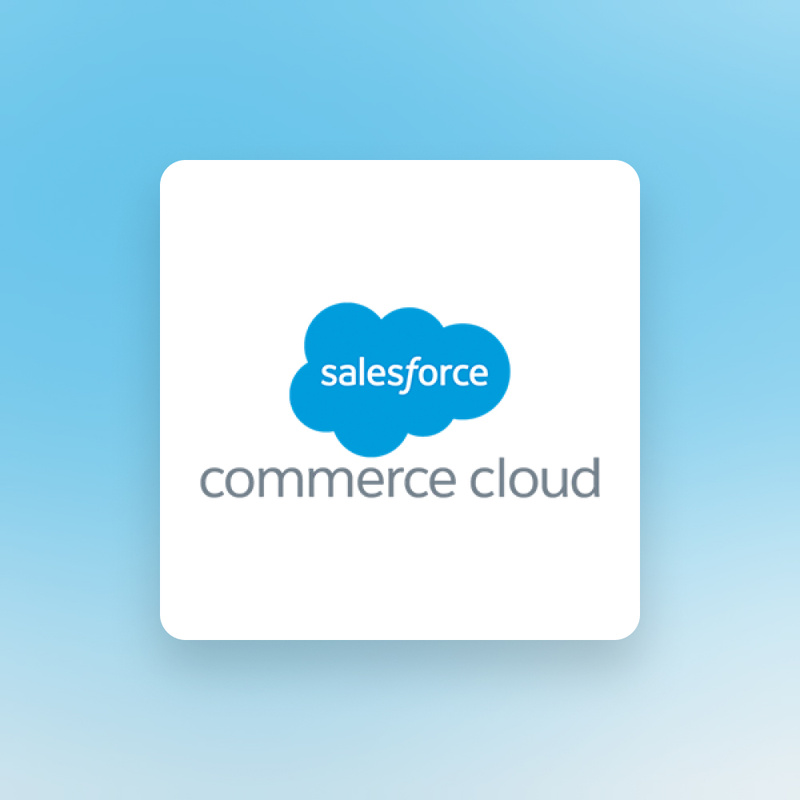
Blueprints are pre-composed starter sites per industry, instantly customizable and transferable to Salesforce Commerce Cloud setups. A suitable starting point shortens the path to go-live.
[View Blueprints](https://www.laioutr.com/en/blueprints)
UI PREVIEW
## Page types for Salesforce Commerce Cloud storefronts
Product launch pages, home pages, product detail pages, product list pages, sales pages, blogs, content pages, and more.
[Explore the UI preview](https://preview.laioutr.com/)
Certified Salesforce partners support SFCC frontend projects with Laioutr, from SiteGenesis migrations to PWA Kit replatformings.
[](https://www.laioutr.com/en/partners/valantic "Valantic")
FAQ
## Frequently asked questions about a headless frontend for Salesforce Commerce Cloud
Does Laioutr work with B2C Commerce and B2B Commerce on LWR?
Yes. Laioutr uses the Shopper API Platform (SCAPI), which is compatible with both editions. B2B-specific endpoints (account hierarchies, approval workflows) are connected via the B2B API extension.
How does Laioutr differ from the Salesforce PWA Kit?
PWA Kit is Salesforce's official React framework for headless SFCC, code-first and deeply integrated into the Salesforce stack. Laioutr is a ready-made frontend platform with a visual builder, 70+ components and EU hosting as an add-on. Faster to launch, lower learning curve, plus marketing self-service.
How does the SCAPI connection work in Laioutr?
Through the Shopper API Platform (SCAPI), which Salesforce recommends as the most modern API layer. Configuration happens in Studio, with no custom connector development needed. OCAPI as a legacy option is supported as well.
How does Laioutr relate to Einstein AI?
Einstein AI features that run in the SFCC backend (personalization, recommendations, search) are served through SCAPI and can be used in Laioutr components. The full Einstein frontend depth is more native with PWA Kit.
Does Laioutr work with Salesforce Marketing Cloud, Service Cloud, and Data Cloud?
Yes. Marketing Cloud tags, Service Cloud chat integrations, and Data Cloud personalization are integrated via JavaScript or API, exactly as with any other frontend solution.
Can we keep using our existing SFCC analytics and tracking setups?
Yes. Analytics tags (Adobe Analytics, Google Analytics, Salesforce Marketing Cloud) are integrated via JavaScript, exactly as with any other frontend solution.
How long does a migration from SiteGenesis, SFRA, or PWA Kit take?
A pilot is usually live within 14 days, and the migration takes under 14 days at the median. Extensive multi-brand setups need correspondingly more time. Founder-led migration is standard, not an extra.
How much does Laioutr cost compared to PWA Kit plus Managed Runtime plus engineering?
PWA Kit itself is free (open source), but Managed Runtime costs extra (revenue-based) and the engineering investment is significant (a six- to twelve-month build phase plus ongoing maintenance with three to four engineers per brand). Laioutr is SaaS with transparent plans; components are included and hosting is available as an add-on. Total cost of ownership is typically 40 to 60 percent below PWA Kit plus Managed Runtime.
Can we move off the Salesforce stack later without rebuilding the frontend?
Yes. That's precisely one of the key advantages over PWA Kit. Laioutr is backend-agnostic, so moving from SFCC to commercetools, Adobe Commerce, or any other backend means reconfiguring an API connection, not rebuilding the frontend.
Is the solution BFSG- and GDPR-compliant?
Yes. Server location in the EU/Germany (note: Managed Runtime is not necessarily EU-sovereign), EU standard contract, German-language support, WCAG 3.0, and the BFSG (the German Accessibility Reinforcement Act, mandatory since 2025) are all covered by default.
Does Laioutr support multiple sites in one SFCC realm?
Yes. Laioutr uses the multi-site configuration of an SFCC realm. Each site is treated as its own storefront, and layouts, assortments, languages and currencies can be configured per site in Studio.
Which frontend options exist for Salesforce Commerce Cloud?
Salesforce Commerce Cloud (SFCC) offers several frontend routes: SFRA (Storefront Reference Architecture, the classic server-side approach), the PWA Kit or Composable Storefront (Salesforce's React-based headless frontend), a custom build against SCAPI/OCAPI, or a ready-made Frontend Management Platform like Laioutr with a visual builder, 70+ components, and EU hosting. More on the concept: [composable headless frontend](https://www.laioutr.com/en/composable-headless-frontend).
## Insights on Salesforce Commerce Cloud
[All insights](https://www.laioutr.com/en/blogs/insights)
[Agentforce Commerce Is Live: Who Writes What It Says?
Salesforce announced general availability of Agentforce Commerce on July 6, 2026: three AI agents th…](https://www.laioutr.com/en/blog/salesforce-agentforce-commerce-ga-2026-experience-layer)
[Salesforce Storefront Next: What a 30-Minute Storefront Actually Means for Frontend Ownership
Salesforce shipped its biggest Agentforce Commerce release yet with the B2C Commerce June '26 up…](https://www.laioutr.com/en/blog/salesforce-storefront-next-agentic-commerce-verdict-2026)
[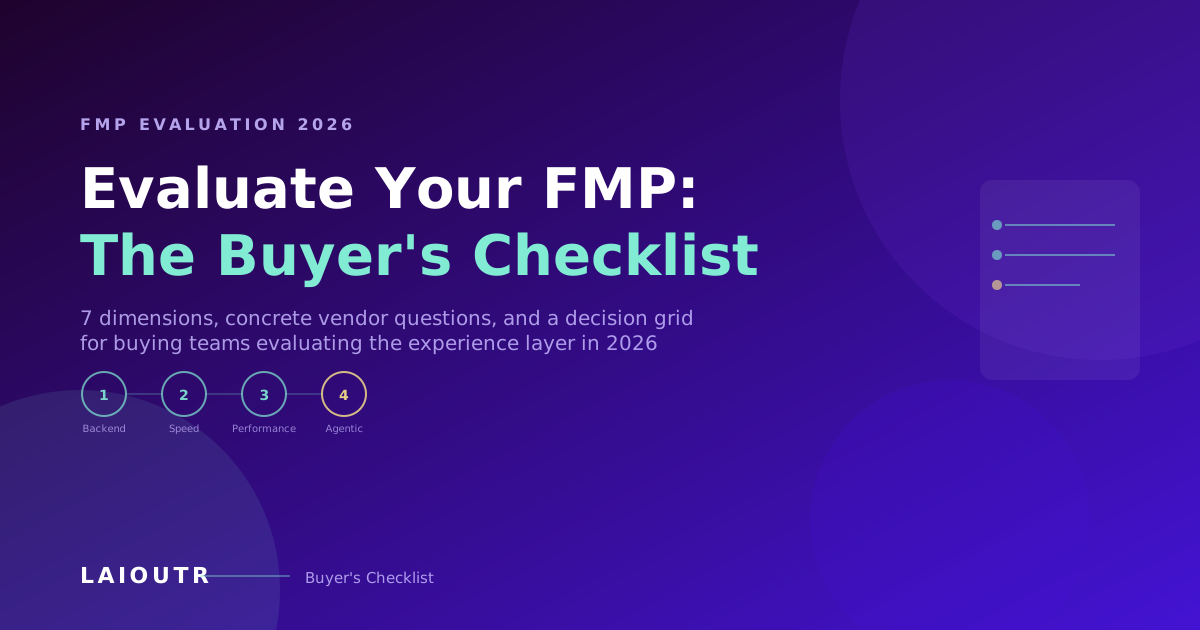How to Evaluate a Frontend Management Platform: 2026 Checklist
The frontend management platform (FMP) market is consolidating fast. What was an open field with a h…](https://www.laioutr.com/en/blog/frontend-management-platform-evaluation-checklist-2026)
[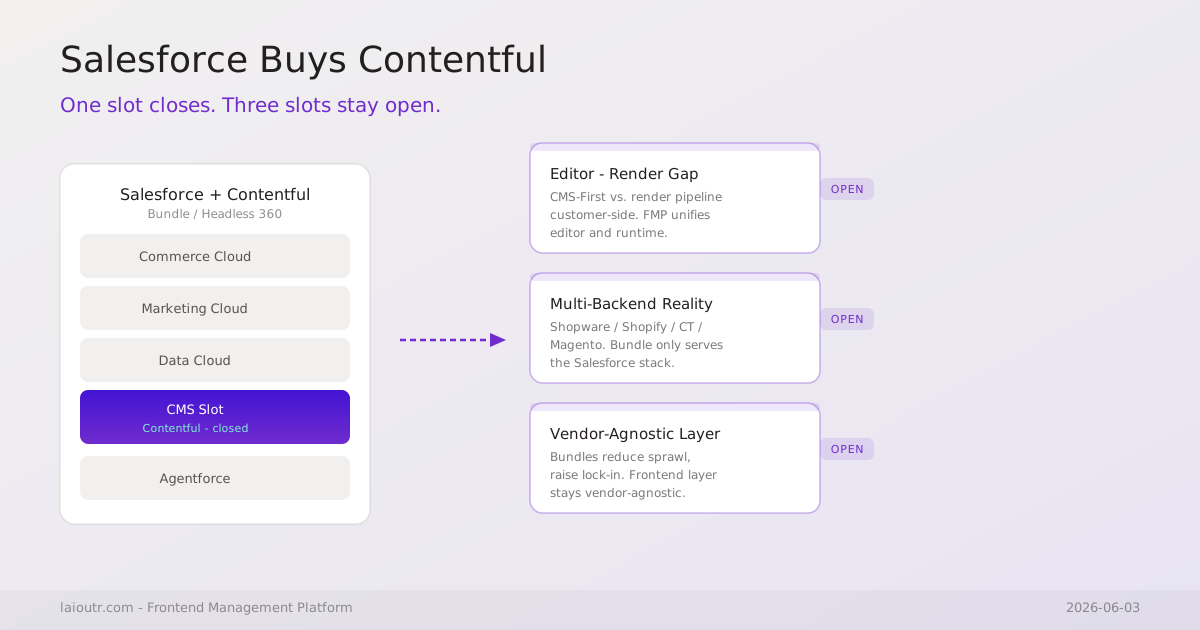Salesforce Buys Contentful: The Frontend-Layer Gap a Bundle Cannot Close
My take is this: Salesforce has closed a meaningful gap in their platform story with the Contentful …](https://www.laioutr.com/en/blog/salesforce-contentful-acquisition-frontend-layer-gap-2026)
[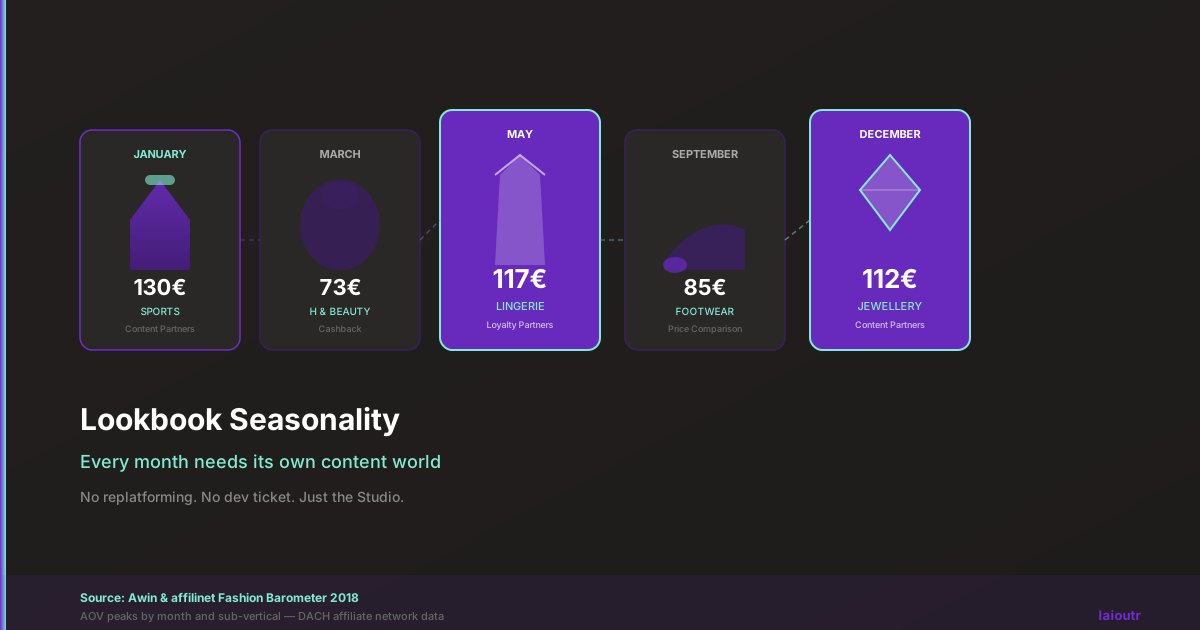Lookbook Seasonality: Content Worlds Without Replatforming
Awin and affilinet documented this in their 2018 Fashion Barometer: premium jewellery is bought thro…](https://www.laioutr.com/en/blog/lookbook-saisonalitaet-fashion-content-welten)
[10 Years of Microservices in Commerce: What Goetsch Got Right
October 2016. Kelly Goetsch, then at commercetools, publishes a slim O'Reilly eBook: Microservic…](https://www.laioutr.com/en/blog/10-years-microservices-modern-commerce-retrospective)
[Salesforce Headless 360 and the Frontend Management Platform
At TDX in April 2026, Salesforce made the browser optional. Every platform capability - catalog, pri…](https://www.laioutr.com/en/blog/salesforce-headless-360-impact-on-frontend-management-platform-category)
[Composable Commerce as a Strategic Necessity for 2026 and Beyond
For years, composable commerce was treated in many strategy discussions as an option. A modern archi…](https://www.laioutr.com/en/blog/composable-strategic-necessity-2026)
[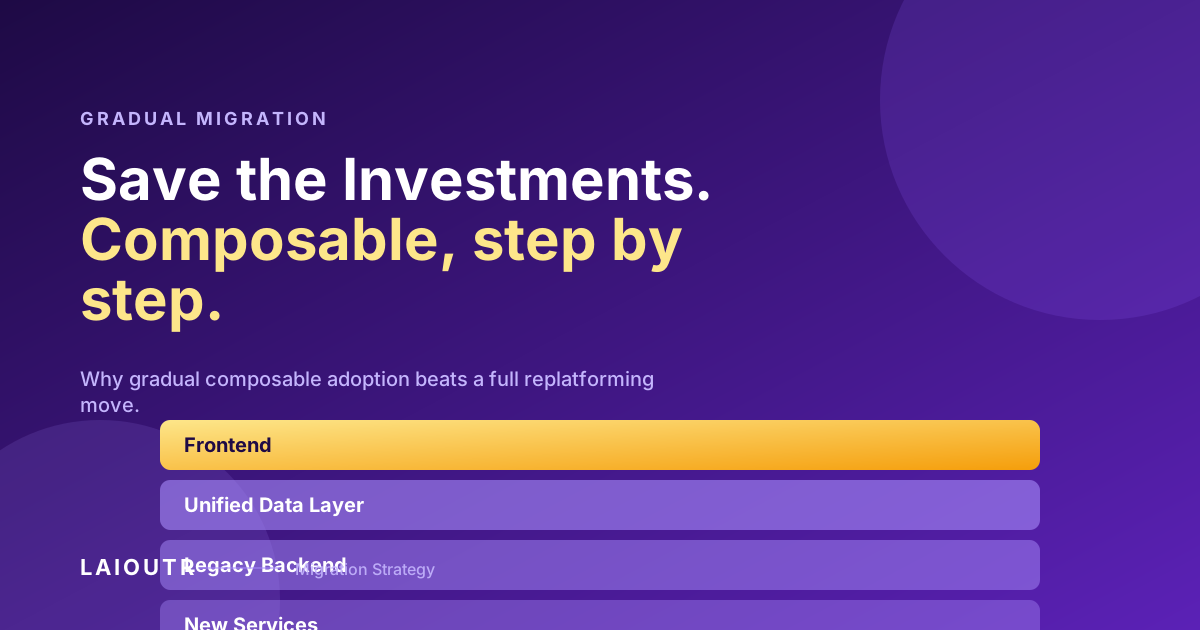Saving Existing Investments: Why Gradual Composable Transition Beats Full Replatforming
In every composable adoption workshop, the same concern shows up. We have invested millions in our c…](https://www.laioutr.com/en/blog/saving-existing-investments-composable-migration)
[The 5 Biggest Composable Commerce Myths Debunked in 2025
Composable commerce reached mainstream discussion in 2025. Four out of five enterprise merchants are…](https://www.laioutr.com/en/blog/5-composable-myths-debunked)
[commercetools, BigCommerce and SCAYLE: A Neutral Comparison for SFCC Merchants Considering a Switch
When an SFCC customer seriously considers a full switch in 2026, three platforms show up especially …](https://www.laioutr.com/en/blog/commercetools-bigcommerce-scayle-comparison)
[Multibrand and Multistorefront on SFCC: Inventory and Logistics Are the Real Bottleneck
In SFCC research, multibrand setups stand out as a special case. While single brand operations strug…](https://www.laioutr.com/en/blog/multibrand-multistorefront-sfcc)
[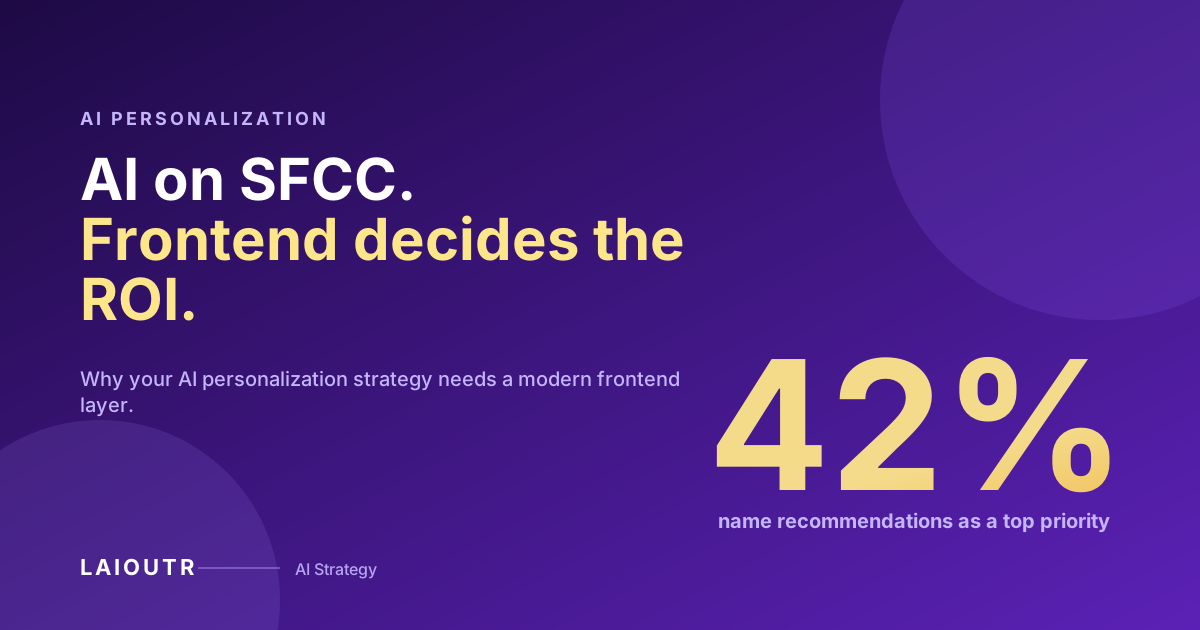AI Personalization on SFCC: Why Your Frontend Decides Whether AI Pays Off
In 2026, every SFCC customer's board meeting features the same question. Where are the promised …](https://www.laioutr.com/en/blog/ai-personalization-sfcc)
[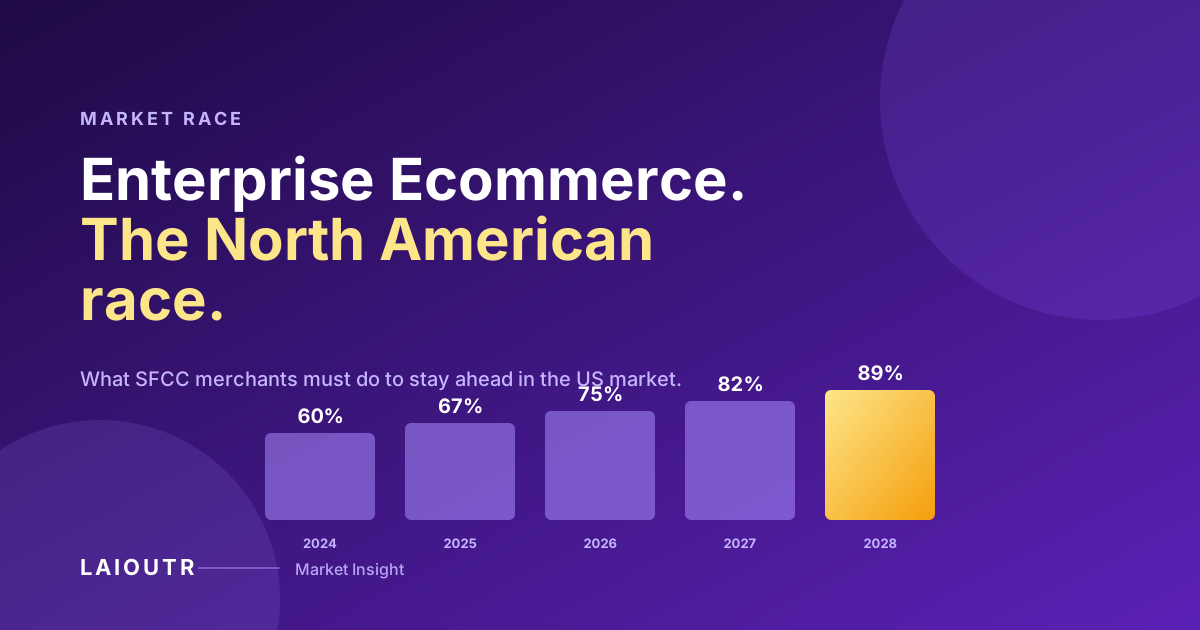The North American Enterprise Ecommerce Race: What SFCC Merchants Must Do to Stay Ahead
In 2028, US ecommerce will pass one point six trillion dollar for the first time. That sounds like g…](https://www.laioutr.com/en/blog/north-american-enterprise-ecommerce-race)
[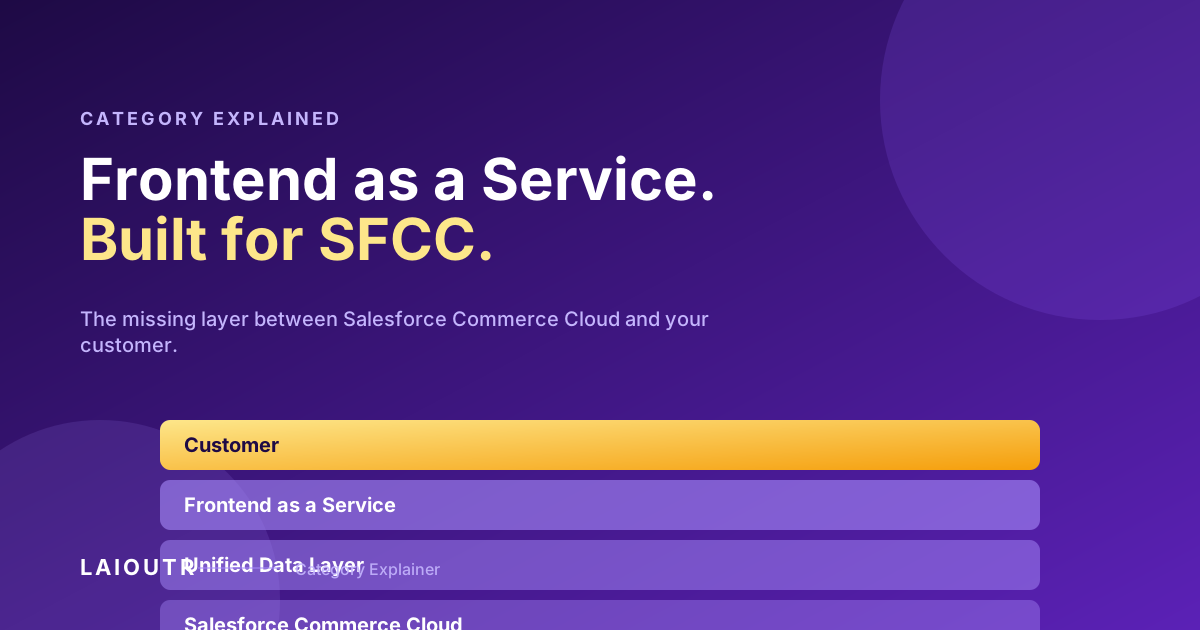Frontend as a Service for Salesforce Commerce Cloud Explained
Over the last two years a new category has established itself in enterprise ecommerce. Frontend as a…](https://www.laioutr.com/en/blog/faas-for-sfcc-explained)
READ MORE
## More on headless frontends for enterprise commerce
### Composable headless frontend
The concept behind a backend-independent frontend layer for commerce backends.
[Composable headless frontend](https://www.laioutr.com/en/composable-headless-frontend)
### Headless frontend for SAP Commerce Cloud
Accelerator, Composable Storefront, custom build or a Frontend Management Platform: the frontend routes for SAP Commerce Cloud at a glance.
[Frontend for SAP Commerce Cloud](https://www.laioutr.com/en/headless-frontend-for-sap-commerce-cloud)
### Headless frontend for Adobe Commerce
Hyvä, PWA Studio, custom build or a Frontend Management Platform: the frontend routes for Adobe Commerce at a glance.
[Frontend for Adobe Commerce](https://www.laioutr.com/en/headless-frontend-for-adobe-commerce)
### E-commerce systems
Which commerce backends connect to Laioutr and how the frontend uses them.
[E-commerce systems overview](https://www.laioutr.com/en/system/e-commerce)
### Composability & orchestration
How Laioutr connects backends and provides data through Orchestr.
[Composability & orchestration](https://www.laioutr.com/en/product/composability-orchestration)
### Laioutr and Alokai compared
A Frontend Management Platform and a Vue-based storefront framework compared side by side.
[Laioutr vs. Alokai](https://www.laioutr.com/en/laioutr-und-alokai-im-vergleich)


STILL UNSURE?
## Accelerating SFCC frontends for multi-brand
30 minutes with the Laioutr team: Laioutr live on an SFCC setup, with answers on migration, multi-brand rollout, SCAPI connectivity and pricing.
[Request a demo](https://www.laioutr.com/en/contact)
## Structured Data
```json
{
"@context": "https://schema.org",
"@graph": [
{
"@type": "Organization",
"@id": "https://www.laioutr.com/#identity",
"name": "Laioutr",
"legalName": "Laioutr GmbH",
"url": "https://www.laioutr.com/",
"logo": {
"@type": "ImageObject",
"url": "https://www.laioutr.com/laioutr-logo.png",
"width": 400,
"height": 400
},
"email": "info@laioutr.com",
"telephone": "+49 30 75435715",
"address": {
"@type": "PostalAddress",
"streetAddress": "Münchweilersteig 5",
"postalCode": "12559",
"addressLocality": "Berlin",
"addressCountry": "DE"
},
"vatID": "DE450905846",
"sameAs": [
"https://www.linkedin.com/company/laioutr",
"https://www.youtube.com/@Laioutr",
"https://x.com/laioutr"
]
},
{
"@type": "WebSite",
"@id": "https://www.laioutr.com/en/#website",
"url": "https://www.laioutr.com/en/",
"name": "Laioutr",
"inLanguage": "en",
"publisher": {
"@id": "https://www.laioutr.com/#identity"
}
},
{
"@type": [
"WebPage",
"FAQPage"
],
"@id": "https://www.laioutr.com/en/headless-frontend-for-salesforce-commerce-cloud#webpage",
"url": "https://www.laioutr.com/en/headless-frontend-for-salesforce-commerce-cloud",
"name": "Headless frontend for Salesforce Commerce Cloud | Laioutr",
"description": "Headless frontend for Salesforce Commerce Cloud: visual page builder, 70+ components, SCAPI connectivity. Multi-brand rollouts without a PWA Kit build.",
"inLanguage": "en",
"isPartOf": {
"@id": "https://www.laioutr.com/en/#website"
},
"breadcrumb": {
"@id": "https://www.laioutr.com/en/headless-frontend-for-salesforce-commerce-cloud#breadcrumb"
},
"primaryImageOfPage": {
"@type": "ImageObject",
"url": "https://eu-west-2.graphassets.com/cmii2mlqi0dux06l5543v7nkc/cmk19p26ysmne07l82vn6q45s"
},
"mainEntity": [
{
"@type": "Question",
"name": "Does Laioutr work with B2C Commerce and B2B Commerce on LWR?",
"acceptedAnswer": {
"@type": "Answer",
"text": "Yes. Laioutr uses the Shopper API Platform (SCAPI), which is compatible with both editions. B2B-specific endpoints (account hierarchies, approval workflows) are connected via the B2B API extension."
}
},
{
"@type": "Question",
"name": "How does Laioutr differ from the Salesforce PWA Kit?",
"acceptedAnswer": {
"@type": "Answer",
"text": "PWA Kit is Salesforce's official React framework for headless SFCC, code-first and deeply integrated into the Salesforce stack. Laioutr is a ready-made frontend platform with a visual builder, 70+ components and EU hosting as an add-on. Faster to launch, lower learning curve, plus marketing self-service."
}
},
{
"@type": "Question",
"name": "How does the SCAPI connection work in Laioutr?",
"acceptedAnswer": {
"@type": "Answer",
"text": "Through the Shopper API Platform (SCAPI), which Salesforce recommends as the most modern API layer. Configuration happens in Studio, with no custom connector development needed. OCAPI as a legacy option is supported as well."
}
},
{
"@type": "Question",
"name": "How does Laioutr relate to Einstein AI?",
"acceptedAnswer": {
"@type": "Answer",
"text": "Einstein AI features that run in the SFCC backend (personalization, recommendations, search) are served through SCAPI and can be used in Laioutr components. The full Einstein frontend depth is more native with PWA Kit."
}
},
{
"@type": "Question",
"name": "Does Laioutr work with Salesforce Marketing Cloud, Service Cloud, and Data Cloud?",
"acceptedAnswer": {
"@type": "Answer",
"text": "Yes. Marketing Cloud tags, Service Cloud chat integrations, and Data Cloud personalization are integrated via JavaScript or API, exactly as with any other frontend solution."
}
},
{
"@type": "Question",
"name": "Can we keep using our existing SFCC analytics and tracking setups?",
"acceptedAnswer": {
"@type": "Answer",
"text": "Yes. Analytics tags (Adobe Analytics, Google Analytics, Salesforce Marketing Cloud) are integrated via JavaScript, exactly as with any other frontend solution."
}
},
{
"@type": "Question",
"name": "How long does a migration from SiteGenesis, SFRA, or PWA Kit take?",
"acceptedAnswer": {
"@type": "Answer",
"text": "A pilot is usually live within 14 days, and the migration takes under 14 days at the median. Extensive multi-brand setups need correspondingly more time. Founder-led migration is standard, not an extra."
}
},
{
"@type": "Question",
"name": "How much does Laioutr cost compared to PWA Kit plus Managed Runtime plus engineering?",
"acceptedAnswer": {
"@type": "Answer",
"text": "PWA Kit itself is free (open source), but Managed Runtime costs extra (revenue-based) and the engineering investment is significant (a six- to twelve-month build phase plus ongoing maintenance with three to four engineers per brand). Laioutr is SaaS with transparent plans; components are included and hosting is available as an add-on. Total cost of ownership is typically 40 to 60 percent below PWA Kit plus Managed Runtime."
}
},
{
"@type": "Question",
"name": "Can we move off the Salesforce stack later without rebuilding the frontend?",
"acceptedAnswer": {
"@type": "Answer",
"text": "Yes. That's precisely one of the key advantages over PWA Kit. Laioutr is backend-agnostic, so moving from SFCC to commercetools, Adobe Commerce, or any other backend means reconfiguring an API connection, not rebuilding the frontend."
}
},
{
"@type": "Question",
"name": "Is the solution BFSG- and GDPR-compliant?",
"acceptedAnswer": {
"@type": "Answer",
"text": "Yes. Server location in the EU/Germany (note: Managed Runtime is not necessarily EU-sovereign), EU standard contract, German-language support, WCAG 3.0, and the BFSG (the German Accessibility Reinforcement Act, mandatory since 2025) are all covered by default."
}
},
{
"@type": "Question",
"name": "Does Laioutr support multiple sites in one SFCC realm?",
"acceptedAnswer": {
"@type": "Answer",
"text": "Yes. Laioutr uses the multi-site configuration of an SFCC realm. Each site is treated as its own storefront, and layouts, assortments, languages and currencies can be configured per site in Studio."
}
},
{
"@type": "Question",
"name": "Which frontend options exist for Salesforce Commerce Cloud?",
"acceptedAnswer": {
"@type": "Answer",
"text": "Salesforce Commerce Cloud (SFCC) offers several frontend routes: SFRA (Storefront Reference Architecture, the classic server-side approach), the PWA Kit or Composable Storefront (Salesforce's React-based headless frontend), a custom build against SCAPI/OCAPI, or a ready-made Frontend Management Platform like Laioutr with a visual builder, 70+ components, and EU hosting. More on the concept: composable headless frontend."
}
}
]
},
{
"@type": "BreadcrumbList",
"@id": "https://www.laioutr.com/en/headless-frontend-for-salesforce-commerce-cloud#breadcrumb",
"itemListElement": [
{
"@type": "ListItem",
"position": 1,
"name": "Laioutr",
"item": "https://www.laioutr.com/en/"
},
{
"@type": "ListItem",
"position": 2,
"name": "Headless frontend for Salesforce Commerce Cloud"
}
]
}
]
}
```
```json
{
"@context": "https://schema.org",
"@graph": [
{
"@id": "https://www.laioutr.com/en/headless-frontend-for-salesforce-commerce-cloud#webpage",
"description": "Headless frontend for Salesforce Commerce Cloud: visual page builder, 70+ components, SCAPI connectivity. Multi-brand rollouts without a PWA Kit build.",
"name": "Headless frontend for Salesforce Commerce Cloud | Laioutr",
"url": "https://www.laioutr.com/en/headless-frontend-for-salesforce-commerce-cloud",
"@type": [
"WebPage",
"FAQPage"
],
"mainEntity": [
{
"@id": "https://www.laioutr.com/en/headless-frontend-for-salesforce-commerce-cloud#/schema/question/1"
},
{
"@id": "https://www.laioutr.com/en/headless-frontend-for-salesforce-commerce-cloud#/schema/question/2"
},
{
"@id": "https://www.laioutr.com/en/headless-frontend-for-salesforce-commerce-cloud#/schema/question/3"
},
{
"@id": "https://www.laioutr.com/en/headless-frontend-for-salesforce-commerce-cloud#/schema/question/4"
},
{
"@id": "https://www.laioutr.com/en/headless-frontend-for-salesforce-commerce-cloud#/schema/question/5"
},
{
"@id": "https://www.laioutr.com/en/headless-frontend-for-salesforce-commerce-cloud#/schema/question/6"
},
{
"@id": "https://www.laioutr.com/en/headless-frontend-for-salesforce-commerce-cloud#/schema/question/7"
},
{
"@id": "https://www.laioutr.com/en/headless-frontend-for-salesforce-commerce-cloud#/schema/question/8"
},
{
"@id": "https://www.laioutr.com/en/headless-frontend-for-salesforce-commerce-cloud#/schema/question/9"
},
{
"@id": "https://www.laioutr.com/en/headless-frontend-for-salesforce-commerce-cloud#/schema/question/10"
},
{
"@id": "https://www.laioutr.com/en/headless-frontend-for-salesforce-commerce-cloud#/schema/question/11"
},
{
"@id": "https://www.laioutr.com/en/headless-frontend-for-salesforce-commerce-cloud#/schema/question/12"
}
]
},
{
"@id": "https://www.laioutr.com/en/headless-frontend-for-salesforce-commerce-cloud#/schema/question/1",
"@type": "Question",
"inLanguage": "en",
"name": "Does Laioutr work with B2C Commerce and B2B Commerce on LWR?",
"acceptedAnswer": {
"@type": "Answer",
"text": "Yes. Laioutr uses the Shopper API Platform (SCAPI), which is compatible with both editions. B2B-specific endpoints (account hierarchies, approval workflows) are connected via the B2B API extension.
"
}
},
{
"@id": "https://www.laioutr.com/en/headless-frontend-for-salesforce-commerce-cloud#/schema/question/2",
"@type": "Question",
"inLanguage": "en",
"name": "How does Laioutr differ from the Salesforce PWA Kit?",
"acceptedAnswer": {
"@type": "Answer",
"text": "PWA Kit is Salesforce's official React framework for headless SFCC, code-first and deeply integrated into the Salesforce stack. Laioutr is a ready-made frontend platform with a visual builder, 70+ components and EU hosting as an add-on. Faster to launch, lower learning curve, plus marketing self-service.
"
}
},
{
"@id": "https://www.laioutr.com/en/headless-frontend-for-salesforce-commerce-cloud#/schema/question/3",
"@type": "Question",
"inLanguage": "en",
"name": "How does the SCAPI connection work in Laioutr?",
"acceptedAnswer": {
"@type": "Answer",
"text": "Through the Shopper API Platform (SCAPI), which Salesforce recommends as the most modern API layer. Configuration happens in Studio, with no custom connector development needed. OCAPI as a legacy option is supported as well.
"
}
},
{
"@id": "https://www.laioutr.com/en/headless-frontend-for-salesforce-commerce-cloud#/schema/question/4",
"@type": "Question",
"inLanguage": "en",
"name": "How does Laioutr relate to Einstein AI?",
"acceptedAnswer": {
"@type": "Answer",
"text": "Einstein AI features that run in the SFCC backend (personalization, recommendations, search) are served through SCAPI and can be used in Laioutr components. The full Einstein frontend depth is more native with PWA Kit.
"
}
},
{
"@id": "https://www.laioutr.com/en/headless-frontend-for-salesforce-commerce-cloud#/schema/question/5",
"@type": "Question",
"inLanguage": "en",
"name": "Does Laioutr work with Salesforce Marketing Cloud, Service Cloud, and Data Cloud?",
"acceptedAnswer": {
"@type": "Answer",
"text": "Yes. Marketing Cloud tags, Service Cloud chat integrations, and Data Cloud personalization are integrated via JavaScript or API, exactly as with any other frontend solution.
"
}
},
{
"@id": "https://www.laioutr.com/en/headless-frontend-for-salesforce-commerce-cloud#/schema/question/6",
"@type": "Question",
"inLanguage": "en",
"name": "Can we keep using our existing SFCC analytics and tracking setups?",
"acceptedAnswer": {
"@type": "Answer",
"text": "Yes. Analytics tags (Adobe Analytics, Google Analytics, Salesforce Marketing Cloud) are integrated via JavaScript, exactly as with any other frontend solution.
"
}
},
{
"@id": "https://www.laioutr.com/en/headless-frontend-for-salesforce-commerce-cloud#/schema/question/7",
"@type": "Question",
"inLanguage": "en",
"name": "How long does a migration from SiteGenesis, SFRA, or PWA Kit take?",
"acceptedAnswer": {
"@type": "Answer",
"text": "A pilot is usually live within 14 days, and the migration takes under 14 days at the median. Extensive multi-brand setups need correspondingly more time. Founder-led migration is standard, not an extra.
"
}
},
{
"@id": "https://www.laioutr.com/en/headless-frontend-for-salesforce-commerce-cloud#/schema/question/8",
"@type": "Question",
"inLanguage": "en",
"name": "How much does Laioutr cost compared to PWA Kit plus Managed Runtime plus engineering?",
"acceptedAnswer": {
"@type": "Answer",
"text": "PWA Kit itself is free (open source), but Managed Runtime costs extra (revenue-based) and the engineering investment is significant (a six- to twelve-month build phase plus ongoing maintenance with three to four engineers per brand). Laioutr is SaaS with transparent plans; components are included and hosting is available as an add-on. Total cost of ownership is typically 40 to 60 percent below PWA Kit plus Managed Runtime.
"
}
},
{
"@id": "https://www.laioutr.com/en/headless-frontend-for-salesforce-commerce-cloud#/schema/question/9",
"@type": "Question",
"inLanguage": "en",
"name": "Can we move off the Salesforce stack later without rebuilding the frontend?",
"acceptedAnswer": {
"@type": "Answer",
"text": "Yes. That's precisely one of the key advantages over PWA Kit. Laioutr is backend-agnostic, so moving from SFCC to commercetools, Adobe Commerce, or any other backend means reconfiguring an API connection, not rebuilding the frontend.
"
}
},
{
"@id": "https://www.laioutr.com/en/headless-frontend-for-salesforce-commerce-cloud#/schema/question/10",
"@type": "Question",
"inLanguage": "en",
"name": "Is the solution BFSG- and GDPR-compliant?",
"acceptedAnswer": {
"@type": "Answer",
"text": "Yes. Server location in the EU/Germany (note: Managed Runtime is not necessarily EU-sovereign), EU standard contract, German-language support, WCAG 3.0, and the BFSG (the German Accessibility Reinforcement Act, mandatory since 2025) are all covered by default.
"
}
},
{
"@id": "https://www.laioutr.com/en/headless-frontend-for-salesforce-commerce-cloud#/schema/question/11",
"@type": "Question",
"inLanguage": "en",
"name": "Does Laioutr support multiple sites in one SFCC realm?",
"acceptedAnswer": {
"@type": "Answer",
"text": "Yes. Laioutr uses the multi-site configuration of an SFCC realm. Each site is treated as its own storefront, and layouts, assortments, languages and currencies can be configured per site in Studio.
"
}
},
{
"@id": "https://www.laioutr.com/en/headless-frontend-for-salesforce-commerce-cloud#/schema/question/12",
"@type": "Question",
"inLanguage": "en",
"name": "Which frontend options exist for Salesforce Commerce Cloud?",
"acceptedAnswer": {
"@type": "Answer",
"text": "Salesforce Commerce Cloud (SFCC) offers several frontend routes: SFRA (Storefront Reference Architecture, the classic server-side approach), the PWA Kit or Composable Storefront (Salesforce's React-based headless frontend), a custom build against SCAPI/OCAPI, or a ready-made Frontend Management Platform like Laioutr with a visual builder, 70+ components, and EU hosting. More on the concept: composable headless frontend.
"
}
}
]
}
```