---
title: "Headless Frontend Options Compared: Saleor & Beyond"
canonical_url: "https://www.laioutr.com/en/blog/saleor-headless-frontend-options-compared"
locale: en
meta:
description: "Comparing headless frontend options for Saleor and other composable backends? See how architecture, speed, and lock-in risk stack up before you choose."
"og:description": "Comparing headless frontend options for Saleor and other composable backends? See how architecture, speed, and lock-in risk stack up before you choose."
"og:title": "Headless Frontend Options Compared: Saleor & Beyond"
---

# Saleor Headless Frontend: 5 Optionen im Vergleich 2026
Table of contents
1. [1.The starting point](#the-starting-point)
2. [2.Option 1: the default frontend](#option-1-the-default-frontend)
3. [3.Option 2: a fully custom build](#option-2-a-fully-custom-build)
4. [4.Option 3: Laioutr FMP on the GraphQL API](#option-3-laioutr-fmp-on-the-graphql-api)
5. [5.Side-by-side](#side-by-side)
6. [6.When each option wins](#when-each-option-wins)
7. [7.FAQ](#faq)
1. [1.The starting point](#the-starting-point)
2. [2.Option 1: the default frontend](#option-1-the-default-frontend)
3. [3.Option 2: a fully custom build](#option-2-a-fully-custom-build)
4. [4.Option 3: Laioutr FMP on the GraphQL API](#option-3-laioutr-fmp-on-the-graphql-api)
5. [5.Side-by-side](#side-by-side)
6. [6.When each option wins](#when-each-option-wins)
7. [7.FAQ](#faq)
Choosing a frontend for Saleor is a deliberate decision. Saleor is the GraphQL-native, open-source composable commerce API where the API is the only way to interact. Saleor is API-only and GraphQL-first, with a Python and Django backend and a Next.js reference storefront. Teams usually weigh three paths: use the default frontend, build a fully custom one on the GraphQL API, or put a Frontend Management Platform (FMP) like Laioutr on top. Here is the honest comparison.
## The starting point
Because Saleor is headless and exposes its GraphQL API, the backend stays the source of truth for catalog, pricing and orders, and the frontend layer is genuinely yours to choose. The default option is Next.js storefront.
## Option 1: the default frontend
Staying on Next.js storefront is the path of least initial resistance. The trade-off is that customization and ongoing maintenance, performance budgets and accessibility remain your team's responsibility, and marketing changes typically require engineering.
## Option 2: a fully custom build
A bespoke frontend on the GraphQL API gives maximum control. The cost is a multi-month build, a dedicated frontend team and permanent ownership of hosting, upgrades, Core Web Vitals and accessibility. It makes sense when frontend engineering is a strategic core capability.
## Option 3: Laioutr FMP on the GraphQL API
Laioutr sits as a frontend layer on the existing GraphQL API. The Saleor backend stays untouched. You get a visual editor, more than 70 prebuilt commerce components, EU hosting and a Lighthouse 100 target, with marketing teams composing [pages and campaigns](https://www.laioutr.com/en/composable-headless-frontend) without engineering tickets and [WCAG 3.0 and BFSG](https://www.laioutr.com/en/product/wcag-ready) as a platform baseline.
## Side-by-side
- Time-to-launch: default and custom = weeks to months of engineering; Laioutr = weeks
- Year-1 TCO: default and custom = engineering-heavy; Laioutr = predictable subscription
- Maintenance: default and custom = your team; Laioutr = platform-operated
- Accessibility: default and custom = your responsibility; Laioutr = WCAG 3.0 and BFSG in the standard
- Backend optionality: custom = locked to Saleor; Laioutr = backend-agnostic across Saleor, commercetools, Shopify and more
## When each option wins
The default frontend or a custom build wins when you have a strong engineering team and pixel-level control is a strategic priority. [Laioutr](https://www.laioutr.com/en/headless-frontend-for-saleor) wins when you want weeks to go-live, marketing autonomy and built-in EU compliance on top of Saleor.
## FAQ
### Does Laioutr replace the Saleor frontend?
It is an alternative frontend layer on the same GraphQL API. Keep the default, or use Laioutr for faster time-to-launch and no-code page composition.
### Does the Saleor backend change?
No. Laioutr consumes the GraphQL API. Catalog, pricing and order logic stay in Saleor. See the [Saleor pillar page](https://www.laioutr.com/en/headless-frontend-for-saleor).
### How does pricing compare to building it ourselves?
Total cost of ownership is typically lower because hosting, components and the editor are included. See [pricing](https://www.laioutr.com/en/pricing) or [book a strategy call](https://www.laioutr.com/en/contact).
More on Laioutr: [Personalization](https://www.laioutr.com/en/product/personalization).
Related reading: [Headless Frontend Options for BigCommerce Compared](https://www.laioutr.com/en/blog/big-commerce-headless-frontend-options-compared) and [Headless Frontend Options for Pimcore Compared](https://www.laioutr.com/en/blog/pimcore-headless-frontend-options-compared).
---
Share this article
[Share on Facebook](https://www.facebook.com/sharer/sharer.php?u=https%3A%2F%2Fwww.laioutr.com%2Fen%2Fblog%2Fsaleor-headless-frontend-options-compared) [Share on X](https://x.com/intent/post?url=https%3A%2F%2Fwww.laioutr.com%2Fen%2Fblog%2Fsaleor-headless-frontend-options-compared&text=) [Share on LinkedIn](https://www.linkedin.com/sharing/share-offsite/?url=https%3A%2F%2Fwww.laioutr.com%2Fen%2Fblog%2Fsaleor-headless-frontend-options-compared) [Share on Pinterest](https://pinterest.com/pin/create/button/?url=https%3A%2F%2Fwww.laioutr.com%2Fen%2Fblog%2Fsaleor-headless-frontend-options-compared&description=) [Share via email](mailto:?subject=&body=%0A%0Ahttps%3A%2F%2Fwww.laioutr.com%2Fen%2Fblog%2Fsaleor-headless-frontend-options-compared)
## More interesting articles
Practical know-how for frontend development, smart agents, and headless
[To the blog](https://www.laioutr.com/en/blogs)
[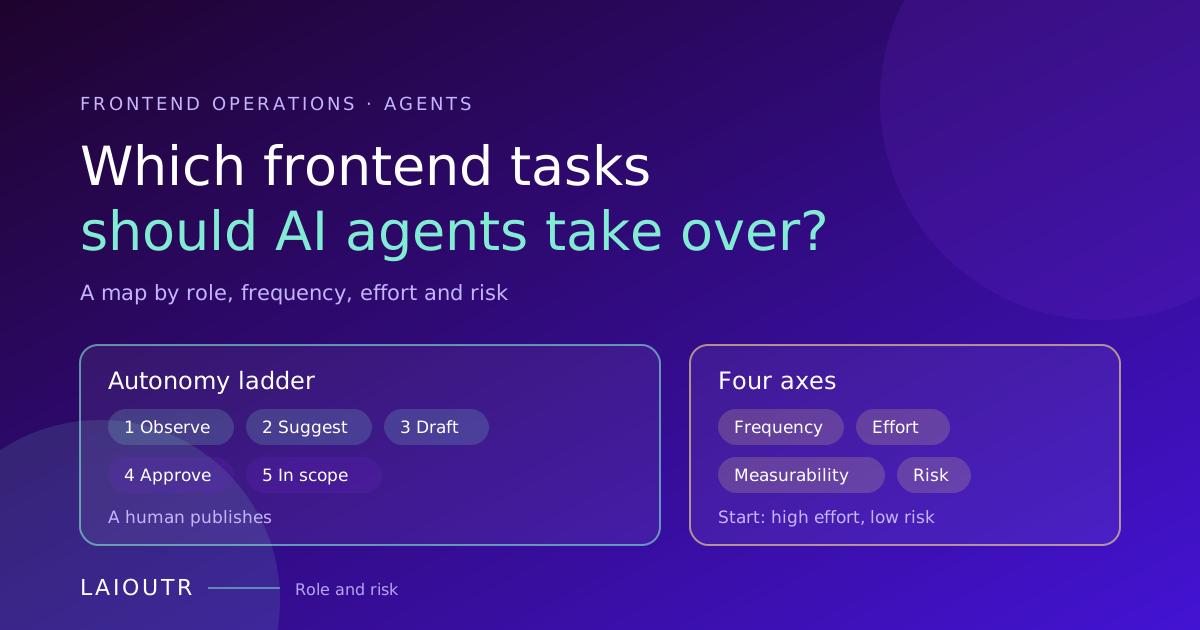Which Frontend Tasks Should AI Agents Take Over? Role and Risk Map
AI agents should first take over the frontend tasks that come up often, involve a lot of manual work…](https://www.laioutr.com/en/blog/frontend-operations-agent-task-map-role-risk-2026)
[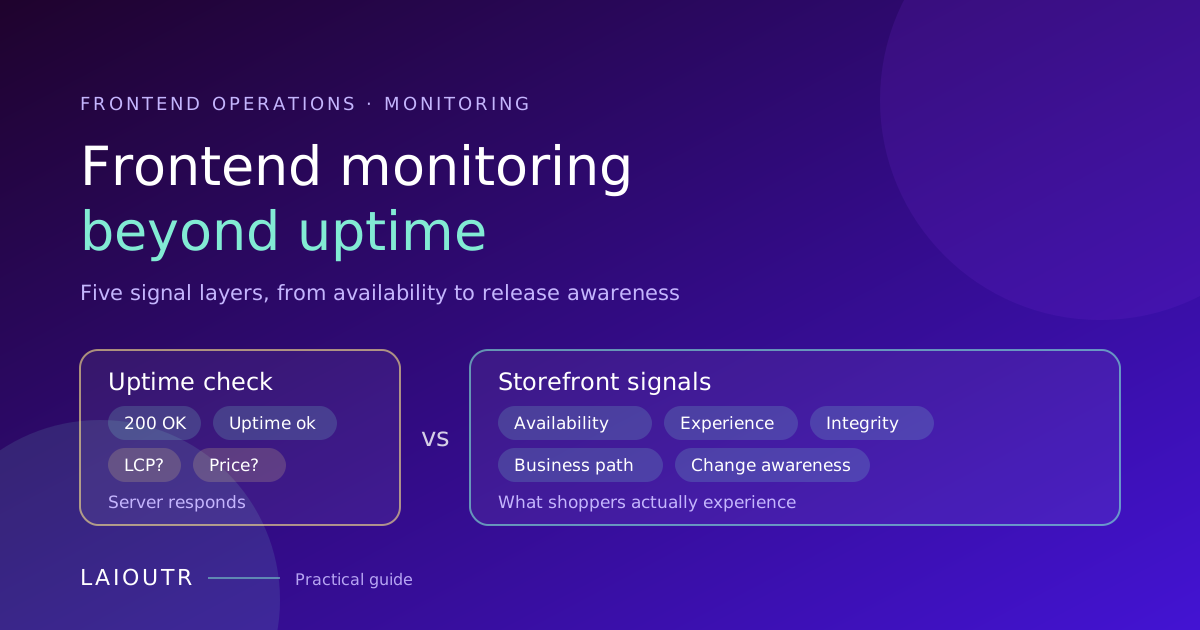Frontend Monitoring Beyond Uptime: Signals a Storefront Needs
Frontend monitoring beyond uptime means checking a storefront not only for availability but for what…](https://www.laioutr.com/en/blog/frontend-operations-monitoring-beyond-uptime-2026)
[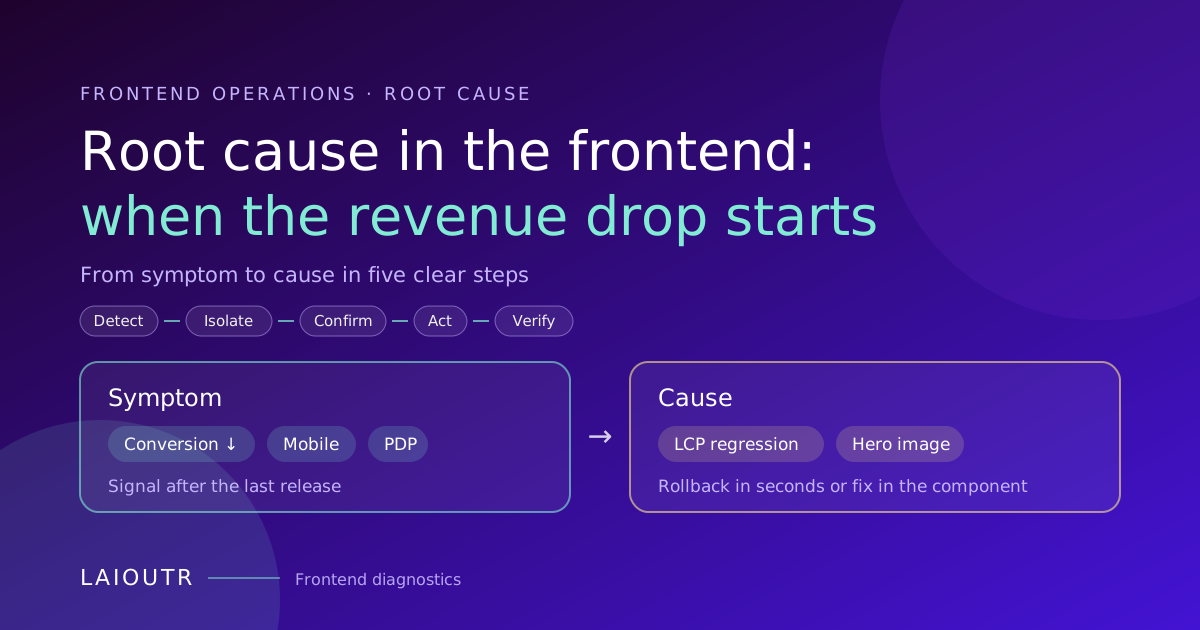Root Cause in the Frontend: When Revenue Drops Start in the Storefront
When revenue or conversion rate drops suddenly, the cause often is not traffic, pricing or the comme…](https://www.laioutr.com/en/blog/frontend-operations-root-cause-revenue-drop-storefront-2026)
[Laioutr Academy Is Live: The Video Manual for Laioutr
Since October 15, 2026, the Laioutr Academy has been live at academy.laioutr.com. It is the user man…](https://www.laioutr.com/en/blog/laioutr-academy-launch-video-manual-certification)
[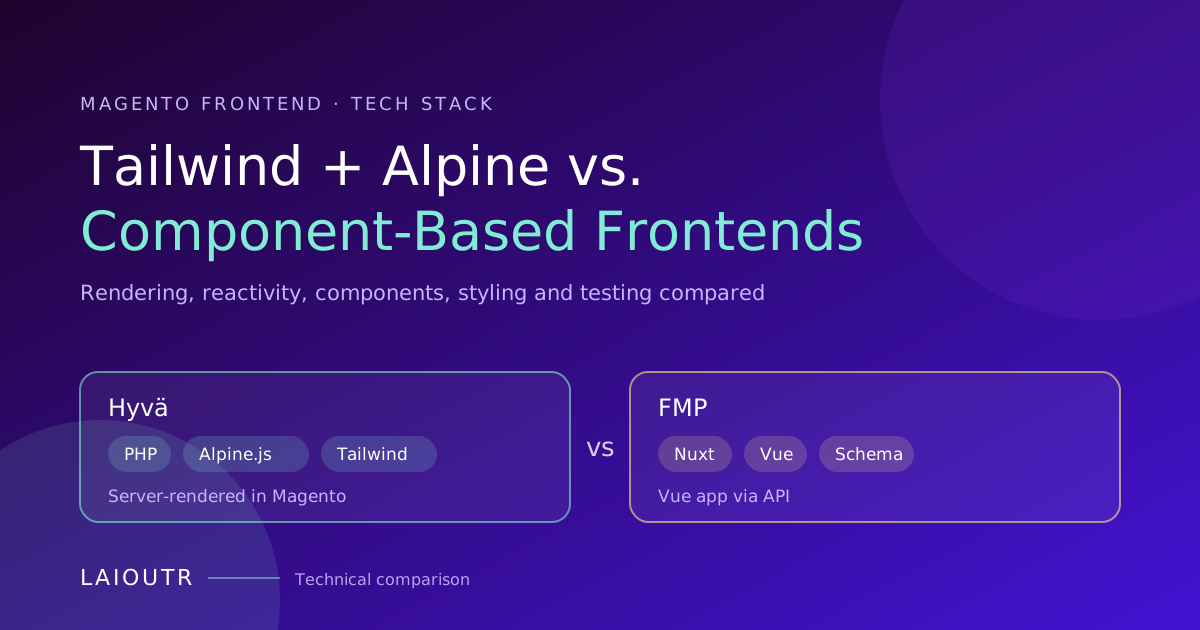Tailwind + Alpine vs. Component-Based Frontends for Magento
Hyvä renders Magento pages on the server with PHP templates and layout XML, adds interactivity throu…](https://www.laioutr.com/en/blog/tailwind-alpine-magento-vs-component-based-frontend-2026)
[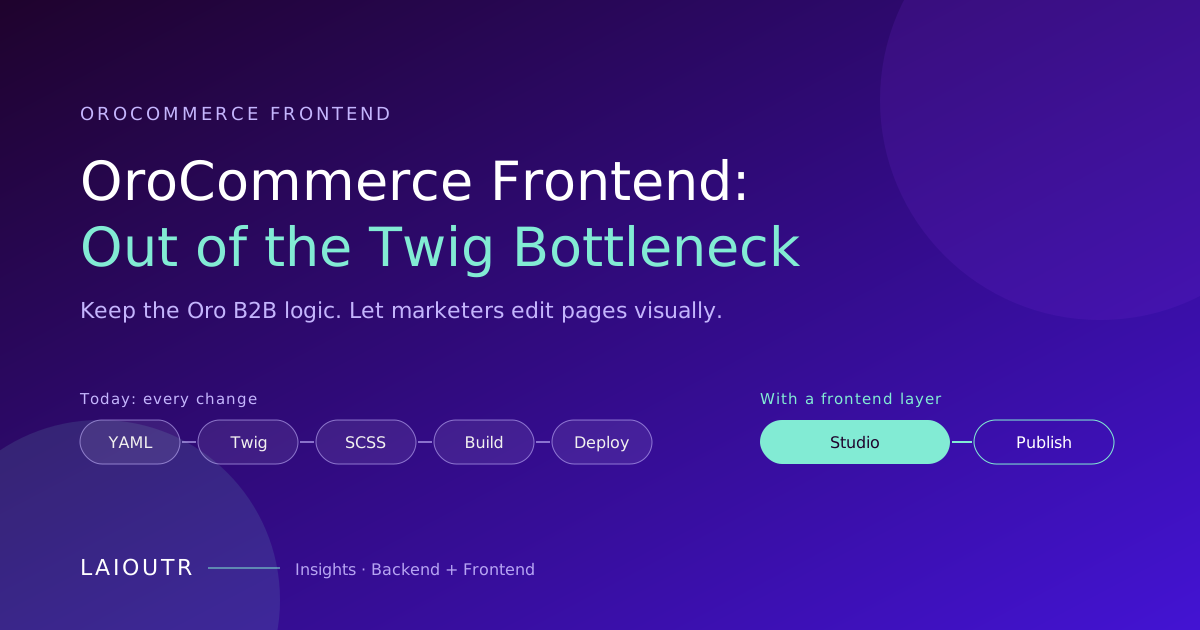OroCommerce Frontend: Out of the Twig and Layouts Bottleneck
The OroCommerce frontend is a server-rendered storefront built from Symfony bundles, OroLayouts and …](https://www.laioutr.com/en/blog/orocommerce-frontend-twig-layouts-bottleneck)
[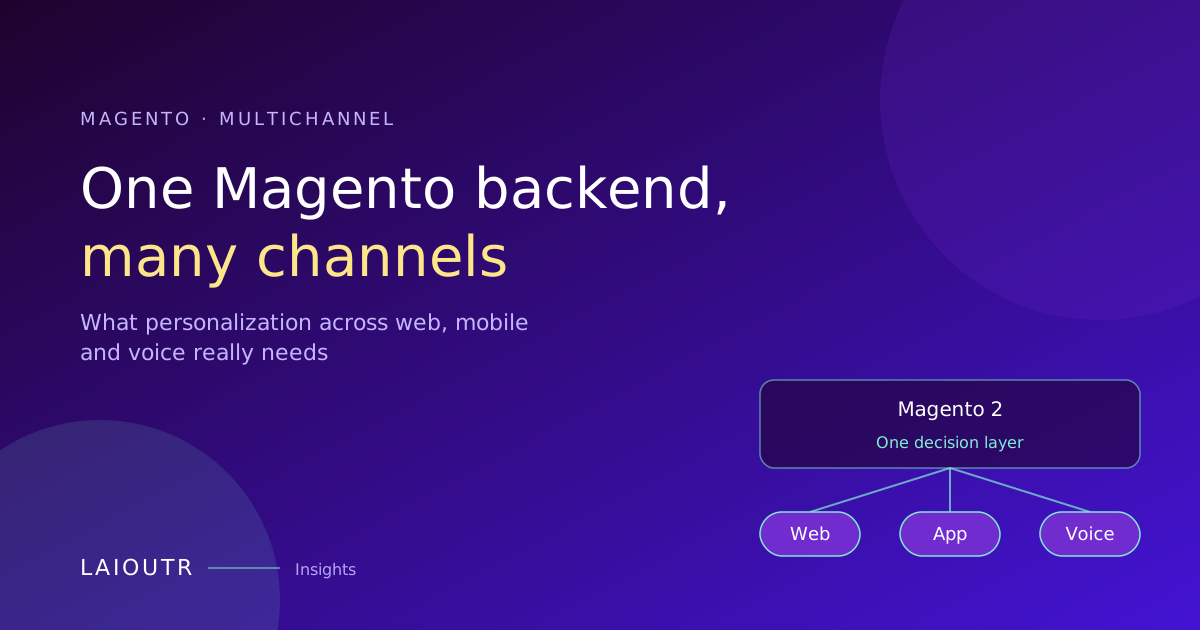One Magento Backend, Many Channels: Personalization in Practice
Personalization across web, mobile and voice on a single Magento backend does not start with a featu…](https://www.laioutr.com/en/blog/magento-multichannel-personalization-web-mobile-voice-2026)
[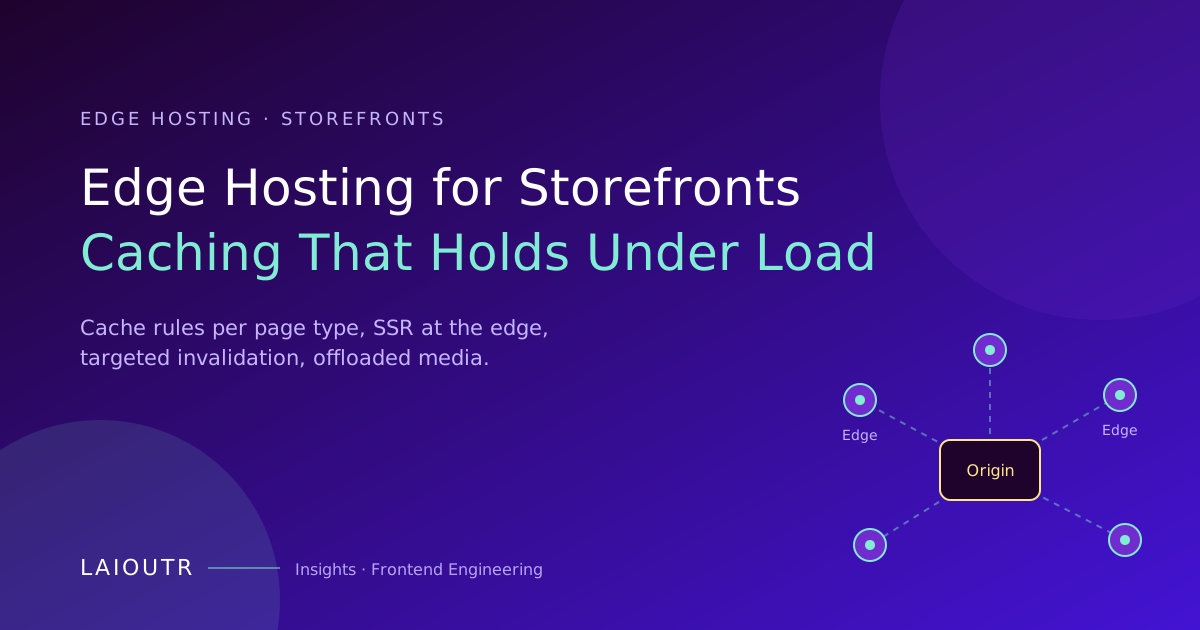Edge Hosting for Storefronts: Caching That Holds Under Peak Load
Edge hosting keeps a storefront fast under load when most requests never reach the origin: pages and…](https://www.laioutr.com/en/blog/edge-hosting-storefronts-peak-traffic-caching-2026)
[Composable Commerce 2027: What Shifted and What Comes Next
Composable commerce enters 2027 with a different agenda than a year ago. The architecture question i…](https://www.laioutr.com/en/blog/composable-commerce-2027-outlook)
[AI Engagement and Conversion: Personalization on the Frontend
AI-driven engagement and conversion on the frontend rests on five mechanics: segments decide who see…](https://www.laioutr.com/en/blog/ai-engagement-conversion-frontend-personalization)
[Website Tracking in E-Commerce 2026: An Honest Stack Overview
Website tracking in e-commerce is not one tool but a stack of five layers: consent management, tag m…](https://www.laioutr.com/en/blog/website-tracking-ecommerce-stack-overview-2026)
[One Content Source, Every Channel: Print to Storefront
Re-keying happens when the same product text, specification or image is typed in again for every cha…](https://www.laioutr.com/en/blog/unified-content-source-print-to-storefront-omnichannel-2026)
[Third-Party Cookies Are Not Dead: Why Data Still Has Gaps
Third-party cookies still exist in 2026. Google decided in 2025 not to remove them from Chrome and r…](https://www.laioutr.com/en/blog/third-party-cookies-2026-why-tracking-data-has-gaps)
[Structured Product Content: Why PIM and DAM Decide AI Visibility
AI answer engines and assistants recommend products they can understand and verify. Whether a produc…](https://www.laioutr.com/en/blog/structured-product-content-agents-ai-visibility-2026)
[Guest Checkout vs. Customer Account: A Frontend Decision to Test
Guest checkout should be the default path in a B2C storefront, and the customer account should be an…](https://www.laioutr.com/en/blog/guest-checkout-vs-customer-account-frontend-testing)
[](https://www.laioutr.com/en/apps/shopify)
Laioutr
[Shopify](https://www.laioutr.com/en/apps/shopify)
Shopify is a commerce platform for selling online and in physical retail.
[](https://www.laioutr.com/en/apps/shopware)
Laioutr
[Shopware](https://www.laioutr.com/en/apps/shopware)
Shopware is a flexible ecommerce platform from Europe for product catalogs and omnichannel commerce.
[](https://www.laioutr.com/en/apps/adobe-commerce)
Laioutr
[Adobe Commerce](https://www.laioutr.com/en/apps/adobe-commerce)
Adobe Commerce is an enterprise commerce platform for complex, global B2C and B2B scenarios.
Planned
[](https://www.laioutr.com/en/apps/b2b-sellers)
Laioutr
[B2Bsellers](https://www.laioutr.com/en/apps/b2b-sellers)
B2B suite for Shopware that turns an online store into a professional B2B commerce platform.
Planned
[](https://www.laioutr.com/en/apps/commerce-layer)
Laioutr
[Commerce Layer](https://www.laioutr.com/en/apps/commerce-layer)
Commerce Layer is a headless commerce platform for making inventory and catalogs available online.
[](https://www.laioutr.com/en/apps/commercetools)
Laioutr
[Commercetools](https://www.laioutr.com/en/apps/commercetools)
Commercetools is a SaaS-based headless ecommerce platform used worldwide.
[](https://www.laioutr.com/en/apps/emporix)
Laioutr
[Emporix](https://www.laioutr.com/en/apps/emporix)
Emporix is a composable, API-first commerce platform for scalable B2B and B2C scenarios.
Planned
[](https://www.laioutr.com/en/apps/hcl-software)
Laioutr
[HCL Software](https://www.laioutr.com/en/apps/hcl-software)
Enterprise suite for digital commerce and experience with extensive configurability.
Planned
[](https://www.laioutr.com/en/apps/intershop)
Laioutr
[Intershop](https://www.laioutr.com/en/apps/intershop)
Enterprise commerce platform for complex B2B and B2C business models.
Planned
[](https://www.laioutr.com/en/apps/magento-2)
Laioutr
[Magento 2](https://www.laioutr.com/en/apps/magento-2)
Widely used, extensible commerce platform for B2C and B2B scenarios.
[](https://www.laioutr.com/en/apps/oxid-eshop)
Laioutr
[OXID eShop](https://www.laioutr.com/en/apps/oxid-eshop)
OXID eShop is an extensible commerce platform for complex B2B and B2C requirements.
Planned
[](https://www.laioutr.com/en/apps/patchworks)
Laioutr
[Patchworks](https://www.laioutr.com/en/apps/patchworks)
Patchworks is a low-code iPaaS that connects ecommerce, ERP, WMS, 3PL, and marketplaces.
Planned
[](https://www.laioutr.com/en/apps/PrestaShop)
Laioutr
[Prestashop](https://www.laioutr.com/en/apps/PrestaShop)
Open-source commerce platform for small and midsize merchants in Europe and beyond.
Planned
[](https://www.laioutr.com/en/apps/saleor)
Laioutr
[Saleor](https://www.laioutr.com/en/apps/saleor)
Open-source, API-first commerce platform built on GraphQL for custom storefronts.
Planned
[](https://www.laioutr.com/en/apps/salesforce-commerce-cloud)
Laioutr
[Salesforce Commerce Cloud](https://www.laioutr.com/en/apps/salesforce-commerce-cloud)
Salesforce Commerce Cloud is a cloud-based enterprise commerce platform for businesses of any size.
Planned
[](https://www.laioutr.com/en/apps/sap-commerce-cloud)
Laioutr
[SAP Commerce Cloud](https://www.laioutr.com/en/apps/sap-commerce-cloud)
Enterprise commerce platform for complex catalogs, pricing models, and omnichannel journeys.
Planned
[](https://www.laioutr.com/en/apps/scayle)
Laioutr
[Scayle](https://www.laioutr.com/en/apps/scayle)
SCAYLE is a commerce engine that helps brands and retailers scale their business.
Planned
[](https://www.laioutr.com/en/apps/spryker)
Laioutr
[Spryker](https://www.laioutr.com/en/apps/spryker)
Composable commerce platform for sophisticated B2B and B2C business models.
[](https://www.laioutr.com/en/apps/sylius)
Laioutr
[Sylius](https://www.laioutr.com/en/apps/sylius)
Sylius is a developer-friendly ecommerce framework for B2C and B2B shopping experiences.
Planned
[](https://www.laioutr.com/en/apps/vendure)
Laioutr
[Vendure](https://www.laioutr.com/en/apps/vendure)
Vendure is a headless commerce platform for businesses with complex requirements.
Coming Soon
[](https://www.laioutr.com/en/apps/vtex)
Laioutr
[VTEX](https://www.laioutr.com/en/apps/vtex)
Cloud-native, composable commerce platform for B2B and B2C at scale.
Planned
[](https://www.laioutr.com/en/apps/websale)
Laioutr
[Websale](https://www.laioutr.com/en/apps/websale)
Stable, enterprise-ready commerce backend for complex retail environments.
Strategy call
## Ready to turn your frontend into a control layer?
Show us your stack, your roadmap, your replatforming scenario, and we'll show you how Laioutr fits, what it costs, and how fast you go live.
*"After 30 minutes, we knew Laioutr makes our replatforming feasible." - Daniel B., CEO,* [*hygibox.de*](https://hygibox.de)
[Book a demo](https://www.laioutr.com/en/contact)
## Structured Data
```json
{
"@context": "https://schema.org",
"@graph": [
{
"@type": "Organization",
"@id": "https://www.laioutr.com/#identity",
"name": "Laioutr",
"legalName": "Laioutr GmbH",
"url": "https://www.laioutr.com/",
"logo": {
"@type": "ImageObject",
"url": "https://www.laioutr.com/laioutr-logo.png",
"width": 400,
"height": 400
},
"email": "info@laioutr.com",
"telephone": "+49 30 75435715",
"address": {
"@type": "PostalAddress",
"streetAddress": "Münchweilersteig 5",
"postalCode": "12559",
"addressLocality": "Berlin",
"addressCountry": "DE"
},
"vatID": "DE450905846",
"sameAs": [
"https://www.linkedin.com/company/laioutr",
"https://www.youtube.com/@Laioutr",
"https://x.com/laioutr"
]
},
{
"@type": "WebSite",
"@id": "https://www.laioutr.com/en/#website",
"url": "https://www.laioutr.com/en/",
"name": "Laioutr",
"inLanguage": "en",
"publisher": {
"@id": "https://www.laioutr.com/#identity"
}
},
{
"@type": "BlogPosting",
"@id": "https://www.laioutr.com/en/blog/saleor-headless-frontend-options-compared#article",
"headline": "Saleor Headless Frontend: 5 Optionen im Vergleich 2026",
"description": "Comparing headless frontend options for Saleor and other composable backends? See how architecture, speed, and lock-in risk stack up before you choose.",
"image": [
"https://eu-west-2.graphassets.com/cmii2mlqi0dux06l5543v7nkc/cmq66u5egg25o07l4t7hfgbzt"
],
"datePublished": "2026-07-09T04:45:54.215704+00:00",
"dateModified": "2026-07-09T04:45:53.980094+00:00",
"inLanguage": "en",
"articleSection": "Insights",
"keywords": "Headless Commerce, Comparison, Frontend Management, Migration, BigCommerce, commercetools, Pimcore, Saleor, Shopify",
"author": {
"@type": "Person",
"name": "Marcel Thiesies",
"jobTitle": "Co-Founder & CEO, Laioutr",
"image": "https://eu-west-2.graphassets.com/cmii2mlqi0dux06l5543v7nkc/cmj01b962364n07lb0iguvts5"
},
"publisher": {
"@id": "https://www.laioutr.com/#identity"
},
"mainEntityOfPage": {
"@id": "https://www.laioutr.com/en/blog/saleor-headless-frontend-options-compared#webpage"
},
"isPartOf": {
"@id": "https://www.laioutr.com/en/#website"
}
},
{
"@type": "WebPage",
"@id": "https://www.laioutr.com/en/blog/saleor-headless-frontend-options-compared#webpage",
"url": "https://www.laioutr.com/en/blog/saleor-headless-frontend-options-compared",
"name": "Saleor Headless Frontend: 5 Optionen im Vergleich 2026",
"description": "Comparing headless frontend options for Saleor and other composable backends? See how architecture, speed, and lock-in risk stack up before you choose.",
"inLanguage": "en",
"isPartOf": {
"@id": "https://www.laioutr.com/en/#website"
},
"breadcrumb": {
"@id": "https://www.laioutr.com/en/blog/saleor-headless-frontend-options-compared#breadcrumb"
},
"primaryImageOfPage": {
"@type": "ImageObject",
"url": "https://eu-west-2.graphassets.com/cmii2mlqi0dux06l5543v7nkc/cmq66u5egg25o07l4t7hfgbzt"
},
"datePublished": "2026-07-09T04:45:54.215704+00:00",
"dateModified": "2026-07-09T04:45:53.980094+00:00",
"mainEntity": {
"@id": "https://www.laioutr.com/en/blog/saleor-headless-frontend-options-compared#article"
}
},
{
"@type": "BreadcrumbList",
"@id": "https://www.laioutr.com/en/blog/saleor-headless-frontend-options-compared#breadcrumb",
"itemListElement": [
{
"@type": "ListItem",
"position": 1,
"name": "Laioutr",
"item": "https://www.laioutr.com/en/"
},
{
"@type": "ListItem",
"position": 2,
"name": "Insights",
"item": "https://www.laioutr.com/en/blogs/insights"
},
{
"@type": "ListItem",
"position": 3,
"name": "Saleor Headless Frontend: 5 Optionen im Vergleich 2026"
}
]
}
]
}
```